10 years ago, Lemmy was killed by death


From wikipedia.org / © Mark Marek


Following the recent death of singer and guitarist Chris Rea, whose 1986 song Driving Home for Christmas has become something of a festive-season classic, a mate of mine observed that this was yet another example of a ‘musician who’s associated with a perennial Christmas song’ expiring at Christmastime.


To support his thesis, he mentioned George Michael (responsible for 1984’s Last Christmas and died on Christmas Day 2015) and Shane MacGowan (co-singer and co-writer of 1987’s Fairy Tale of New York and died on November 30th, 2023 – okay, not quite in the festive season but I’m sure the Christmas lights were already up in Dublin at the time).  Referencing the singers of Merry Christmas Everybody (1973) and I Wish It Could Be Christmas Every Day (1973) and the perpetrator of Mistletoe and Wine (1988) and Saviour’s Day (1990), my mate concluded, “…Noddy, Roy and Cliff better take extra care in Decembers to come.”


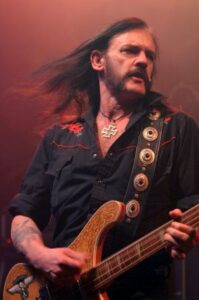
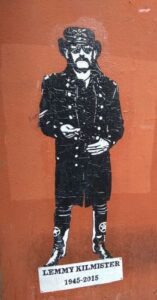
Well, today is the festive-season day of December 28th, 2025.  And it marks the tenth anniversary of the death of a titan of popular music: Lemmy, front-man with one of heavy metal’s most brilliant bands, Motörhead, and a general all-round role model for how to live your life (i.e. loudly, always disreputably and occasionally downright badly).


I was going to say that Lemmy’s passing at Christmastime disproves my mate’s theory that only the singers of Christmas songs die during this period.  But I’ve just checked and discovered that, though Motörhead never recorded a Christmas song, in 2008 Lemmy did get together with ZZ Top’s Billy Gibbons and the Foo Fighters’ Dave Grohl and made a cover version of Chuck Berry’s Run, Rudolph, Run (1958) for the same year’s album We Wish You a Metal Christmas and a Headbanging New Year.  (Google AI informs me the song’s vibe was ‘heavy, aggressive and sinister’.)   So maybe there’s something in it after all.


Anyway, Lemmy.  What an amazing career he had.  Legend has it that he managed the remarkable feat of being thrown out of Hawkwind for taking too many drugs – though more likely he was thrown out for taking the wrong sort of drugs, i.e., amphetamines, which the other, hallucinogenic-loving band-members looked down on.  He tried to teach Sid Vicious how to play bass (with a predictable lack of success).  He composed the greatest rock ‘n’ roll song ever, Ace of Spades (1980).  He also gave rise to the greatest joke ever – “If Lemmy had a fight with God, who would win?”  “It’s a trick question: Lemmy is God.” – which was funny because it was true.


Here, by way of a tribute to the great man, is a review of a Motörhead concert that I wrote back in 2008 for the University of East Anglia’s student newspaper, Concrete.  It’s an excitable and breathless piece of writing but, well, I had just been at a Motörhead concert.  Reading it now, I have a few regrets.  I should apologise to the late Ronnie James Dio – in the years since, I’ve come to realise I like ‘strutting spandex-clad idiots singing songs about elves and wizards’.  Plus, Ronnie was no idiot.


And obviously, I regret the fact that the prediction made in the final sentence didn’t come true.

*

MOTÖRHEAD

UEA, November 21st, 2008

If the Nobel Foundation in Stockholm ever creates a Nobel Prize for Heavy Metal, surely its first recipient will be Lemmy, singer, bassist and general driving force of Motörhead.


Founded in the 1970s, a decade when heavy metal consisted of strutting spandex-clad idiots singing songs about elves and wizards (e.g. Rainbow) or about their abilities in making vigorous love to the ladies (e.g. Whitesnake), Motörhead were a revelation.


Lemmy’s hoarse roar was stuck onto a racket of guitars played at the loudest possible volume and at the fastest possible speed, a sound that helped to spawn the speed and thrash metal sub-genres and supplied Metallica, Slayer, Anthrax and co. with at least 666 tons of inspiration.


Lemmy was also an early and crucial champion of Girlschool, the groundbreaking all-female metal band who helped the music to shed some of its reputation for sexism.  And in the segregated pre-grunge era, when heavy metal and punk fans weren’t supposed to associate with each another, Motörhead was the one metal band it was okay for punks to like.  Lemmy and the Sex Pistols’ Sid Vicious were good mates and he even tried to teach Sid how to play bass guitar – unsuccessfully, it must be said.


Taking the stage tonight after a short-but-well-received set from Toronto band Danko Jones and a ludicrous-but-loveable one from Saxon – ironically one of those hoary old-style metal bands that Motorhead helped to make obsolete – Lemmy, guitarist Phil Campbell and drummer Mikkey Dee went to work with their usual, blistering single-mindedness.  Old favourites like Bomber (1979) and Killed by Dead (1984) got blasted out alongside items from their new album Motörizer – though unsurprisingly the new stuff didn’t sound entirely different from the old stuff.


Apart from a blues pastiche where Lemmy displayed some unexpected harmonica-playing skills, this was business-as-usual in the best sense of the phrase.  Rounding off a perfect evening for the head-grinding crowd was an encore containing Ace of Spades, surely the most brain-batteringly brilliant song in heavy metal – and possibly in 7000 years of human civilisation as well.


The big heavy-metal news this week was that Guns n’ Roses had finally put out Chinese Democracy – an album so named because it’d taken so long to record that democracy could have feasibly come to China by the time of its release.   From tonight’s showing, however, Motörhead will be going strong long after China has taken over Wall Street, bought up Coca Cola and put a man on the moon.
 

From blabbermouth.net / © Pedro Alonso
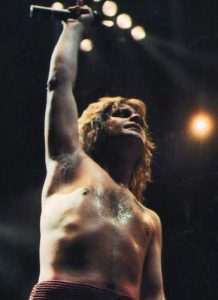
Adi-Ozz amigo


From wikipedia.org / © Ted Van Pelt


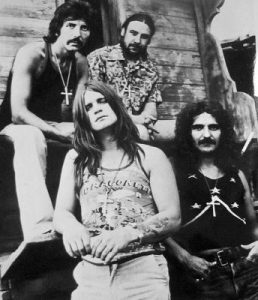
The Prince of Darkness has gone dark.  I was saddened to hear of the passing of Ozzy Osbourne, singer with legendary heavy metal band Black Sabbath, on July 22nd for two reasons.


Firstly, Ozzy’s eerie, high-pitched, alien-sounding vocals were the perfect accompaniment for the crunching, doom-laden guitars and drums of his Black Sabbath compadres, guitarist Tony Iommi, bassist Geezer Butler and drummer Bill Ward.  Their rumbling, abrasive sound evoked the heavy machinery in the factories where the working-class quartet found employment as youths and where they would have spent their lives had they not hit the bigtime with their music.  Indeed, Iommi’s time in a steelworks ended with an accident that sheared off two of his fingertips and nearly ruined his budding career as a guitarist.  Ozzy didn’t fare much better, beginning work as a toolmaker’s apprentice and cutting off the top of his thumb on his first day on the job.


It was also a sound that was massively influential.  As I wrote on this blog a couple of years ago, Sabbath’s influence is “all over musical movements like grunge and hardcore punk.  And they’re clearly major influences on such metallic sub-genres as black metal, doom metal, goth metal, power metal, sludge metal, speed metal and stoner metal.  Indeed, they’re responsible for more metal than the Brummie steelworks where the young Tony Iommi lost his fingertips and almost lost his future in music.”


From wikipedia.org / © Warner Bros. Records


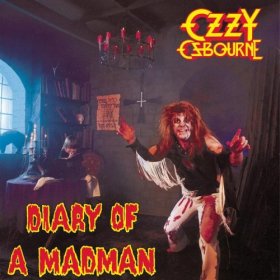
Secondly, when I heard of Ozzy’s death, I felt like I’d lost a crazy, shambolic but lovable uncle.  Yes, he styled himself as the Prince of Darkness – or at least, his manager-wife Sharon Osbourne did, realising how lucrative his mad-bad-and-dangerous-to-know brand was.  And in the 1980s he was a bête noir among Christian American parents and there were unsuccessful attempts to sue him for, it was alleged, causing two young men to kill themselves after they’d listened to his song Suicide Solution from his first solo album Blizzard of Ozz (1980).  And during his young, hellraising years, it certainly sounded like the drink and drugs turned him into a psycho at times.  But once he reached middle-age, he became an amiable, if hapless, teddy bear of a man.  He was also a superstar devoid of airs and graces.  No doubt the tough, unpretentious start to life he’d had in Birmingham helped keep his feet on the ground.


And, fabulously, he never lost his Brum accent.  “Oi’m the Prince of Dawkness!” drunkards would cry in pubs the world over, whenever his name came up in conversations.


His everyman image received a further boost when he, wife Sharon and kids Jack and Kelly featured in Emmy-winning reality show The Osbournes (2002-05).  While I have to say I found the other members of his family an acquired taste, Ozzy was wonderful just for being himself.  Millions of men like me, watching the show as they entered both middle-age and the 21st century, surely sighed wistfully as they recognised themselves in Ozzy’s failing efforts to control the environment around him.  Failing to control his offspring.  Failing to control his pets – I remember him accusing one recalcitrant dog of being “worse than Bin Laden.”  Failing to control the technological gadgets in his house.  “I’m a very simple man,” he ranted at one point. “You’ve got to have, like, computer knowledge to turn the f**king TV on and off… I press this one button and the shower starts going off…”


No doubt it was Ozzy’s lack of guile that led him, in his younger days, to being an absolute disaster in terms of boozing and drug-taking.  His behaviour resulted in him being sacked from Black Sabbath at the end of the 1970s, though Ozzy claimed he was no worse a state than the other three band-members were at the time.  Still, it must have been difficult working with a man given to such antics as snorting a line of ants in the mistaken belief they were a line of cocaine, or getting arrested for urinating over the Alamo whilst wearing a frock.  “Son,” a member of the San Antonio police force told him gravely, “when you piss on the Alamo, you piss on the state of Texas.”


My favourite story from Ozzy’s wild years was one that happened after he’d returned to England from America, where he’d been making the 1972 Black Sabbath album Vol. 4 and where he’d also developed a taste for LSD.  “I took 10 tabs of acid, then went for a walk in a field.  I ended up standing there talking to this horse for about an hour.  In the end the horse turned round and told me to f**k off.  That was it for me.”


A lifetime of drugs, alcohol, excess and idiocy did nothing for Ozzy’s health and, more recently, he was beset by health issues: Parkinson’s disease, neck and spine surgery, depression, blood clots, nerve pain.  At Christmas 2016, after the news that George Michael and Status Quo’s Rick Parfitt had died within the space of 24 hours, a friend emailed me worriedly and said, “At this rate Ozzy’s not going to make it to the Bells.”


Happily, Ozzy made through nine more Bells.  He also made it to Back to the Beginning, his farewell concert held at Birmingham’s Villa Park on July 5th this summer.  The bulk of this consisted of performances by a dazzling range of heavy metal bands who might never have seen the light of day if Black Sabbath hadn’t set the ball rolling for their genre in 1970 – Mastodon, Anthrax, Lamb of God, Alice in Chains, Gojira, Pantera, Tool, Guns N’ Roses, Slayer, Metallica and others, plus two guest-ridden ‘superstar’ bands assembled by the event’s musical director, Rage Against the Machine’s Tom Morello.  The event climaxed with a five-song solo set by Ozzy and then a four-song set by the original Black Sabbath line-up of him, Iommi, Butler and Ward, playing together for the first time since 2005.


Back to the Beginning’s 45,000 tickets sold out in 16 minutes.  It also raised 140 million pounds for charity.  Rather prophetically, Ozzy said of the concert a couple of months before it happened: “I’m going to make this f**king gig if it’s the last thing I do.  Well, it will be…”


He died just 17 days afterwards.  His life was chaotic but, at the very end, his timing was impeccable.


From wikipedia.org / © Jet Records