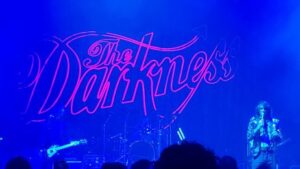
The Darkness descends on Singapore


Andy Warhol’s prediction that one day everyone would be famous for 15 minutes seems cruelly appropriate when I think about English glam rock / metal band the Darkness.  In 2003 they released their debut album Permission to Land and for the next year they were huge. The album went platinum and the band racked up three awards – Best British Group, Best British Rock Act and Best British Album – at 2004’s BRIT Awards.


But then…  Suddenly, they weren’t huge.  Their second album One Way Ticket to Hell… and Back (2005) being a flop and their singer and lead guitarist Justin Hawkins quitting the band after struggling with drug and alcohol addiction didn’t help, though overall they gave the impression their popularity would be brief.  With the over-the-top theatricality of their music – crowned by Hawkins’ falsetto vocals – and the cartoonish-ness of their videos and general image, the band obviously didn’t take themselves seriously, which was admirable.  Alas, there’s a problem with presenting yourself as something of a joke, i.e., even the funniest joke in the world stops being funny when you’ve heard it a number of times.


For the record, I should say I liked One Way Ticket to Hell… and Back, if only for its title track, which contained the immortal lyrics: “The first line hit me like a kick in the face / Thought I better have another one just in case…”  I also liked them because they came from Lowestoft, the rather rough-and-ready seaside resort in County Suffolk.  I was spending much of my time in Suffolk when, temporarily, they hit the big time.  Indeed, at the height of their celebrity, they threatened to buy big, fancy houses in Southwold, the more upmarket, snootier seaside resort a few miles along the coast from Lowestoft – a threat some Southwolders took seriously.  I seem to recall a newspaper article where the journalist visited Southwold and interviewed some locals about the prospect of having Justin Hawkins and co. as residents.  One old lady expressed her disapproval of them because they ‘had tattoos’.


However, as evidenced by John Travolta – who went from the highs of Saturday Night Fever (1977) and Grease (1978) to the lows of the Look Who’s Talking movies (1989-93), but then enjoyed a comeback with Pulp Fiction (1994) – or Robert Downey Jr – who, after Air America (1990) and Chaplin (1992), seemingly destroyed his career with cocaine and heroin abuse, but then made a half-billion dollars playing Iron Man in the Marvel Cinematic Universe – or even Sir Michael Caine – whose route from Zulu (1964) and Alfie (1966) to having roles in eight Christopher Nolan movies and becoming a British national treasure had to go through a mid-career trough containing the likes of The Swarm (1978), Beyond the Poseidon Adventure (1979), The Island (1980), The Hand (1981) and Jaws: the Revenge (1987) – just because you were once fashionable, but then went out of fashion, doesn’t mean you won’t ever come back into fashion.   So it is with the Darkness.  After being off the radar for a long time, they’ve lately acquired some retro-coolness.


Their eighth and most recent album, 2025’s Dreams on Toast, got to Number 2 in the British charts.  They’re due to support Iron Maiden at their 50th anniversary show at Knebworth Park in July this year.  And in December 2026 they’ve lined up no fewer than seven UK arenas to perform in for their Band of Brothers tour.  They even generated some headline-making controversy when Justin Hawkins, who reunited with the Darkness in 2011, and younger brother Dan, who plays lead guitar in the band too, criticized Yungblud’s performance at the late Ozzy Osbourne’s farewell concert last summer.  The elder Hawkins commented: “…if the future of rock comes from musical theatre and Disney, if this is Ozzy’s heir, we’re in trouble.”  Finally, it hasn’t done the band’s renewed popularity any harm that, since 2021, Justin Hawkins has had a YouTube channel where he reviews and analyses songs.  It currently has 600,000 subscribers.


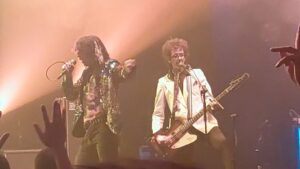
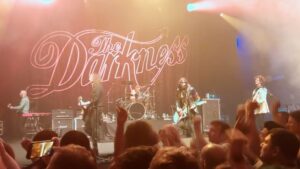
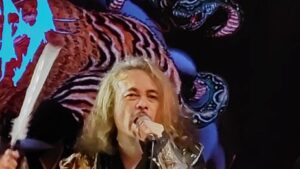
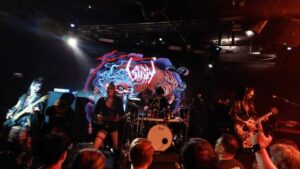
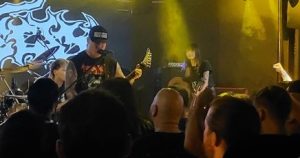
Last week, the Darkness made their first-ever appearance in Singapore, my current abode, with a gig at the Capitol Theatre.  In terms of musicality, it wasn’t the best concert I’ve attended in the city-state.  That accolade probably belongs to Jack White, whom I saw at the same venue three-and-a-half years ago.  But in terms of showmanship… This gig was pretty awesome.


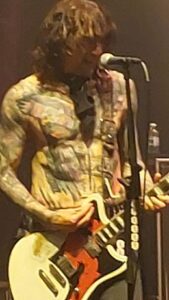
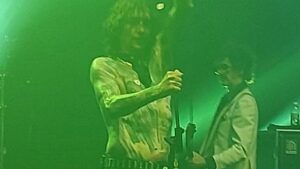
Yes, the band-members are two decades older than they were in their mid-noughties heyday – bassist Frankie Poullain, who once resembled a moustached villain from a spaghetti western, appears to have transformed into Kurt Vonnegut – but the encroachment of middle age hasn’t slowed, calmed or subdued them.  Justin Hawkins, for example, in an impressive display of spriteliness, performed a handstand at one point.  Also, admirably un-self-conscious, he stripped off to the waist early in the gig and flaunted a torso slathered in tattoos.  No wonder that old lady in Southwold objected to him.


When you list the bands that had an influence on the Darkness, the one topping the list is surely Queen.  Accordingly, there were moments tonight when I felt I was listening to the rockier end of Queen’s musical repertoire – without the detours into opera, funk, disco, music hall, electronica and so on that the older band were so fond of – with Justin Hawkins providing plenty of Freddie Mercury-style flamboyance.  But I mean that in a good way.  Those Queen-esque moments smacked of loving homage rather than slavish imitation.  And on the subject of Queen, I should mention that since 2015 the Darkness’s drummer has been Rufus Tiger Taylor, whose dad is none other than the legendary Queen tub-thumper Roger Taylor.  Justin Hawkins cracked a joke about this at one point, quipping that Rufus’s father used to ‘play the drums in Status Quo’.  I laughed, though nobody else in the crowd seemed to.  Maybe because I was the only audience-member old enough to know who Status Quo were.


The setlist balanced half-a-dozen songs from their first and still most famous album Permission to Land, including such crowd-pleasing items as I Believe in a Thing Called Love and Get Your Hands Off My Woman Motherf*cker, with half-a-dozen from their recent comeback Dreams on Toast.  Of the latter songs, Rock and Roll Party Cowboy, which served as the opening number and set the tone for what was to follow, was a particularly glorious slab of glam-metal genius / stupidity (“Leather jacket, no sleeves / Harley-Davidson? Yes, please!“).  Some of their in-between albums were represented by a song each and they also did a cover, a guitar-heavy rendition of Jennifer Rush’s The Power of Love (1984), which Hawkins’ voice was highly suited to.  The cover was fun, though one ironic take on a power ballad was enough.  They thankfully didn’t follow it up with versions of, say, Bonnie Tyler’s Total Eclipse of the Heart (1983) or Celine Dion’s It’s All Coming Back to Me Now (1996).


The band played epically with instruments cranked up to 11 at all times, Justin Hawkins antics’ as frontman achieved the right alchemy of melodrama and hilarity, and consequently the evening was high in entertainment value and the crowd had an excellent time. What helped, I felt, was that the Darkness came across as being a bunch of genuinely decent lads.  For instance, Justin Hawkins showed his appreciation of the guitar-tech guy who sporadically had to run on and off-stage.  The band also made sure their touring member, the keyboardist and guitarist Ian Norfolk – who, with his bald head, trimmed beard and sensible clothes looked as unlike the other performers as was possible – got a minute in the limelight.  By the way, I appreciate a guy called Norfolk playing with a band from Suffolk.


Moreover, the one moment that could have soured things – the band stopped a half-minute into I Believe in a Thing Called Love to ask certain members of the audience at the front of the stalls to stop filming on their phones – was well-handled by Hawkins.  Speaking like the nice, popular teacher at school who, once in a blue moon, has to discipline an unreasonably rowdy class, he pointed out in an I’m-not-angry-just-a-bit-disappointed voice, “Imagine if I sang the song while filming you on my phone…  It’d be really boring!”  He was more restrained than Brett Anderson of Suede, who in a 2023 gig at Singapore’s Star Theatre reacted to phone-filming spectators by tussling with them and knocking the infernal devices out of their hands.


Incidentally, when I arrived before the show, I noticed that one of the counters selling drinks at the back of the stalls belonged to the Flying V, Singapore’s premiere – well, probably only – heavy-metal bar.  And when I approached that counter to buy a beverage, I discovered they were selling Aspall Cyder.  The cidery producing this particular brew is located in the Suffolk village of Aspall, about 30 miles southwest of Lowestoft.  Wow, I thought, is this on sale because the Darkness are performing tonight?  Are they supporting the Suffolk economy whilst playing in Asia?  Momentarily, I had a vision of the Darkness’s tour-jet being accompanied by a cargo plane loaded with bottles of East Anglian scrumpy.  However, I visited the Flying V after the gig and learnt that they sell Aspall Cyder there all the time.  So it was just a coincidence.


No shuffling off this Lacuna Coil


In 2022, the year I arrived in Singapore, the Italian gothic metal band Lacuna Coil played a gig at the city-state’s Esplanade Annex Studio.  Although I’d really enjoyed several of the band’s early albums, such as Comalies (2002) and Shallow Life (2009), I somehow, stupidly, missed seeing them on that occasion.  When I heard that the band would be paying a return visit to Singapore on February 9th this year, playing in the same venue, I made sure I didn’t make the same mistake again.


Lacuna Coil are currently touring in promotion of their 2025 album Sleepless Empire.  The album was well-received by critics, who noted that it showed the band moving towards a darker, heavier sound.


Though plentifully equipped with chugging guitars, earlier Lacuna Coil albums like those I’d mentioned above had prioritised melody over volume.   This was embodied in the band’s use of two vocalists, the operatic Christina Scabbia and the rougher, more aggressive-sounding Andrea Ferro.  Indeed, to me, they sounded like a goth-metal version of the 1980s Icelandic indie-band the Sugarcubes – wherein a very young Björk’s charmingly fey vocals were offset by the more discordant ones of Einar Ӧrn, allegedly ‘the first punk in Iceland’.  Nonetheless, Ferro’s rawer voice was still in synch with the tunes.


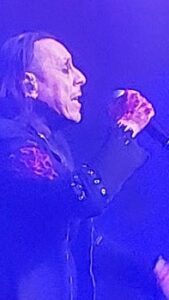
At tonight’s gig, I was discombobulated at first to encounter a louder, crunchier, snarlier incarnation of Lacuna Coil than I’d expected – songs from Sleepless Empire made up nearly half the setlist, with previous, gentler albums represented by one or two tracks only.  It was also a surprise to hear those alternating vocals.  While Scabbia was as operatic as ever, Ferro sometimes indulged in death-growling, Cannibal Corpse-style.  Actually, one of Sleepless Empire’s tracks, Hosting the Shadow, was recorded with guest vocals from Randy Blythe of the American thrash / groove metal band Lamb of God, who in the past has provided guest vocals for – surprise! – Cannibal Corpse.


But a few songs into Lacuna Coil’s set, my brain had adjusted and I enjoyed the rest of the gig enormously.  And the heaviness of Sleepless Empire was leavened by a few old tracks I’m fond of: Heaven’s a Lie and Swamped off Comalies, Spellbound off Shallow Life.  No room, alas, for Survive, the first track on Shallow Life, which is maybe my favourite Lacuna Coil song thanks to its use of a spooky, children’s-nursery-rhyme-like refrain, which sounds like something off the soundtrack of an old giallo movie.  (Giallo were a sub-genre of stylish but brutal horror-thrillers developed in Italy in the 1960s and 1970s by directors like Mario Bava, Dario Argento, Sergio Martino and Lucio Fulci.  Frequently, the murders in them were the result of someone having suffered childhood trauma, which necessitated flashback scenes accompanied by the sounds of creepy children.)  And that brings me nicely to my next point…


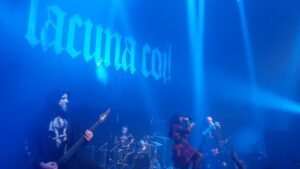
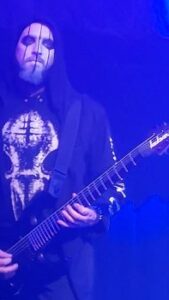
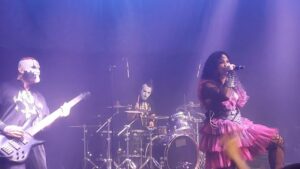
One thing I liked about Lacuna Coil’s show tonight was how, visually, they echoed old Italian horror movies, of which I’m a big fan.  Bassist Marco Coti Zelati, who also composes the music for and produces their records – Scabbia and Ferro write the lyrics – was slathered in white corpse-paint, except for a dish-shaped portion at the top of his head, which had been painted red and brain-like to suggest his brainpan had been removed.  Indeed, he resembled a lumbering, reanimated cadaver from the zombie epics that Lucio Fulci started making after he stopped making giallo.  Meanwhile, recently recruited guitarist Daniele Salomone wore a cowl and resembled the hooded villain in Antonio Margheriti’s 1963 horror film The Virgin of Nuremberg.


The colours bathing the stage veered from garish blue to garish red with the abandon of the stylised lighting that drenched the movies of Mario Bava and Dario Argento.  And the dark-haired, red-dressed Scabbia would have made a good female lead in an Italian gothic horror, either being menaced (à la Jessica Harper) or doing the menacing (à la Barbara Steele).


Finally, I should say the crowd were appreciative of Lacuna Coil’s artistry, though a few too many phone-cameras were in operation.  I’d secured a good position near the front of the stage, but my view of the band was sometimes disrupted by a girl standing before me who held her phone permanently aloft, seemingly hellbent on filming the entire gig.  Occasionally, she’d turn and, with a sweep of the arm, try to film the audience behind her too. Whenever she did this, I noticed how her arm swooped up and down so as to avoid getting a close-up of my grizzled, decrepit visage amid these panoramic shots.  Heaven forbid — that would have ruined all her footage.


10 years ago, Lemmy was killed by death


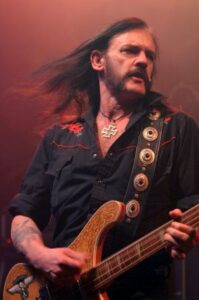
From wikipedia.org / © Mark Marek


Following the recent death of singer and guitarist Chris Rea, whose 1986 song Driving Home for Christmas has become something of a festive-season classic, a mate of mine observed that this was yet another example of a ‘musician who’s associated with a perennial Christmas song’ expiring at Christmastime.


To support his thesis, he mentioned George Michael (responsible for 1984’s Last Christmas and died on Christmas Day 2015) and Shane MacGowan (co-singer and co-writer of 1987’s Fairy Tale of New York and died on November 30th, 2023 – okay, not quite in the festive season but I’m sure the Christmas lights were already up in Dublin at the time).  Referencing the singers of Merry Christmas Everybody (1973) and I Wish It Could Be Christmas Every Day (1973) and the perpetrator of Mistletoe and Wine (1988) and Saviour’s Day (1990), my mate concluded, “…Noddy, Roy and Cliff better take extra care in Decembers to come.”


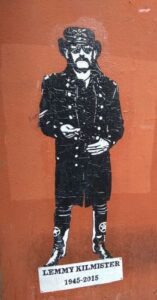
Well, today is the festive-season day of December 28th, 2025.  And it marks the tenth anniversary of the death of a titan of popular music: Lemmy, front-man with one of heavy metal’s most brilliant bands, Motörhead, and a general all-round role model for how to live your life (i.e. loudly, always disreputably and occasionally downright badly).


I was going to say that Lemmy’s passing at Christmastime disproves my mate’s theory that only the singers of Christmas songs die during this period.  But I’ve just checked and discovered that, though Motörhead never recorded a Christmas song, in 2008 Lemmy did get together with ZZ Top’s Billy Gibbons and the Foo Fighters’ Dave Grohl and made a cover version of Chuck Berry’s Run, Rudolph, Run (1958) for the same year’s album We Wish You a Metal Christmas and a Headbanging New Year.  (Google AI informs me the song’s vibe was ‘heavy, aggressive and sinister’.)   So maybe there’s something in it after all.


Anyway, Lemmy.  What an amazing career he had.  Legend has it that he managed the remarkable feat of being thrown out of Hawkwind for taking too many drugs – though more likely he was thrown out for taking the wrong sort of drugs, i.e., amphetamines, which the other, hallucinogenic-loving band-members looked down on.  He tried to teach Sid Vicious how to play bass (with a predictable lack of success).  He composed the greatest rock ‘n’ roll song ever, Ace of Spades (1980).  He also gave rise to the greatest joke ever – “If Lemmy had a fight with God, who would win?”  “It’s a trick question: Lemmy is God.” – which was funny because it was true.


Here, by way of a tribute to the great man, is a review of a Motörhead concert that I wrote back in 2008 for the University of East Anglia’s student newspaper, Concrete.  It’s an excitable and breathless piece of writing but, well, I had just been at a Motörhead concert.  Reading it now, I have a few regrets.  I should apologise to the late Ronnie James Dio – in the years since, I’ve come to realise I like ‘strutting spandex-clad idiots singing songs about elves and wizards’.  Plus, Ronnie was no idiot.


And obviously, I regret the fact that the prediction made in the final sentence didn’t come true.

*

MOTÖRHEAD

UEA, November 21st, 2008

If the Nobel Foundation in Stockholm ever creates a Nobel Prize for Heavy Metal, surely its first recipient will be Lemmy, singer, bassist and general driving force of Motörhead.


Founded in the 1970s, a decade when heavy metal consisted of strutting spandex-clad idiots singing songs about elves and wizards (e.g. Rainbow) or about their abilities in making vigorous love to the ladies (e.g. Whitesnake), Motörhead were a revelation.


Lemmy’s hoarse roar was stuck onto a racket of guitars played at the loudest possible volume and at the fastest possible speed, a sound that helped to spawn the speed and thrash metal sub-genres and supplied Metallica, Slayer, Anthrax and co. with at least 666 tons of inspiration.


Lemmy was also an early and crucial champion of Girlschool, the groundbreaking all-female metal band who helped the music to shed some of its reputation for sexism.  And in the segregated pre-grunge era, when heavy metal and punk fans weren’t supposed to associate with each another, Motörhead was the one metal band it was okay for punks to like.  Lemmy and the Sex Pistols’ Sid Vicious were good mates and he even tried to teach Sid how to play bass guitar – unsuccessfully, it must be said.


Taking the stage tonight after a short-but-well-received set from Toronto band Danko Jones and a ludicrous-but-loveable one from Saxon – ironically one of those hoary old-style metal bands that Motorhead helped to make obsolete – Lemmy, guitarist Phil Campbell and drummer Mikkey Dee went to work with their usual, blistering single-mindedness.  Old favourites like Bomber (1979) and Killed by Dead (1984) got blasted out alongside items from their new album Motörizer – though unsurprisingly the new stuff didn’t sound entirely different from the old stuff.


Apart from a blues pastiche where Lemmy displayed some unexpected harmonica-playing skills, this was business-as-usual in the best sense of the phrase.  Rounding off a perfect evening for the head-grinding crowd was an encore containing Ace of Spades, surely the most brain-batteringly brilliant song in heavy metal – and possibly in 7000 years of human civilisation as well.


The big heavy-metal news this week was that Guns n’ Roses had finally put out Chinese Democracy – an album so named because it’d taken so long to record that democracy could have feasibly come to China by the time of its release.   From tonight’s showing, however, Motörhead will be going strong long after China has taken over Wall Street, bought up Coca Cola and put a man on the moon.


From blabbermouth.net / © Pedro Alonso

What a Sigh is there


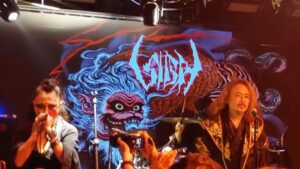
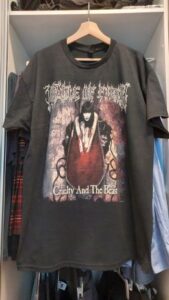
It was my birthday a while ago and my lovely mother-in-law sent me a batch of rock-music-themed T-shirts as a present.  One was emblazoned with the striking cover-illustration of the 1998 album Cruelty and the Beast by County Suffolk gothic / symphonic heavy metal band Cradle of Filth.  Cruelty and the Beast was a concept album inspired by the legendary 16th / 17th century Hungarian countess Elizabeth Bathory, who supposedly bathed in the blood of slaughtered virgins in an attempt to keep herself young-looking.  (Fittingly, the album featured narration by the late, great horror-movie actress Ingrid Pitt, who played Bathory in the 1971 Hammer film Countess Dracula.)  Anyway, I’d been waiting for an opportunity to wear this new T-shirt in public.  The opportunity arrived on October 16th, when Japanese black metal band Sigh performed at Singapore’s Phil Studio.


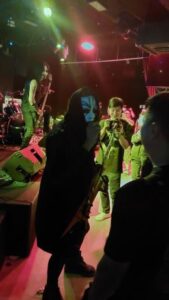
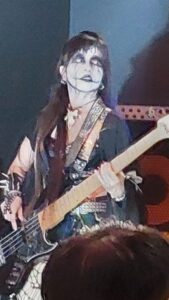
Actually, my T-shirt matched the macabre vibe established by the second support act, the Singaporean Tok Yathraa.  (I couldn’t get away from work early enough to catch the first support act, which was N3M3515 – read the numbers as letters – described intriguingly as a “one-man ChipDoom Project from Singapore, armed with a Classic Gameboy, combining elements from Sludge Doom and Hardcore.”)  Tok Yathraa is a black-shrouded, hooded, white-faced, rather Bergmanesque figure who, when interviewed on the Filthy Gods of Metal website, described himself as “a one-man band which started on 16th May 2020… heavily influenced by King Diamond, Mercyful Fate, Black Sabbath, Immortal, S.M. Salim, Judas Priest and Wings.”  It might come as a shock for the classic Malay singer S.M. Salim or, indeed, Paul McCartney’s Wings to find themselves included in such illustriously metallic company.  In the same interview, he called his music “bomoh metal, a fusion of black metal plus heavy metal plus focusing on subjects of local / Asia ghosts.”


Now fronting a three-piece band with a drummer and bass-player, Tok Yathraa put on a show that was simultaneously spooky and good fun, with his references to the ghosts and folklore of the Malay Peninsula nicely anticipating Halloween at the end of this month.  He went down well with the small but enthusiastic crowd whom, at the beginning of his set, he encouraged to stand close to the stage so that things felt more intimate.


Headliners Sigh also have roots in the sub-genre of black metal, which values shrieking vocals, hectic and distorted guitars and copious allusions to occult, Satanic and pagan skulduggery, and is essayed by corpse-painted and pseudonym-laden musicians.  Indeed, historically, Sigh’s black metal credentials are impeccable.  They formed in 1989, heavily inspired by the black metal scene becoming popular – and soon notorious – in Scandinavia.  A few years later, they were signed to the Norwegian label Deathlike Silence Records by Euronymous, co-founder of the band Mayhem.  Yes, Euronymous was the bloke who’d be stabbed to death in 1993 by Varg Vikernes, of the band Burzum, during a period when the Norwegian black metal scene went down some very dark roads indeed.


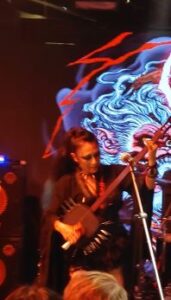
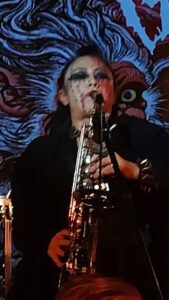
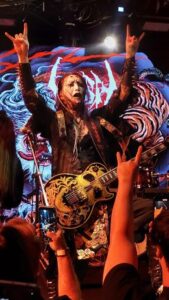
But in the three decades since – during which time, vocalist, keyboardist and bassist Mirai Kawashima has been the band’s leading light and one, enduring member – Sigh have also distinguished themselves with their willingness to experiment.  Their sound has incorporated elements from classical music, traditional Japanese music and elsewhere, so that it’s earned such epithets as ‘avant-garde’ and ‘progressive’.  Their eclectic-ness was certainly on display tonight.  For example, their second singer and multi-instrumentalist Dr Mikannibal – according to Google AI, she’s actually a professor with ‘a doctorate in physics form the University of Tokyo’ – played a shamisen at one point and a saxophone at another.  That was when she wasn’t pouring fake blood over her face from a goblet and shrieking sepulchrally.  All good, ghoulish fun, by the way.


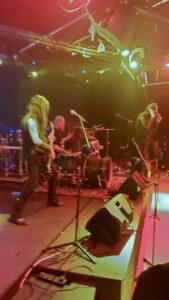
Their set – much of which was drawn from the 2007 album Hangman’s Hymn, which they re-recorded this year, and from the 2022 album Shiki – was a riot.  It contained enough of the band’s original black metal lodestone to keep headbangers in the audience happy but offered plenty of other elements to ensure the proceedings felt fresh and unpredictable.  The band’s look was great too.  It was obviously influenced by such Japanese things as manga, kabuki and ukiyo-e – the colourful woodblock prints from the Edo period – as well as by Tim Burton and the traditional corpse-paint and general gruesomeness of black metal.  I noticed how the guitarists had painted-on stitch-marks at the corners of their mouths, suggesting Kuchisake Onna, the fearsome slit-mouthed lady of Japanese urban myth.  Though I don’t know what the black mask (or was it black gunk?) covering the face of the drummer was meant to represent.  Anyway, he looked pretty fearsome too.


As I said, the crowd was relatively small, but the performers gave it their all.  There was a splendid vibe and I had a great night.  In my heavy metal live-music memories, this experience will be up there with seeing Megadeth (supported by Korn) in Chicago in 1995, or Motorhead (supported by Saxon) in Norwich in 2009.  It didn’t matter that the attendance wasn’t massive. I tried explaining this to Tok Yathraa, whom I encountered at the end of the evening, after Sigh had finished their set.  He looked slightly bemused by my enthusiasm.  Well, I’d had a few beers by then.


One thing did put a dampener on the evening, though.  Also after the gig’s end, I got talking to one of Phil Studio’s staff-members and learned from him that the venue will be closing down on November 2nd.  This is thanks to an economically lethal cocktail of ‘high operational costs, compliance burdens, regulatory red tape, and double standards’.  It comes in the wake of the closure two months ago of the Projector Cinema, a rare place in Singapore where you could get to see movies considered too niche to be shown in the city’s cineplexes.  Oh dear, Singapore.  If you keep on shedding your independent, alternative and idiosyncratic creative spaces like this, you’re going to end up as bland, corporate and culturally airless as Dubai…  Or indeed, Edinburgh (see here, here and here).


Acting the goat


When I was a teenager in the United Kingdom, I recall people of my parents’ generation rolling their eyes in disgust when the radio or TV played music made by and aimed at young people. They regarded the musicians as ‘uncouth’ and ‘disrespectful’ – the Sex Pistols, for example, fronted by a young Johnny Rotten, sneering their way through God Save the Queen, or Motörhead, fronted by a young Lemmy, growling their way through Ace of Spades – and the music itself as ‘just a racket’.  There was, these members of the older generation agreed, only one way to cure the malaise of delinquency and degeneracy that’d afflicted younger folk and turned them into noisy spiky-haired louts and noisy long-haired hooligans…


“National service!” they’d agree.  “Bring back national service!  That’d teach these young whippersnappers some manners!  That’d sort them out!”


Well, the existence of the Singaporean band Wormrot nullifies that argument.  They are evidence that national service may not be the antidote some think it is for curing society’s younger members of their urge to make loud, unruly and unholy music. For the band formed in the late 2000s immediately after its founding members, vocalist Arif Suhaimi, guitarist Rasyid Juraimi and drummer Fitri completed the two years of national service that Singapore requires of its young male citizens.   Having hung up their uniforms and become Wormrot, the trio dedicated themselves to the noisy subgenre of grindcore, which Juraimi once described in an interview as “a bastard child of punk and metal with less limitation.”


Wormrot have achieved some notable things.  They were the first Singaporean act to play at Britain’s Glastonbury Festival, in 2017, though they had to perform in unusually cramped conditions – their stage was inside a train carriage, with its seats removed, which’d been dubbed the ‘Earache Express’.  And they’ve supported the legendary Napalm Death.  Even people who’ve never listened to grindcore, and have no idea what it is, know the name ‘Naplam Death’.


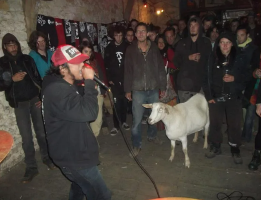
And fabulously, it was at one of their French concerts in 2012 that pictures of ‘Biquette the Grindcore Goat’ first went viral.  Biquette was, yes, a goat.  She was rescued from a milking factory and adopted by a communal farm, and she famously enjoyed being at the front of the crowd at heavy metal and punk concerts.


From disciplinemag.com


Yet things looked slightly bleak for Wormrot in recent years.  Fitri departed from the band in 2015, with Vijesh Ghariwala taking over the drumkit for the next nine years.  However, the band was less able to absorb the blow of losing vocalist Suhaimi in 2022.  They had to embark on a world tour using Gabriel Dubko (of the German band Implore) as a temporary, stand-in singer.  As a result, they arrived back in Singapore lacking the services of a full-time vocalist.


Happily, both Suhaimi and Fitri rejoined Wormrot in 2024, meaning the band has now reverted to its original line-up. The middle of this month saw them appear at an event with the self-explanatory title SG Metal Mayhem V, held at the Singaporean venue Phil Studio. Though Wormrot were the third of four bands on the bill, and thus weren’t the headliners, I suspect it was their presence that attracted the bulk of the local crowd – this was a chance to see the rejuvenated band back in business.


I couldn’t leave work until after SG Metal Mayhem V had started and unfortunately I missed the opening act, Microchip Terror, an artist who specialises in ‘electronic body horror music’.  I’ve listened to some of his stuff online and, to me, it seems an intriguing blend of Nine Inch Nails, synthy old John-Carpenter movie scores and death metal vocals.  I made it there in time to catch the second band, the Japanese outfit Kruelty who, their website claims, “find that sweet spot… of heavy beatdown hardcore and 90s American / Scandinavian death / doom metal…”  Kruelty’s vocalist Zuma (Kohei Azuma) was in fine growly form and their set was well-received.


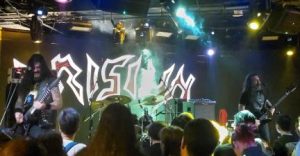
Also growly and well-received were the evening’s headliners, the veteran – on the go since 1990 – Brazilian death metal band Krisiun.  This outfit’s line-up consists of three brothers: vocalist and bassist Alex Camargo, guitarist Moyses Kolesne and drummer Max Kolesne.  When I think of bands containing three or more siblings, the Bee Gees, the Osmonds, the Jackson 5, Hanson and the Corrs spring to mind, but Krisiun are a wee bit less… genteel than that lot.  With their beards, long hair, denims and tattoos, they have an outlaw-ish / biker-ish vibe.  If Lemmy had ever played a warlord in a post-apocalyptic sci-fi movie – he was in one such movie once, but in a minor role – I could imagine this trio playing his phalanx of bodyguards.  Anyway, Krisiun delivered the goods at SG Metal Mayhem V, their aggressive vocals and brutal sound offset by some impressively virtuoso guitar-playing.


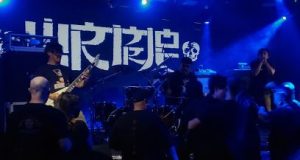
But before that, the crowd got to see – and certainly got to hear – local heroes Wormrot.  The cacophony they produced, and its pleasures, are best summed up by a comment about them I read on Reddit.  After attending a Wormrot gig, the writer “couldn’t hear the whole way home” and a ringing in his ears “didn’t go away for a couple days,” but… “It was fantastic.”  Yes, by standing within earshot of Juraimi’s manic guitarwork, and Fitri’s frenzied drumming, and Suhaimi’s inhuman screeching, you’re subjecting yourself to a massive sonic assault.  But the experience is strangely wonderful.


The delighted crowd showed their appreciation by forming a mosh-pit – though this being Singapore, it was a slightly less bone-juddering mosh-pit than in other metal gigs in other parts of the world.  It more resembled a demented conga-line.  There were also attempts at crowd-surfing, though these threatened to end up like Jack Black’s famously disastrous attempt to crowd-surf in School of Rock (2003).


And sweetly, I think I saw someone wearing a T-shirt emblazoned with the words Grindcore Goat.  Rest in Peace, Biquette.


Return to Ozz


From youtube.com / © BBC


My previous post was about the much-loved Ozzy Osbourne, singer with groundbreaking heavy metal band Black Sabbath in the 1970s, and an ultra-successful solo artist from the 1980s onwards, who died on July 22nd.  Here are my favourite dozen songs featuring Ozzy’s vocals.


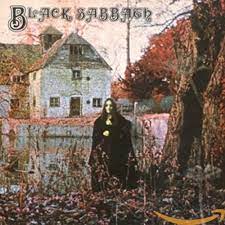
Black Sabbath (from 1970’s Black Sabbath)

The eponymous first song on Black Sabbath’s eponymous first album, this sets the tone for everything to follow.  It immediately establishes a horror-movie vibe, opening with rumbling thunder, sluicing rain and clanging altar bells.  Then the doomy chug of heavy guitars and the sepulchral wails of Ozzy’s voice kick in: “What is this that stands before me?  Figure in black which points at me-e-ee?”  Things eventually speed up for a tumultuous but still menacing climax.  (Unsurprisingly, guitarist Tony Iommi and bassist Geezer Butler were horror movie fans and their band’s name comes from a scary film, 1963’s Black Sabbath, directed by the legendary Mario Bava and starring the equally legendary Boris Karloff.)


Incidentally, I like how Ice T uses Black Sabbath for his 1989 track Shut Up, Be HappyHe retains the song’s ominous music but replaces Ozzy’s vocals with the voice of Jello Biafra from the Dead Kennedys, intoning about how America has just been put under martial law: “All constitutional rights have been suspended.  Stay in your homes.  Do not attempt to contact loved ones, insurance agents or attorneys.  Shut up!”  Depressingly, Shut Up, Be Happy is more relevant than ever in 2025.


Meanwhile, for a proper cover version of Black Sabbath, I’d recommend the one by goth-metal band Type O Negative on 1994’s Nativity in Black: A Tribute to Black Sabbath, a collection of Sabbath covers whose other contributors include White Zombie, Therapy?, Corrosion of Conformity and Faith No More.  It’s not the most the adventurous of covers, but the late Peter Steele’s vocals are suitably foreboding.


© Vertigo / Warner Bros.


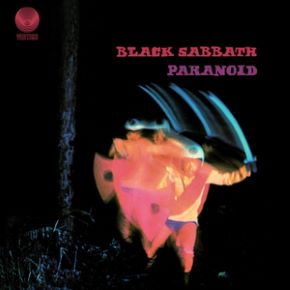
Iron Man (from 1970’s Paranoid)

Much loved by Beavis and Butthead, this is the most remorseless and skull-crushing of Sabbath songs.  It’s about a man who travels into the future, witnesses the apocalypse, gets turned to steel, then returns to the present to warn humanity but is ridiculed and shunned because he’s now a metallic freak: “Is he alive or dead? Has he thoughts within his head?  We’ll just pass him there…  Why should we even care?”  So, what does he do?  He engineers the apocalypse he foresaw: “Heavy boots of lead, fills his victims full of dread…”


I’ll make a confession here.  Back in my drunken-asshole student days, I arrived home from the pub one Saturday night and, with one of my flatmates, also a drunken-asshole student, we made a bet while we played the album Paranoid on the flat’s stereo.  If we played it at full volume, during which song would another flatmate, a clean-living, go-to-bed-early type, finally lose it, jump out of bed, fling open the door of his room and scream at us to turn it down?  You guessed it.  While Ozzy was hollering about Iron Man being turned to steel in the great magnetic field, the door of that flatmate’s room swung back and a voice bellowed: “WOULD YOU TURN THAT DREADFUL RACKET DOWN?”


War Pigs (from Paranoid)

A lamentation against war and those who orchestrate it, War Pigs is a reminder that Black Sabbath’s members were youths during the late 1960s when the pacifistic hippy movement was on the go.  This being Sabbath, though, War Pigs dwells bitterly on war’s violence and hatred rather than try to counter it with calls for peace and love.  It’s a long song, just under eight minutes, yet short on lyrics – the word-count is less than 150.  But oh, what words: “Generals gathered in their masses, just like witches at black masses…  In the fields, the bodies burning, as the war machine keeps turning…”


This song has seen several notable cover versions.  Judas Priest did an impeccably metallic rendition of it – I also like the accompanying video, wherein Priest-frontman Rob Halford stomps about the stage like a farmer in wellies trying to negotiate a boggy field.  A funked-up version of it impressively closes the 2023 album On Top of the Covers from singer / rapper T-Pain.  But for a reworking of War Pigs that’s splendidly ‘out there’, yet retains the original’s drive and power, you can’t beat what the ‘Ethiopian Crunch Music’ band Ukandanz did to it.  They replaced Tony Iommi’s guitar with a saxophone and sang it in Amharic.


© Vertigo / Warner Bros.


Planet Caravan (from Paranoid)

The sublimely dreamy and trippy Planet Caravan has been described as ‘the ultimate coming-down song’.  Well, if the stories about how Ozzy and the rest of Black Sabbath were behaving at the time are true, they certainly needed a good coming-down song.  To augment the faraway sound, Ozzy sang through a Leslie speaker during the recording, which gave the impression he was warbling the lyrics underwater.


There’s a mellow cover of Planet Caravan at the end of Pantera’s less-than-mellow 1994 album Far Beyond Driven.  Indeed, Pantera performed Planet Caravan at the Back to the Beginning concert, Ozzy’s farewell show staged in Birmingham just two-and-a-half weeks before he died.


Children of the Grave (from Master of Reality)

Master of Reality is possibly Black Sabbath’s heaviest and doomiest-sounding album.  Its best track, Children of the Grave, has an urgent, unsettling sound that suggests creepy, occult-flavoured goings-on.  That feeling is increased by the song’s horror-movie-like title and the way it’s whispered sinisterly during the coda.  But if you listen properly to the lyrics, you discover it’s not about the supernatural at all.  It’s really another anti-war song, like War Pigs: “Must the world live in the shadow of atomic fear?  Can they win the fight for peace, or will they disappear?”


Supernaut (from 1972’s Vol. 4)

The exuberant Supernaut might be, as the lyrics suggest, about a man trying to find “the dish that ran away with the spoon” or “the crossing near the golden rainbow’s end”.  Or it might be about, you know, substances.  Of which, by then, the band were taking a lot.


For a cracking (and funny) cover version of this song, look no further than the one by 1000 Homo DJs (actually a side-project of the industrial rock band Ministry) which retains the original’s insane jauntiness while spicing it up with a solemn 1960s voice intoning about the dangers of taking acid.  For my money, this is the best track on Nativity in Black: A Tribute to Black Sabbath, basically because it’s not afraid to try something different.


© Vertigo


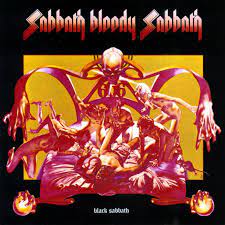
Sabbath Bloody Sabbath (from 1973’s Sabbath Bloody Sabbath)

What can I say?  This is my all-time favourite Black Sabbath song – ever, ever, ever.


Symptom of the Universe (from 1974’s Sabotage)

It could be argued that the hectic, exhilarating Symptom of the Universe is a track that helped invent punk rock.  And if it didn’t, it surely helped invent thrash metal.  Fittingly, the Brazilian thrash metallers Sepultura do a nifty version of this song, which again can be found on Nativity in Black: A Tribute to Black Sabbath.


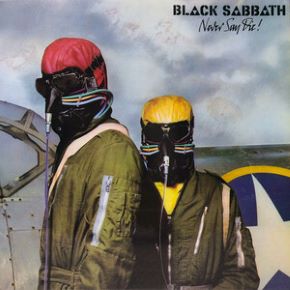
Never Say Die (from 1978’s Never Say Die)

By 1978 the writing was on the wall for Ozzy Osbourne’s association with Black Sabbath.  He’d already quit the band briefly (and been replaced, equally briefly, by singer Dave Walker) and Never Say Die would be the final Ozzy-fronted Black Sabbath album until 2013’s 13.  Thus, it was recorded under strained circumstances.  Never Say Die was badly received at the time, and nowadays it’s fashionable to write it off as Ozzy-era Sabbath’s last, perfunctory gasp.  But, if you can handle the ‘jazz inflections’, it’s not a bad album – just different.  As the Guardian once said of it, “it’s a quirky and enjoyable record, as long as you don’t expect Sabbath Even Bloodier Sabbath.”


And the title track is a stormer.  Ozzy delivers it so directly and defiantly he could be fronting a garage band.


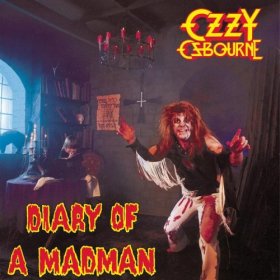
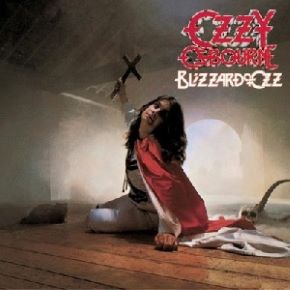
Crazy Train (from 1980’s Blizzard of Ozz)

The second track off Ozzy’s first solo album, this has a cleaner, nimbler guitar sound – courtesy of tragically short-lived guitarist Randy Rhoads – that’s in keeping with the mainstream American glam-metal aesthetic that, for a while, dominated heavy metal in the 1980s.   The lyrics begin wholesomely – “Maybe it’s not too late to learn how to love and forget how to hate” – but by the chorus we’re getting a probable summation of Ozzy’s mental state at the time: “Mental wounds not healing, life’s a bitter shame, I’m going off the rails on a crazy train!”  (It wasn’t until 1982 that he’d marry the formidable Sharon Arden, the woman who’d, eventually, clean him up, sort him out and reinvent him as an amiable, reality-TV dad.)


© Jet Records


That same year, the now Ozzy-less Black Sabbath released Heaven and Hell, their first album with Ronnie James Dio on vocals.  1980 was also when I entered the ‘senior school’ – fifth and sixth year – at my high school.  One of the perks of this was that the senior pupils had their own common room in the school basement, with a record player and loudspeakers.  For a few, ear-bleeding months, Blizzard of Ozz and Heaven and Hell were never off that record player.


Mr Crowley (from Blizzard of Ozz)

I don’t think Ozzy had acquired the moniker the ‘Prince of Darkness’ yet.  However, aware that darkness was part of his schtick, he included this song on Blizzard of Ozz – a paeon to the English occultist Aleister Crowley.  Depending on your point of view, Crowley was truly the Wickedest Man Alive or was a piss-taking libertine who enjoyed terrorising genteel, respectable British society with exaggerated tales of his diabolism.  The song is launched in melodramatic fashion by the organ-tones of keyboardist Don Airey, but Ozzy sings it with agreeable wistfulness: “Your lifestyle to me seemed so tragic with the thrill of it all.  You fooled all the people with magic.  Yeah, you waited on Satan’s call…”  


For a really over-the-top version of Mr Crowley, check out this effort by Cradle of Filth.


Thereafter, Ozzy would put out a dozen more solo albums.  The best that can be said about them is that they’re variable in quality.  But their highlights are certainly better than anything on the seven albums Black Sabbath released during the same period that had neither Ozzy nor Ronnie James Dio singing on them.


And obviously…  Paranoid (from Paranoid)

Yes, I’m glad this was what Ozzy sang at the very end of his farewell concert earlier this month.  There was no better way to bow out.


© Vertigo

Adi-Ozz amigo


From wikipedia.org / © Ted Van Pelt


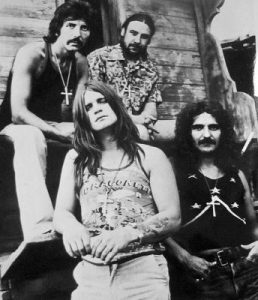
The Prince of Darkness has gone dark.  I was saddened to hear of the passing of Ozzy Osbourne, singer with legendary heavy metal band Black Sabbath, on July 22nd for two reasons.


Firstly, Ozzy’s eerie, high-pitched, alien-sounding vocals were the perfect accompaniment for the crunching, doom-laden guitars and drums of his Black Sabbath compadres, guitarist Tony Iommi, bassist Geezer Butler and drummer Bill Ward.  Their rumbling, abrasive sound evoked the heavy machinery in the factories where the working-class quartet found employment as youths and where they would have spent their lives had they not hit the bigtime with their music.  Indeed, Iommi’s time in a steelworks ended with an accident that sheared off two of his fingertips and nearly ruined his budding career as a guitarist.  Ozzy didn’t fare much better, beginning work as a toolmaker’s apprentice and cutting off the top of his thumb on his first day on the job.


It was also a sound that was massively influential.  As I wrote on this blog a couple of years ago, Sabbath’s influence is “all over musical movements like grunge and hardcore punk.  And they’re clearly major influences on such metallic sub-genres as black metal, doom metal, goth metal, power metal, sludge metal, speed metal and stoner metal.  Indeed, they’re responsible for more metal than the Brummie steelworks where the young Tony Iommi lost his fingertips and almost lost his future in music.”


From wikipedia.org / © Warner Bros. Records


Secondly, when I heard of Ozzy’s death, I felt like I’d lost a crazy, shambolic but lovable uncle.  Yes, he styled himself as the Prince of Darkness – or at least, his manager-wife Sharon Osbourne did, realising how lucrative his mad-bad-and-dangerous-to-know brand was.  And in the 1980s he was a bête noir among Christian American parents and there were unsuccessful attempts to sue him for, it was alleged, causing two young men to kill themselves after they’d listened to his song Suicide Solution from his first solo album Blizzard of Ozz (1980).  And during his young, hellraising years, it certainly sounded like the drink and drugs turned him into a psycho at times.  But once he reached middle-age, he became an amiable, if hapless, teddy bear of a man.  He was also a superstar devoid of airs and graces.  No doubt the tough, unpretentious start to life he’d had in Birmingham helped keep his feet on the ground.


And, fabulously, he never lost his Brum accent.  “Oi’m the Prince of Dawkness!” drunkards would cry in pubs the world over, whenever his name came up in conversations.


His everyman image received a further boost when he, wife Sharon and kids Jack and Kelly featured in Emmy-winning reality show The Osbournes (2002-05).  While I have to say I found the other members of his family an acquired taste, Ozzy was wonderful just for being himself.  Millions of men like me, watching the show as they entered both middle-age and the 21st century, surely sighed wistfully as they recognised themselves in Ozzy’s failing efforts to control the environment around him.  Failing to control his offspring.  Failing to control his pets – I remember him accusing one recalcitrant dog of being “worse than Bin Laden.”  Failing to control the technological gadgets in his house.  “I’m a very simple man,” he ranted at one point. “You’ve got to have, like, computer knowledge to turn the f**king TV on and off… I press this one button and the shower starts going off…”


No doubt it was Ozzy’s lack of guile that led him, in his younger days, to being an absolute disaster in terms of boozing and drug-taking.  His behaviour resulted in him being sacked from Black Sabbath at the end of the 1970s, though Ozzy claimed he was no worse a state than the other three band-members were at the time.  Still, it must have been difficult working with a man given to such antics as snorting a line of ants in the mistaken belief they were a line of cocaine, or getting arrested for urinating over the Alamo whilst wearing a frock.  “Son,” a member of the San Antonio police force told him gravely, “when you piss on the Alamo, you piss on the state of Texas.”


My favourite story from Ozzy’s wild years was one that happened after he’d returned to England from America, where he’d been making the 1972 Black Sabbath album Vol. 4 and where he’d also developed a taste for LSD.  “I took 10 tabs of acid, then went for a walk in a field.  I ended up standing there talking to this horse for about an hour.  In the end the horse turned round and told me to f**k off.  That was it for me.”


A lifetime of drugs, alcohol, excess and idiocy did nothing for Ozzy’s health and, more recently, he was beset by health issues: Parkinson’s disease, neck and spine surgery, depression, blood clots, nerve pain.  At Christmas 2016, after the news that George Michael and Status Quo’s Rick Parfitt had died within the space of 24 hours, a friend emailed me worriedly and said, “At this rate Ozzy’s not going to make it to the Bells.”


Happily, Ozzy made through nine more Bells.  He also made it to Back to the Beginning, his farewell concert held at Birmingham’s Villa Park on July 5th this summer.  The bulk of this consisted of performances by a dazzling range of heavy metal bands who might never have seen the light of day if Black Sabbath hadn’t set the ball rolling for their genre in 1970 – Mastodon, Anthrax, Lamb of God, Alice in Chains, Gojira, Pantera, Tool, Guns N’ Roses, Slayer, Metallica and others, plus two guest-ridden ‘superstar’ bands assembled by the event’s musical director, Rage Against the Machine’s Tom Morello.  The event climaxed with a five-song solo set by Ozzy and then a four-song set by the original Black Sabbath line-up of him, Iommi, Butler and Ward, playing together for the first time since 2005.


Back to the Beginning’s 45,000 tickets sold out in 16 minutes.  It also raised 140 million pounds for charity.  Rather prophetically, Ozzy said of the concert a couple of months before it happened: “I’m going to make this f**king gig if it’s the last thing I do.  Well, it will be…”


He died just 17 days afterwards.  His life was chaotic but, at the very end, his timing was impeccable.


From wikipedia.org / © Jet Records

Happy World Goth Day 2025


From unsplash.com / © Maryam Sicard


It’s May 22nd, which a quick check on Google informs me is Sherlock Holmes Day, Harvey Milk Day, International Day for Biological Diversity, Buy a Musical Instrument Day, and, thirst-quenchingly, both Chardonnay Day and National Craft Distillery Day.  But most interestingly for me, in honour of the planet’s spookiest and blackest-clad musical sub-culture, it’s World Goth Day.


With that in mind, here are YouTube links to a dozen Goth tunes that I’ve been listening to recently.  Be prepared, though, for a few annoying YouTube ads for fast-food outlets, perfumes and designer footwear before you get to the delights of the music itself.
 

First off… I knew nothing about Sidewalks and Skeletons before I stumbled across this number, Born to Die, on YouTube a little while ago.  According to a Google search, “Sidewalks and Skeletons is the solo project of UK artist of Jake Lee, who grew up in Bradford, England”.  Lee was at one time a deathcore guitarist but during the past two decades has been attracted more by ‘dark electronic music.’  Anyway, as well as being an impressive (if rather intense) listening experience, Born to Die comes with a video that’s a memorable amalgamation of epileptic-seizure-inducing lighting effects and quaint-but-creepy clips from some old, black-and-white silent movies.


Here’s a song called Edison’s Medicine by the San Francisco band In Letter Form.  A track on their 2016 album Fracture Repair Repeat, it manages the tricky feat of sounding a bit like late 1970s legends Joy Division, whilst having enough personality of its own to also sound like something other than a song by Joy Division.  (There’s a whole sub-genre of bands out there who sound like Joy Division and nothing else – I’m looking at you, Editors – a sub-genre I like to call ‘Joy Revision’.)  Anyway, it’s great  The only thing to sour the experience of hearing its melancholy gorgeousness is knowing that, tragically, the band’s singer Eric Miranda passed away the same year it was released.


© Sacred Bones Records


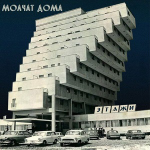
And there’s a pleasant (but again not too derivative) Joy Division vibe running through my next choice, Cyaho, by the Belarussian band Molchat Doma.  It appears on their 2018 album Etazhi.  Popular belief has it that Goth music evolved in wintry, out-of-way cities in northern England in the Margaret Thatcher-dominated 1980s.  So perhaps it’s unsurprising that a similar sound emerged from Minsk, the wintry (during the coldest months its temperature drops to minus seven degrees) out-of-the-way capital of Alexander Lukashenka-dominated Belarus.  Though apparently, they’re now based in Los Angeles.


If all this Joy Division-influenced music is making you feel glum, here’s the cure.  I mean it.  Here’s the Cure.  In 2000 Robert Smith and co. released their eleventh studio album Bloodflowers, which was greeted by some snotty reviews in the music press.  “Goth-awful!” exclaimed the now-defunct Melody Maker, hilariously.  What a lot of nonsense.  Bloodflowers is a great Cure record.  Incidentally, it’s currently the album I listen to most on my elderly iPod while I subject my equally elderly bones and joints to a workout in my local gym.  And the very best thing on it is the second track, Watching Me Fall, a mighty, majestic thing indeed.  It’s like listening to a Gothicised version of a relentless Led Zeppelin stomper such as When the Levee Breaks (1971) or Kashmir (1975).
 

My next song is Troops by London-based singer Grace Solero and her eponymous band.  It originally appeared on their first album, New Moon, in 2009.  I don’t know if Ms. Solero would be pleased to be described as a purveyor of Goth music, but there’s an amount of witchy darkness here, though mixed with some radiant, soaring moments too.  In fact, it’s the song’s polarities – its rawness and tenderness – that appeal to me.


There was a time when Australian singer-songwriter Nick Cave, famous for performing with his band the Bad Seeds and for once fronting the raucous punk-Goth outfit the Birthday Party, seemed a Jekyll and Hyde character.  Sometimes you’d get Nice Nick, singing gentle, pretty songs like Into My Arms (1997) that you ‘d happily let your granny listen to.  Yet you’d also get Nasty Nick, responsible for such sonic assaults as Stagger Lee (1996) where Cave hollered about slobbering on people’s heads and filling them full of lead while Blixa Bargeld shrieked apocalyptically in the background, which you’d only let your granny listen to if you wanted her to die so you could inherit her money.
 

© Mute Records


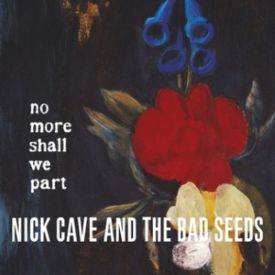
Some have lamented the fact that as he’s grown older, Nice Nick has come to dominate Cave’s musical output while Nasty Nick has mostly disappeared.  But I just go with the flow…  Here’s an example of what I consider Nice Nick at his best, the ballad Sweetheart Come from 2001’s No More Shall We Part.  I can’t understand why it hasn’t received more attention, praise and love as I think it’s a marvellous song.  Though the lyric “And if he touches you again with his stupid hands / His life won’t be worth living” suggests a smidgeon of Nasty Nick lurking in the mix.
 

As someone who’s also a fan of heavy metal, I should enjoy the crossover of it and Goth music known as ‘gothic metal’.  But with a few exceptions, such as County Suffolk’s awesome Cradle of Filth, the bands don’t appeal to me.  HIM, the Rasmus, Nightwish, Charon, Unshine…  Their music seems all a bit too tasteful and pretty for my tastes, and the ones with female singers appear to be doing their best to sound like Evanescence, a very successful band who never floated my boat.  Plus they all seem to come from Finland – is being a member of a gothic-metal band a prerequisite for getting Finnish citizenship?


However, here’s one Finnish gothic-metal outfit I do like, the melodramatically-named Eternal Tears of Sorrow.  This song, Sweet Lilith of My Dreams, the opening track on their 2006 album Before the Bleeding Sun, begins daintily enough, before gathering speed and volume.  It’s just a shame that Eternal Tears of Sorrow announced their disbandment three months ago.


And just to show there are gothic-metal bands with female singers whom I like too, here’s Lacuna Coil, from Italy (not Finland).  Two years ago, Lacuna Coil played a gig in my current city of residence, Singapore, and I’m still annoyed at myself for missing the opportunity to see them then.  This song, Blood, Tears, Dust, from their 2016 album Delirium, nicely combines the operatic vocals of their singer Christina Scabbia with the growlier and more traditionally-metallic tones of their other singer, Andrea Ferro.  And musically, it rattles along.


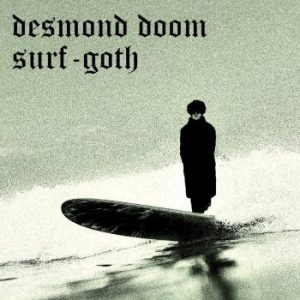
That’s enough about gothic metal.  Now it’s time for another hybrid – Goth music blended with twangy surf music.  The song in question is from the 2022 EP Surf-Goth by Melbourne artist Desmond Doom and its called Get Me Out.  Actually, the dark sounds and dark sensibilities mixed with springy surf guitars put me in mind of some earlier efforts by feedback-loving alternative rockers the Jesus and Mary Chain.  (If Jim and William Reid knew I had mentioned the Jesus and Mary Chain in a piece about Goth music, they would probably come around to my house and kill me.  So don’t tell them I did that.)


© Desmond Doom Music


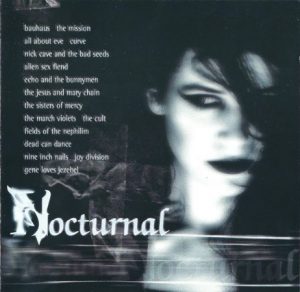
Come to think of it, though, back in 1998 I bought a Goth compilation album called Nocturnal, which had two Jesus and Mary Chain tracks on it…  And also on that album, near the end, was my next choice, Big Hollow Man by the singer, producer and artist Danielle Dax.  I thought the song  was charming, even though it seemed lighter and poppier than most other stuff on the record.  But should anyone doubt Ms. Dax’s credentials for appearing in a list of Goth tunes, I’ll point them to the fact that in 1984 she played the wolf-girl in Neil Jordan’s masterly film adaptation of Angela Carter’s short story The Company of Wolves (1979).  There’s nothing Gothier than that.


I’ve described the veteran band Killing Joke in the past as a ‘Goth / industrial juggernaut’ with a ‘crunching, thunderous urgency’.  The next song, I am the Virus, from Killing Joke’s 2015 album Pylon, does nothing to make me change my opinion of them.  With its Beatles-baiting title, it takes retrospective aim at George Bush Jr, Tony Blair, the War on Terror, the second Iraq War et al: “There’s a darkness in the West,” roars singer Jaz Coleman, “oil swilling guzzling corporate central banking mind-f**king omnipotence.”  I suppose in 2015 Bush and Blair’s catastrophic intervention in the Middle East seemed the worst thing that could ever happen.  Mind you, since then…  According to their Wikipedia entry, the band have been ‘inactive’ since the death of guitarist Geordie Walker in 2023.  But now, in this dire era of Trump II, I feel we need them more than ever.


Finally, here’s Dead Can Dance, another band who combine Goth music with something else – in their case, ‘world music’, the patronising catch-all term Westerners use to describe traditional music from non-Western countries.  Dead Can Dance have been mixing genres enthusiastically since 1996’s Spiritchaser, although on this song, Amnesia, from the band’s 2012 album Anastasis, the world-music elements are less in evidence.  Well, apart from the insistent chime of band-member Lisa Gerrard’s yangqin, which Wikipedia describes as a ‘Chinese hammered dulcimer’.  Whatever, Amnesia is both a stirring and a wonderfully-mellow composition and it makes a good item with which to end this list.


Happy World Goth Day 2025!


© Procreate

My safe space


The world is in a terrible state at the moment.  It’s apparently morphing into a real-life version of the scenario imagined by George Orwell’s 1984 (1949), wherein the planet is divided into three authoritarian superstates, Eurasia, Eastasia and Oceania.  We now have Russia run by Vladimir Putin, China run by Xi Jinping, and the USA run by the grotesque triumvirate of orange gobshite Donald Trump, viper-in-hillbilly-form J.D. Vance, and the chainsaw-wielding, ketamine-popping, Seig Heiling, superrich super-dickhead Elon Musk.  All three countries have been open about their territorial ambitions, about their wish to expand and become real-life, continent-engulfing equivalents of Eurasia, Eastasia and Oceania.  Very bad news if you live in Ukraine, Poland, the Baltic states, Taiwan, Panama, Greenland or Canada.  Pretty bad news for the rest of us.


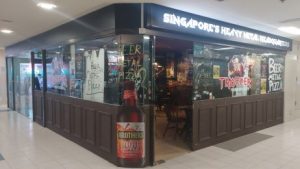
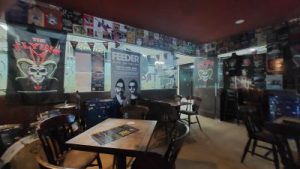
Thus, in these troubled times, it’s a relief to have a safe space: a little cubby hole you can retreat to, and hide in, and where your brain can function removed from all the awfulness happening outside for a while.  For me, that space is provided by the Flying V bar, Singapore’s self-styled ‘heavy metal headquarters’, which is hidden away in a back corridor in the basement of the Adelphi Shopping Centre on the city’s Colman Street.  Actually, the shopping centre is next door to the National Gallery, which makes the Flying V an ideal spot to sit with a beer after a visit to the gallery and ruminate on all the artwork you’ve just experienced.


A Singaporean shopping centre may seem an incongruous place to find a heavy metal bar.  However, it isn’t the only music or metal-related business in the Adelphi.  On your way there, you pass a few units containing shops that sell vinyl records, many of the heavy-metal variety.


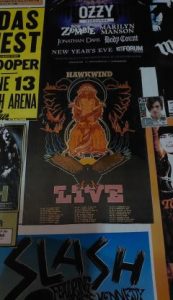
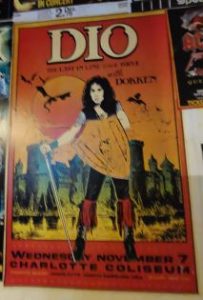
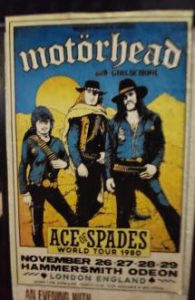
Inside, the walls of the Flying V are slathered with old posters and flyers advertising heavy-metal bands, concerts and festivals.  Even if you don’t touch a drop of alcohol, you can spend a pleasant hour in the place just reading the items crammed over the walls and enjoying the little glows of nostalgia they kindle in you.  On my part, for example, I gave happy sighs when I discovered an Art Nouveau-inspired poster for the mighty space-rock band Hawkwind, designed by the graphic artist Barney Bubbles; a picture of the late, great Ronnie James Dio tricked out in sword-and-sorcery gear, as was Ronnie’s wont to wear; and a poster for the much-missed Motörhead on their 1980 world tour, promoting their greatest-ever album Ace of Spades.


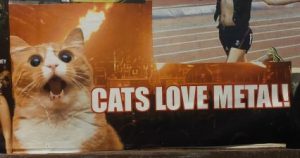
On the other hand, when I took my cat-loving partner there, she was delighted to find this proclamation about the feline species emblazoned on the wall behind our table.


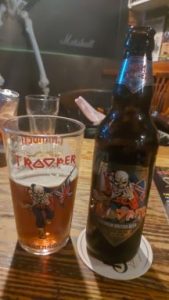
The Flying V’s drinks menu includes a beverage called Trooper Premium British Beer.  Trooper’s vivid label-design gives you a clue as to who produces it.  Yes, it’s the result of a project involving veteran heavy-metal band Iron Maiden, singers of such anthems as Number of the Beast (1982) and Bring Your Daughter to the Slaughter (1990).  The latter song will always be close to my heart because of the fact it knocked Cliff Richard’s sanctimonious Saviour’s Day (1990) off the coveted Christmas Number One slot in the 1990 British singles chart.  The band produce Trooper in partnership with England’s Robinson’s Brewery.  So, if you spend an afternoon getting sloshed on the stuff in the Flying V, you’re not being wasteful or unproductive.  You’re actually helping to fund Iron Maiden.


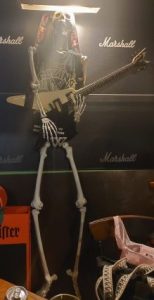
As I’ve said, the world is in a dire state just now and it sometimes feels tempting to retreat into the Flying V and hole up there for good.  However, the place does contain a warning against staying on the premises for too long.  You might end up like this guy.


A marriage made in Deafheaven


San Francisco band Deafheaven performed at the Ground Theatre in Singapore’s *SCAPE installation on Monday, July 15th.  I was introduced to their music several years ago when I heard their acclaimed 2013 album Sunbather.  Some have categorized Deafheaven’s sound as ‘blackgaze’.  This means it combines the screeching vocals and apocalyptic edge of black-metal music – the subgenre that began in the 1980s with the likes of Bathory, Mercyful Fate and Newcastle-upon-Tyne’s greatest-ever metal band Venom, and gained notoriety in the 1990s with Norwegian black-metal bands like Burzum and Emperor, some of whose members were not adverse to burning down churches and murdering each other – with the more reflective, swirly, dreamy sound of the 1980s shoegaze movement that embraced bands like Ride, Lush, Slowdive, Chapterhouse, Swervedriver and the masterly My Bloody Valentine.


Initially, I have to admit, that sounded to me like a marriage made in hell.  However, when I listened to Sunbather, I was pleasantly surprised.  I found its songs intense but also captivating.


© Sargent House


Fast-forward eight years to 2021, and Deafheaven released their fifth and most recent album Infinite Granite.  This took the bold step of toning down the black-metal element in their sound, with singer George Clarke providing ‘clean’ – i.e., non-growly – vocals, and emphasizing the shoegaze component.  Infinite Granite got some excellent reviews in mainstream outlets.  In the Guardian, for instance, it was given a five-star rating and praised as ‘rock at its most majestically beautiful’.  However, not all of the heavy-metal world was taken with its less abrasive approach.  In his monthly roundup Columnus Metallicus in The Quietus, for example, Kez Whelan described it as Deafheaven’s “most drab, soulless outing yet, a conveyor belt of clean, perfectly pleasant but entirely unexciting jangle pop that sounds uncannily like an assortment of American Football B-sides.”  Ouch.  You spurn heavy metal at your peril.


Anyway, not knowing what to expect, I went to the Ground Theatre on Monday evening.  The venue was surprisingly cavernous, with a high ceiling, and though the gig was sold out the premises looked like they could have accommodated a bigger crowd.  The disparate elements in Deafheaven’s sound was mirrored by the variety of T-shirts being worn by the audience.  In addition to the bog-standard heavy-metal T-shirts (like Slayer), I saw Goth (Siouxsie and the Banshees), electronica (Crystal Castles) and, yes, shoegaze ones (Slowdive).  Though I’m not sure what the lady in the Heart T-shirt was expecting.


The support band tonight was a Singaporean outfit called Naedr, who allowed me to sample another hybrid subgenre I’d heard about, but never before experienced live – they proclaimed themselves a screamo band.  Screamo, according to Wikipedia, “is an aggressive subgenre of emo… strongly influenced by hardcore punk.”  To be honest, Naedr sounded pretty metallic to my ears.  But I enjoyed them.


Before the main attraction came onstage, I tried to position myself appropriately – close enough to the stage to get a decent view of the band and feel the full force of their music, but not so close that I got sucked into any moshing that might break out among the more excitable spectators at the front.  I have nothing against moshing, but I’m a frail old man now and my body can’t handle such violence.


And then Deafheaven’s five members emerged into the stage-lights and got down to business.  It was an impressive performance, helped a lot by George Clarke’s antics as front-man.  He leered, glared, pointed and gesticulated fiercely at the audience, looking rather like the actor Matthew McConaughey – a younger, messianic and rather demented version of him.


The first part of their set consisted of older numbers, including Sunbather, the title song from their groundbreaking 2013 album.  I should say that when they started playing material from Infinite Granite, namely the songs In Blur and Great Mass of Colour, and Clarke’s shrieking black-metal vocals suddenly gave way to conventionally sung ones, the tonal shift was jarring.  But I found their new stuff as hypnotic as their old stuff.  It was a gig where it was best to switch off your forebrain and simply immerse yourself in the tide of noise advancing out of the speakers.  That was true of both the more aggressive and the less aggressive songs in the band’s repertoire.


And, though I didn’t hear anyone in the crowd complaining afterwards, it was probably sensible that they kept the hardcore metallers happy by ending the gig with Dream House – the stormer that was the opening track on Sunbather back in 2013 and that first marked Deafheaven as a band to take notice of.