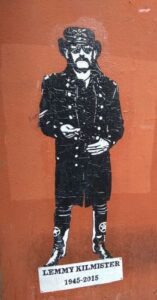
10 years ago, Lemmy was killed by death


From wikipedia.org / © Mark Marek


Following the recent death of singer and guitarist Chris Rea, whose 1986 song Driving Home for Christmas has become something of a festive-season classic, a mate of mine observed that this was yet another example of a ‘musician who’s associated with a perennial Christmas song’ expiring at Christmastime.


To support his thesis, he mentioned George Michael (responsible for 1984’s Last Christmas and died on Christmas Day 2015) and Shane MacGowan (co-singer and co-writer of 1987’s Fairy Tale of New York and died on November 30th, 2023 – okay, not quite in the festive season but I’m sure the Christmas lights were already up in Dublin at the time).  Referencing the singers of Merry Christmas Everybody (1973) and I Wish It Could Be Christmas Every Day (1973) and the perpetrator of Mistletoe and Wine (1988) and Saviour’s Day (1990), my mate concluded, “…Noddy, Roy and Cliff better take extra care in Decembers to come.”


Well, today is the festive-season day of December 28th, 2025.  And it marks the tenth anniversary of the death of a titan of popular music: Lemmy, front-man with one of heavy metal’s most brilliant bands, Motörhead, and a general all-round role model for how to live your life (i.e. loudly, always disreputably and occasionally downright badly).


I was going to say that Lemmy’s passing at Christmastime disproves my mate’s theory that only the singers of Christmas songs die during this period.  But I’ve just checked and discovered that, though Motörhead never recorded a Christmas song, in 2008 Lemmy did get together with ZZ Top’s Billy Gibbons and the Foo Fighters’ Dave Grohl and made a cover version of Chuck Berry’s Run, Rudolph, Run (1958) for the same year’s album We Wish You a Metal Christmas and a Headbanging New Year.  (Google AI informs me the song’s vibe was ‘heavy, aggressive and sinister’.)   So maybe there’s something in it after all.


Anyway, Lemmy.  What an amazing career he had.  Legend has it that he managed the remarkable feat of being thrown out of Hawkwind for taking too many drugs – though more likely he was thrown out for taking the wrong sort of drugs, i.e., amphetamines, which the other, hallucinogenic-loving band-members looked down on.  He tried to teach Sid Vicious how to play bass (with a predictable lack of success).  He composed the greatest rock ‘n’ roll song ever, Ace of Spades (1980).  He also gave rise to the greatest joke ever – “If Lemmy had a fight with God, who would win?”  “It’s a trick question: Lemmy is God.” – which was funny because it was true.


Here, by way of a tribute to the great man, is a review of a Motörhead concert that I wrote back in 2008 for the University of East Anglia’s student newspaper, Concrete.  It’s an excitable and breathless piece of writing but, well, I had just been at a Motörhead concert.  Reading it now, I have a few regrets.  I should apologise to the late Ronnie James Dio – in the years since, I’ve come to realise I like ‘strutting spandex-clad idiots singing songs about elves and wizards’.  Plus, Ronnie was no idiot.


And obviously, I regret the fact that the prediction made in the final sentence didn’t come true.

*

MOTÖRHEAD

UEA, November 21st, 2008

If the Nobel Foundation in Stockholm ever creates a Nobel Prize for Heavy Metal, surely its first recipient will be Lemmy, singer, bassist and general driving force of Motörhead.


Founded in the 1970s, a decade when heavy metal consisted of strutting spandex-clad idiots singing songs about elves and wizards (e.g. Rainbow) or about their abilities in making vigorous love to the ladies (e.g. Whitesnake), Motörhead were a revelation.


Lemmy’s hoarse roar was stuck onto a racket of guitars played at the loudest possible volume and at the fastest possible speed, a sound that helped to spawn the speed and thrash metal sub-genres and supplied Metallica, Slayer, Anthrax and co. with at least 666 tons of inspiration.


Lemmy was also an early and crucial champion of Girlschool, the groundbreaking all-female metal band who helped the music to shed some of its reputation for sexism.  And in the segregated pre-grunge era, when heavy metal and punk fans weren’t supposed to associate with each another, Motörhead was the one metal band it was okay for punks to like.  Lemmy and the Sex Pistols’ Sid Vicious were good mates and he even tried to teach Sid how to play bass guitar – unsuccessfully, it must be said.


Taking the stage tonight after a short-but-well-received set from Toronto band Danko Jones and a ludicrous-but-loveable one from Saxon – ironically one of those hoary old-style metal bands that Motorhead helped to make obsolete – Lemmy, guitarist Phil Campbell and drummer Mikkey Dee went to work with their usual, blistering single-mindedness.  Old favourites like Bomber (1979) and Killed by Dead (1984) got blasted out alongside items from their new album Motörizer – though unsurprisingly the new stuff didn’t sound entirely different from the old stuff.


Apart from a blues pastiche where Lemmy displayed some unexpected harmonica-playing skills, this was business-as-usual in the best sense of the phrase.  Rounding off a perfect evening for the head-grinding crowd was an encore containing Ace of Spades, surely the most brain-batteringly brilliant song in heavy metal – and possibly in 7000 years of human civilisation as well.


The big heavy-metal news this week was that Guns n’ Roses had finally put out Chinese Democracy – an album so named because it’d taken so long to record that democracy could have feasibly come to China by the time of its release.   From tonight’s showing, however, Motörhead will be going strong long after China has taken over Wall Street, bought up Coca Cola and put a man on the moon.
 

From blabbermouth.net / © Pedro Alonso
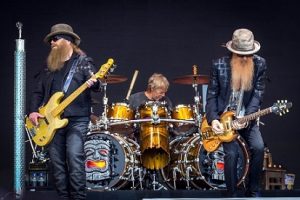
How ZZ Top stopped me topping myself


From Wikipedia / © Brian Marks


It’s farewell, alas, to Dusty Hill, who recently passed away at the age of 72.  Hill was bassist and sometime vocalist with the mighty blues / boogie / hard-rock Texan power trio ZZ Top, and not only was his musicianship crucial for the muscular tempo of those much-loved Top songs, but his appearance was crucial for the band’s image.  Sporting Stetson, sunglasses, beard – a lot of beard – he was almost indistinguishable from the similarly hatted, shaded and hirsute Billy Gibbons, ZZ Top’s lead guitarist and vocalist.  This meant two-thirds of the band seemed to consist of man-sized, guitar-wielding, Texan versions of Cousin It from The Addams Family.


The band’s third member, drummer Frank Beard, had a moustache but a clean-shaven jaw.  This is probably the best-known amusing fact in the entire world, but it hasn’t stopped pub-bores during the past 40 years declaring: “Hey, here’s something funny you won’t know!  The guy in ZZ Top who doesn’t have a beard is called Frank Beard!”


ZZ Top don’t get much credit for being a blues band, but one reason why I like them is because of the obvious influence blues music has had on their sound.  Indeed, the ‘ZZ’ part of their name pays tribute to Texas bluesman ZZ Hill, and Billy Gibbons had toyed with the idea of calling the band ZZ King, in honour of the legendary BB King too, but decided that would be a bit much.  No matter how hard, raucous, even heavy metal-ish they became at times, and even when they hit paydirt in the 1980s after sprucing up their sound with new technology, like synthesizers, and embracing new media, like MTV, the chord progressions powering their songs remained defiantly bluesy – My Head’s in Mississippi from their 1990 album Recycler is a particularly exhilarating example.  Blues-music writer Charles Shaar Murray neatly described their sound from this period, lean and relentless, but with a crisp studio sheen, as ‘cyber-blues’.


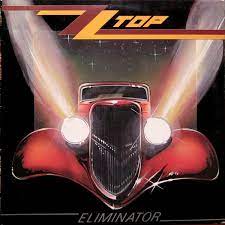
When they made it big with the 1983 album Eliminator, they managed to make themselves cool by being determinedly uncool.  Their videos were packed with foxy, leggy 1980s babes, but whereas the members of your average 1980s hair-metal band would be strutting like randy tomcats among the luscious ladies, eyes goggling, tongues waggling, ZZ Top stayed on the sidelines.  Hill, Gibbons and Beard would suddenly appear in their videos as if they’d beamed down from the Starship Enterprise.  They wouldn’t interact with the ladies but just play a few riffs, throw some schmuck the keys of the ZZ Top car (a cherry red 1933 Ford Coupe), point mysteriously and de-materialise again.  This they did whilst clad in unphotogenic, dusty hats and denims.  No wonder that when they made a cameo appearance in one of the Wild West scenes in Back to the Future, Part III (1990), they had no problems blending in.


© Warner Bros.


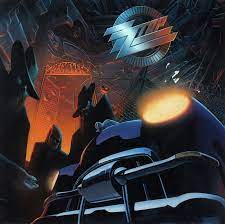
All ZZ Top’s albums are worth a listen – I think their final album La Futura (2012), which has another corking blues track Heartache in Blue, is really good – but it’s their trilogy Eliminator (1983), Afterburner (1985) and Recycler (1990) that sees them capture the zeitgeist.  Recycler, which one critic described as ‘worth stepping over a few rattlesnakes to buy’, is for me their finest hour.  It effortlessly straddles the interface between modern America, a place of ‘concrete and steel’, ‘flying saucers off the Presley estate’, penthouses, fast food and 7-11s, and the America of old, one of the ‘Texas sand’, ‘dust and haze’, cowgirls and ‘old Levi’s’, with a clutch of songs that are both bracingly up-to-date and pleasingly retro.


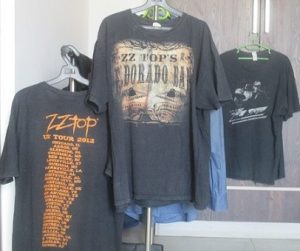
There aren’t many culturally cool things that Texas is associated with.  After all, this is the place that’s given us George W. Bush, Ted Cruz, Vanilla Ice and the Dealey Plaza.  That’s why my partner’s parents, who live in the Texan city of San Antonio, always opt for a ZZ Top T-shirt when they want to give me a souvenir of their state of residence.  Thus, I’ve amassed quite a collection of ZZ Top T-shirts over the years.


And now for a personal digression.  Here’s how during 1984-85, ZZ Top helped keep me sane.


I’ve done many different jobs in my time.  If anyone asks me what my least favourite job was, I immediately reply: “Being a member of the floor-staff at Ritzy’s nightclub in Aberdeen.”  This was during my second year as a student at Aberdeen University and I worked at Ritzy’s three or four evenings a week, earning some money to compensate for the fact that I hadn’t been awarded any student grant that year.  (Yes, this was in the days when students in the UK not only had their tuition fees paid for but many of them received a grant to cover their living expenses too.  Of course, as soon as the generation that benefitted from this educational generosity graduated, became politicians and assumed positions of power – Tony Blair, I’m looking at you – they abolished the system for the kids who came after them and saddled them with potentially ruinous student loans instead.)


At Ritzy’s nightclub, I’d don a short-sleeved, light-blue boiler suit and lug around a plastic crate all evening.  In the crate I’d place empty glasses and full ashtrays from the punters’ tables, then carry them to the work-spaces behind the club’s bars where I’d empty the ashtrays and wash them and the glasses.  Then I’d return the clean glasses to the bar-shelves and the clean ashtrays to the tables.  Doing this job at Ritzy’s – which’d previously been known as ‘Fusion’ and would later be known as the subtle-as-a-brick ‘Bonkers’ – was shit for a great variety of reasons.


It was shit that I had to work till 2.00 AM every Friday and Saturday night while all my mates were out enjoying some social life.  It was shit that the club used a particular design of tumbler, a structurally unsound design, that exploded and sprayed you with shards if you stacked too many of them together.  It was shit that the glasses you collected were often phenomenally grotty, with booze still inside them and cigarette butts floating around in that.  (Not everyone in Aberdeen at this time had mastered the new-fangled invention that was the ashtray.)  It was especially shit that many of the punters were workers in the then-flourishing oil industry whose headquarters was in Aberdeen, and made barrow-loads of money, and believed that their earnings entitled them to behave like knob-heads at all times – especially towards serfs like myself, trying to scrape together a few pennies by carting crates of glasses and ashtrays around a nightclub at the weekends.


But worst of all was the nightclub music.  1984-85 was a particularly horrible era in terms of British popular music and it was grueling indeed to lug your crate of glasses about, get insulted by dickhead oilmen, and at the same time be blasted by likes of The Reflex by Duran Duran or Wake Me Up Before You Go-Go by Wham or,  joy, The War Song by Culture Club.  Even worse was how the DJ – a fellow whose day-job was with the local radio station, Northsound – would play certain songs, which in themselves weren’t so obnoxious, again and again until hearing them became the musical equivalent of the Chinese water torture.  Even today, if I ever hear Lost in Music by the Sisters Sledge, or Solid as a Rock by Ashford and Simpson, or No More Love on the Run by Billy Ocean, or Roni Griffith’s cover of The Best Part of Breakin’ Up, I suffer from a type of post-traumatic stress disorder where I have harrowing flashbacks to the hellscapes of mid-1980s Ritzy’s.


It wasn’t much better when I was scheduled to work mid-week at the special evening Ritzy’s held for the over-30s, which was known in local parlance as ‘grab-a-granny night’.  (Yes, back then, granny-dom began pretty early in Aberdeen.)  This featured a live band that performed cover versions of songs currently in the charts.  I realise the band did their best and I don’t want to slag them off…  But I have to say their front-man, a bloke called Stan, doing his Bruce Springsteen impersonation during Dancing in the Dark wasn’t the most edifying thing I’ve ever seen or heard.


© Warner Bros.


But mercifully, this was when ZZ Top were riding high in the British album charts with Eliminator and during my year at Ritzy’s the band released a mighty trio of singles from that record: Gimme All Your Lovin’, Sharp Dressed Man and Legs.  At least one of these would be played each evening in Ritzy’s and as soon as Frank Beard’s drumbeat started, followed by Billy Gibbons and Dusty Hill’s crunchy guitars, I’d actually smile.  I’d even find myself singing as I struggled with my heavy crate through the crowd: “You got to whip it up… And hit me like a ton of lead…!”  Etcetera.


I’d even swear that as soon as a ZZ Top number started playing, the dancing in Ritzy’s – which hitherto had resembled a net-load of flopping, convulsing fish being dumped across the deck of a North Sea trawler – would suddenly improve.  Folk would suddenly smarten up and jig with a military precision, courtesy of Beard and Hill’s infectious, but meticulously-measured rhythm section.  I’ll go further still and suggest that Stan at grab-a-granny night never sounded better than when he was wrapping his tonsils around Sharp Dressed Man.


If only, while I was wrestling my way through the punters at Ritzy’s in the mid-1980s, ZZ Top had actually materialized and tossed me their car-keys…


From antiquesnavigator.com