Cinematically stoned (Part 2)


© Taplin-Perry-Scorsese Productions / Warner Bros


I ended my previous post by promising I’d give a list of my favourite movie scenes wherein songs by the Rolling Stones are employed to memorable effect.  Here it is.


Jumpin’ Jack Flash (1968) in Mean Streets (1973)

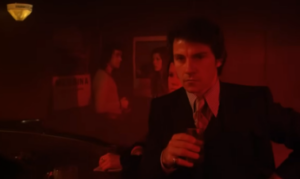
Wow.  Martin Scorsese really likes the Rolling Stones.  Not only has he made a concert movie about them, 2008’s Shine a Light, but he’s used their music in umpteen films: Goodfellas (1990), Casino (1995), The Departed (2006) and the one that first put him on the map, 1973’s Mean Streets.  Even today, more than 50 years later, the scene in Mean Streets where a young Robert De Niro comes swaggering through a bar, in slow motion, towards a pensive Harvey Keitel, while Mick Jagger hollers in the background about being “born in a cross-fire hurricane”, is a great synthesis of rock ‘n’ roll music and rock ‘n’ roll cinema.  Indeed, Jumpin’ Jack Flash is a fitting accompaniment for the arrival in popular consciousness of De Niro, who’d spend the rest of the 20th century showing Hollywood how to do proper acting.  The 21st century, featuring such efforts as The Adventures of Rocky and Bullwinkle (2000), Little Fockers (2010), New Year’s Eve (2011) and Dirty Grandpa (2016)…  Okay, not so much.


Satisfaction (1965) in Apocalypse Now (1979)

The Stones’ early, primordial and still potent stomper Satisfaction gets a brief but memorable airing in Francis Ford Coppola’s baroque Vietnam War masterpiece, playing on the radio while Captain Martin Sheen and his not-exactly-fighting-fit crew go cruising up the Nùng River in search of Marlon Brando.  Cue some funky on-deck dance moves by a frighteningly young-looking Laurence Fishburne and some funny / cringeworthy water-skiing moves by Sam Bottoms that knock various Vietnamese people out of their fishing boats.

 

© Omni Zoetrope / United Artists


Sympathy for the Devil (1968) in Alien Nation (1988) and in Interview with the Vampire (1994)

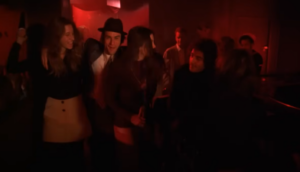
Graham Baker’s sci-fi / cop movie Alien Nation isn’t very good.  Its premise of an alien community getting stranded on earth and having to integrate as best as they can with the curmudgeonly human natives was handled much better in Neill Blomkamp’s District 9 (2009).  But I do like a woozy, hypnotic scene in it where alien-loathing cop James Caan enters a sleazy alien bar while a lady-alien performs an erotic dance to the strains of Sympathy for the Devil.  Not the original Stones song, but a correspondingly woozy, hypnotic cover-version of it by the great Jane’s Addiction.  I can’t find a film-clip of the scene, but here’s the Jane’s Addiction cover.


Meanwhile, Neil Jordan’s adaptation of Anne Rice’s Interview with the Vampire ends with Sympathy for the Devil on the soundtrack.  Again, this isn’t the Rolling Stones version but a cover, this time by Guns n’ Roses.  It’s every bit as ramshackle, shonky and (for me) enjoyable as the other covers Guns n’ Roses have done, for example, of Wings’ Live and Let Die (1973) and Bob Dylan’s Knockin’ on Heaven’s Door (1973).  Sympathy for the Devil kicks in when the vampire Lestat – Tom Cruise in one of his rare interesting roles – pops up to claim Christian Slater as his new vampirical companion for eternity.


Can’t You Hear Me Knocking? (1971) in Casino (1995)

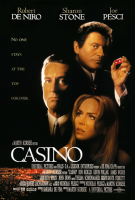
While Martin Scorsese serenades Robert De Niro and Harvey Keitel with Jumpin’ Jack Flash in Mean Streets, he employs the Stones song Can’t You Hear Me Knocking? for another of his regulars, Joe Pesci, in Casino.  Remarkably, Scorsese plays all seven minutes of the Santana-esque Can’t You… as an accompaniment to a lengthy sequence showing how Pesci’s Casino character Nicky Santoro gets established in Las Vegas.  Predictably, the sequence has Pesci doing what Pesci usually does in Scorsese movies: being a psychotic shit, barking orders at hoodlum sidekicks twice his size, eating in restaurants, ingratiating himself with fellow Mafiosi, being a psychotic shit, cursing and swearing, getting a blow-job, being a psychotic shit, talking about food, knocking off jewellery stores, acting the loving family man with his non-criminal relatives… and being a psychotic shit.
 

© Légende Entreprises / Universal Pictures


Ruby Tuesday (1967) in Children of Men (2006)

Wistful Stones ballad Ruby Tuesday features briefly on the soundtrack of Alfonso Cuarón’s gruellingly pessimistic science-fiction thriller Children of Men.  It’s another cover, sung by Franco Battiato.  We hear it during one of the movie’s calmer moments when Theo (Clive Owen) is visiting his old mate Jasper (Michael Caine), whose home provides a small pocket of sanity amid the unfolding dystopian grimness.  Amusingly, Caine, well known in real life for being a right-wing old grump with an aversion to paying tax, here plays an elderly anarcho-hippy with a fondness for smoking exceptionally strong pot.


Gimme Shelter (1969) in The Departed (2006)

Martin Scorsese loves the Rolling Stones and he loves their apocalyptic number Gimme Shelter in particular.  By my count he’s used it in three movies: Goodfellas, Casino and The Departed.  It’s best deployed at the beginning of The Departed, rumbling in the background while gangland thug Frank Costello (Jack Nicholson) expounds his philosophy.  “I don’t want to be a part of my environment,” he intones, imbuing his words with that leery, languid menace that only Nicholson is capable of.  “I want my environment to be a part of me.”  Strangely, in Scorsese’s Shine a Light two years later, Gimme Shelter was one of the songs the Stones didn’t perform on stage.  Marty missed a trick there.
 

© Plan B Entertainment / Warner Bros


Street Fighting Man (1968) in Fantastic Mr Fox (2009)

Director Wes Anderson also sticks Rolling Stones into his movies, but so far I haven’t mentioned him because I think most of his work is smug, pretentious and annoying.  For example, Play with Fire (1965) figures prominently in 2007’s The Darjeeling Limited, an Anderson movie so twee I find it the cinematic equivalent of being force-fed with chocolate-cake mix.  However, I like the scene in his stop-motion-animation adaptation of Roald Dahl’s Fantastic Mr Fox where, to the sound of the rabblerousing Stones anthem Street Fighting Man, Farmers Bean, Boggis and Bunce use three diggers to tear up the den of the titular Mr Fox; forcing the den’s inhabitants to frantically dig an escape-route.  Yes, they really ‘dig’ that song.  Sorry.


And finally…  Out of Time (1968) in Once Upon a Time in Hollywood (2019)

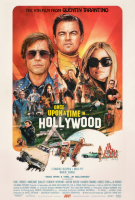
I’m not the biggest fan of the Stones song Out of Time – Jagger’s vocals get a bit too caterwauling for my liking – but it sees good satirical use in Once Upon a Time in Hollywood, Quentin Tarantino’s paean to the American movie-making capital in the late 1960s, a fascinating period when traditional notions about what made a good film were rapidly being undermined by an uppity younger generation.  Played when Rick Dalton (Leonardo DiCaprio), his new Italian spouse Francesca Capucci (Lorenza Izzo) and sidekick Cliff Booth (Brad Pitt) return from Italy, where Rick has been making spaghetti westerns and action thrillers with the likes of Sergio Corbucci and Antonio Margheriti, Out of Time gives an one-the-nose summation of DiCaprio’s sad-sack character – an actor a bit too old, un-hip and uncomprehending of the changing world around him to get the leading roles he once did, now doomed to playing villains in second-rate TV shows.
 

© Columbia Pictures / Sony Pictures Releasing 

Just a flesh wound


© Ley Line Entertainment / Bron Creative / A24


It’s fair to say that the regal, if probably hypothetical, legend of King Arthur has suffered more than a few flesh wounds from filmmakers over the years.


At least in the case of the Monty Python team, the filmmakers were deliberately taking the piss.  Their 1974 movie Monty Python and the Holy Grail inflicted on poor Arthur such indignities as the Knights Who Say ‘Ni!’, the bloodthirsty Rabbit of Caerbannog, the Holy Hand Grenade of Antioch, Dennis of the Autonomous Collective (“Listen, strange women lying in ponds distributing swords is no basis for a system of government. Supreme executive power derives from a mandate from the masses, not from some farcical aquatic ceremony.”) and the outrageously rude French guard (“You don’t frighten us, English pig-dogs! Go and boil your bottoms, sons of a silly person!”).


More worryingly, other filmmakers have tried to be serious, though with cringeworthy results.  I’m thinking of 1967’s Camelot, which has Richard Harris’s Arthur bursting into song and warbling, “You mean a king who fought a dragon / Whacked him in two and fixed his wagon / Goes to be wed in terror and distress? / Yes!”  Or 2004’s King Arthur, which has a grimly wooden Clive Owen in the title role and which, according to the Times’ reviewer Wendy Ide, ‘attaches itself to the Arthurian legend like some parasitic worm’.  Or 2017’s King Arthur: The Legend of the Sword, which was directed by Guy Ritchie in the manner you’d expect from Guy Ritchie, complete with a cameo appearance by that well-known icon of the Dark Ages, David Beckham.


Actually, I’ve immersed myself a lot in the King Arthur legend recently, not through films but through books, which I’ve found much more rewarding.  Not long ago, I managed to finish off T. H. White’s Once and Future King series, comprised of The Sword in the Stone (1938), The Queen of Air and Darkness (1939), The Ill-Made Knight (1940), The Candle in the Wind (1958) and The Book of Merlyn (1977).  Yes, I know, the first book was the basis for the underwhelming 1963 Walt Disney cartoon, but the series becomes impressively philosophical, political and tragic as it goes on.  I’ve also lately read Kazuo Ishiguro’s 2015 novel The Buried Giant, set a short period after the death of Arthur.  Come to think of it, The Buried Giant could almost qualify as a postscript to White’s series, although there are a few differences in continuity.  (For example, Merlin is said to be dead by the time of Ishiguro’s novel, whereas in the timeline established by White he’d be alive.  His ability in the Once and Future King books to live through time in the opposite direction from human beings, from the future to the past, would ensure that.)


© Faber & Faber


A figure from Arthurian legend who plays a major role in The Buried Giant, as an elderly man, is Arthur’s nephew Sir Gawain.  Gawain, of course, occupies his own niche in the Arthurian mythos because he’s the main character in Sir Gawain and the Green Knight, the late 14th century poem written in a North West Midlands dialect of Middle English.  The poem has Sir Gawain respond to the mysterious Green Knight who arrives at Arthur’s court one Christmas Eve with an unusual challenge: who is prepared to strike him a blow with the axe he is carrying, on the condition that one year from now the Green Knight gets an opportunity to return the blow on his home turf, a place called the Green Chapel?  Gawain takes up the challenge and uses the axe to whack off the Green Knight’s head.  That, however, doesn’t resolve the matter, because the Green Knight refuses to die.  He picks up his head and rides off, leaving Gawain honour-bound to keep the appointment at the Green Chapel next Christmas.  Obviously, there, he’ll receive an equivalent blow that he’s less likely to be impervious to.


The poem was filmed twice in the 20th century by the director Stephen Weeks, first in 1973 as Sir Gawain and the Green Knight with singer Murray Head as Gawain and Nigel Greene as the Green Knight, and again in 1984 as Sword of the Valiant. Both versions made little impact and the clearly well-intentioned Weeks was hampered by low budgets.  With the second version, he was no doubt hampered too by the fact he made the film for the notoriously schlocky Cannon Group, whose co-owners Menahem Golan and Yoram Globus overrode his choice of Mark Hamill to play Gawain and instead foisted on him Miles O’Keefe, who’d previous played the Lord of the Jungle in 1981’s dire Tarzan the Ape Man.  A better casting choice was Sean Connery as the Green Knight.


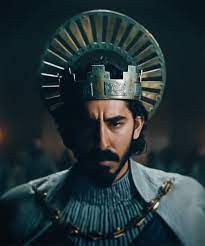
Now, however, Sir Gawain and the Green Knight has received the big budget treatment.  Well, at 15 million dollars, not that big, but certainly a lot more than Stephen Weeks had to play with.  David Lowery has written and directed a new version with Dev Patel, of 2008’s Slumdog Millionaire, stepping into Gawain’s armour.  I have to say the resulting film, with the shortened title The Green Knight, isn’t perfect, but nonetheless it does justice to the poem at last.  It also qualifies as that rare beast – a quality King Arthur movie.


The Green Knight doesn’t present a fanciful or idealised picture of Arthur’s court, if that court had ever actually existed.  While it doesn’t wallow in medieval dirt, muck and shit like Monty Python and the Holy Grail (“Dennis!  There’s some lovely filth down here!”), it does show life in and around Arthur’s citadel as wintry, draughty, farmyard-y and unglamorous.  Accordingly, Arthur and Guinevere (Sean Harris and Kate Dickie) are portrayed as an ageing, rather threadbare couple, who don’t even get the accolade of being referred to by their legendary names.  They’re just ‘the king’ and ‘the queen’.


On the other hand, the film is keen to show how unspectacular characters, settings and events get exaggerated and mythologised and turned into legends.  It makes much of story-telling and myth-making.  For example, no sooner has Gawain had his first encounter with the Green Knight than the tale is being retold as a puppet show for the neighbourhood’s children.  On a battlefield strewn with newly-dead corpses, a scavenger (Barry Keoghan) is already recounting stories of derring-do about the battle that are clearly over-the-top bullshit.  And Arthur himself pleads with his court, “Friends, brothers and sisters, who can regale me and my queen with some myth or tale?”  When he asks Gawain, “Tell me a tale of yourself so that I might know thee,” and Gawain replies, “I have none to tell,” Guinevere interjects with: “Yet. You have none to tell yet.”


© Ley Line Entertainment / Bron Creative / A24


It reminds me of another movie with a focus on myth-making, but a very different setting, The Man Who Shot Liberty Valance (1962), John Ford’s meditation about the end of America’s Wild West. As Carleton Young’s newspaper-editor character says in that film, “When the legend becomes fact, print the legend!”


I thought the first hour-and-a-bit of The Green Knight was splendid.  The Green Knight himself is presented wonderfully as a proper green man, all gnarled wood and straggly tree-root beard, and his appearance is complemented by his voice, which is that of gravelly Yorkshireman Ralph Ineson.  Actually, it’s nice to see Ineson and Kate Dickie together in a film again after they played the doomed Puritan parents in Robert Eggers’ The Witch (2015).


Once Gawain sets off in search of the Green Chapel, to keep his unwanted appointment, he has several phantasmagorical adventures that involve phantoms, giants and supernaturally intelligent animals and that are gorgeously shot by cinematographer Andrew Droz Palermo.  However, it’s the episode with Barry Keoghan and his grubby little band of thieves that’s perhaps most haunting, thanks to an amazing sequence with a rotating camera-shot and time-lapse special effects that makes you wonder if anything else you see in the film is going to be true.


But The Green Knight does, in my opinion, have a structural problem.  This is because in the original poem the adventures Gawain has during the first half of his journey are not described in any detail, and what we see on screen presumably comes from Lowery’s imagination.  However, later events in the film are based on the poem and form an important part of the plot.  These involve Gawain coming to a castle near the Green Chapel and enjoying the hospitality of its lord (Joel Edgerton) and lady (Alicia Vikander) during the last few days before his appointment.  His experiences there become strange and prove to be a series of tests.  That’s fine, but after the fantastical episodes that Gawain’s been through earlier on, these castle-bound scenes feel something of a let-down and act as a brake on the film’s momentum.


The climax bravely departs from the denouement of the poem (which had Arthur’s sister, and Gawain’s aunt, Morgan Le Fay popping up as a sort of medieval deus ex machina).  Instead, it does something that had me thinking of the climax of Martin Scorsese’s The Last Temptation of Christ (1988).  This neatly echoes the earlier themes of storytelling and myth-making.


The Green Knight certainly isn’t to everyone’s tastes.  For example, a certain well-known science-fiction author, clearly more a Guy Richie / King Arthur: Legend of the Sword man, denounced it on twitter recently as “the worst film I’ve watched this year…  What a waste of good actors.  I want my two hours back.”  However, if you’re in the right frame of mind, not expecting anything like the usual cinematic Arthurian fare, and willing to tolerate some ruminative, slow-moving stuff in the second half, you may find it magical.


© Ley Line Entertainment / Bron Creative / A24