Haw Par Villa: a special place in hell


Donald Trump has been inaugurated as 47th President of the United States of America. With social-media platforms like X, Facebook, Instagram, Threads and now TikTok acting as his cheerleaders and fascists like the Proud Boys, Oath Keepers, Three Percenters and those deranged January 6th rioters he’s just pardoned acting as his law enforcers, he looks set to transform the USA into a combination of Vladimir Putin’s Russia, Ben Ali’s Tunisia and Benito Mussolini’s Italy.  That’s while his administration abandons science and embraces paranoid conspiracy fantasies, superstition and stupidity, pumps umpteen more billions of tons of carbon into our already-poisoned biosphere, and conspires to destroy what democracies remain in the modern world.  Therefore, it can be said we are now living in hell. 


With these hellish things happening, I thought it would be appropriate to devote a blogpost to the most vivid representation of hell I have ever seen: that at Haw Par Villa, Singapore’s most remarkable museum.


Haw Par Villa was originally built by Burmese-Chinese brothers Aw Boon Haw and Aw Boon Par, who developed and marketed the famous analgesic remedy Tiger Balm.  They relocated from Burma to Singapore in 1926 and purchased the site – today on the West Coast Highway, just along from the Haw Par Villa MRT Station – in 1935.  The villa was designed in an Art Deco style and completed in 1937, but its original incarnation didn’t last long, being bombed and occupied by the Japanese during World War II and demolished after the war ended.  Its gardens survived, though.  Up to his death in 1954, Aw Boon Haw installed statues and dioramas there that he hoped would help instil ‘traditional Chinese values’ in those who viewed them.  Subsequently, the gardens became a public park popular among Singaporean families.


By the 1980s, the place was losing its lustre and efforts to repackage it meant it underwent several name changes – from ‘Tiger Balm Gardens’ to ‘Haw Par Villa Dragon World’, back to ‘Tiger Balm Gardens’ and finally to ‘Haw Par Villa’ as it is today.  No doubt the Singaporean Tourist Board understood it was special, thanks to those installations Aw Boon Haw had made to promote his vision.  Yet it surely seemed too traditional, and too eccentric, to compete with the city-state’s more modern visitor attractions.  A study in 2014 reported ‘low tourist interest’ in it and made the melancholy observation that it was ‘rather rundown and not very well maintained’.  However, Journeys Pte Ltd acquired it in 2015 and closed it for a period at the start of the 2020s to make renovations.  Since reopening, the latest version of Har Par Villa has won acclaim.  In 2023, for instance, it was a finalist in the Singaporean Tourism Awards for Outstanding Attraction.  Let’s hope its future is now secure.


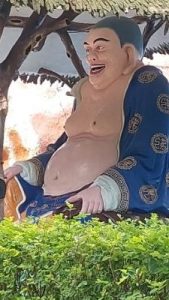
A while back, accompanied by my partner and a couple of friends, I visited Har Par Villa.  Approaching its entrance, we went past the place’s name in blood-red English letters and Chinese characters raised against a tableau of artificial rocks.  Then we went through a traditional Chinese paifang with a prominently-displayed picture of a tiger – appropriately for the home of Tiger Balm – and then found ourselves passing a gamut of strange statues.  These included big, spooky white rabbits with red mouths and eyes, mad-looking sheep with black horns and black-rimmed eyes, and a freaky humanoid pig in britches, cap and shirt, the shirt peeled back to reveal a fat belly and sagging man-boobs.  A couple with human bodies and tiger heads, wearing dungarees and a pink dress, held forward tins, boxes and packets of Tiger Balm.  And a pot-bellied Buddha with a wide cackling mouth resembled one of the Blue Meanies in the animated Beatles movie Yellow Submarine (1968).  It was all wonderfully, charmingly weird.


Our intention today was to visit just one part of Haw Par Villa, its most famous part – the attraction announced by a banner at the entrance, which said: ‘Hell’s Museum: Visions of Death and the Afterlife’.  From all accounts, there’s much more to see there, but that would have to wait until another visit.


After buying tickets at the ticket desk / gift shop – whose door had a sign saying ‘No food, no drinks, no pets (pets go to heaven)’ – we ventured into the first section of Hell’s Museum.  We discovered a corner where we could stand by a backdrop of red-hot lava, orange flames and grey smoke and have photos taken so that it looked like we were in hell; and a room where a short documentary film about religious concepts of death and hell played on a loop. Thereafter, we entered a modern and reasonably sober museum.  Haw Par Villa is famous for some over-the-top, properly hellish depictions of hell, but those would come later.


The museum contained displays and charts giving information on such things as different cultures’ and religions’ beliefs in the afterlife, the history of ‘handling death’ in Singapore, ‘Singapore’s industry of cremation’ and, courtesy of a large map, the locations of all the cemeteries in the city-state – Chinese, Buddhist, Muslim, Christian, Hindu, Jewish, Baha’i, Parsi, Burmese, Japanese and ‘War’.  Among many other things, there were verses on the subject of death and hell from various sacred texts, such as the Buddhist Dhammapada.  (Chapter 9, Verses 126-128: “Some are born in the womb; the wicked are born in hell…”)


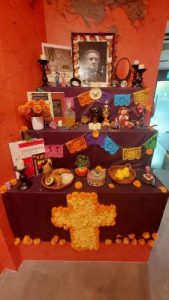
I particularly liked a replica of a Mexican Day of the Dead altar with all the traditional paraphernalia: photographs of the deceased, butterflies, flowers, bunting, candles, water, food, alcohol, cigars, salt, incense, mirrors, crosses and little skulls made of glass, ceramics, plaster and sugar.  There was also one of ‘a traditional Chinese void deck funeral’.  Void decks are the ground floors of the Singaporean Housing Development Board (HDB) apartment blocks that rise all over the city-state.  These floors are normally untenanted and have communal spaces and, according to the museum, create ‘opportunities for residents to interact and bond over activities…’ and let them ‘…stage social functions, weddings, and of course funerals.’  Coincidentally, I’d lately read a short story entitled The Moral Support of Presence by the Singaporean writer Karen Kwek, about a woman having to organise and sit through a void-deck funeral for her mother whilst coping with grief.


Immediately past the modern museum was another area of Haw Par Villa eccentricity.  The dioramas here included a mass of rock whose multiple folds and clefts were adorned with severed heads, their faces ghostly pale, tongues protruding, mouths and eyes leaking blood.  An even more bizarre display was a rocky landscape where rats and rabbits were depicted at war with each other.  I don’t know what story or legend inspired this, but to my Western eyes it resembled the title creatures of James Herbert’s The Rats (1974) taking on the rabbits in Richard Adams’ Watership Down (1972) – after those rabbits were infected with rabies. One rabbit chomping bloodily on a rat’s neck was an especially nasty detail.  Meanwhile, I felt sorry for a pair of rats wearing medic armbands who were trying to carry away an injured comrade on a stretcher.


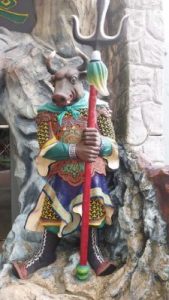
Finally we came to a structure housing Haw Par Villa’s most celebrated attraction – a series of dioramas representing the Ten Courts of Hell of Chinese mythology and Buddhism.  Guarding its entrance were the demons Ox Head (a minotaur holding a trident) and Horse Face (an equine-headed being clutching a spiked club).  These guardians, an information panel explained, were “…part of the netherworld’s bureaucracy.  They form a network of attendants and jailers responsible for escorting souls through the ten courts…”


Inside, things started fairly innocuously with Court 1, where ‘King Qinguang conducts a preliminary trial for the deceased.’  The diorama here showed a recently-deceased soul cowering in front of King Qinguang while demon guards with superlong tongues and bird’s claws, or heads shaped like malformed gourds, looked on.  Having been assessed according to the deeds they did alive, with the help of such judging tools as ‘the Book of Good and Evil’, ‘the Scale of Good and Evil’ and ‘the Mirror of Souls’, the souls are divided up: “Virtuous souls… may cross the Golden or Silver Bridges to either attain the Tao, become immortals or deities, or be reborn as humans blessed with good lives…”, whereas “…sinners will have to go through further judgement and punishment in the rest of the 10 courts.”  Needless to say, it’s the ordeals of that latter group that gives this attraction its ghoulish zest.


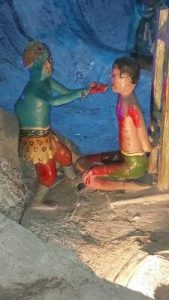
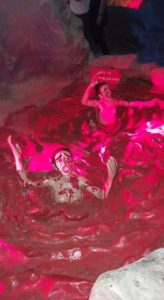
Thereafter, we learnt what types of miscreants are dealt with in Courts 2-9 and what punishments are meted out to them.  In Court 2, for instance, people who’ve caused hurt, cheated or robbed get ‘thrown into a volcanic pit’, those who’ve indulged in corruption, stealing or robbery (again) get ‘thrown into blocks of ice’, and those sullied by prostitution get ‘thrown into a pool of blood’.  By Court 9, robbers, murderers, rapists and those responsible for ‘any other unlawful conduct’ have their ‘head and arms chopped off’ while anyone guilty of ‘neglecting the old and the young’ gets ‘crushed under boulders’.


And the dioramas showed the courts’ demonic bureaucrats carrying out those punishments in bloody, gory detail.  We saw hearts being extracted (as punishment for ungratefulness, being disrespectful towards one’s elders or ‘escaping from prison’); writhing bodies disappearing under giant grindstones (that’s what you get if you’re disobedient to your siblings or don’t show enough ‘filial piety’); folk being graphically impaled on the branches of ‘a tree of knives’ (your comeuppance for cheating, kidnapping or using bad language); and tongues being removed (the price you pay if you spread rumours or cause discord among your family members).


Fabulously, the chopping, severing, gouging, crushing, impaling, disembowelling, dismembering and decapitating going on in Haw Par Villa’s 10 Courts of Hell have encouraged generations of parents to bring their children here in order to instil moral values in them – or, putting it more bluntly, to terrify them into being good.  They’ve forced their offspring to look on these horrors while warning them, “See what happens if you’re naughty!”  Indeed, one of my Singaporean colleagues told me she was brought here when she was eight years old and suffered nightmares for the next fortnight.


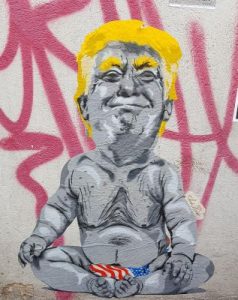
I found myself wondering, meanwhile, what chastisements the 47th President of the USA would face when he passed away and entered the netherworld.  From what I knew of his misdeeds, I calculated he’d be thrown into a volcanic pit, into blocks of ice, into a tree of knives and into a wok of boiling oil; have his heart and tongue cut out and his head and arms chopped off; and be grilled alive on a red-hot copper pillar, sawn in half and pounded by a stone mallet.  Oh, and dismembered.


Lastly, in Court 10, we saw King Zhuanlun making a final judgement on the souls who’ve been through hell’s punishments, deciding “what forms they will take upon their rebirth.  This will depend on their karma – the good and bad deeds committed in life.”  In this diorama, there were two sinners on their hands and knees before the king, and already the animals they’d become in their next lives were taking form on their backs.  One was metamorphosising into a black goat, the other into a white rabbit.  Before being reincarnated as those creatures, they had one more port of call – ‘Meng Po’s Pavillion’, where their  memories of previous lives, and presumably of hell, are erased.


With all this glorious, phantasmagorical barminess on display, it doesn’t surprise me that the Sri Lankan author Shehan Karunatilaka, who worked in Singapore at various times between 2014 and 2020 and whose Booker Prize-winning novel The Seven Moons of Maali Almeida (2022) is about ghosts, demons and the afterlife in late-1980s Colombo, cites Har Par Villa as one of Seven Moons’ major inspirations.


As I’ve said, there was a great deal more at Haw Par Villa we didn’t have time to see that day.  I can’t wait for our next visit to this splendidly baroque place.


The controls are set for the heart of the sun


© Val Guest Productions / Pax Films / British Lion Films


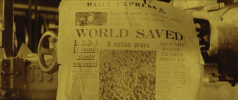
In my previous blog-post, I cited the ending of the apocalyptic 1961 sci-fi film The Day the Earth Caught Fire, where we’re inside a newspaper office and see that two versions of the next day’s front page have been prepared.  One page’s headline announces WORLD SAVED.  The other announces WORLD DOOMED.  Which headline, I wondered, would be appropriate after the US presidential election on November 5th?


Well, the results are in.  And it’s…


© Val Guest Productions / Pax Films / British Lion Films


I think I’ll stay away from the news for the next week or so, as it’s going to be full of the sights and sounds of the very worst people on the planet popping open the champagne and jeering and crowing about Trump’s win – from despots and corrupt authoritarians like Vladimir Putin, Benjamin Netanyahu, Kim Jong Un, Victor Orban and Aleksandr Lukashenko to billionaires who believe (probably rightly, given the evidence now) that democracy is something that can be bought and sold in the quest for profits, like Elon Musk, Jeff Bezos, Charles Koch, Rupert Murdoch, Paul Marshall and all the other media tycoons, hedge-fund moguls, oligarchs, oil barons and would-be tech overlords.


Despite a majority of British people hating Trump’s guts, Britain’s press and social media will be particularly infested with sycophants drooling and slobbering over the orange turd’s victory.  These range from online grifters who make their money whipping gullible people into frenzies of paranoia and hatred, such as Andrew Tate, Russell Brand, Neil Oliver, Tommy Robinson and failed nepo-baby thespian Laurence Fox; to the preening hacks who pen vitriol for the country’s right and far-right-wing publications, like Brendan O’Neill, Alison Pearson, Douglas Murray, Piers Morgan and Isabel Oakeshott; and to its most discredited, unsavoury and opportunistic politicians, such as Boris Johnson, Liz Truss, Nigel Farage, Lee Anderson and Jacob Rees-Mogg.  So, I’ll avoid that lot too for a while.  I don’t want to be put off my food.


Many hideous people are no doubt licking their lips at the prospect of the dystopian years ahead, thinking about what they can do as part of the Trump bandwagon and how they can line their pockets from it.  I’m sure that includes all those I’ve mentioned above.


Finally, I now find myself thinking of the ending of another 1960s sci-fi film, that of Franklin J. Schaffner’s Planet of the Apes (1968).


© APJAC Productions / 20th Century Fox


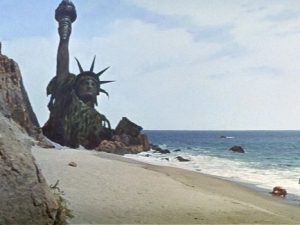
Not only does this conclude with Charlton Heston discovering the Statue of Liberty buried up to her chest in sand – indicating that the USA, plus the rest of human civilisation, are now extinct and lie hidden under millions of tons of sediment – but it shows Heston having a meltdown in front of this haunting and pitiful spectacle.  “You maniacs!” he rages.  “You blew it up!  Damn you!  Goddamn you all to hell!”


He could have been referring to those millions of Americans who thought it was a good idea to vote Donald Trump back into office the other day.


© APJAC Productions / 20th Century Fox

Set the controls for the heart of the sun


© Val Guest Productions / Pax Films / British Lion Films


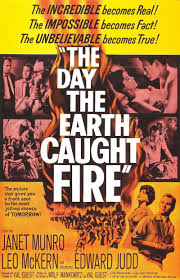
One my favourite British science-fiction movies is The Day the Earth Caught Fire (1961), starring Edward Judd, Janet Munro and Leo McKern, directed by Val Guest and scripted by Guest and Wolf Mankowitz.  (The underrated Guest made three other movies, 1955’s The Quatermass Experiment, 1957’s Quatermass II and 1960’s Hell is a City, that I also like a lot.)


The Day the Earth Caught Fire is an apocalyptic tale wherein the USA and the Soviet Union carry out simultaneous nuclear-bomb tests at the earth’s poles and, subsequently, the planet experiences weird meteorological events.  Rivers dry up in some places and rain falls in unexpected torrents in others.  The general trend, though, is that temperatures rise.  The film’s heroes – a pair of London-based journalists – discover that those nuclear tests have disrupted the earth’s nutation, its axis of rotation.  Our planet is now spiralling closer and closer to the sun and in a few months’ time will plunge into it.


Yes, the film’s science is wonky.  A full-force hurricane has a heat-release every 20 minutes that’s similar to one 10-megaton nuclear bomb going off, so a few such nuclear explosions are nowhere near enough to knock the earth out of its orbit.  Also, what’s amusing about the film from a 2024 viewpoint is that its journalist heroes work for the Daily Express – a newspaper now so moon-howlingly rubbish it makes the Daily Mail look comparatively sane and reasonable.  Today, while the Thames evaporated, the Express would be denouncing the earth-knocked-out-of-orbit / crashing-into-the-sun scenario as a woke hoax and politically-correct fearmongering.


However, as a dystopian sci-fi movie showing a gradually-unfolding catastrophe through the eyes of some ordinary people who are powerless to do anything about it, The Day the Earth Caught Fire is both affecting and chilling.


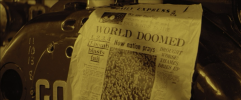
The film ends ambiguously.  The world’s governments make a last-ditch attempt to reverse the damage, exploding more nuclear bombs in the desperate hope they’ll nudge the earth back into its proper orbit.  Meanwhile, in the Daily Express’s offices in now-utterly-sweltering London, we see that two versions of the next day’s front page have been prepared.  One bears the headline WORLD SAVED, the other the headline WORLD DOOMED.  And we leave the film’s characters there, not knowing their fate.


I’ve been thinking about the ending of The Day the Earth Caught Fire a lot today.  November 5th, 2024, is when Americans go to the polls to elect a new president.  That will either be Kamala Harris or Donald Trump.  The latter was once memorably and accurately described by the New Yorker writer Mark Singer as someone whose existence is ‘unmolested by the rumbling of a soul’.  A few years ago, less eloquently, I called him ‘that rancid man-slug of evil.’


Trump has been open about what he’ll do to the USA if he’s re-elected president.  He’ll transform the world’s most powerful country from a democracy into an authoritarian state, with him as despot-in-chief.  Even if the American public are stricken with buyers’ remorse after voting him in, he’ll change the election laws and fiddle the constitution so that they can’t ever get rid of him and his far-right Republican successors (who’ll no doubt be led by the repulsive J.D. Vance).  The Trump Reich will be here to stay.


Along the way, he’ll also embolden other fascists in other countries around the world, hand over Ukraine to his buddy, hero and idol Vladimir Putin and allow Putin’s malignant influence to extend right into Europe, make American women second-class citizens with zero control over their bodies, persecute LGBT people and probably erase trans ones, put the lunatic anti-vaxxer Robert F. Kennedy in charge of American health policy and appoint Elon Musk as his Joseph Goebbels-style head of propaganda who’ll pump out misinformation and hate on Twitter (or ‘X’ as Musk calls his debased platform these days).  Science will be derided, suppressed and defunded.  Pig-ignorance will be lauded, promoted and revelled in.


Worst of all, Trump, a climate-change denialist, will add billions of tonnes of US carbon emissions to the earth’s atmosphere, probably thwarting any last chances of humanity doing anything to mitigate the effects of the climate catastrophe.  Yes, the earth really will be catching fire, if slightly more slowly than it did in Guest’s movie.


So, world saved or world doomed?  We’ll find out a little later this week.


© Val Guest Productions / Pax Films / British Lion Films

Jiggery-wokery


From abc.net.au / © BBC


‘Woke’…  What does that word even mean?


Here’s failed US presidential candidate and failed insurrectionist Donald Trump using it to denigrate the American women’s soccer team, who do un-Trumpian things like ‘taking the knee’ during the playing of the Star-Spangled Banner.  “Woke equals failure!” he barked on TruthSocial, his minor social-media platform, when the team was knocked out of this year’s Women’s Football World Cup.


And here’s John Cleese grumping about the BBC being woke because it banned that episode of Fawlty Towers (1975-79) where the Major uses some unfashionable language to describe the West Indies cricket team.  (In fact, the episode was temporarily pulled from the BBC-owned streaming service UKTV, and reviewed, and reinstated with a content warning.)  Cleese is so incensed by wokeness that he’s started hosting a TV chat-show in which he fulminates against it.  His show is called The Dinosaur Hour (2023) and it’s broadcast on the right-wing, alleged ‘news’ channel GB News.  Amusingly, Cleese was peeved to discover that his new employers at GB News had just signed Boris Johnson, whom he considers a ‘serial liar’, to host a show too.  Well, John, when you lie down with dogs, expect to get up with fleas.  In this case, big, blonde, bloviating, bonking Boris-fleas.


Another household name much concerned about woke behaviour is Elon Musk, who last year purchased Twitter (or X, as he calls it now) and set about purging it of wokeness.  He’s certainly done that.  He’s also purged the platform of half of its advertising revenue and half of the value of its acquisition price.  Musk has described wokeness as a ‘mind-virus’ and ‘communism rebranded’ – and communism, he’ll tell you, is a very bad thing.  Though that hasn’t stopped him opening a big Tesla plant in communist China, in Shanghai, and being warmly welcomed every time he visits the country, and declaring that democratic, capitalist Taiwan is actually Chinese property.  Musk is also introducing to Twitter a ‘snarky, anti-woke AI chatbot’ called ‘Grok’, which sounds like a character from the sci-fi comic 2000 AD (1977-present).


From britishcomic.fandom.com / © Rebellion Developments


I don’t agree with Musk on much but he’s right to liken wokeness to a virus.  Because the moment that people with his right-wing politics come into contact with it, they seem to turn red-eyed, froth at the mouth and gibber insanely, like the infected did in Danny Boyle’s 28 Days Later (2003).


© DNA Films / UK Film Council / Fox Searchlight Pictures


But if you need refuge from wokeness, just move to Florida.  There, Governor Ron DeSantis has been pushing a ‘Stop-Woke Act’ in the hope that the state will be ‘the place where woke goes to die’.  In fact, DeSantis’s Florida is now so anti-woke, and so determinedly opposed to the teaching of wokey things like Critical Race Theory, that its State Board of Education has kids learning in school that slavery was a good thing because it helped the black slaves to develop ‘skills which, in some cases, could be applied for their personal benefit‘.  Wow.  Who knew?


I’m sure DeSantis’s achievements in Florida are admired by Suella Braverman, the belligerent and self-serving British Conservative politician who was very recently sacked from her position as the UK’s Home Secretary.  During her time in office, she slammed the British police force for being too woke.  One example was when she claimed to have reprimanded officers in Essex for the woke act of raiding a pub and removing a display of racist golliwogs.  (Except that she didn’t – it turned out that Suella had been disingenuous, or stupid, or both, which is perfectly possible in her case.)  Suella, or ‘Sewer-ella’ as I like to think of her, also famously condemned a faction she called the ‘Guardian-reading, tofu-eating wokerati’.  Supposedly, these have formed a ‘coalition of chaos’ with the opposition parties and are responsible for all of Britain’s ills.  She said this whilst serving in the brief but tumultuous government of Liz Truss.  Accusing someone else of being part of a coalition of chaos?  That’s a bit rich, given the context.


Elsewhere, the Daily Mail has complained that woke builders are daring to ‘enjoy yoga, muesli, listening to Radio 4 and sharing their feelings’ rather than ‘devouring greasy-spoon breakfasts and discussing sport.’  Xbox games consoles have been accused of being woke for getting updated with an ‘energy saver’ mode to lessen their power consumption – because, as you know, attempting to be more environmentally-friendly just drips with contemptible wokeness.  The makers of The Simpsons (1989-present) have been lambasted for being woke, coincidentally by Cleese’s associates at GB News, for no longer having scenes where Homer loses his rag at Bart, picks him up by the throat and strangles him until his eyes bulge and tongue protrudes.  Not wanting to strangle children?  How hideously woke.


So, what does ‘woke’ actually mean?  Well, according to Wikipedia, it’s “an adjective derived from African-American Vernacular English (AAVE) meaning ‘alert to racial prejudice and discrimination’.  Beginning in the 2010s, it came to encompass a broader awareness of social inequalities such as racial injustice, sexism and LGBT rights.”  Fascinatingly, the phrase ‘stay woke’ goes all the way back to 1938, when it was first heard on a recording of a song called Scottsboro Boys by the legendary blues singer Huddie Ledbetter, aka, Lead Belly.


From wikipedia.org / © William P. Gottlieb Collection


Though how the term ‘woke’ became elastic enough to encompass eating tofu, and builders talking about their feelings, and Xboxes having energy-saving modes, and Homer Simpson not throttling his offspring, is anyone’s guess.  Perhaps a simpler definition of the term – certainly when you look at the people mentioned above who’ve railed against it, like Trump, Musk, DeSantis, Braverman, the Daily Mail and GB News – might be: ‘Anything that right-wing tossers don’t like.’


Indeed, as somebody who considers himself partly Scottish, I felt a surge of pride a while ago when Gavin McInnes, founder of the neo-fascist American militia the Proud Boys, denounced Scotland as ‘the most woke country in the world.”  No wonder Scottish novelist Christopher Brookmyre responded to McInnes’s ravings by saying: “That delighted me…”


Unfortunately, nobody ever lost money by underestimating human beings’ intelligence.  There’s clearly political mileage in ranting endlessly about wokeness. Gradually, you brainwash millions of people, mainly older ones who don’t get out much, and sit and watch Rupert Murdoch’s Fox News all day, into believing that dark, malevolent woke forces do indeed lurk in the world, planning to deprive them of their Bibles, guns, gas-guzzling automobiles, Big Macs, racist jokes, un-politically-correct 1970s TV shows, etc.  It’s also convenient for the likes of Trump (currently facing 91 felony counts) and Britain’s Conservative government (trying to justify why the country is such a horrible, unhappy mess when they’ve been in charge of it for the past 13 years) to peddle the narrative that the establishment is riddled with hostile woke agents.  The civil service, the courts, the police…  A giant woke conspiracy is being implemented from society’s corridors of power and it’s trying to discredit them and stymie their every move.


I’m not claiming, by the way, that stupidity is confined to right-wingers.  The left is also capable of it.  In recent years the American right has infiltrated school-boards and removed books they disapprove of from syllabuses and libraries, books deemed too woke, often written by people of colour or members of the LGBT community, and often featuring characters of colour or LGBT characters.  There was even a book suspended in Alabama because officials didn’t like the sound of the author’s name, Marie-Louise Gay.  But left-wing educators have done themselves no favours by trying to ban books that offend their sensibilities too.


For example, I lately came across the case of a school board in Washington State pulling Harper Lee’s To Kill a Mockingbird (1960) off its required reading list for ninth-graders because a group of ‘progressive’ teachers objected to it.  Sure, you can argue that To Kill a Mockingbird portrays its black characters with less depth than its white characters and has a ‘white saviour’ narrative that’s offensive to many.  But shouldn’t teachers focus on developing their students’ powers of critical thinking, argument and self-expression so that they can articulate why they object to the book?  Engaging with – certainly, studying – literature shouldn’t be limited to books you’re personally comfortable with.  You should have to experience ones you find discomforting too, whilst developing the ability to formulate logical and coherent responses to them.


I don’t deny there are works that some people will find upsetting because of their beliefs or backgrounds or difficult experiences they’ve had in their lives.  And I don’t see anything wrong with books and stories having trigger warnings, which inform readers the content they’re about to immerse themselves in may be uncomfortable or even traumatising.  I say that as a writer who’s had trigger warnings attached to his fiction in the past.  But banning books altogether?  I don’t agree with censorship, unless it’s of something that’s completely off-the-scale in promulgating odious stereotypes and stirring up hatred.


Otherwise, I don’t have much of a problem with wokeness.  Especially as it seems to annoy all the right – and I mean ‘right’ – people.  So, now, it’s time to sign off and grab some lunch.  What will I have…?  Why, tofu of course.  Up yours, Sewer-ella.


From wikipedia.org / © UK Government Web Archive

Hey, hey, we’re the munchies


© Duckworth Books


Another Halloween-inspired post…


Zombie movies used to be my favourite sub-genre of horror cinema.  Okay, at first, it’s difficult to see the charms of a school of movies about reanimated corpses shambling around and trying to munch on the living.  But what I liked about zombies was that they could be a brilliant metaphor for any group that was large in number but, according to the powers-that-be, mindless: consumers, blue-collar workers, the homeless, etc.  This gave filmmakers endless opportunities for social comment and allowed zombie movies to have brains figuratively as well as literally.


Thus, George Romero’s Night of the Living Dead (1968) is a parable about a United States rattled by racial tensions and the Vietnam War.  His 1979 sequel Dawn of the Dead takes potshots at a consumerist America where shopping malls had become part of both the landscape and the social fabric.  Danny Boyle’s 28 Days Later (2002) reflects a Britain where anger was an increasingly common social phenomenon, terms like ‘road rage’ and ‘air rage’ having entered the popular vernacular.  Its sequel, Juan Carlos Fresnadillo’s 28 Weeks Later (2007) is an allegory about the post-war occupation of Iraq.  And Edgar Wright’s Shaun of the Dead (2004) takes the piss out of a twenty-something slacker generation who can’t tell if someone’s a zombie or just stoned, drunk or hungover.


But I said I used to be fond of zombie movies, because in the last few years I feel there’s been too damned many of them, offering the same old apocalyptic visions and same old shambling tropes.  Zombies have become ubiquitous, not just in the cinema but in TV series, books, graphic novels and computer games.  With popular TV shows like The Walking Dead (2010-present), derived from a graphic novel, and The Last of Us (2023), derived from a computer game, filling our screens with zombie carnage week after week after week, surely it’s impossible now to do anything fresh with the concept?


Despite my zombie-fatigue, however, I recently read Max Brooks’ bestselling 2006 novel World War Z: An Oral History of the Zombie War.  This is probably the number-two urtext in the zombie pantheon.  (Obviously, the number-one urtext is George A. Romero’s original trilogy of Living Dead movies, Night, Dawn and 1986’s Day of the Dead, which created the template: the flesh-eating, the infection being spread by bites, the need to shoot them in the head, the humans reacting to the crisis soon becoming more monstrous than the zombies themselves.)  Brooks updated the sub-genre for the 21st century and imagined a zombie plague happening on a global scale, with different countries responding in different ways.


From wikipedia.org / © Rhododendrites


World War Z is a mock non-fictional tome modelled on Studs Terkel’s The Good War: An Oral History of World War Two (1984).  It’s purportedly a compilation of interviews by a United Nations expert who, sometime after a worldwide zombie crisis ended, worked on a UN Postwar Commission Report.  He collected oral testimonies from survivors but, ultimately, the commission’s chairperson decided not to include the testimonies in the report, reasoning: “It was all too intimate…  Too many opinions, too many feelings.  That’s not what this report is about.  We need clear facts and figures, unclouded by the human factor.”  So instead, the UN expert publishes the survivors’ stories in book-form.


One’s first impression of World War Z is that Brooks – who in real life is the son of venerable funnyman and comic filmmaker Mel Brooks – has not only set his sights high but done his homework.  The book believably presents the voices not just of ordinary people, but of politicians, scientists, doctors, soldiers, mercenaries, pilots, etc.  It nicely captures their particular sets of jargon, slang and cadences as they describe their  experiences of the conflict with the undead.  The political protocols, science, technology, medicine, weaponry and equipment referred to sound convincingly well-researched.  Brooks is also authoritative when his UN official interviews people from more specialist walks of life, such as deep-sea divers (these zombies can move underwater) and astronauts (there’s a section about the crew of the International Space Station who, after things kick off, find themselves in orbit for longer than planned and do all they can to help humanity below).


The jargon occasionally gets a bit dense.  For instance, a diver grumps: “Kids today… f*ckin’ A.  I sound like my pops, but it’s true, the kids today, the new ADS divers in the Mark 3s and 4s, they have this ZeVDek – Zero Visibility Detection Kit – with colour-imaging sonar and low-light optics…  We couldn’t see, we couldn’t hear – we couldn’t even feel if a G was trying to grab us from behind.”  But then, people in any profession use plenty of jargon when they talk with passion about their work.  And you have to be passionate about your work when it involves relentless waves of zombies coming at you.


From pixabay.com / © Syaibatul Hamadi


A few entries stray into stereotypes and caricature, though.  An account by one Kondo Tatsumi, a teenaged computer geek so addicted to hacking into systems and obtaining information that he stays at his bedroom computer long after his parents have vanished, and the zombies have started eating his neighbours, without any awareness of the peril he’s in, ladles on the stereotype of the Japanese otaku too thickly.  To rub it in, Kondo is described as being at the time ‘a skinny acne-faced teenager with dull red eyes and bleached blond highlights streaking his unkempt hair.’


Another Japanese-set instalment is rather cheesy too.  It concerns an elderly blind man called ‘Sensei’ Tomonaga Ijiro.  Though old and blind, his sense of hearing and smell are acute and he’s also skilled at using a samurai sword – well, it’s really a sharp-bladed shovel that he used during his pre-World-War-Z days working as a gardener.  He manages to survive for years in the forested mountains of Hokkaido, slaying any zombie that ventures near him.  Here, Brooks is clearly riffing on the legendary blind swordman Zatoichi, a fixture of Japanese cinema and fiction.  But the story’s unlikeliness is out-of-place in a tome that generally aims for documentary realism.  Even if Sensei Tomonaga’s non-visual senses and swordsmanship enable him to fight off zombies for several years, I don’t see how an old blind bloke could stay alive in Hokkaido, in the open, for so long.  I’ve lived in Hokkaido and know how brutal its winters are.


Worst of all is the testimony of David Allen Forbes, a stereotypical Richard Curtis / Hugh Grant-style silly-ass Englishman whom Brooks’ dad could have featured in one of his films – Robin Hood: Men in Tights (1993), say, or Dracula: Dead and Loving It (1995).  An expert on castles, he begins by explaining how modern-day humans used the medieval structures as refuge against the zombie hordes.  Then he gets onto his own experiences of World War Z, which he spent holed up in Windsor Castle, just outside London.  There’s some utter guff where Forbes gets teary recalling Queen Elizabeth II.  She refused to join the rest of the Royal Family when they were evacuated to Ireland – yes, it shows how desperate things were that the Royal Family, for their safety, had to be sent to Ireland.  Instead, she stayed with the garrison in Windsor to ‘be an example to the rest of us, the strongest, and bravest, and absolute best of us.’  Of castles and Her Majesty, Forbes concludes: “One defended our bodies, the other, our souls.”  That bit turned my stomach more than the most graphic gore I’ve seen in a zombie movie.


Still, the good parts of World War Z more than outweigh the duff ones.  Most effective for me is a section where an American woman, Jesika Hendricks, recalls her experiences as a girl early in the crisis.  Following government advice to move north – by then it’d been noticed that zombies freeze up in cold weather – her urban, white-collar family load up a van and head for Canada.  They join some fellow refugees who’ve set up camp beside a lake.  Initially, everything is cheery, with communal bonhomie, singing around the campfire, and the nearby forest and lake-waters providing fuel and food.  Then, as the trees get cut down, and the fish get dynamited to non-existence, and the days grow shorter and colder, the mood sours.  “The camp became a mess, nobody picking up their trash anymore.  A couple of times I stepped in human shit.  Nobody was even bothering to bury it.”  By mid-winter, things have become truly nasty.  It’s a grim and believable account of what frightened and unprepared people can end up doing in an emergency.  And the zombies aren’t even around.  They figure in the punchline, though: “It took a lot of time, but eventually the sun did come out, the weather began to warm, and the snow finally began to melt.. spring was finally here, and so were the living dead.”


Meanwhile, Brooks devises a neat explanation for the zombies’ origins and how they spread everywhere.  The zombie-creating virus first appeared in China – possibly somehow spawned in the areas flooded by the Three Gorges dam project – and went on to infect the country’s supply of organs that’d been forcibly-harvested in its prisons.  Some of these organs were exported around the world and they released the virus into the bodies of their recipients.  Incidentally, in real life, China announced in 2014 that it would no longer use prisoners as forced organ-donors.


© Skydance Productions / Paramount Pictures


This premise didn’t make it into the big-budget, but disappointing movie version that Hollywood made of World War Z in 2013.  No doubt the studio, Paramount Pictures, was mindful of the growing importance of Chinese audiences for international movie profits and didn’t want to include anything that might annoy the Chinese government.


Finally, I noticed how the book makes references, mostly indirectly, to personages like Nelson Mandela, Fidel Castro and the aforementioned Queen Elizabeth II.  This gives it an oddly historical feel now.  Its story evidently began in the mid-noughties and concluded sometime in the 2010s.  And while Brooks pours scorn on inept and corrupt politicians, and other assholes in positions of power and influence (like a crooked pharma tycoon who lulls the West into a false sense of security with an ‘anti-rabies’ vaccination), he obviously believes the era still has enough people with the leadership skills, knowhow and courage to win the day for humanity.


But the mind boggles at the thought of such a scenario occurring in 2023.  For years now, we’ve been subjected to the callousness, venality and stupidity of leaders like Putin, Bolsonaro, Modi, Netanyahu, Johnson and, of course, Trump.  Also, we’ve seen how so many of them botched the handling of the Covid-19 epidemic.  If a zombie apocalypse started under the watch of the far-right-wing populist authoritarians who currently run too many countries in the world, they’d probably use it as an excuse to invade neighbouring countries, burn the Amazon, bash the Muslims, avoid corruption charges, hold raucous parties, inject themselves with bleach or, indeed, abandon the ‘blue states’ to the zombies.


And on the fake-news front, millions of ‘zombie sceptics’ would agree with Alex Jones, who’d dismiss news footage of zombie carnage as the work of ‘crisis actors’.  Millions of supposed ‘freethinkers’ would applaud the tweets of Right Said Fred and Neil Oliver, who’d dismiss the thing as a hoax engineered by a shadowy global cabal wanting to foist a ‘world government’ on us all.  Actually, I could imagine Oliver defying zombie-emergency lockdown by announcing on GB News: “If your freedom means I might get bitten by a zombie then so be it.  If my freedom means you might get bitten by a zombie, then so be it.”


Max Brooks’ 2006 World War Z chronicles a horror-show, but in hindsight, there’s ultimately something positive and uplifting about it.  A 2023 World War Z would be a horror-show full-stop.


From invaluable.com / © Motik One

Now expose it to garlic, holy water and sunlight


From wikipedia.org / © Eva Rinaldi


A while ago on this blog, I conducted the following thought-experiment.  Imagine that current trends result in the world becoming a globally-warmed, war-ravaged hellhole inhabited by only a few surviving remnants of humanity.  But those remnants somehow manage to lay their hands on a time machine and realise they can send an assassin back in time, in the manner of the James Cameron / Arnold Schwarzenegger movie The Terminator (1984).  Who would they have their assassin target in, say, the late 20th century to change the course of history and prevent the world from turning into crap?


As I mused at the time, “The young Donald Trump?  The young Vladimir Putin…?  Neither.  I suspect those guys would be considered small beer compared to the one the time-travelling assassin from the future would really go after…  Rupert Murdoch.”


Wizened 92-year-old media mogul Murdoch was recently in the news because he announced his decision to step down as head of News Corp and the Fox Corporation in favour of his son Lachlan.  Murdoch certainly looks his age, but it sometimes felt like he was going to live forever and keep running his media empire forever.  Regular nocturnal blood-meals sucked from the throats of helpless victims are evidently good for the constitution.  That said, lately, the old monster had begun to look a little vulnerable, both in his business dealings and in his personal life.


April this year saw his Fox News network fork out nearly 790 million dollars to settle a lawsuit brought against it by the voting-equipment company Dominion.  This was after the network told outrageous porkies about the company switching votes in the 2020 US presidential election so that Donald Trump wouldn’t win it.  Among the guff peddled by Fox was the claim that the company was owned by Venezuelans and had experience of swinging elections for the late Hugo Chavez.


Meanwhile, though old Rupe had once wooed the ladies with confident charm, like an extremely shrivelled George Clooney, he’s also looked less sure-footed on the romantic front recently.  In 2022, he ended his fourth marriage, to Jerry Hall, by unchivalrously sending her an email to inform her that she’d been dumped.  Hall was unsurprisingly miffed, as during the Covid-19 pandemic she’d gone out of her way to ensure her aged husband stayed isolated and avoided getting the virus, which for someone of his years would probably have been a death sentence.  Earlier this year, he announced his engagement to former radio host Ann Lesley Smith, but this lasted just two weeks.  That’s even shorter than a Liz Truss premiership.  Apparently, Murdoch started to panic at Smith’s loopy evangelical-Christian pronouncements, which included the assertion that Tucker Carlson was ‘a messenger from God.’


But you can’t keep an old horn-dog down.  Rupe is currently engaged again, this time to Elena Zhukova, who was once married to the Russian billionaire – don’t mention the ‘O’ word – Alexander Zhukova.  At this rate, Murdoch will have got himself betrothed 16 more times before he reaches treble-figures.


© Prana Film / Film Arts Guild


Now that Murdoch has stepped back from the media-controlling activities that have kept him busy for the past 71 years, ever since the age of 21 when he inherited an Adelaide newspaper, the News, from his dad, what legacy does he leave?  If he had a shred of conscience, morality and decency – which of course he doesn’t have, which makes this an academic statement – he’d surely howl in despair and incarcerate himself in a Trappist monastery for the rest of his days to do penance for his multiple sins.  Or just top himself.  Murdoch’s media operations have, over decades, caused massive harm to the well-being of humanity.


He pushed the rapacious neoliberal agenda of Margaret Thatcher and Ronald Reagan in the 1980s, with its credo that greed is good, the market should be worshipped and the financial safety nets and infrastructure that held societies together, and looked after their most vulnerable members, weren’t worth bothering about.  Thatcher said it all when she declared in 1987, “There is no such thing as society.”  His outlets have gone to great lengths to ignore and discredit the overwhelming scientific evidence that manmade climate change is happening and poses a terrifying threat to our civilisation’s future.  In Australia, a country that’s already baking and burning as the climate catastrophe unfolds, Murdoch newspapers like the Australian and Sydney’s Daily Telegraph cheer-led right-wing moon-howler Tony Abbott into power in 2013 – Abbott once dismissed climate change as ‘absolute crap’.  And in the USA, Murdoch has used Fox News to build up a vast, paranoid, delusional, far-right-wing ecosystem whereby millions of gullible people now accept the lies of Donald Trump as gospel truth.  Fox could very well see to it that Trump wins the presidency again in 2024.  At which point, the world’s biggest superpower will make the transition into authoritarianism.


Murdoch is truly the man with the reverse-Midas touch.  Everything he sticks his finger in turns into manure.  Yet this never seems to stop him generating huge amounts of money, so he’s happy.  No wonder his son James, that rare thing indeed, a Murdoch with a conscience, quit the board of News Corp in 2020, sickened by the horrors his old man had empowered.


In the UK, Murdoch has long exerted his toxic influence through the swathe of national newspapers he owns: the Times, Sunday Times, Financial Times, Sun and Sun on Sunday.  His reign of terror began when he acquired the Sun in 1969.  The history of that particular tabloid since then, when it hasn’t devoted itself to gleeful, lowest-common-denominator stupidity with headlines like ‘WEREWOLF SEIZED IN SOUTHEND’ and ‘FREDDIE STARR ATE MY HAMSTER’, has been an unrelenting saga of horribleness.


In the 1980s, when the Sun was under the stewardship of the repugnant Kelvin MacKenzie, it revelled in homophobia and gloated over the AIDS epidemic, which it dubbed the ‘gay plague’ and insinuated straight people had nothing to worry about.  It catered for the ‘dirty mac’ brigade with its ‘page three’ girls, at least one of whom, Samantha Fox, was only 16 when it displayed her topless.  And it lied through its teeth about the behaviour of Liverpool football fans at the 1988 Hillsborough Disaster, to cover up the failings of the police that day.  That led an embargo of the Sun in Merseyside, which is still in force now.  If only the British population generally treated the rag with the same contempt that the Scousers do.  (I also admired the attitude of the late playwright Dennis Potter, whom the Sun dubbed ‘Old Flaky’ on account of his crippling psoriasis.  When he was diagnosed with pancreatic cancer, he named his cancer ‘Rupert’.)


More recently, the Sun provided a platform for Katie Hopkins, someone even more repellent than MacKenzie, who likened migrants to ‘cockroaches’ and advocated the use of gunboats to stop them.  And its incessant abuse of the European Union, European countries and European people (‘frogs’ and ‘krauts’ to a man and woman) climaxed with the newspaper’s enthusiastic support for Brexit – ‘BELEAVE IN BRITAIN’, its front page declared on the day of the referendum in 2016.  It was no surprise that Murdoch welcomed Brexit, regardless of the economic, diplomatic and reputational damage it inflicted on the UK.  He famously commented that while he could impose his will on one country’s leader, at No 10 Downing Street, he wasn’t powerful enough to do that with the combined force of 28 countries’ leaders, in Brussels.


From dailysabah.com / © Sun


Meanwhile, during the noughties, the Sun’s sister paper, the News of the World, under the editorship of flame-haired gorgon Rebakah Brooks, was so determinedly on the sniff for a good story that it hacked into the phones of, among others, murdered schoolgirl Milly Dowler, dead British soldiers and victims of the 2005 London bombings.  This proved too much for even its ghoulish proprietor and he axed the News of the World in 2011.  Mind you, he soon replaced it with the Sun on Sunday, so not much changed.


With the Sun leading the way, Britain’s other, supposedly more ‘respectable’ right-wing newspapers – the Daily Telegraph, Daily Mail and Daily Express – happily dived into the same midden of lies, slander and xenophobia, with the result that over the past half-century the popular press in Britain has done much to cheapen public discourse, making it shrill, prurient, mean-spirited and pig-ignorant.  Murdoch can also take credit for inspiring the birth, or spawning, of alleged news channel GB News in 2021, which clearly wanted to become the British equivalent of his ghastly Fox News.  The conspiracy theories it peddled about the Covid-19 pandemic and Covid-19 vaccines, often voiced by that havering bawbag Neil Oliver, mirror the work Fox News did in the USA to make people resistant to vaccinating themselves against the virus.  The fact that Murdoch was one of the first people on the planet to get the vaccine, yet he happily let his media outlets promote scepticism of it among their audience – who tended to be older and more at risk from Covid-19 – shows his ethics are non-existent.


Sadly, in Britain, non-Conservative politicians are so frightened of Murdoch’s newspapers that they feel obliged to cosy up to him.  In the late 1990s, Labour Party leader Tony Blair got so thick with Murdoch that he became godfather to one of Murdoch’s kids.  In return, the Sun displayed the front-page headline ‘THE SUN BACKS BLAIR’ prior to the 1997 general election that saw him win power.  Murdoch’s newspapers subsequently supported Blair during his participation in the 2003 invasion of Iraq, an operation founded on lies and resulting in disaster.  I have no doubt that Keir Starmer, the current Labour Party leader, and basically Tony-Blair-lite, will prostate himself before Murdoch in a similar, craven manner.


Though the Nosferatu-esque Murdoch is no longer at the helm of the media empire he’s built, he’s made it clear that he still intends to exert influence from the sidelines.  And his son Lachlan is such a piece of work it sounds like that empire will conduct its business with even more malevolence in the future.  The fact that Lachlan has just appointed Tony ‘climate-change-is-crap’ Abbott to the Fox board doesn’t bode well.


When Murdoch informed his employees of his decision to step down, he told them to “make the most of this great opportunity to improve the world we live in.”  Really, Rupe?  Improve?  You did nothing to improve the world.  Rather, your shitty news outlets helped turn it into a sewer.


© Prana Film / Film Arts Guild

The power of Friedkin compels you! (Part 1)


From wikipedia.org / © Guillem Medina


I was very young when a film made by William Friedkin, the great American director who died earlier this month, first unsettled me.  I was about eight or nine years old when I learnt that the BBC was going to show his 1968 movie The Night They Raided Minsky’s one evening.  The TV listings in the newspaper assured me this was a comedy film, starring the zany performer Norman Wisdom, who could best be described as Britain’s answer to the USA’s Jerry Lewis.  When I was eight or nine, I absolutely loved Norman Wisdom.  I adored the knockabout slapstick he specialised in and the gormless man-child persona he affected for his roles.  You couldn’t dissuade me from my belief that such efforts as The Bulldog Breed (1960), in which Norman joins the Royal Navy and ends up being launched into outer space in an experimental rocket, or The Early Bird (1965), in which Norman plays a humble milkman who takes on and outwits a ruthless dairy corporation that’s trying to muscle in on his milk-delivery patch, were the best movies ever.


Thus, I was rather perturbed when I sat down to watch The Night They Raided Minsky’s and discovered it wasn’t a typical Norman Wisdom vehicle.  Rather than a knockabout comedy, it was a nostalgic, bitter-sweet film about knockabout comedy, as it was enacted in American burlesque theatres in the 1920s.  It was also, I realised to my horror, a bit risqué.  It told the story of a naïve Amish girl (Britt Ekland) who runs away to the big city, tries to fulfil her dream of making a career onstage, and ultimately but accidentally invents the striptease routine. Every time the film featured a boob gag, I’d nervously look over my shoulder in case my parents had entered the room.


Needless to say, since then, my opinion of Norman Wisdom’s oeuvre has been revised, downwards.  I’ve also managed to see The Night They Raided Minsky’s again, at an age when I no longer found it baffling and was able to appreciate its tone and subject matter.  It’s not great, but it’s likeable and benefits from a marvellous cast: Ekland, Elliott Gould, Jason Robards, Forest Tucker, Harry Andrews, Denholm Elliott, Joseph Wiseman and Bert Lahr, who’d played the Cowardly Lion in The Wizard of Oz (1939).  In the film’s final images, Lahr is shown ruefully treading the boards of the now-deserted theatre, after the titular police raid, with the implication that as far as burlesque is concerned, this is the end of an era.  (It was also the end, alas, for Lahr, who died of cancer during production.)  And, credit where it’s due, Wisdom is pretty good in the movie too.


© Tandem Productions / United Artists


The Night They Raided Minsky’s was film number three on William Friedkin’s CV and was a credible third film for a director in his early thirties.  Mind you, based on it, you’d hardly predict the stunning commercial and critical success that awaited him in the next decade.


Half-a-dozen years later, I was also unsettled by the second Friedkin movie I saw, 1977’s Sorcerer, shown on TV while I was a typical teenager, i.e., I saw myself as hardened, cynical and incapable of being fazed by anything.  Sorcerer made an impression because it did faze me.


A remake of Henri-Georges Clouzot’s The Wages of Fear (1953), it tells the story of four dregs of humanity – a Mexican hitman (Francisco Rabal), a Palestinian terrorist (Hamidou Benmessaoud), a French businessman fleeing fraud charges (Bruno Cremer) and an Irish-American crook who has the Mafia after him (Roy Scheider) – hired to drive two ramshackle trucks carrying two loads of volatile explosives across a natural assault course of overgrown jungle paths, rocky mountain-trails and decrepit rope bridges.  The explosives, ancient sticks of dynamite so decayed they’ve started to leak their prime ingredient, nitroglycerin, are needed to extinguish a fire that’s consuming an oil well in a remote part of South America.


I was rattled by Sorcerer because I wasn’t prepared for how brutal, cynical and hard-as-nails it was.  From its unflinching images of accident victims – bloodied ones after the getaway car Schneider and his gang are using crashes in New Jersey, charred ones after the initial explosion at the oil well – to the squalor of the village from which the four men set out on their ultra-dangerous mission – mud, shacks, chickens, feral dogs, feral policemen, Big-Brother-type political posters bearing the features of the local military dictator, barefoot kids whose only function is to mindlessly chase after the jeeps that occasionally rumble through the place, sordid bars where the only thing missing is the author Malcolm Lowry sitting on a barstool, getting sozzled on tequila – to everything that nature flings against them during their nightmarish odyssey – torrential rain, sweltering heat, choking vegetation, raging torrents, treacherous quicksand and toppled trees – Sorcerer knocked me for six.  And ladled over that is the film’s relentless nihilism, which makes it plain there’s going to be no happy endings for anyone.  Teenaged kid, Sorcerer seemed to tell me, you still have some growing up to do!


© Universal Pictures / Paramount Pictures


The film’s master set-piece, of course, is the sequence where the quartet have to get their trucks across a falling-apart rope bridge, above a swollen river, during a mini-hurricane – which at one point sends a fallen tree scudding along the water and crashing into them.  Appropriately, this provides the vertiginous image that appears on Sorcerer’s poster.  The film’s stunt coordinator was the Bud Ekins, who’d doubled for Steve McQueen during the climactic motorbike chase in The Great Escape (1963), though I’ve read that the cast did many of the stunts themselves.  There’s also a pulsing, needling soundtrack by German prog-rock band Tangerine Dream, which Friedkin wisely refrains from overusing.


On its release, Sorcerer was a financial disaster – coming out at the same time as a wee film called Star Wars (1977) probably didn’t help – and received a critical drubbing.  Leading the charge was Britain’s notoriously prissy, reactionary whinging-film-critic-in-chief Leslie Halliwell, who lamented, “Why anyone should have wanted to spend twenty million dollars on a remake of The Wages of Fear, do it badly and give it a misleading title is anybody’s guess.  The result is dire.”  Happily, Sorcerer had now been re-evaluated and is recognised as one of the very best American action-thrillers of the 1970s.


Roy Scheider turned up again in the next William Friedkin movie I encountered, 1971’s The French Connection, the one that put him on the map and won him a Best Director Oscar.  Lauded for its grittiness, as exemplified by Gene Hackman (who bagged an Oscar too) in the lead role of rumpled and rowdy detective Eddie ‘Popeye’ Doyle, The French Connection manages to have its cake and eat it – for while it oozes with authentic, documentary-style 1970s New York grime and sleaze, it also serves up some classic, if hardly realistic, action set-pieces.  Most notable of these is the legendary chase between a car and an elevated train, which Friedkin filmed without proper permission.  The sequence also necessitated the head of the New York Transit Authority being bribed so that one of their trains could be ‘borrowed’.  Indeed, it sounds like Friedkin indulged in the same sort of ‘guerilla filmmaking’ that nine years later Lucio Fulci did when he shot the New York parts of his horror opus Zombie Flesh Eaters (1980) – he’d have his crew turn up in city locations, start filming and then run like hell when the police appeared.  (There. I’ve just mentioned William Friedkin in the same sentence as Lucio Fulci.  The famously cantankerous Friedkin would hate me for that.)


Incidentally, classic though The French Connection is, I think its sequel, John Frankenheimer’s imaginatively titled French Connection II (1975), is equally good.  This sees Doyle pursue Alain Charnier, the smooth French drug-mastermind of the original film (who was played by Fernando Rey, actually a Spaniard), back to Marseille.  This leads to culture clashes galore.  Predictably and hilariously, Doyle shows zero diplomacy while dealing with the locals, including the exasperated Marseille police force.  He’s surely the most boorish American to ever descend upon France – well, until 2018, when Donald Trump rocked up there for the 100th anniversary of the Armistice at the end of World War One.


© Philip D’Antoni Productions / 20th Century Fox


Stay tuned for the second instalment of this entry, when I talk about my experiences of William Friedkin’s The Exorcist (1973), Cruising (1980) and Killer Joe (2011)! 


Cue Mike Oldfield’s Tubular Bells

The Twittering has gone


From unsplash.com / © Brett Jordan


At the end of last month, the amount of time I spend roaming the Internet was suddenly halved. This was because when I went Twitter-browsing, and tried to look at the Twitter threads of the numerous people, publications and organisations I read regularly, I was greeted by something new – a page inviting me to ‘sign in to Twitter’.  At its bottom, the page made the teasing comment: ‘Don’t have an account?  Sign up.’


Yes, billionaire Elon Musk, who took over the platform last year in a blaze of publicity, if hardly a blaze of glory, had blocked access to it for non-members.  If you want to see what’s on Twitter, you now have to join Twitter.  Musk had previously expressed disapproval at AI companies using Twitter’s data to train their models, which this move would put a stop to.  But there’s an equally feasible, more desperate explanation for it.  Since Musk’s taking of the Twitter helm, it’s been well-documented how the platform has all but gone down the plughole in terms of membership, advertising revenue, technical reliability and overall credibility.  Perhaps this blocking represents a last-throw-of-the-dice attempt to encourage a few million people, who’d hitherto enjoyed seeing Twitter without being on Twitter, to come aboard.


Sorry, Elon.  Thanks but no thanks.  I had fun peering into Twitter in the past, and I no doubt wasted far too much time doing so, but being denied access to it now is not going to turn me into a committed, signed-up Twitterer.  Indeed, I avoid social-media membership, not being on Facebook, Instagram or anything similar.  Using WhatsApp is about as far as I go.  This is partly because I’m a technophobe at heart and have a distrust of shiny new forms of communication pushed upon me by eager super-rich tech-tycoons.  I have good reasons for that mistrust.  See, for example, the affair of the dodgy British political consultancy firm Cambridge Analytica, which among other things had a helping hand in Donald Trump’s 2016 election campaign.  The firm’s shady activities were helped by a data breach involving the personal details of up to 87 million people, ‘inappropriately’ taken from Mark Zuckerberg’s Facebook.


Also, it’s partly because if I was active on social media, I suspect I’d spend most of my time arguing with idiots and arseholes.  And there are a lot of those on Twitter.  There always have been, though there seem to be many more now since Musk did away with much of the site’s moderation and declared an ‘anything goes’ policy on ‘freedom of speech’.  Well, that’s what he calls ‘freedom of speech’, though most sane people would call it ‘havering and slabbering by far-right-wing turnips’.


I’d always thought Musk was a jerk, but I’d assumed too he possessed some intelligence and business acumen.  For one thing, he was a vocal admirer of the works of the late Iain Banks, especially Banks’ science-fiction series of Culture novels, with which he claimed to share a ‘utopian anarchism’.  The fact that he read books – unlike Trump, who’s allegedly never read one in his adult life – suggested to me that at least some of his grey matter was working.  Although I imagine knowing that Musk, the world’s number-one, right-wing, libertarian, billionaire man-boy, was a fan of his would send poor old Banks twirling in his grave.*


© Time Warner Books UK


Well, since he took over Twitter, I’ve had to revise my opinion of Musk’s IQ downwards.  He’s overseen the platform with the finesse of Leatherface from the Texas Chainsaw Massacre movies trying to run the kitchen in a Michelin-starred sashimi restaurant.


His proprietorship began in late October 2022.  Before the year was out, he’d shed 50% of Twitter’s employees and reportedly 80% of its contractor workforce, while warning remaining staff to adapt to a ‘hardcore’ working culture of long hours and high pressure.  His efforts to charge users for verified accounts were a shambles – as evidenced by a notorious, supposedly-verified ‘Twitter Blue’ account by one George W. Bush who tweeted, “I miss killing Iraqis”  The platform swelled with troll accounts because there was neither the manpower left, nor the inclination on Musk’s part, to curb them.  And an end-of-the-year poll by Musk inviting Twitter users to vote on whether or not he should stay as its Chief Executive, presumably meant to shore up his position, didn’t go the way he’d intended.  57.5% of respondents told him to quit.


2023 has brought Musk no respite.  Only yesterday, the BBC reported that Twitter has lost half its advertising revenue since Musk’s takeover – something he’s admitted himself.  Besides not wanting to have their services and products featured next to comments by charmers like Andrew Tate and the Taliban leader Anas Aqqani (who recently praised Twitter for its ‘freedom of speech’, ‘public nature’ and ‘credibility’ – I bet that made Elon feel better), advertisers can’t have been happy at limits imposed earlier this month on the number of tweets users can view per day.  The maximum is 1000 for non-verified users, 10,000 for verified ones.  This on top of the fact that their adverts aren’t reaching outsiders like me anymore.


Making Musk’s life even harder is sneaky Mark Zuckerberg’s recent decision to launch a rival, Twitter-lookalike platform called Threads.  This got 30 million sign-ups on the first day of its existence and 100 million within a week.  (Having one of Zuckerberg’s Instagram accounts automatically entitles you to a Threads one, so the new platform was bound to start life with impressive membership numbers.)  Musk, predictably, was not happy about this.  In addition to calling the pasty-faced, blank-eyed Zuckerberg a ‘cuck’, he said he was ready to take him on in both a cage-fight and a penis-measuring contest.  Not being a fan of Zuckerberg either (see the aforementioned Cambridge Analytica scandal for one reason), I have to say there hasn’t been a confrontation where I’ve so badly wanted both parties to lose since…  Since….  Well, since last month, when Yevgeny Prigozhin squared up to Vladimir Putin.


Incidentally, Musk has a fan-club of ‘edge-lords’, who are predominantly young, male, white and (I’d hazard a guess) virginal, and whose thinking seems to be: “Oooh, I’m really edgy because I’m very right-wing and I say offensive things about women, black people, Muslims, lefties, gays and transpeople on social media!  Though always from the safety of my parents’ basement.”  These types worship the ground Musk treads upon and, lately, I’ve noticed their comments below online news articles reporting Twitter’s woes.  Obviously, they defend their hero to the hilt.  They claim he’s engaged in a cunning game of three-dimensional chess.  What Musk’s doing, they say, is part of some brilliant strategy that’ll outfox the evil, liberal establishment and result in him and Twitter taking over the world.  Though if, say, Bill Gates was responding to queries from journalists by sending them poop emojis, as Musk has been doing for the last four months, I suspect they’d be less inclined to hail that as a sign of genius.


From wikipedia.org / © The Royal Society


So anyway, that’s Twitter off my radar.  It’s a shame, because for many years pre-Musk it’d been a good source of information and entertainment.  Occasionally, I’d find stuff on it that was thought-provoking.


For a long period I was obsessed with Scottish and British politics – I’m less so now – and regularly visited the Twitter-threads of a wide range of political pundits, polemicists and bloggers: David Aaronovitch, Derek Bateman, Bella Caledonia, Alastair Campbell, Nick Cohen, Chris Deerin, Ian Dunt, Kenny Farquharson, Flying Rodent, Gerry Hassan, Owen Jones, Pat Kane, Alex Massie, Darren McGarvey, Iain McWhirter, Craig Murray, Laurie Penny, Scot Goes Pop, Wings Over Scotland, Mic Wright…  I obviously didn’t agree with all the opinions they expressed, but I felt it important to know what people with different views to mine were thinking.  I should add that, for various reasons, I stopped reading some of those folks’ thoughts.  Either they became bitter and twisted (McWhirter), or were embroiled in scandal (Cohen), or went howling-at-the-moon mad (Murray, Wings Over Scotland), or simply got too annoying (Deerin, Massie).  Or they died, which was sadly the case with Bateman.


Also, as someone who writes a little fiction, I found access to other writers’ Twitter threads invaluable.  Writers commonly tweet and retweet names of magazines, anthologies and publishing houses that are looking for new work, and these heads-ups led to me getting a good amount of stuff published.  Plus, it was good to know the thoughts of writers who tweeted regularly – not just about writing, but about life generally.  These ranged from big names such as Stephen King, William Gibson, Irvine Welsh and Ian Rankin to less famous, but equally engaging, ones such as Anne Billson, Simon Bestwick, Charlie Stross and the late Christopher Fowler.


Twitter also alerted me to a few magazines and publishing houses I should stay clear of.  Usually, this was because their staff and associated writers turned out to be extreme-right-wing dingbats who tweeted approvingly about the likes of Jordan Peterson, Tucker Carlson, Tommy Robinson, Laurence Fox, Giorgia Meloni – the only woman worth listening to, apparently – and the bare-chested, horse-riding, bear-wrestling Russian he-man Vladimir Putin.  Oh, and they all thought Elon Musk was the bees’ knees.  No surprise there.


One thing’s for sure now.  I feel as little urge to sign up with Threads as I do with Twitter.  One reason is my antipathy towards Zuckerberg.  Another reason is that I don’t want to be on a social media platform that shares its name with the most horrifying and apocalyptic film of all time.


© BBC / Nine Network Australia


* For the record, Banks was cremated and his ashes were scattered in Venice, Paris and the Firth of Forth.

Respect South Park’s authority


© South Park Studios


I remember the moment I fell in love with Trey Parker and Matt Stone’s animated TV comedy show South Park, which first aired a quarter-century – yes, 25 years! – ago last weekend.


It was 1998 and I was watching episode twelve, entitled MechaStreisand, of the show’s first season.  Until then, South Park had seemed amusing enough.  Chronicling the adventures of four kids – ‘everyman’ Stan Marsh, sharp-tongued Jewish lad Kyle Broflovski, parka-shrouded, working-class Kenny McCormick (whose relationship with life, and death, is complicated) and the epically sociopathic Eric Cartman – in the Colorado town of the title, its low-fi animation had been enlivened by some moments of outrageous, by 1998 standards, bad taste.


But for me, with Mecha-Streisand, South Park seemed to become something altogether more audacious and surreal.  The episode has Barbra Streisand transforming into a giant Godzilla-style kaiju and stomping all over the town until Robert Smith of the Cure – referred to as ‘Robert Smith of the Cure’ – arrives and transforms too.  He becomes a giant moth and ejects the monster-Streisand into outer space.  No wonder Kyle cries out in gratitude, “Disintegration is the best album ever!”


© South Park Studios


Since then, I’ve been a big fan of the show, though it definitely enjoyed its glory years during the noughties, when over seven or eight seasons it went into overdrive and churned out magnificent episodes on a regular basis.  It’s never quite scaled the same heights afterwards.  One problem is that since 2016 American politics have been so insane and, well, South Park-like, that the country has existed beyond the show’s powers to satirise it.  Indeed, in a 2015 episode, while the prospect of Donald Trump becoming president still seemed a joke, the show killed off the orange-skinned tycoon.  When the real Trump ended up in the White House the following year, South Park had to run an unconvincing parallel-universe storyline where the kids’ unhinged teacher Mr Garrison becomes US president and behaves like Trump for four years.
 

That’s not to say it isn’t good these days.  Unlike other long-running cartoon shows I could mention, which have declined into weary irrelevance, the twenty-something South Park has nobly, if not always successfully, tried to experiment.  It’s had full-season story arcs and, during the Covid-19 pandemic, longer-length specials satirising America’s response to the virus. It’s spent much time exploring the topic of political correctness, with surprising depth considering how crudely the show started out in 1998.  In 2015, to increase its commentary on this, it introduced the character of PC Principal (“Watch your micro-aggressions, bro!”), who could have been portrayed as just a woke idiot but was rather more nuanced.


© South Park Studios


And it hasn’t been afraid to take much-loved characters off on dark tangents.  Witness Stan’s dad Randy, once a gormless but lovable dolt, now a ruthless, profit-obsessed dealer in marijuana.  In 2019, Randy even accepted the filthy lucre of the Disney Corporation and murdered Winne the Pooh, whose unfortunate resemblance to Xi Jinping had been holding back Disney’s fortunes in China.


Here, then, are my ten favourite episodes of South Park – though picking just ten has been an almost impossible task.


Scott Tenorman Must Die (2001)

Scott Tenorman Must Die is the first South Park episode to show the full, depraved depths of Cartman’s sociopathy.  Glib older kid Scott Tenorman humiliates Cartman, who then plots his revenge.   This culminates in Scott being tricked into eating the bodies of his dead parents, which Cartman has cunningly turned into chili.  To make things that bit worse, Scott’s favourite band Radiohead show up just as he discovers the truth and bursts into tears.  “You know, everyone has problems, but it doesn’t mean you have to be a little cry-baby about it,” snorts Thom Yorke before he and his bandmates walk off in disgust.


Casa Bonita (2003)

More top-notch Cartman sociopathy.  He convinces the sweet but idiotically naïve and gullible Butters Stotch – South Park’s unofficial ‘fifth Beatle’ to Cartman, Stan, Kyle and Kenny – that a huge meteor is on a collision course with earth and hides him away in a secret bunker.  To keep him hiding there, he later convinces him that the post-collision earth has been overrun by ravenous, radioactive cannibals.  The reason?  Butters is on the guest list for Kyle’s birthday party at the kitschy Mexican-themed restaurant Casa Bonita and Cartman isn’t.  Casa Bonita is, weirdly, Cartman’s idea of heaven and he reasons his name will be added to that precious guest list if Butters disappears.  Trey Parker and Matt Stone actually bought the real-life Casa Bonita in 2021.


You Got F’d in the A (2004)

This is the perfect South Park episode if you felt you were the terminally uncool kid at school, forever overshadowed by much trendier schoolmates.  Stan is challenged to a ‘dance-off’ by a squad of obnoxiously hip kids from Orange County, California, and is humbled when the best he can do is shuffle his feet to Billy Ray Cyrus’s Achy Breaky Heart (1992).  Urged on by his dad Randy – back then hapless but good-hearted, rather than the out-and-out arsehole he is nowadays – Stan puts together a team to represent South Park and take on the Orange County kids at an official dance competition.  The team includes one of the town’s Goth Kids (catchphrase: “If you want to be one of the non-conformists, all you have to do is dress just like us and listen to the same music we do”), a dancing chicken called Jeffy, and Butters, who’s been suffering from severe PTSD since a tap-dancing routine went wrong.  Therefore, hopes of success are not high.  The outcome is unexpected, brutal and gratifying.


© South Park Studios


AWESOM-O (2004)

Butters receives a mysterious present, a sentient robot called AWESOM-O.  It’s really Cartman in disguise, the little scumbag intent on digging up more dirt on Butters so that he can humiliate him further.  What he discovers, though, is that Butters has a secret video of Cartman, showing him cross-dressing as Britney Spears. Thus, Cartman has to remain in disguise for longer than planned, until he learns the location of the incriminating video.  During the episode, Butters and his new robot pal end up in LA, where AWESOM-Os remarkable artificial intelligence earns him the attention of, first, some Hollywood executives, and then the top brass in the military-industrial complex.  None of the adults seem to notice that AWESOM-O is, in fact, a portly kid wearing a couple of cardboard boxes.  AWESOM-O is another classic featuring the Cartman-Butters double-act.  As is…


The Death of Eric Cartman (2005)

Cartman does something even more reprehensible than tricking Scott Tenorman into eating his parents – he scoffs all the delicious, crispy chicken-skins on a Kentucky Fried Chicken takeaway when the other kids aren’t looking.  (Kenny is so upset when he finds out that he bursts into tears.)  The kids retaliate by totally ignoring Cartman the next day.  Cartman, trying to fathom why everybody appears not to see or hear him anymore, decides it must be because he died during the night.  For some reason, though, his spirit remains marooned on earth just like Patrick Swayze’s was in Ghost (1990).  However, the kids have forgotten to tell Butters that no one’s speaking to Cartman.  When he finds himself able to communicate with Cartman as usual, the duo conclude he’s the equivalent of the medium in Ghost played by Whoopi Goldberg.  Much hilarity / stupidity ensues as Butters and Cartman try to get the latter’s spirit to pass on to the great hereafter.


Erection Day (2005)

If The Death of Eric Cartman spoofs Ghost, the closing minutes of Erection Day provide a piss-take, both funny and gruelling, of the most famous scene in An Officer and a Gentleman (1982).  This episode centres on Jimmy Valmer, the crutch-using, stuttering kid in class whose catchphrase is, “I’m not handicapped, I’m handi-capable!” and whose ambition is become a stand-up comedian.  Obviously, Jimmy is determined to win the school’s annual talent contest – other contestants include Cartman doing an impersonation of Tony Montana from Scarface (1983) and the Goth Kids performing a synth number called Talent Shows are for Fags – but a strange affliction threatens to ruin his act.  He keeps suffering sudden, unprovoked and massive erections.  Some misguided advice leads him to believe that the only way to cure the affliction is to lose his virginity.  Then, venturing into South Park’s red-light district, he becomes involved with a decrepit prostitute called Nutgobbler and her ultra-violent pimp.


© South Park Studios


Tsst (2006)

One reliably depressing character in South Park is Eric Cartman’s spineless mother Liane, devoted to her hideous offspring while he bullies, manipulates and torments her.  In Tsst, Liane Cartman finally tries to tame her son by enlisting the help of some reality TV show hosts.  She brings in Jo Frost from Supernanny (2004-08), who ends up in an asylum eating her own faeces.  (“It’s from hell!”)  Then she tries Cesar Millan from Dog Whisperer (2004-12).  Millan’s approach, of treating Cartman like a badly-behaved canine, has better results.


Go God Go / Go God Go XII (2006)

An ambitious two-parter making fun of everything from Richard Dawkins’ book The God Delusion (2006) to hoary old sci-fi TV show Buck Rogers in the 25th Century (1979-81), Go God Go has Cartman unable to wait a few weeks until the new Nintendo Wii console appears in the shops.  Instead, he has himself cryogenically frozen until it goes on sale.  Inevitably, things go wrong and he overshoots his target-date by 500 years and wakes up in a strange future world where everyone is an atheist and Richard Dawkins is hailed as a prophet, yet different factions with different interpretations of Dawkins’ pronouncements fight their own ‘holy’ wars.  For funniness, though, nothing quite matches an early scene where Ms Garrison (who by this time has had a gender re-assignment) reluctantly teaches the kids the theory of evolution: “So there you go.  You’re the retarded offspring of five monkeys having butt-sex with a fish-squirrel.  Congratulations!”


© South Park Studios


Breast Cancer Show Ever (2008)

The finest hour of Wendy Testaburger, Stan’s prim, pink-clad but formidable girlfriend.  One morning she gives a speech to her class about the threat breast cancer poses to women and gets heckled by Cartman, who’s greatly amused by her repeated use of the word ‘breast’.  Enraged, she challenges him to a fight after school.  Cartman agrees, then gets increasingly worried about what’s coming to him and tries increasingly desperate strategies to wheedle out of it.  Breast Cancer Show Ever ends the way it should, with Wendy beating the crap out of the evil little shit.


The Ungroundable (2008)

The Ungroundable uses a common South Park trope, that of the confusion caused when the kids interpret the grown-up (or more grown-up) world according to their own juvenile and fanciful logic.  Butters assumes that some older kids at the school, obsessed with Stephanie Meyer’s Twilight books and modelling themselves on vampires, really are vampires.  To destroy them, he joins forces with the Goth Kids – who merely object to the Vampire Kids on the grounds of them being douchebags.  Before then, Butters mistakenly believes he’s been bitten and has become a vampire himself.  And whose blood must he drain?  Cartman’s, of course: “…if someone must die so that I can feed… I choose thee!”


© South Park Studios


I know – all the episodes I’ve listed are more than a decade old.  But give 2020s South Park a go.  It’s still pretty funny.  And it’s a hell of a lot funnier than The Simpsons is these days.

It’s time Putin’s pals were put in the bin (Part 1)


From the New European


Yes, folks, it’s time for a rant…


There’s nothing I can say in response to Russia’s Vladimir Putin-orchestrated invasion of Ukraine – at the time of writing in its 16th day – that hasn’t been said already by decent-minded and properly-informed people the world over.  The invasion has been brutal and wholly unjustified and by masterminding it Putin has shown himself to be a vile, despotic thug.  Although the evidence for that summation of Putin’s character had been overwhelming already.


Yet, over the years, Putin has acquired in the West a faithful coterie of groupies, toadies and sycophants.  And now, post-invasion, no matter how hard they try to backtrack and dissociate themselves from him, they shouldn’t be allowed to escape their status as Putin fanboys and fangirls.  Instead, they should be treated with the contempt they deserve.  Though even if Putin hadn’t existed, I’m sure they would have developed into horrible people anyway.


Let’s take a look at some of them.


When it comes to Putin worshippers, where else can you begin but with that human slough of venality, mendacity, crassness and pig-ignorance Donald Trump, 45th president of the United States and, sadly, quite possibly its 47th one in 2024 too?  The romance between Trump and Putin was always one-sided.  Basically, Trump wanted to have Putin’s babies, whereas it was obvious to everyone (apart from Trump himself) that Putin regarded Trump as a contemptible but highly useful moron.


Donnie and Vlad first became an item in 2013 when Trump was lined up to host the Miss Universe competition in Moscow.  He tweeted: “Do you think Putin will be going to The Miss Universe Pageant in November in Moscow – if so, will he become my new best friend?”  Puke.  According to the dossier compiled by British intelligence officer Christopher Steele, while Trump was in Moscow Russian intelligence spied on and recorded him romping with local prostitutes.  If this actually happened, then Trump became Putin’s new best friend whether he wanted to or not.


After that, Trump’s sycophancy towards Putin was relentless.  In 2014, he enthusiastically backed Putin’s annexation of Crimea.  Putin, he claimed, was “absolutely having a great time.”  By 2015 he was nosing around for a deal to build a Trump Tower in Moscow.  As president, in 2017, he reacted to news that Putin was forcing a cut in personnel at the US Embassy in Moscow by commenting jocularly: “I want to thank him because we’re trying to cut down on payroll… I’m very thankful that he let go of a large number of people, because now we have a smaller payroll.”


Meanwhile, according to former White House Press Secretary Stephanie Grisham, Trump envied Putin’s ability to kill off his critics and opponents.  Thanks to checks and balances in the US constitution, Trump wasn’t allowed to do this himself, though of course if he gets a second crack at the American presidential whip in 2024, those checks and balances might not exist much longer.  Grisham has stated her belief that Trump “admired him greatly.  I think he wanted to be able to kill whoever spoke out against him.”


Trump’s starry-eyed attitude towards Putin and Russia contrasts with his attitude towards Ukraine.  When the Russians were widely accused of meddling in the 2016 presidential election that brought him to power, his former campaign manager Paul Manafort glibly turned the accusations on their head and blamed the Ukrainians for hacking into Democratic National Committee computers.  In 2019, Trump delayed sending Ukraine 400 million dollars’ worth of military aid, which had been approved by Congress, because he wished to exert pressure on Ukrainian President Volodymyr Zelensky.  He wanted Zelensky to dig up dirt on Hunter Biden, son of his presidential-election foe Joe Biden.
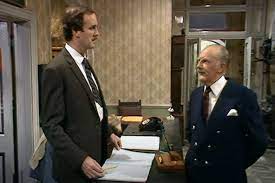
 

And late last month, when Putin’s forces rolled across the Ukrainian border, Trump was initially awestruck in his response.  “I went in yesterday and there was a television screen, and I said, ‘This is genius.’  Putin declares a big portion of the Ukraine…  Putin declares it as independent.  Oh, that’s wonderful.”


What a bawbag.


© Stewart Bremner


Of course, Trump’s grovelling before Putin is representative of the American far right, who see Putin as a virile embodiment of values the West has sadly lost and should be aspiring to regain.  After all, the  super-manly Vlad hates gays and transexuals, believes a woman’s place is at the stove, goes to church regularly (but obviously pays no attention to that wimpy, hippy New Testament stuff about loving thy neighbour and the like), has black belts in judo and taekwondo, is pals with Steven Seagal, wrestles with bears, and poses for totally non-embarrassing photo shoots on horseback naked from the waist up.


No wonder that at a recent American white nationalist conference, which was also attended by Republican Party nutjob Marjorie Taylor Greene, white supremacist commentator Nick Fuentes implored the crowd: “Can we get a round of applause for Russia?”  Other far-right American brown-nosers of the Putin derriere have included Ku Klux Klan leader David Dukes (Russia is the “key to white survival”), Ann Coulter (“In 20 years, Russia will be the only country that is recognisably European”) and Steve Bannon (“Putin ain’t woke…”  Well, bully for him, Steve!)
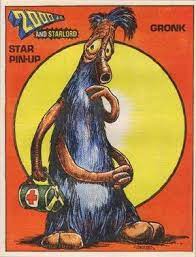
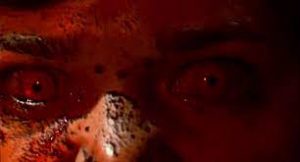
 

One malignant thread that’s woven through the rancid tapestry of American right-wing thought is the QAnon conspiracy theory.  Predictably, QAnon’s adherents have swiftly incorporated Putin, Ukraine and the invasion into their warped belief systems.  Putin, they’ve claimed, is really on the side of the angels.  His forces in Ukraine are trying to take out biolabs that the US has placed there.  And in these biolabs, the US President’s Chief Medical Advisor Anthony Fauci, Dr Evil himself, is attempting to create a new, deadly virus that’ll replace Covid-19.  I don’t so much despise people who buy into the QAnon cult as feel sorry for them, though I feel sorrier for their unfortunate families.  But I feel sorriest of all for the mild-mannered Dr Fauci.  The poor guy’s had to put up with garbage like this for the past two years for the sin of simply trying to do his job.


Finally, there’s the ultra-right – which isn’t the same as ‘ultra-correct’ – American broadcaster Tucker Carlson, who’s been so enthusiastically pro-Putin that TV outlets like Russia 1 and Russia Today have aired his ravings to the Russian public as evidence that lots of Western folk actually approve of Putin’s aggression in Ukraine.  In one plea for Putin tolerance, Carlson lamented, “Did he manufacture a worldwide pandemic that wrecked my business and kept me indoors for two years?  Is he teaching my children to embrace racial discrimination?  Is he making fentanyl?  Is he trying to snuff out Christianity?”  Supposedly, the answer to these questions is ‘no’, which makes him fine in Carlson’s eyes.


Tucker Carlson, who appears on Rupert Murdoch’s Fox News network, is what in American television parlance is called an ‘anchor’.  He’s also something that rhymes with ‘anchor’.  Come to think of it, he’s something that rhymes with ‘Tucker’ too.


More ranting will be done in a future post, when I move onto the topic of Putin’s British pals.


From twitter.com/campbellclaret