Ralph’s extraordinary world


© Columbia Pictures


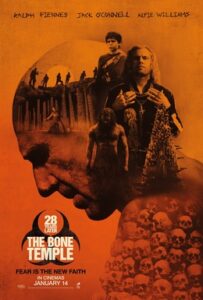
The recently released 28 Years Later: The Bone Temple is the latest in the series of British zombie movies that began with 28 Days Later (2002).  It’s also a direct sequel to last year’s 28 Years Later.  Though I had a few reservations about 28 Years Later, which was scripted by Alex Garland and directed by Danny Boyle, creators of the original 2002 film, it generally impressed me.  I felt wary about the forthcoming Bone Temple, though, because one of my 28 Years Later reservations was how it ended and set up its sequel.


I wrote at the time: “Its last minutes have upset a few people with their unexpected reference to a dark episode in recent British history, but I don’t mind that.  I think it’s a pretty audacious move by Garland’s script.  Rather, I don’t appreciate the goofy, cartoony manner in which those last minutes are filmed, which jar against the sombre tone of everything that’s happened previously.  This makes me nervous about what the sequel will be like (and it isn’t directed by Boyle, but by Nia DaCosta).”


Happily, having just seen 28 Year Later: The Bone Temple, I realise I had nothing to worry about.  It isn’t goofy or cartoony at all.  Actually, Nia DaCosta shoots her movie in a more measured, controlled style than Boyle shot his – he filmed with numerous iPhone cameras, edited frenziedly, and intercut the action with clips from old war documentaries and Laurence Olivier’s Henry V (1944).  Parts of DaCosta’s film are so still and character-focused you feel you’re watching a stage-play.  And overall, it’s a near-perfect blend of horror, violence, humour, pathos and, yes, optimism.  I’d even rate it as the best of the 28 Days / Weeks / Years Later movies – praise indeed, since I think the previous three films are all quality.  (I know the 2007 installment, Juan Carlos Fresnadillo’s 28 Weeks Later, gets some grief. But, apart from one idiotic lapse in plot logic, I like it.)


A warning.  From here on, there’ll be spoilers for 28 Years Later: The Bone Temple.


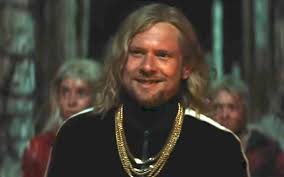
So, what was that ‘dark episode in recent British history’ referenced at the end of 28 Years Later?  Well, it concluded with its juvenile hero Spike (Alfie Wiliams) being rescued from the infected – the series’ name for the humans who’ve succumbed to the ‘rage virus’ and transformed into slavering, red-eyed, hyperactive zombies – by eight youths wearing tracksuits, bling and long, blonde wigs.  Their leader, played by Jack O’Connell, introduces himself as ‘Sir Jimmy’.  Indeed, they’re all called ‘Jimmy’: Jimmy Shite, Jimmy Fox, Jimmy Snake, etc.  Wandering around this post-apocalyptic, zombie-infested hellscape is a gang fixated on Jimmy Savile.


At this point, British viewers of 28 Years Later went, “Eek!”  Everyone else in the world probably went, “Huh?”


Savile, in case you didn’t know, was a British disc jockey, children’s TV presenter and charity fundraiser – in his lifetime he raised around 40 million pounds – who died in 2011.  With his long, greasy locks of blonde hair, penchant for tracksuits, cigars and bling, and irritating, homemade patois (“Now then, now then, as it happens, goodness gracious, how’s about that then, guys ‘n’ gals?”), he cut a grotesque figure, but was regarded as a saint because of his charity work.  One year after his death, though, he turned into a modern-day folk-demon when it became apparent he’d been a sexual predator who’d abused children, young women and others on an industrial scale – often patients in hospitals he’d raised funds for.  In fact, there’d been rumours about his evil proclivities while he was alive, but he never faced justice thanks to his saintly image and connections with the political and media establishments.
 

© Columbia Pictures


28 Years Later began with a prologue, seemingly unlinked to the rest of the film, wherein during the rage virus’s original outbreak in 2002 a group of children are stuck in a room watching a Teletubbies (1997-2001) video while their parents try, unsuccessfully, to barricade the house against an army of the infected.  Only one small boy escapes and he flees into a nearby church.  There, he sees his father, the local cleric, get attacked, transform and then seemingly lead the other infected off in a macabre, marauding dance.  The boy, it transpires, becomes Sir Jimmy, O’Connell’s character.  Grown up, his brain is an unhinged cocktail of zombie trauma, garbled religious dogma (from his father) and obsolete British pop culture (from the TV) – in the films’ alternative timeline, civilization ended in 2002, so Savile’s crimes were never revealed.  Thus, Sir Jimmy enthuses about Teletubbies and has trained one of his gang, Jimmima (Emma Laird), to do a Teletubbies dance-routine.  Also, echoing Savile, he frequently talks about ‘charity’ – though he uses the word as a euphemism for ‘torture’.


For Sir Jimmy’s gang are Clockwork Orange-type psychopaths.  He’s convinced them he’s the son of the devil and they’re on a holy, or unholy, mission to slaughter the infected and uninfected alike in what’s left of Britain.  Spike, fallen into their clutches and forced to join their ranks, spends 28 Years Later: The Bone Temple trying to stay alive and figure out how to escape from them.


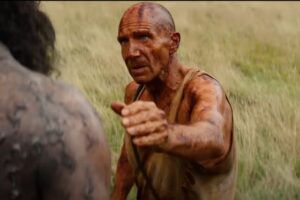
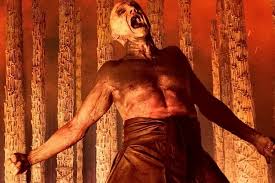
The movie has a second plot-strand, concerning Dr Ian Kelson (Ralph Fiennes), whom we also met in the previous film.  He’s a hermit who, in the middle of the countryside, has created a spectacular ‘bone temple’ – a structure built from the skeletal remains of the victims of the 28-year-long contagion that also honours those victims.  Kelson is certainly eccentric, but he’s decent and humane too and he’s managed to find a way of peacefully co-existing with the dangerous, brutal world around him.


Emblematic of that danger and brutality is Samson (Chi Lewis-Parry) – the name Kelson has given an ‘alpha’ member of the infected who stalks the environs of the temple.  Alphas are specimens bigger, stronger and even more dangerous than the ordinary infected.  Kelson uses morphine-tipped darts fired from a blowpipe to subdue Samson as he approaches, but he’s noticed that Samson has been coming back to the temple more often.  It’s as if he enjoys the doses of morphine he’s getting.  This inspires Kelson to experiment on the alpha.  How much, he wonders, of what’s wrong with the infected is a virus and how much is psychosis?  If the psychosis can be calmed – possibly lifted? – by drugs, what remains of the victim’s mind and memories?  Though Spike’s dad (Aaron Taylor-Johnson) claimed in the previous film that the infected don’t have souls, Kelson, as his relationship with Samson develops, realises something of a soul does linger in the infected’s simultaneously terrifying and pitiful husks.


So, Spike is trapped among the Jimmies, Fiennes is improbably bonding with Samson and, ominously, we know these two storylines are going to crash together sooner or later with painful results for everyone.  One thing I like about The Bone Temple, again scripted by Alex Garland, is that for all the simplicity of its plotting, it’s less predictable than you’d expect.  I’d assumed the Jimmies would intrude violently on Kelson with a ‘home invasion’ of his bone temple, but what happens is more complex.  I’d also seen people assume online before the film’s release that the Jimmies would kill Kelson and an enraged Samson would go on the rampage, or the Jimmies would kill Samson and an enraged Kelson would go on the rampage – but neither happens here. The real outcome is unexpectedly hopeful, funny, sad and satisfying.  And the long-awaited scene when Sir Jimmy and Kelson finally come face to face is splendid in both its drama and its restraint.  Generally, while O’Connell’s performance is great, Fiennes’ performance is one for the ages.


The previous film posited that although Britain had been ravaged by the rage virus, mainland Europe hadn’t and it’d continued to develop as it actually did in the 21st century.  This scenario of an isolated and seriously in-the-shit Britain was an obvious metaphor for Brexit.  The Bone Temple is less on the nose with state-of-the-nation metaphors, but you can still see some.


The kids making up Sir Jimmy’s gang – and they are kids, as evidenced by scenes where a couple of them suffer fatal injuries and reveal their true, frightened selves during their death throes, one of them even lamenting about a long-ago pet kitten – symbolize the victims of a half-century of ruthless government policies that decreed there had to be winners and losers and split the country into haves and have-nots. They’re the losers, the have-nots, the left-behind youngsters condemned to membership of a feral underclass.  Tellingly, the opening scene shows the Jimmies gathered in a decayed public swimming pool in some abandoned post-industrial city: the sort of public amenity, in the sort of place that desperately needed public amenities, that got the chop during David Cameron’s premiership and ‘austerity’ project in the early 2010s.


Significantly, they’re exploited, manipulated and fashioned into a squad of killers by someone modelling himself on Jimmy Savile.  The real Savile was a respected member of the establishment at the time when British politics turned callous and abandoned the principle that all citizens, including the weak, poor and vulnerable, should be looked after.  Each Christmas-time in the 1980s, for instance, Prime Minister Margaret Thatcher would invite him to spend Boxing Day with her at Chequers.  He was also a confidante of Prince (now King) Charles.
 

© Columbia Pictures


If Sir Jimmy and his minions represent everything rotten about Britain recently, Kelson represents the opposite.  For one thing, he was formerly a doctor in the country’s National Health Service, an institution founded on the principle that the weak, poor and vulnerable should be looked after (and not have to pay a fortune for their treatment).  When he treats the arrow wounds that a doped-up Samson has incurred during his travels, he quips, “So you owe me…  Only kidding.  I’m NHS, free of charge.”  Another British cultural reference that may go over the heads of American audiences.


Kelson also reminds us that as well as being an imperial superpower, Britain was once a more benevolent, cultural one. (It helps that he’s played by Ralph Fiennes, a fixture in two massive, British-originating cultural franchises, Harry Potter and James Bond.)  Despite the apocalypse, Kelson has managed to hang onto his old vinyl collection and he plays stuff from it at appropriate moments – Duran Duran’s Ordinary World (1992) when Samson needs some pacification; Radiohead’s Everything in its Right Place (2000) when he’s wistfully contemplating the night-sky; and fabulously, when he has to deal with the Jimmies, Iron Maiden’s Number of the Beast (1982) – “Let’s turn this up to 11,” he says, and he does.  Iron Maiden, Radiohead, Duran Duran…  In their different ways, at different times, these British bands were massively popular, musical juggernauts worldwide (and coincidentally, all three have been touring again lately).  That’s the sort of global soft power Britain should be proud of.


Indeed, Kelson seems an embodiment of the caring and creative British values that the country tried to project to the outside world during the opening ceremony of the 2012 London Olympics – a ceremony whose artistic director was Danny Boyle.


Aside from the script, performances, themes and general execution, a reason why I liked The Bone Temple so much was because the relationship between Kelson and Samson echoed something in one of my all-time favourite horror movies, George A. Romero’s Day of the Dead (1985).  In the Romero film, a scientist called Dr Logan (Richard Liberty) attempts to ‘domesticate’ a zombie nicknamed ‘Bub’ (Sherman Howard).  Good though Chi Lewis-Parry is, Samson doesn’t quite have the pathos of Bub – it would be difficult, since at the start of The Bone Temple we see Samson doing business as usual, i.e., ripping off someone’s head and dragging their spine out of their neck-stump.  Kelson, though, is a far more endearing character than the obsessed and unbalanced Logan.  The scenes with him and an ever-more docile Samson are both amusing and touching and you feel increasingly worried about them both as the Jimmies close in.


If I have a criticism of The Bone Temple, it’s about how it depicts the other infected, the ones who aren’t Samson.  They feel like a device that gets turned on and off according to the needs of the plot.  Uninfected humans out in the open who need to be threatened?  The infected are ubiquitous.  Uninfected humans out in the open who need to have a chat by the campfire?  The infected are nowhere to be seen.  Also, near the end, I can’t understand why the infected don’t immediately swarm the bone temple when it’s lit up like a chandelier and blasting out Iron Maiden.


Otherwise, 28 Years Later: The Bone Temple is a hugely impressive achievement by Nia DaCosta, Alex Garland and their cast and crew.  And while Ralph Fiennes won’t win an Oscar for his performance, much as he deserves to – zombie movies don’t win Oscars – Iron Maiden should at least get him onstage during the rest of their world tour.
 

© Columbia Pictures

Coltrane’s sweetest notes


© BBC


Actor and comedian Robbie Coltrane, who died on October 14th, seemed part of the furniture in British TV shows and films when I was in my late teens and twenties.  His performing talents, gallus manner and considerable physique made him impossible to ignore.


Also, as someone who’d grown up mostly in Scotland, I – and everyone I knew – appreciated the fact that he was a Scottish lad.  Originally, he’d been one Anthony MacMillan from Rutherglen, with his stage name inspired by the great jazz saxophonist John Coltrane.  It’s fair to say that Scotland did not get much attention in the London-centric media of 1980s Thatcherite Britain, except when it fleetingly made the news as the site of yet another factory or colliery closure. (Admittedly, things are only slightly better in 2022.)  Thus, seeing Coltrane on popular, national telly or in movies reaching international audiences, and seeing him be unashamedly Scottish too, felt like a victory.


Anyway, here are a dozen of my dozen favourite TV and cinematic moments involving Robbie Coltrane.


The Young Ones (1984)

Coltrane made three appearances in the groundbreakingly anarchic BBC comedy show The Young Ones.  I remember him best in the episode Bambi, which may have been the first time he registered on my radar.  Bambi is the one where Rik (Rik Mayall), Vyvyan (Ade Edmondson), Neil (Nigel Planer) and Mike (Christopher Ryan) appear on University Challenge (up against a snooty team from ‘Footlights College, Oxbridge’ comprised of Stephen Fry, Hugh Laurie, Emma Thompson and Ben Elton), while Motorhead play The Ace of Spades in their living room.  Observing the shenanigans through a microscope is Coltrane as a genteel, old-fashioned Scottish doctor (“Absolutely amazing! Human beings the size of amoebas!”), possibly modelled on Dr Finlay in the 1930s stories by A.J. Cronin.  Coltrane brings the episode to an abrupt end when he accidentally drops an éclair on the specimen slide, burying Rik, Vyvyan and co. in creamy goo.


Laugh???  I Almost Paid My Licence Fee (1984)

During the early 1980s, Coltrane featured in three TV comedy sketch shows, Alfresco (1983-84), which also featured the afore-mentioned Fry, Laurie, Thompson and Elton; A Kick Up The Eighties (1984); and Laugh??? I Almost Paid My Licence Fee (1984).  In the latter, Coltrane made several memorable appearances as a West-of-Scotland Orangeman called Mason Boyne.  With his imposing bulk and craggy features, and wearing a black suit, bowler hat and sash,  Coltrane certainly looked the part.  Laugh? was produced by BBC Scotland and this was one of the very few times when the broadcaster was bold enough to have a go at the Orange Order and its paranoia about all things Popish.  “It’s all here, Matthew Chapter 2, Verses 1-10,” says Boyne, citing the Bible in support of his assertion that the Pope is the Antichrist.  “All you have to do is… jumble the words up a bit.”


© BBC


Caravaggio (1986)

Throughout the 1980s Coltrane had supporting or minor roles in many British or made-in-Britain films.  These include, incidentally, several forgotten fantasy and science-fiction ones: Death Watch (1980), Flash Gordon (1980), Britannia Hospital (1982), Krull (1983) and Slipstream (1989).  Okay, Flash Gordon hasn’t been forgotten – unfortunately.  Anyway, in Derek Jarman’s Caravaggio, he gives a performance that’s stayed in my memory more than most.  He plays Scipione Borghese, the 17th century cardinal who becomes the patron of the turbulent Italian painter.  As usual with Jarman, there’s striking set design, deliberately littered with anachronisms, and the film sees the debuts of Tilda Swinton and Sean Bean.


Mona Lisa (1986)

Coltrane also provides good support in Neil Jordan’s Mona Lisa.  He plays Thomas, a garage-owner who offers sanctuary for the movie’s main character, old friend and harassed ex-convict George, played by the incomparable Bob Hoskins.  Thomas has no bearing on the film’s plot, which sees George employed by a gangster (Michael Caine) to drive around and look after high-class prostitute Simone (Cathy Tyson), whom he gradually falls in love with. But the friendship Thomas offers George is one of the few specks of light in a bleak film.  His best line comes when he walks in on George while George is watching a dodgy video he’s obtained – discovering to his horror that it features his beloved Simone in some hardcore porn.  Innocently, Thomas asks, “Channel 4, is it?”


Tutti Frutti (1987)

The pinnacle of Coltrane’s 1980s work, the tragi-comedy series Tutti Frutti is surely the best piece of television to come out of Scotland.  At the time, I remember the New Musical Express hailing it as ‘the best TV show ever’, though sadly those know-nothing kids running the 2022 online version of the NME didn’t even mention Tutti Frutti in their Coltrane obituary.  Written by John Byrne, Tutti Frutti has Coltrane as Danny McGlone, who’s drafted in to sing for a vintage Scottish rock ‘n’ roll band called the Majestics after their original singer, Danny’s older brother, is killed in a car accident.  The Majestics are on a death-spiral, largely due to the antics of guitarist Vincent Driver (Maurice Roëves, who died last year).  Driver styles himself as ‘the iron man of Scottish rock’, but his personal life is a destructive shambles.  The band’s conniving manager Eddie Clockerty (a never-better Richard Wilson) doesn’t help things, either.


One consolation for Danny is another recent addition to the band’s line-up – guitarist Suzy Kettles, played by Emma Thomson with an impressively convincing Glaswegian accent. He gradually falls for the sassy Suzy, though she has her own issues – an abusive ex-husband, who happens to be a dentist.  Can Danny and Suzy get together while, around them, everything descends into a hellhole of fights, farce, humiliation, depression, knifings, suicide and extreme dental violence?  Due to copyright problems over its title song, written and recorded by Little Richard in 1955, Tutti Frutti didn’t get another airing for a very long time.  Happily, it’s now available on DVD and three years ago was shown again on BBC Scotland.


© BBC


Blackadder the Third (1987)

Coltrane played the celebrated lexicographer Dr Samuel Johnson three times on stage and screen.  His best-remembered performance as the famously irascible Johnson is in the Ink and Incapability episode of the much-loved TV comedy Blackadder, wherein the crafty title character (Rowan Atkinson) and his hapless minion Baldrick (Tony Robinson) accidentally incinerate the one and only copy of Johnson’s Dictionary of the English Language (1755) prior to its publication.  This leaves them with just one night to write a replacement dictionary before Johnson finds out and inflicts his wrath upon them.  In the funniest scene, Johnson boasts that his dictionary “contains every word in our beloved language.”  To which Blackadder offers him his “most enthusiastic contrafibularities.”  He sticks the knife in by adding, “I’m anaspeptic, phrasmotic, even compunctuous to have caused you such pericombobulation.”


Henry V (1989)

Sir John Falstaff, a prominent character in Shakespeare’s Henry IV, Parts 1 and 2, is actually dead at the start of Henry V.  However, in this cinematic version, writer and director Kenneth Branagh couldn’t bear to leave out the portly, garrulous rogue, so he showed Coltrane as Falstaff in an all-too-brief flashback.  Falstaff was a role Coltrane was clearly born to play and it’s a tragedy he never got cast in a proper adaptation of the two Henry IV plays (or for that matter The Merry Wives of Windsor).


Nuns on the Run (1990)

Nuns on the Run, which has Coltrane and Monty Python’s Eric Idle as criminals trying to escape some nastier criminals and taking refuge, and donning disguises, in a convent, is truly a one-joke film.  That joke is seeing Coltrane dressed as and pretending to be a nun.  It’s a pretty hilarious one, I have to admit.  Though totally inconsequential, Nuns on the Run works better than another comedy he was in during the same period, The Pope Must Die (1991).  North American distributors, nervous about the film’s sacrilegious title and noticing Coltrane’s girth, unsubtly renamed it The Pope Must Diet.


© HandMade Films / 20th Century Fox


The Bogie Man (1992)

This TV film adapted to the small screen the Alan Grant / John Wagner comic book about a Scotsman with psychiatric issues who believes he’s Humphrey Bogart (or characters Bogie played in the movies) and goes around fighting crime. The TV version was panned by the critics, disowned by Grant and Wagner, and as far as I known has never been reshown.  While I found it underwhelming, I enjoyed Coltrane’s performance as the lead character – occasionally, when not channelling Bogart, he lapses into impersonating Sean Connery and Arnold Schwarzenegger too.  Also, Craig Ferguson, years before he became a superstar on American television, gives a nice supporting turn as the cop on Coltrane’s trail.


Cracker (1993-95)

Arguably Coltrane’s greatest role, his work in Cracker as Dr Edward ‘Fitz’ Fitzgerald, a criminal psychologist helping out a dysfunctional team of detectives (Christopher Eccleston, Geraldine Somerville, Lorcan Cranitch) won him the British Academy Award for Best Actor three years in a row.  Grim and intense, with the only humour coming from the arrogant, flamboyant and self-destructive Fitz, the show was at its most gruelling during its To Be a Somebody story at the start of season 2.  This involves a terrifyingly credible killer (Robert Carlyle), who’s ended up the way he is largely because of trauma he suffered in the 1989 Hillsborough Stadium disaster.  It also features the murder of one of the show’s main characters.


© Granada Television


Goldeneye (1995) and The World is Not Enough (1999)

Coltrane’s entertaining turns as ex-KGB man Dimitri Valentin, now a would-be entrepreneur in post-Communist Russia, are among the highlights of these two Bond movies, which have Pierce Brosnan playing 007.  Valentin certainly gets the best lines.  In Goldeneye, when Bond holds a gun to the back of his head and he hears the click of its safety catch, he observes: “Walther PPK, 7.65 millimetre. Only three men I know use such a gun.  I believe I’ve killed two of them.”   And in The World Is Not Enough, when Bond interrogates him about sultry oil tycoon Elektra King (Sophie Marceau), whom Bond has recently bedded, and demands, “What’s your business with Elektra King?”, he retorts, “I thought you were the one giving her the business.”  Valentin, who runs a hellish-sounding country-and-western club in one film and a caviar factory in the other, was devised at a time when Russian oligarchs could be depicted as lovable, comic Arthur-Daley-from-Minder-type grifters; and not sinister billionaires laundering mountains of dirty money in the City of London and buying their way into the heart of the British establishment.


From Hell (2001)

Like The Bogey Man, this movie adaptation of Alan Moore’s labyrinthine graphic novel about Jack the Ripper, published in instalments from 1989 to 1998, was disdained by its original creator.  However, if you can erase all memories of Moore’s From Hell and focus solely on the film, it’s decent.  For one thing, it looks at the Ripper’s hideous murders from the perspective of characters commonly neglected in previous films on the subject – his female victims.  Coltrane gives a solid performance as Sergeant George Godley, the loyal, capable and intelligent assistant to the film’s hero, the vulnerable, opium-raddled Inspector Frederick Abberline (Johnny Depp).  A scene where Godley and Abberline are filmed from behind as they approach the funeral ceremony of one Ripper victim, dressed in black suits and bowler hats, even evokes Laurel and Hardy.  (In fact, at one time, Coltrane and Robert Carlyle had tried unsuccessfully to get a Laurel and Hardy movie off the ground.)


Thereafter, Coltrane achieved global popularity playing Hagrid in eight Harry Potter movies and got regular gigs doing voice-work in items like The Gruffalo (2009) and Brave (2012).  None of this was my cup of tea, but good on him for securing well-deserved fame and, presumably, fortune too.  It’s just a pity that a few years ago ill-health caught up with him, which deprived our TV and movie screens of his always-welcome presence.


© Eon Productions

Branagh’s Belfast


© Northern Ireland Screen / Focus Features / Universal Pictures


Kenneth Branagh has seemed the embodiment of classical, theatrical Englishness for a long time – at least since his 1989 film adaptation of Henry V, in which he raged “Cry ‘God for Harry, England and Saint George!’”  Meanwhile, over the years, I’ve enjoyed shocking people by pointing out to them that Branagh isn’t actually English.  He was born in Belfast, Northern Ireland, in 1960.  He and his family left there for England in 1969, shortly after the outbreak of the Troubles.  He ended up in Berkshire, where he dropped his Belfast accent and ‘acquired received pronunciation to avoid bullying.’  Thus began the plummy-voiced Branagh we know today.


In fact, Branagh’s early life wasn’t dissimilar to mine, for I was born and brought up in Northern Ireland until the age of 11, when my family moved to the town of Peebles, in the Borders region of Scotland.  I was a couple of years older than Branagh was at the time of moving and couldn’t shed my accent so easily – not that I needed to, because although my new classmates in Peebles sometimes took the piss out of the way I spoke, I was never bullied.  Come to think of it, acquiring ‘received pronunciation to avoid bullying’ probably wouldn’t have been a good policy at Peebles High School.  Folk would have picked on you more for sounding like a posh tosser.


Before Branagh made a name for himself as the star, director and adaptor of Henry V, I’d known of his Northern Irish connections because I’d seen him appear in a quartet of TV plays written by the Northern Irish dramatist Graham Reid.  These were Too Late to Talk to Billy (1982), A Matter of Choice for Billy (1983), A Coming to Terms for Billy (1984) and Lorna (1987), and were about the tribulations of a working-class Protestant family in Belfast, the Martins.  The Martins’ problems aren’t caused by the Troubles but by their own flawed, damaged and abrasive personalities.  The widowed father Norman (James Ellis) is an unrepentant hard man, incapable of showing his gentler feelings, while his eldest child and only son Billy (Branagh) is embittered about how Norman treated his late mother.  It’s left to the eldest daughter, the mild-mannered Lorna (Brid Brennan), to act as a surrogate mother to the family’s younger children.  During the plays, unexpected things happen – Norman mellows under the influence of a woman he forms a relationship with while working in England, Lorna develops some unexpected steel and Billy, dismayingly, begins to show some of the worst traits of his dad.  In the four plays Branagh had no problem readopting his old Belfast accent, so I was surprised when a few years later I went to the cinema and heard him speaking fluent Shakespeare in Henry V.


Branagh has revisited his Belfast roots with his latest movie Belfast, which was released in the USA last year and has just been released in Britain.  Inspired by Branagh’s experiences during the late 1960s, it tells the story of another working-class Protestant family, one less dysfunctional than the Martins in the Billy plays: a couple simply entitled ‘Ma’ (Catriona Balfe) and ‘Pa’ (Jamie Dornan), and their older son Will (Lewis McAskie) and younger son Buddy (Jude Hill).  Pa spends his working life in England and is considering moving his family over to live with him, something that doesn’t appeal to Ma and the boys.  “I know nothing else but Belfast,” she protests.  For one thing, they have strong family ties in the city, most notably Pa’s parents, the droll Pop (Ciaran Hines) and stern but kindly Granny (Judi Dench).  Then the Troubles erupt and Protestant paramilitaries led by local thug Billy Clanton (Colin Morgan) chase the Catholic families out of their neighbourhood.  As the paramilitaries’ grip on the area tightens, Pa falls foul of Clanton and it becomes clear that, like it or not, his family will have to leave too.


© Northern Ireland Screen / Focus Features / Universal Pictures


This basic plot could have made Belfast a grim film, but it’s a funny, good-natured one because these events are seen through the eyes of little Buddy.  They have to compete for attention with all the things that matter to a normal nine-year-old boy – things ranging from pursuing your first love to getting initiated into the local kids’ gang, from making trips to the cinema to bonding with your granddad.


Belfast left me with mixed emotions.  On one hand, I found it annoyingly overstated in places.  On the other, I generally found it rather moving.  I’ll explain my conflicting reactions in detail, starting with the negative ones.


I have to admit that until now Henry V is the only film by Branagh that I’ve enjoyed.  I wasn’t impressed by his later adaptations of Shakespeare, like Much Ado About Nothing (1993) and Love’s Labour’s Lost (2000), and I hated his version of Mary Shelley’s Frankenstein (1994).  They seemed shrill and over-the-top in both their acting and their visuals.  Originally, I thought this was because Branagh didn’t have confidence in the original texts by Shakespeare and Shelley to capture the attention of modern film audiences.  He felt obliged to make them as bombastic as possible, pumping them up with the cinematic equivalent of steroids – operatic performances, hammy humour, fast-moving camerawork and so on.  Nowadays, though, I just think the problem is that Branagh, basically, is a theatrical man.  When you’re on a stage, performing for a live audience, everything has to be big – the voice projection, the gestures, the general drama – in order to be seen and heard. But what’s effective from a distant stage often seems unsubtle when it’s projected in fine detail onto a large movie screen.  And that’s the impression I sometimes got with Belfast.


In its plot machinations, visuals and soundtrack, there are some broad brushstrokes indeed.  You get heavy-handed pieces of comedy, such as when Buddy cheats at his homework in order to get placed at the desk beside the girl he fancies at school – their teacher positions the pupils from the front to the back of the classroom according to how good or bad their marks are, and Buddy’s sweetheart, the brightest kid in class, is right at the front.  (From a teaching point of view, wouldn’t it be sensible to have the less able kids at the front, so you can keep a close eye on them, and the smart ones at the back?)


Meanwhile, Branagh shoots the film in black and white but inserts colour at certain moments.  These are when Buddy’s family go to the cinema.  Although the auditorium is filmed in monochrome, what’s happening on the screen – action from Hammer’s One Million Years BC (1966) and the movie version of Roald Dahl’s Chitty Chitty Bang Bang (1968) – appears in its original, glorious technicolour.  As a metaphor for how the cinema transports Buddy out of his black-and-white everyday existence and into the colourful dreamworld of the movies, this is pretty clunking.


© Northern Ireland Screen / Focus Features / Universal Pictures


By far the worst offender, though, is a scene where Pa confronts Billy Clanton on a street.  Clanton is holding his family at gunpoint and there’s a squad of British Army soldiers looking on, pointing weapons at everybody.  I know we’re meant to be viewing this through Buddy’s eyes.  But still, it seems crass and cheesy that at this deadly-serious moment Tex Ritter starts singing Do Not Forsake Me Oh My Darling from the classic 1952 western High Noon – which Buddy has recently watched on TV – on the soundtrack.  Billy Clanton, incidentally, was the name of one of the villainous Clanton Gang who took on the Earp brothers and Doc Holliday during the gunfight at the OK Corral, another touch that’s a bit too obvious.


All that aside, however, I have to say I enjoyed Belfast.  It’s nice to see a film about Northern Ireland that isn’t primarily about terrorism, extreme religion or extreme politics, and that focuses on believable, relatable people who are just trying to get on with their lives.  It also contains a lot of humour, something that’s usually in short supply in movies about Northern Ireland, even though I remember knowing many funny, witty characters when I lived there.  (Ciaran Hines’ genial, good-hearted Pop, who manages to be on Buddy’s wavelength without ever patronising him, initially seemed too good to be true – but again, I realised, I’d known several old guys like him during my childhood.)


Branagh conveys the idea that, as a kid in Northern Ireland, the popular culture of the time enthused you just as it enthused kids in more ‘normal’ societies, and influenced you as much as (if not more than) the riots and bombings that were happening not far from your doorstep. Thus, we see Buddy dressing up like a cast-member of Thunderbirds (1965-66), watching Star Trek (1966-69), playing with Subbuteo and James Bond toy cars, and reading the Marvel comic The Mighty Thor, which allows Branagh to sneakily reference the 2011 movie Thor, which he directed.  (I don’t know how easy it was to access Marvel comics in Belfast in 1969, especially as Marvel’s British subsidiary Marvel UK didn’t begin operating until 1972.  Still, I remember finding an American edition of The Avengers in Enniskillen in the early 1970s, so I guess it was possible.)


If there’s one thing I find unconvincing about the characters, it’s that the tribal symbols that existed in Northern Ireland’s Protestant and Catholic communities, even in 1969 before the Troubles hardened people’s senses of identity, are absent.  There’s little said or shown about being British or Irish, about Union Jacks or tricolours, about the Orange Order or Gaelic Athletics Association.  Actually, at a few points Buddy’s relatives describe themselves as ‘Irish’ (“The Irish were born for leaving – otherwise, the rest of the world would have no pubs…”  “All the Irish need to survive is a phone, a Guinness and the sheet music to Danny Boy…”), although I expect most Belfast Protestants would call themselves ‘British’.  Compare this with a scene in Graham Reid’s A Coming to Terms for Billy when Norman Martin’s two youngest daughters discuss, unenthusiastically, the prospect of their dad taking them to England.  When one points out how disliked the Irish are in England, the other retorts, “We’re not Irish.  We’re Protestants!”


Still, Belfast definitely shows that Branagh’s heart is in the right place even if, occasionally, his plotting and filmmaking instincts aren’t.  The black-and-white cinematography is gorgeous and his use of classic Van Morrison songs on the soundtrack – Warm Love, Jackie Wilson Said, Bright Side of the Road, Days Like This, Carrickfergus and, inevitably at the end, The Healing has Begun – is a reminder that however much Van the Man has degenerated these days into a curmudgeonly, whinging old fart who’d pick a fight with his own shadow, he did, once upon a time, record some wonderful music.


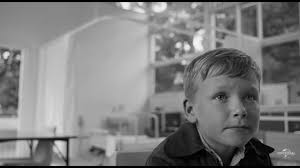
And, ultimately, Branagh shows that despite the terrible things that have gone on there, Northern Ireland is a place that exerts a powerful hold on your affections.  This is illustrated in the scene where Ma and Pa break the news to Buddy that they’re all going to leave Belfast and move to England.  Poor Buddy promptly bursts into tears.


I remember when my mother took me aside in 1976 and told me that we were going to move to Scotland.  I reacted in exactly the same way.


© Northern Ireland Screen / Focus Features / Universal Pictures