You can’t say those things nowadays… unless you’re a politician


From wikipedia.org / © House of Lords / Roger Harris


In this post I’m not going to repeat the three most depraved and revolting jokes I’ve ever heard.  But I’ll say when and where I heard them, and from whom.


The first joke concerned a medical tragedy and a hideous crime, both involving children, which’d made headlines in the UK during the 1980s.  One night in a pub in Aberdeen, where I was a college student, a friend told a 13-word joke that combined the two cases.  The friend was a decent guy who was drunk at the time and he uttered the joke during a moment of reckless bravado.  Immediately afterwards, he looked disgusted with himself and spent the rest of the evening in a state of depression.  I don’t think I heard him tell an even vaguely risqué joke after that.


I wasn’t as shocked as I might have been because I’d already encountered the joke in written form.  Some degenerate had scribbled it on the back of a toilet-door in Aberdeen University’s Queen Mother Library and I’d noticed it whilst ‘on the john’.


The second joke was two words longer – 15 – and I heard it in the context of a supposedly real-life anecdote.  Another guy I’d known as a student had, following graduation, gone on a trip to the USA where, one day, he’d ended up at an outdoor music festival.  He too was somewhat inebriated.  The festival’s compere decided, at one point, to leave the stage and wander among the crowd, sticking his microphone into people’s faces and asking them how they were getting on.  He stopped by my old acquaintance and, discovering he was from ‘Scaaat-land’, asked him to tell a ‘Scaaat-tish’ joke.  So my acquaintance spewed those 15 words into the microphone, which boomed across the field from the festival’s speakers and left the entire crowd in mortified, disbelieving silence.  I’m not sure if I really believe that story happened – but if it did happen, it was quite something.


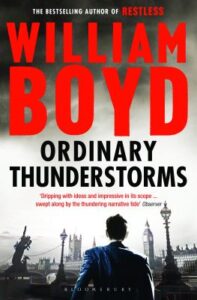
Incidentally, the same joke appears in William Boyd’s 2009 novel Ordinary Thunderstorms.  An unsavoury character tells it to the book’s hero, who responds by tipping him over a bridge and dropping him into the River Thames, where he drowns.  To be fair, the character had antagonized him a lot before that, so he wasn’t just reacting to the joke’s depravity.
 

© Bloomsbury


The third joke I heard in the early 1990s.  I was sitting at the counter of an Edinburgh pub when a drunken guy beside me told it.  It was a longer and more elaborate joke and featured Freddie Mercury, singer of the rock band Queen, who was famously gay and had died of AIDS a while earlier, and another famous showbusiness personage, also gay, who’s still with us in 2026.


Ooph, I thought, that’s really horrible. I hope I never hear a joke like that again.  


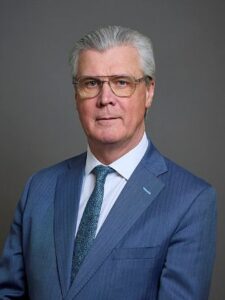
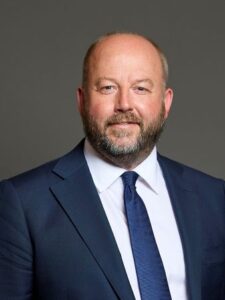
Well, I have just encountered a joke like that again.  In fact, it’s the same joke, though updated from the 1990s and now about the gay singer George Michael, who passed away in 2016, and his former partner Fadi Fawaz.  According to the Daily Record newspaper last week, it was told by Malcolm Offord, leader of the far-right-wing Reform party’s branch in Scotland.  In 2018, he included it in a speech he delivered at a Burns Supper held by a rugby club he was a director of.  In the kerfuffle following the Daily Record’s report, Offord admitted telling the joke was ‘a mistake’ and denied being homophobic.  “I don’t have any issue with homophobia,” he said.  “I’ve got a lot of gay friends.”


Nigel Farage, Reform’s Britain-wide leader, has defended Offord, saying, “If we’re going to drum people out of public life for telling a joke at a boozy rugby club dinner that’s amongst friends, we’ll finish up with the dullest group of individuals, looking a bit like, sounding a bit like Keir Starmer.”  Less forgiving was John Swinney, leader of the Scottish National Party and currently First Minister of Scotland – the post Offord aspires to take over following the Scottish parliamentary election this May.  Swinney said of Offord, “He’s unfit to be leader of any political party, unfit to be a member of the Scottish Parliament with views and attitudes like that…  I think we’ve got to be really careful as a country about where we are heading, and Reform have got no part to play in it if they represent views of intolerance, prejudice and hatred of that type.”


What are we to make of this?  Should we regard Offord’s faux pas as regrettable, alcohol-fuelled ‘banter’, accept his apology and move on?  And are we, as Farage suggests, in danger of becoming too puritanical, of scaring all the interesting people away from public office, of ending up with humourless dullards in power over us?  Is society getting – oh God, here we go again – too woke?


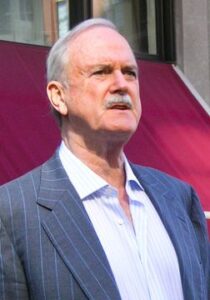
It calls to mind the lamentations of Monty Python (1969-74) and Fawlty Towers (1975-79) star John Clleese, who’s spent a good part of the last few years complaining that you can’t tell a good, impactful, close-to-the-bone joke anymore because folk get too offended: “I don’t think we should organize a society around the sensibilities of most easily upset people because then you have a very neurotic society.”  Incidentally, the 86-year-old Cleese appears to have thrown in his lot with Rupert Lowe’s party Restore UK, an outfit even further to the right than Farage’s Reform.
 

From wikipedia.org / © Paul Boxley


Well, in my view, we’re never going to stop hearing sick, horrible and downright racist / misogynist / homophobic / transphobic / etc. jokes.  For as long as the urge to be ‘edgy’ persists in the human psyche, such jokes will continue to be told in pubs and clubs, on sports terraces, in Internet forums, on WhatsApp and other messaging platforms, in countless situations where people interact.  But anyone who thinks it’s a good idea to spout a joke of that sort in public – supposedly 200 people attended Offord’s Burns Supper – shouldn’t be presenting themselves as a politician qualified to take over the highest political office in Scotland.  Especially when as holder of that office you’ll be representing, and making decisions that affect, the group of people your joke cruelly mocked.


Call me old-fashioned, but I prefer my political leaders to be dull – and serious, and sensible.  I remember British Prime Ministers like Labour’s Jim Callaghan and the Conservatives’ John Major, both rather grey and uninteresting, but whom I felt a lot safer having in Number 10, Downing Street than, say, an alleged laugh-a-minute ‘personality’ like Boris Johnson.  Between Callaghan and Major, of course, Britain was subjected to the 11-year reign of Margaret Thatcher, who had many qualities – mainly negative qualities, in my opinion – but being a barrel of laughs who told good jokes wasn’t one of them.


Offord must have thought he was on safe ground with his joke because he was at a well-lubricated rugby club event, not what you’d expect to be the most politically correct of gatherings.  But according to the Daily Record, even his rugby-loving audience was unimpressed.  One witness said, “I was sitting next to a gay man and it was clearly an extremely uncomfortable and unpleasant experience for him…  At the time I thought it pretty awful and indeed that was the feeling in the room.  Even for a rugby club it was a crude, bad taste and insulting spectacle…  I don’t know who in their right mind would say something like that.”


Even some of the usual suspects in Scotland’s mostly right-wing, Unionist media have turned on Offord because of this.  Scottish Times columnist Alex Massie penned a piece entitled Reform may already regret its choice of leader in Scotland, whilst Scottish journalist Stephen Daisley, who frequently writes for the very right-wing Spectator, messaged, “Malcolm Offord is single-handedly wrecking Reform’s chances in the Scottish parliament.  Can the Holyrood campaign be salvaged?”


I haven’t heard any reaction yet from Chris Deerin, who’s somehow the Scotland editor at the supposedly left-leaning New Statesman.  When Offord became Scottish Reform leader, Deerin tweeted, “Malcolm Offord is a seriously great get for Reform.  Very smart, ambitious for Scotland, excellent communicator, properly Scottish, experience of government, hugely successful in business – working class boy made good.  Ooft.”  (‘Ooft’, of course, was my first thought when I heard that joke.)  And in a couple of New Statesman articles Deerin penned about Offord, he talked breathlessly about the wealthy politician’s ‘gilded life’ and particularly admired his “vintage, open-top Jaguar sports car, Bond-esque in its sleek lines and growling power,” in which Offord “roared off into the countryside.”


Alas, despite everything, I don’t think Offord will be roaring off into the countryside, never to be seen or heard of again.  There are too many people who’ll rally to his cause rather than reject it after this furore.  That’s because they believe the line, fed to them endlessly by Britain’s right-wing media and pundits, that everything is too puritanically woke now, that you can’t crack a joke about gays or women or religious or ethnic minorities without the roof falling on your head, that you “can’t say those things nowadays”.  The irony is that you can say those things nowadays, and totally get away with them, at least if you’re a British politician.


Nigel Farage has recently courted controversy over the personalized messages he’s sent as Cameo videos – one of several lucrative side-projects he has in addition to being Reform party leader and a Member of Parliament.  A Guardian investigation found that the messages included ones “supporting a convicted rioter, repeating extremist slogans, and endorsing a neo-Nazi event” and where he “referenced antisemitic conspiracy theories, and made misogynistic remarks about leftwing politicians, including a comment about the US congresswoman Alexandria Ocasio-Cortez’s breasts.”


Previously, Farage was in hot water because of allegations made by over 30 people who’d known him during his schooldays.  According to their accounts, the teenaged Farage was quite the dedicated follower of fascism – among other things, singing Hitler Youth songs and growling “Hitler was right” and “Gas them” at Jewish pupils. He’s variously responded to these allegations by calling them ‘fantasies’, saying he can’t remember saying such stuff or dismissing it as – there’s that word again – ‘banter’.


Not that this has dented Farage’s popularity much.  His party is still leading in British opinion polls.
 

From wikipedia.org / © Roger Harris
From wikipedia.org / © Roger Harris


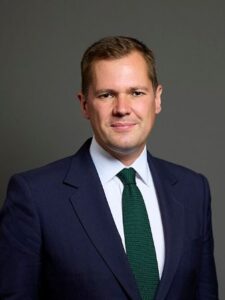
Elsewhere, Robert Jenrick, formerly the Conservatives’ Shadow Justice Secretary and now a defector to Reform, caused outrage last year when he said a 90-minute visit to the Handsworth part of Birmingham was “as close as I’ve come to a slum in this country” and one where he didn’t encounter “another white face“.  And earlier this month, the Conservatives’ Nick Timothy, who’s inherited Jenrick’s role as Shadow Justice Secretary, described an open Iftar event in Trafalgar Square as “an act of domination…  not welcome in our public places and shared institutions…  straight from the Islamist playbook.”  In previous years open Iftar events had been held in the square without anyone objecting, as had other religions’ celebrations such as Chanukah, Vaisakhi and Diwali.  And it had also hosted Christian events like mass prayers and Good Friday passion plays.


Rather than discipline them, Conservative party leader Kemi Badenoch backed both Jenrick and Timothy.  The latter case inspired the double-barreled, hard-right-wing rabble-rouser Stephen Yaxley-Lennon to crow on social media about how, just two years ago, a Conservative Member of Parliament making Timothy’s anti-Islamic comments would have been expelled from the party.  But not in 2026.


Yes, call me old-fashioned…  But I prefer the good old days when not only were British mainstream politicians grey and dull, but if they’d spouted anything blatantly racist, misogynistic, homophobic, or Islamophobic, they’d immediately have been out on their ear.

Rishi sunk, Liz trussed, Penny dropped


From wikipedia.org / © Simon Walker, HM Treasury


Now the dust has settled after the British general election on July 4th, it’s time to offer my tuppence worth about the result.  This saw the Labour Party, led by Keir Starmer, brought to power for the first time in 14 years.  It also saw the Conservative Party, under Rishi Sunak, take an ignominious and well-deserved humping and get booted out of government.  They shed 244 seats in the Westminster parliament and ended up with just 121.


But first…  A message for viewers in Scotland.


As (a) someone who’s believed for a long time that Scotland would ultimately be better off as an independent nation rather than as a region of Britain, and (b) a total pessimist, I wasn’t surprised at the dire election result for the Scottish National Party, where it ceded many seats in Scotland to Labour and went from having 43 seats to having a mere nine.  As I said in a post a few weeks ago about the SNP’s new leader John Swinney – what a baptism in fire he’s had – “I suspect folk in Scotland are so scunnered by the SNP’s recent scandals and mishaps, and so desperate to see the back of the Tories, that they’ll vote for Labour en masse next month.”


The SNP having so few Scottish seats in parliament and Labour having so many – they’ve now got 37 in Scotland – isn’t something that thrills me.  Scotland has lost some decent SNP representatives in London, for example, Alison Thewliss, John Nicholson, Tommy Shepherd and Alwyn Smith.  To be fair, I have no idea what they were like as constituency MPs, but they impressed me with their capabilities and eloquence when I saw them speak in parliament.


Also, I’m old enough to remember the 1980s and 1990s – a period of almost continuous Conservative rule from London – when the Scottish seats were also packed with Labour MPs and, the joke went, in Glasgow you could stick a red rosette on a monkey and it’d get voted into Westminster.  The old Scottish Labour contingent contained several heavyweights like John Smith, Donald Dewar, Alistair Darling, Robin Cook and Gordon Brown, and also a few mavericks like the admirable Dennis Canavan and the gruesome George Galloway.  But the majority of those MPs were, for want of a better word, turnips.


As I wrote on this blog a few years ago: “I’m thinking of such specimens as Lanark and Hamilton East’s one-time Labour MP Jimmy Hood, who once declared he’d oppose Scottish independence even if it made the Scottish people better off – the fact that as an MP he was busy claiming £1000-a-month second-home expenses in London no doubt had something to do with his keenness to keep Westminster running the show.  And Midlothian’s David Hamilton, who in 2015 did his bit for the battle against sexism by describing Nicola Sturgeon (and her hairstyle) as ‘the wee lassie with a tin helmet on’.  And Glasgow South West’s Ian Davidson, who charmingly predicted that after 2014’s referendum on Scottish independence the debate would carry on only ‘in the sense there is a large number of wounded still to be bayoneted’.  This shower became known as the ‘low-flying Jimmies’ because of their lack of ambition in anything other than being cannon-fodder for Labour at Westminster and enjoying all the perks that came with being MPs.  And with numpties like these populating the Westminster opposition benches during the 1980s and 1990s, it’s no surprise Mrs Thatcher’s Tories had a free run to do whatever they liked in Scotland.”


It’s possible the new crop of Scottish Labour MPs will be more distinguished than their predecessors, but I’m not holding my breath.  That’s especially since the two most famous ones are the self-important Douglas Alexander and Blair McDougall, head of the ‘no’ campaign before the 2014 Scottish independence referendum, who famously reassured worried Scottish voters that Boris Johnson had no chance of ever becoming British prime minister: “I think that Boris Johnson’s a clown… he’s not even an MP let alone Prime Minister at the moment.


From wikipedia.org / © Lauren Hurley


Nor does it inspire confidence that new PM Keir Starmer has made Edinburgh Labour MP Ian Murray Secretary of State for Scotland.  Murray is more hardline-Unionist than many of the Tories.  When his predecessor as Scottish Secretary, Tory posho Alister Jack, was asked if a Conservative government would ever allow another referendum on Scottish independence, he mused that support for independence would have to be running at about 60% in opinion polls.  When Murray was asked if there were any circumstances in which he’d allow a referendum, he curtly replied: “None whatsoever.”


Not that I think Labour’s hegemony in Scotland this time will last as long as it did previously (when it had the bulk of Scottish MPs until 2015).  For one thing, the party situation and voting situation are now much too volatile.  Scotland today has six parties competing in a first-past-the-post electoral system – Labour, the SNP, the Tories, the Liberal Democrats, the Greens and, unfortunately, Nigel Farage’s far-right-wing Reform Party.  (I didn’t include Alex Salmond’s Alba Party in that list because they lost their deposit in every seat they contested.)  And Labour’s share of the vote in Scotland last week was just 5.3% ahead of that of the SNP, so their position is hardly unassailable.


Anyway, onto the results for Britain generally.  While I was delighted to see the Tories pulverized – and they thoroughly deserved to be pulverized, having presided over one of the most disastrous periods of government in British history, one that brought us austerity, Brexit, Prime Minister Boris ‘party during lockdown’ Johnson and Prime Minister Liz ‘crash the economy’ Truss – I have to say I’m worried.  Starmer’s Labour Party won the lion’s share of the seats in parliament, but the votes cast for them were not that many – they received 9,731,363 votes, 33.8% of the total cast.  That number is lower than those won by Starmer’s predecessor as Labour leader, the much-maligned Jeremy Corbyn, who managed 10,269,051 votes in 2019 and 12,877,918 votes in 2017.  What saved Labour’s bacon this time was a low turn-out and the presence of Farage’s Reform Party, luring right-wing voters away from the Tories.  If you add up the right-wing votes, those cast for the Conservative and Reform parties, they exceed Labour’s figures by more than a million votes and more than three percent of the vote-share.


Which is concerning, as I don’t think Starmer’s government is going to be popular for very long.  Again, as I wrote last month, his party was “so obsessed with attracting former Conservative Party voters they’ve made their policies a continuation of the right-wing ones that’ve damned Britain to rack and ruin during the past 14 years.  For instance, they’ve vowed not to revisit the terms of the Tories’ Brexit arrangement with the European Union, even though it’s hobbled British businesses and it’ll thwart their plans to ‘grow’ the economy; and they won’t countenance raising taxes, which makes you wonder how they’re ever going to lift Britain’s public services out of their current, dire state.”


Meanwhile, looking at what’s left of the Tory Party, I see that its surviving MPs include that self-promoting, hard-right-wing trio Priti Patel, Suella Braverman and Kemi Badenoch.  As MPs, and with Rishi Sunak on his way out, they’ll be able to run for the party leadership.  I can see one of them winning, swinging the Tories even further to the right and cutting a deal with Farage before the next election, probably in 2029.  Farage is the favourite British politician of both Vladimir Putin and Donald Trump, so I’m sure lots of foreign money would mysteriously arrive to ‘grease’ such an arrangement.


© BBC


Oh well.  You have to take your pleasures when you can, and there was much to enjoy on election night, when various Tory politicians I didn’t like lost their seats.  I shed no tears, for instance, when Penny Mordaunt got the boot in Portsmouth.  Another self-promoter, she’s always annoyed me with her jolly-hockey-sticks brand of patriotism and it confounded me how, for a while last year, she was hero-worshipped for carrying a big sword, whilst wrapped in patterned blue wallpaper, at a ridiculous Ruritanian ceremony in Westminster Abbey.  Mind you, she was talked about as potential future leadership material, and was a moderate by Tory standards, so she might have prevented the party from veering off into Farage-land if she’d kept her seat.


I was also tremendously cheered by the departures of that preposterous, top-hatted, Victorian undertaker Jacob Rees-Mogg in Somerset; the braying, bearded bovver-boy Jonathan Gullis in Stoke; the middle-finger-raising Andrea Jenkyns in Yorkshire; the absurdly-coiffured Boris-Johnson cosplayer Michael Fabricant in Lichfield; and Liam Fox, Grant Shapps, Thérèse Coffey, Johnny Mercer, Gilliam Keegan…  Oh, how I laughed.


Incidentally, on the non-Tory front, it was also fun to see the afore-mentioned gruesomeness that is George Galloway usurped from his seat in Rochdale, just four months after he’d won it in a by-election.


Obviously, the best result was the one that ended Liz Truss’s tenure as MP for South West Norfolk.  The shortest-lasting Prime Minister ever – she managed only 44 days in office, easily beating the previous record set in 1827 by George Canning (who at least had the excuse of dying after 119 days as PM) – Truss has spent her time since showing not one ounce of contrition for her brief but disastrous reign, during which her plan to bring in massive tax cuts and pay for them by increasing government borrowing resulted in the pound plummeting, banks and building societies pulling 40% of their mortgage products off the market, and 30 billion pounds getting added to the British Treasury’s fiscal hole, effectively doubling it.  Far from it.  Truss has been blaming everyone but herself.  She’s even accused a beastly ‘anti-growth coalition’ and woke ‘deep state’ of sabotaging her premiership.  Meanwhile, she’s also been ingratiating herself with the American far-right and cheerleading for Donald Trump.  I do hope July 4th’s result terminates her political career, as her industrial-scale arrogance, incompetence and lack of self-awareness are getting a bit terrifying.


From wikipedia.org / © Simon Dawson


Finally, I was pleased to see the Green Party win four seats – just one seat less than Farage’s mob, who secured five.  Does this mean the British media, including the BBC, will now be giving them nearly as much coverage as they give Farage?  Don’t bet your life savings on it.

Britain gets Trussed


From wikipedia.com / © gov.uk


In a just world, the folk belonging to Britain’s Conservative Party would have been forced into mass exile by now, after foisting upon us the morally rancid Boris Johnson and the three years of lies, corruption, incompetence, embarrassment and disaster he presided over as Prime Minster.  They made him party leader and PM in 2019, long after his myriad character defects had become public knowledge.


But instead, the Tory Party members have just elected another leader who will govern Britain from No 10 Downing Street.  This is the gimlet-eyed careerist, self-publicist, charisma-vacuum and fifth-rate Margaret Thatcher impersonator that is Liz Truss.


Truss’s ascent to the top has seen many, convenient swerves in policy, belief and principle.  From being an atypically-radical Liberal Democrat (at the 1994 Lib Dem conference she called for the abolition of the monarchy, which turned Lib Dem leader Paddy Ashdown into Paddy Meltdown)  to being a hard-right Tory (in 2012 she co-authored the notorious treatise Britannia Unchained, which described British workers as ‘the worst idlers in the world’).  From being an enthusiastic pro-EU Remainer (before the 2016 Brexit referendum, it looked like the Remain side was heading for victory and Truss wanted to be on the winning side) to being an enthusiastic anti-EU Brexiteer (the Leave side won… Quick, Liz, get on that winning side!)  I know it’s an old cliché, but Groucho Marx’s observation, “Those are my principles, and if you don’t like them…  Well, I have others,” has never been truer here.


Her victory comes after a summer-long leadership contest that felt as interminable and punishing as Johnson’s premiership did.  The eight candidates confirmed on July 12th were less than inspiring.  They included far-right, culture-war-obsessed moon-howlers like Kemi Badenoch and the self-aggrandising Suella Braverman.  There was Nadhim Zahawi, estimated to be worth between 30 and 100 million pounds, who once claimed nearly 6000 pounds in taxpayers’ money to light and heat the stables on his estate in Warwickshire.  And there was Johnson’s former chancellor Rishi Sunak, who makes Zahawi look like a pauper.  Sunak and his wife Akshata Murty – reckoned, thanks to her non-domiciled status, to have avoided paying up to 20 million pounds in British tax – allegedly sit on a fortune of 730 million pounds.  During the leadership race, a 2011 video was dug up wherein a young Rishi boasted about having friends from all walks of life: “…friends who are aristocrats… friends who are upper-class… friends who are, you know, working class…”  Really, Rishi?  “Well, not working class.”


From wikipedia.com / © Simon Walker, HM Treasury


Eventually, the field was whittled down to two competitors, Truss and Sunak, and on September 5th, after a soul-destroying two months of never-ending hustings, debates and idiotic ‘I’m-more-anti-woke-than-you-are!’-type bickering, the results of the party-membership vote were announced.  It worked against Sunak that, by resigning as chancellor in early July, he helped set off the events that led to Johnson’s downfall.  Thus, he was regarded by many (obviously dementia-stricken) Tory members as the Judas who’d done for their beloved Boris.  And while I’m absolutely not implying that anyone in the Conservative Party is racist, there’s a teensy-weensy possibility that perhaps, just perhaps, Sunak’s ethnicity might not have worked in his favour either.


Mind you, Truss didn’t win by the landslide that many people had expected.  She secured just 47% of the support of those eligible to vote.  Amusingly, days earlier, there’d been speculation that as PM she’d change the rules of any future referendum on Scottish independence, making it compulsory for the pro-independence side to get the support of half of all eligible voters to win – anyone not bothering to vote would be automatically counted as a ‘no’.  If she’d applied that goalpost-shifting rule to her own leadership election, she’d have lost.


Now Prime Minister Truss has announced her new cabinet.  Looking at the, er, talent that’s featured in the cabinet, the future for Britain – beset by a cost-of-living crisis, energy crisis, war-in-Ukraine crisis, Brexit crisis and climate change crisis – looks bleak indeed.  Appointees include Braverman as Home Secretary, a post previously held by the demented Priti Patel, though Braverman has the potential to make Patel look like a bleeding-heart liberal in retrospect.  She’s expected to take Britain out of the European Convention on Human Rights, whose founders in 1948 included that pathetic, woke snowflake Winston Churchill.  Indulging in brazen, lefty virtue-signalling, Churchill declared, “In the centre of our movement stands the idea of a Charter of Human Rights, guarded by freedom and sustained by law.”  This will enable Braverman to get on with the business started by Patel of sticking newly-arrived asylum seekers on planes and flying them out to Rwanda for ‘processing’.


Elsewhere, getting the portfolio of Business, Energy and Industrial Strategy is the cobwebbed, monocled, top-hatted Jacob Rees-Mogg, surely history’s most Dickensian villain not actually devised by Charles Dickens.  In the past, Rees-Mogg, whose fund-management company Somerset Capital Investment puts money into oil extraction and coal mining, has vowed to squeeze ‘every last cubic inch of gas’ out of the North Sea; called fracking ‘an interesting opportunity’ and likened its damaging geological effects to ‘a rock fall in a disused coal mine’; deliberately misrepresented the Intergovernmental Panel on Climate Change to back his claims that efforts to combat climate change are ‘unrealistic’ and ‘unaffordable’; and, yes, blamed offshore windfarms for the rising cost of fish and chips.  With him in position, the likelihood of Britain honouring its pledge to achieve net zero greenhouse-gas emissions by 2050 is about as great as the likelihood that the famously stuck-up, affected and pompous Rees-Mogg has ever tasted fish and chips.


From wikipedia.com / © Cantab12


Meanwhile, casting a rotund shadow over everything is Boris Johnson, who hasn’t gone away.  It’s widely assumed that Johnson and his followers – in Trumpian feats of delusion and reality-denial – believe that the British public still love him.  Also, they believe it’s only a matter of time before Truss slips up and Johnson, ‘a prince across the water’ like a not-so-bonnie Bonnie Prince Charlie, will return to the fray, become PM again, save the Conservative Party and save the country.  I imagine Johnson and co. are already conspiring to facilitate Truss’s slipping-up, and sooner rather than later.


To conclude on a Scottish note…  On September 5th, in her painfully inept victory speech, Truss paid tribute to Johnson by claiming he was ‘admired from Kiev to Carlisle’.  This was meant to elicit a round of applause from the audience, but Truss was so flat of tone and lifeless of gaze that the audience didn’t get their cue and several moments of tumbleweed-infested silence ensued.  Carlisle is the most northerly town in England, which suggests that for once Truss had got something right.  Beyond Carlisle is Scotland and no one there can stand the sight of Johnson – not even the Scottish Tories.


And the next morning, in Boris Johnson’s farewell speech as PM, when he wasn’t comparing himself to Cincinnatus (the Roman statesman who retired from office to lead a quiet life on his farm but then, when duty called, returned to Rome to lead again – as a dictator, though Johnson didn’t mention that bit), he compared himself to a booster rocket: “Let me say that I am now like one of those booster rockets that has fulfilled its function and I will now be gently re-entering the atmosphere and splashing down invisibly in some remote and obscure corner of the Pacific.”


Boris Johnson calls himself a rocket?  At last, he’s said something that people in Scotland would agree with.  He’s a rocket.


From wikipedia.com / © Tim Hammond, PM’s Office