Jim Mountfield downloads the app


© The Stygian Lepus


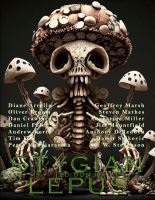
The first part of my science-fictional horror story Appopolis Now has recently been published in Edition 30 of the Stygian Lepus, a magazine where, to quote the current blurb on its website, “the shadows don’t fall – they think, watching you from the edges of perception.”  As with all my stories that are dark and fantastical in tone, the story is attributed to the penname Jim Mountfield.


Appopolis Now is set in the future and imagines a society that’s slightly more high-tech than the one we will live in at the moment.  It’s also a society that’s…  Well, perhaps not dystopian, but definitely Cronenbergian.  (Wow, I have just typed ‘Cronenbergian’ and the Spelling & Grammar checker hasn’t put a red line under it.  That must mean it’s a recognised English adjective now, like ‘Orwellian’, ‘Kafkaesque’ and ‘Ballardian’.)  If you’re familiar with the works of Canadian filmmaker David Cronenberg, that should give you some idea about what to expect.


Edition 30 of the Stygian Lepus contains 14 pieces of macabre, disturbing and unorthodox short fiction and, for the next month, can be accessed here.

Paul McAllister is still here


© Still Here Magazine


Still Here magazine, an online publication that publishes poetry, short stories, essays and artwork focusing on “emotional realism, grounded storytelling, and honest writing that isn’t afraid to bleed a little”, has just published its second issue under the title Ghosts of Our Pasts.  I’m happy to report that Paul McAllister, the pseudonym I use for the occasional piece of fiction I write that’s grounded in reality and set in Ireland, has a short story included in this new issue, entitled That Time.


In keeping with the issue’s theme of the past persisting into the present – in the words of Still Here’s editor Alauna Lester, “even what follows us can still lead us forward” – That Time is inspired by a memory of something that happened to me as a kid in Northern Ireland in the 1970s.  At the time it seemed a trivial, and indeed comical, incident.  But with hindsight, and in the context of the madhouse that was 1970s Northern Ireland, it was rather terrifying too.  No wonder the memory has stuck with me.


Containing 33 poems, nine prose pieces and four works of art, and formatted in a manner that’s beautifully and hauntingly visual, Issue Two of Still Here can be downloaded here as a pdf, for free.  You rarely get something of such quality for nothing these days, so I urge you to sample it!

Christmas comes early for Jim Mountfield too


© Black Hare Press


I’ve never thought of myself as a Christmassy person, but the festive season of 2025 has allowed me to get a couple of Christmas-set short stories into print.  So maybe I’m less of a Scrooge or a Grinch than I’d believed.


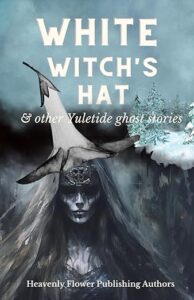
A month ago, my story Southbound Traveller appeared in the collection White Witch’s Hat & Other Yuletide Ghost Stories from Belfast’s Heavenly Flower Publishing.  The story was set in 1990s Scotland and tried mostly for a realistic tone.  Rather than ghosts, it featured an example of what’s best described as a ‘paranormal incident’ near its end.  For that reason, Southbound Traveller appeared under the penname Steve Cashel, which I use for my less fantastical Scottish fiction.


Now, my story The Dark Crooked One has just been published in the book Eerie Christmas 4 from Melbourne’s Black Hare Press, which its blurb describes as a “collection of yuletide tales where the holly is sharp, the snow hides secrets, and something ancient stirs beneath the carols.”  It contains “haunted traditions that refuse to die, gifts that demand a terrible price, winter spirits hungry for warmth, and wishes that should never have been whispered at all.”  The Dark Crooked One is much more of a full-throttle horror tale, featuring a seasonal bogeyman – and indeed, Stephen King’s 1973 short story The Bogeyman gets namechecked in it – so it’s attributed to Jim Mountfield, the pseudonym I use for my scary fiction.


Though most of the horror in The Dark Crooked One is supernatural in character, there’s a little real-life horror present too.  This is the stress and pain that comes when family-members, who don’t necessarily get along very well, are cooped up together in a couple of rooms during December 25th, one of the shortest and wintriest days of the year, and are forced to eat too much and drink too much whilst making it look like they’re enjoying themselves.  And have to listen to the King’s Speech (or the Queen’s Speech, as it was at the time the story is set).


Black Hare Press have done an excellent job in packaging Eerie Christmas 4.  Not only have they been thorough in editing and proofing the text, but they’ve added decorative embellishments to its pages – marginalia, chapter ornamentations and dinkuses – which are both festive and spooky.  This anthology is strongly recommended.


Containing 40 tales of Yuletide terror, Eerie Christmas 4 can be ordered in different formats from different vendors via this webpage here.

Christmas comes early for Steve Cashel


© Heavenly Flower Publishing


Belfast’s Heavenly Flower Publishing has just made available a new anthology called White Witch’s Hat & Other Yuletide Ghost Stories, whose Amazon write-up describes it as “a collection of spooky seasonal stories by 21 authors just in time for the short days and long nights as the winter solstice draws ever nearer.”  The write-up also contains a proviso.  “Reader beware: this book will give you nightmares.  If you’re looking for chilling short stories that are more Krampus than Christmas, full of supernatural scares and denizens of dark nights, Yule not be disappointed.”  One of those spooky Christmas stories comes from my own pen and is entitled Southbound Traveller.


Although I usually write creepy fiction under the pseudonym Jim Mountfield, Southbound Traveller bears a different nom de plume, Steve Cashel.  This is the one I commonly use for ‘non-scary, non-fantastical Scottish stuff’.


A long time ago, back in those naïve days when I didn’t see any reason why I shouldn’t become the literary equivalent of Alasdair Gray, William McIlvanney or James Kelman, I sent many Steve Cashel stories off to various Scottish mainstream-literature magazines.  But I only got two of them placed: one in a publication called Gutter, the other in a publication called Groundswell.  I will forever remember Groundswell, a modest journal based around Edinburgh University, because they replied to my submission with both a rejection letter and an acceptance letter – I didn’t know if they’d published my story or not until I found a copy of Groundswell in a shop and checked its contents.


Then I started to have more success with my horror and fantasy stories, written as Jim Mountfield and Rab Foster, and the Cashel pseudonym was shelved.  From 2023, however, I tried rewriting and submitting again a few of my old Steve Cashell stories and this time they got into print.  Thus, Mr Cashel had an unexpected resurrection.


Something weird and inexplicable happens in Southbound Traveller but, for the most part, it’s an un-supernatural Christmas story.  It tries to paint as realistic a picture of Christmas Day as possible – at least, as I remember Christmas Day in Scotland in the early 1990s, with lots of TV, such as the Queen’s speech, the big afternoon film and the Christmas editions of the popular soaps, and also with too much booze being quaffed and family members getting on each other’s nerves.  It felt more like a Steve Cashel story than a Jim Mountfield one, so I attributed it to the former.


I should add that Southbound Traveller owes something to Hans Christian Anderson’s 1845 fairy story, The Little Match Girl.


Edited by Leilanie Stewart and Joseph Robert, and available as both a paperback and a kindle edition, White Witch’s Hat & Other Yuletide Ghost Stories can be purchased at Amazon US here and Amazon UK here.

Jim Mountfield hedges his bets


© Spiral Tower Press


I’m pleased to say that at the end of last month – appropriately in time for Halloween – I had a new short story published in Issue 5 of Witch House Magazine.  Witch House is devoted to “the pulp fiction tradition of a modern gothic literature called ‘cosmic horror.’  Writers in this tradition include (but are not limited to) the following: Edgar Allan Poe, M.R. James, Arthur Machen, H.P. Lovecraft, Clark Ashton Smith, Robert Bloch, August Derleth, Shirley Jackson, Stephen King, and many more.  ‘Cosmic horror’ emphasizes helpless protagonists, unexplainable monstrous menaces, and fictional occult themes such as forbidden lore and evil conspiracy.”  My story is entitled The Bustle in the Hedgerow and, because it’s macabre in tone, it’s attributed to Jim Mountfield, the penname I use for such fiction.


Yes, the title was inspired by a lyric (“If there’s a bustle in your hedgerow, don’t be alarmed now”) in Led Zeppelin’s Stairway to Heaven (1971), a song that a very long time ago I thought was great but now, having heard it a million times, I’m heartily sick of.  Other songs that fall into this unfortunate category include the Beatles’ Hey Jude (1968), Derek and the Dominos’ Layla (1970) and the Eagles’ Hotel California (1977).  But that’s the only Zeppelin-esque influence on the story.  The Bustle in the Hedgerow owes its existence to three different ideas I had at three different times, which I duly recorded in my ideas notebook.  All published writers and aspiring writers of an elderly disposition, like me, carry a notebook into which they scribble the ideas that occur to them.  Though I suppose these days younger writers may record their ideas using a notes app on their smartphones.


The story’s main character was based on the historian, writer and poet Walter Elliot, who’s written extensively about the Scottish Borders, especially the lovely Ettrick and Yarrow part of it.  My family own a small farm near the Borders town of Peebles.  One day Walter showed up on our doorstep, asking if he could take a look around one of our fields in the cause of historical and archaeological research.  My dad happily told him to go ahead and, as a thank you, Walter presented him with free copies of couple of his books.  “A historian doing research in a remote farm field,” I thought.  “That’d make a good premise for a story.”  I wrote the idea down.


I should say that Walter Elliot is still on the go.  His work was acknowledged and lauded in the Scottish Parliament in 2021.  So please, don’t anyone tell him I’ve turned him into a character in a horror story.


© Deerpark Press


The second idea came when my dad got a grant from the European Union – oh, how long ago that seems now – to improve the natural environment of the farm and planted half-a-mile of hedgerow along the side of its biggest field.  One of the reasons why the hedge got approval was because it’d act as a ‘wildlife corridor’, allowing wild animals to move from habitat to habitat without having to cross roads or cultivated land.  Because the hedge started at a site where the local burn widened into a pool, and it ended at a shelterbelt of trees adjacent to our farmstead, I had a typically horror-writer-ish thought: “Hey, if something nasty lived in that pool, it could now use the hedge, the wildlife corridor, as a way of getting access to our house!”   And another idea was scribbled down.


Thirdly, I’d made notes about, and always wanted to write a story connected with, the Hexham Heads.  These were two little stone heads, alleged by some to be Celtic in origin, discovered in the northeast English town of Hexham in 1971.  They reputedly caused unwelcome and frightening paranormal activity in the homes of whoever had custody of them.  Infamously, Nationwide (1969-83) – a normally easy-going, family-friendly TV current-affairs programme that the BBC aired every weekday evening around six o’clock – featured a report on the story in 1976.  For some reason, the makers of the report saw fit to throw in images of severed human heads on tree-branches, screams and an unexpected jump-cut of Oliver Reed from 1961’s Curse of the Werewolf amid the creepy interviews, traumatising every young kid who happened to be watching.  It certainly scared the shit out of me.  (Long believed lost, footage of that legendary 1976 report has now been discovered and restored.  See here and here.)


From wikipedia.org / © Archaeology Data Service / Dr Anne Ross


I don’t normally dispense advice to other writers.  For me, personally, this has always felt a bit pompous.  But based on my experiences here, I’d recommend them to (1) make notes of their ideas before they forget them, and (2) avoid regarding each idea as having a linear correlation with a story.  Rather than thinking ‘one idea equals one story’, they should keep studying all their ideas, however random, and keep looking for ways that two, three or more ideas could be combined in a single work.  This cross-fertilisation allowed me to come up with The Bustle in the Hedgerow.


Containing eleven pieces of fiction and five poems, Issue 5 of Witch House Magazine can be downloaded here.

Rab Foster resurfaces


© Cloaked Press Inc


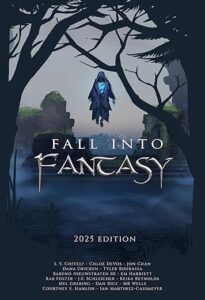
The publishing house Cloaked Press, LLC has recently announced that its new anthology Fall into Fantasy 2025 can be purchased on Kindle.  Among the 15 stories contained in Fall into Fantasy 2025 is one entitled From Out the Boundless Deep, which I wrote under the name Rab Foster, the pseudonym I use for my fantasy fiction.


From Out the Boundless Deep has as its main character a woman called Kayra, who previously appeared in a story called The Trap Master, published way back in 2018 in the American webzine Aphelion.  The premise of both stories is that Kayra inhabits a world where all the creatures of myth and legend – griffins, hydras, harpies, kelpies, minotaurs, etc. – are real and she makes a living by hunting and trapping them.  In From Out the Boundless Deep, she’s summoned to a beach in a remote bay to deal with something that has unexpectedly surfaced there.  I suppose the story is partly inspired by J.G. Ballard’s haunting tale of magical realism The Drowned Giant (1964).  Though, like a lot of my Rab Foster stories, it owes a lot to the films of the legendary stop-motion-animation wizard Ray Harryhausen too.


To access the Kindle edition of Fall into Fantasy 2025, visit here.

Jim Mountfield gets slotted in


© Schlock! Webzine


Jim Mountfield is the pseudonym I attach to fiction I write that’s dark and macabre in nature, and I’m delighted to report that a new Mountfield short story has just appeared in Volume 19 Issue 6, the July 2025 edition, of Schlock! Webzine.  It’s entitled Slot Boy and it takes place in Scotland, against an appropriately Scottish backdrop of parochial wee towns, middle-aged neds, cranky auld wifies, mobility scooters, and terrible football.


Despite its Scottish setting, Slot Boy – like many of my stories – owes a lot to the works of Stephen King.  Although the inspiration for this particular story comes from something I suspect King isn’t in a hurry to trumpet as one of his finest hours, the anthology movie Creepshow 2 (1987), which was a sequel to the rather better Creepshow (1982).  One of the three segments in Creepshow 2, The Raft, was based on a short story included in King’s 1985 collection Skeleton Crew, but the other two segments, Old Chief Wood’nhead and The Hitchhiker, were apparently stories he devised especially for the film.  He wrote an outline that was then polished into a script by legendary horror filmmaker director George A. Romero, though the final movie was directed by Michael Gornick.


Weirdly, it was Old Chief Wood’nhead that inspired Slot Boy.


The Raft and The Hitchhiker both have their moments, but Old Chief Wood’nhead is rightly regarded as the worst of Creepshow 2’s stories.  That’s despite it featuring the stalwart character actor George Kennedy (a man I always associated with crashing airplanes – he was in 1965’s Flight of the Phoenix and all four of the 1970s’ Airport movies) and Dorothy Lamour, star of the Bob Hope / Bing Crosby Road to… movies (1940-62).  Kennedy and Lamour play an elderly couple who own a shop with a hulking, timber cigar store Indian, the titular Old Chief Wood’nhead, standing outside it.  Predictably, bad things happen to them. Then, magically, seeking revenge, Old Chief Wood’nhead comes to… Well, you can guess the rest.


Native American culture is a rich source of stories and myths – see the works of Stephen Graham Jones – but Old Chief Wood’nhead operates at the level of a crass old Hollywood western, with a caricatured ‘injun’ shooting arrows, removing scalps and wielding a tomahawk.  Of course, the horror in the story, or in any horror story, is nothing compared to the real-life horrors that North America’s native American population had to endure during history.  Estimates suggest that population stood at about eight million in the whole continent in 1492; but in the USA, by 1890, it’d been reduced to a quarter of a million.  Though no doubt Trump will soon rewrite all that and have it taught in schools that life was peachy for Native Americans after European settlers arrived.


If Old Chief Wood’nhead was a bit asinine, why on earth did I think of it again after so many years, let alone get an idea for a story from it?  Well, for the first two years that I lived in Singapore, I regularly ate and drank in an establishment on Singapore’s Mountbatten Road that, bizarrely, had this standing on the edge of its premises:


I don’t think I ever saw a cigar store Indian during my time in Scotland, but shops there used to have other figurines standing outside their doors, usually for charity purposes.  One of those figurines features in Slot Boy and plays a role in the story similar to that played by Old Chief Wood’nhead in Creepshow 2.  I just hope the result is scarier – and funnier – than the movie segment.


During July 2025, you can read Slot Boy here, while the main page of Schlock! Webzine, Volume 19 Issue 6, can be accessed here.


© Laurel Entertainment / New World Pictures

Rab Foster gets moored up


© Schlock! Webzine


Rab Foster, my fantasy-writing alter-ego, is on a roll this week.  Just two days ago, The Cats and the Crimson, a story I wrote under that pseudonym, was published in Issue 159 of Swords and Sorcery Magazine.  Today, another Foster-attributed fantasy story appears in the new edition – Volume 19, Issue 4 – of the monthly online publication Schlock! Webzine.  It’s called The Shrine on the Moor and chronicles another adventure in the life of my sword-and-sorcery character Drayak Shathsprey.  By my calculations, this is the sixth tale featuring Shathsprey to have made it into print.


In fact, The Shrine on the Moor is a direct sequel to a story called The Pit of the Orybadak, which featured in the magazine Savage Realms Monthly in January 2024.  Pit of the Orybadak was about Shathsprey’s experiences during a bloody battle and its equally bloody aftermath.  The events of The Shrine on the Moor, when he escapes onto the moor of the title, and encounters the shrine of the title, take place a few days later.  Has he really escaped the battle?  Is there nobody around who still wants to kill him?  Of course not…


I’d like to think The Shrine on the Moor has a flavour of the 1968 John Boorman movie Hell in the Pacific.  But, being a sword-and-sorcery story, it has ghosts and primordial gods mixed into it as well.


For the month of May 2025, The Shrine on the Moor can be read here.  And you can access the contents page of Schlock! Webzine Volume 19, Issue 4, with links to a dozen tales of fantasy, horror and science fiction, here.

Rab Foster herds some cats


© Swords & Sorcery Magazine


The Cats and the Crimson is the name of a fantasy story I’ve just had published in the April 2025 edition, Issue 159, of the online publication Swords and Sorcery Magazine.  As always with my fantasy fiction, the story is attributed to the pseudonym Rab Foster.


One part of its title refers to its heroine, Cranna the Crimson, the formidable red-haired swordswoman who takes no shit from anyone, least of all from male chauvinists.  She’s previously featured in my published stories Vision of the Reaper (which appeared in the collection Fall into Fantasy 2023) and The Drakvur Challenge (which last year appeared in the third issue of the magazine Crimson Quill Quarterly).  The other part of the title refers to the cats that Cranna encounters when she enters a mysterious desert town in search of treasure – firstly, cats of the cute, domestic variety, but later, ones of a more sinister nature.


I don’t want to give away anything more about the story.  Though I will say it contains a rebuke to sentiments expressed by American vice-president and Trump-lackey J.D. Vance, who notoriously complained about women who are “childless cat ladies who are miserable at their own lives and the choices they’ve made” and who “want to make the rest of the country miserable, too.”  I’m sure Cranna would react to those words by socking the contemptible, eyeliner-wearing creep in the jaw.


For the next month, The Cats and the Crimson can be read here, while the April 2025 homepage of Swords and Sorcery Magazine, with three further stories and a book review, is accessible here.

Jim Mountfield gets beached


© Stygian Lepus 


Jim Mountfield, the penname I use when I write scary stories, has just had his first fiction published in 2025.  This is a short story entitled Beach Bodies, which appears in Issue 22 of the Stygian Lepus, a magazine where “readers explore the depths of imagination, where fear and fascination entwine.”


As its title suggests, Beach Bodies was inspired by a visit I made to a beach: Nyang Nyang Beach in the Uluwata area of Bali, Indonesia.  I’d walked a fair bit along the beach, away from its touristy part, to a stretch of it where there was hardly another human being in sight, when suddenly I came across a huge, long slab of rock embedded in the sand.  It was flat but its surface was covered in ruts and runnels that, each time a wave crashed against the shore and breakers came hissing up the beach, filled with white foam and formed strange, drizzling patterns.  There was something weird – something a bit, well, alien – about that rock formation.  And that’s how my story got its basic idea.


Meanwhile, most of the Western tourists I saw on the beach seemed to be busy filming themselves with their smartphones, recording clips of their hopefully-glamorous, hopefully-exotic holiday-adventures that would then be uploaded to their social media accounts.  I even noticed a Balinese guy on the shore, operating a film camera pointed at a group of surfers out amid the waves.  He’d been hired to film their surfing exploits, the footage of which would no doubt be posted online.  This influencer-style narcissism made me immensely grumpy…  That grumpiness also features in the story.


For the next few weeks, Beach Bodies can be read online here, while the contents page of the Stygian Lepus, Issue 22, is accessible here.  And go to this link if you’d like to sample the issue as an eBook.