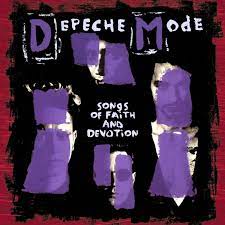
From youtube.com / © South Park Studios
I know time seems to speed up as you grow older, but it still feels weird to me that we’re not only into another year, 2026, but we’re already nearing its halfway point. In fact, today, we’ve reached May 22nd. And rolling around again – again? – is World Goth Day.
According to its Wikipedia entry, May 22nd became the annual day of celebration for the world’s darkest-clad, whitest-eyelinered, most sunlight-shunning musical sub-culture when “UK-based goth DJ Lee Meadows, aka DJ Cruel Britannia (currently known as BatBoy Slim), wrote a MySpace blog suggesting the idea of initiating a ‘Goth Day’ to a very positive reception. In 2010, he and London-based DJ Martin Oldgoth decided to make the concept global, both ‘as a bit of fun’ and to create an environment of positivity and unity within the goth community.”
From worldgothday.com / © BatBoy Slim
As is customary on this blog, I’ll mark the occasion by providing links to a dozen of my favourite Goth songs on YouTube. As ever, I apologise if you first have to endure some annoying corporate and insipid YouTube advertisements, packed with AI-generated visual crap, which are the antithesis of the mystical, elegiac and tenebrous aesthetic of Goth culture.
To get the ball rolling, here’s Wytches Chant ’98 by English Goth band Inkubus Sukkubus, whom noted punk / Goth journalist Mick Mercer described as ‘a zombie version of Fleetwood Mac.’ (Many would argue that the real Fleetwood Mac have been fairly zombified for the past few decades anyway.) So, let’s raise our voices and sing along to that Wytches Chant ‘98: “Isis, Astarte, Diana, Hecate, Demeter, Kali, Inanna…”
A while ago I was looking at an online list of ‘underrated Goth bands’ and discovered Container 47 and their song Razor End Falling. The band don’t have a Wikipedia page and all I know about them is that they’re from Italy and have been on the go since the early 2000s. This song, to me at least, is agreeably heavy.
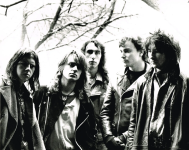
On the same ‘underrated Goth bands’ list, I noticed the name the Rose of Avalanche. Wow, I thought – I hadn’t heard of them since they supported the Mission at a gig in Aberdeen in the mid-1980s. They originally broke up in 1993 but, following a 26-year hiatus, reformed in 2019. I found their 1985 single LA Rain enjoyably audacious – it takes the sound, ambience and languid pace of a typical Lou Reed / Velvet Underground song and drenches it in a shimmery, Gothy 1980s guitar-sound.
From roseofavalanche.com / © The Rose of Avalanche
Here’s some more rain, served up by the Swedish Goth band Miazma (which, from soon after its inception in the late 1990s, has apparently consisted of just one musician, Kristian Olofsson). It’s called Black Rain. Including this song on the list saves me having to include anything by the seminal Goth outfit the Sisters of Mercy because, frankly, Miazma sounds uncannily like the Sisters of Mercy, down to Olofsson’s vocals, which reproduce the nonchalant gruffness of the Sisters’ frontman, Andrew Eldritch. On the other hand, a band whom this Miazma shouldn’t be confused with is another band called Miazma, which is actually a death metal one from Australia’s Alice Springs.
And yet more rain… If Scottish alternative-rock brothers Jim and William Reid, aka the mighty Jesus and Mary Chain, knew I’d included one of their songs in a list of Goth tunes, I suspect they’d come round to my house and murder me – using hammers. Well, tough luck, guys – I am including you. I saw the Jesus and Mary Chain perform in Singapore last month and the gig, at the city-state’s Esplanade Theatre, attracted a fair number of Singaporean Goths. And I think their song Nine Million Rainy Days, from the aptly titled 1987 album Darklands, is dripping with Gothic doom, gloom and darkness, as evidenced by the lyrics, “As far as I can tell / I’m being dragged from here to hell / All my time in hell was spent with you…”
Halfway through, however, Nine Million Rainy Days veers off in an unexpected direction when it borrows the famous ‘woo-woo’ backing vocals that grace the Rolling Stones’ Sympathy for the Devil (1969), though here they mutate into ‘woo-woo, woo-woo, woo!’
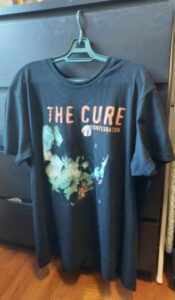
Talking of the Rolling Stones, eyebrows were recently raised when Mick, Keef and Ronnie announced that Robert Smith of the legendary Goth band the Cure would be contributing to their next album. The Stones’ straight-up, unpretentious, bluesy, rock ‘n’ roll swagger seems light-years removed from the Cure’s meticulous, brooding atmospherics, so I don’t know how that’ll work out. Meanwhile, the Cure and possibly their greatest album, 1989’s Disintegration, have been on my mind lately because my lovely mother-in-law gave me a Cure / Disintegration T-shirt as a present for my last birthday. So, from that album, here’s the song Lullaby. The link takes you to the song’s memorable video, where Smith, in pyjamas, sings worriedly about “Mr Spider-man” having him “for dinner tonight.”
In fact, Disintegration is such a masterpiece I could have included any song off it: Fascination Street, Plainsong, Pictures of You, etc. No wonder that in a 1998 episode of the scabrous TV cartoon show South Park, Kyle Broflovski shouts at Robert Smith, “Disintegration is the best album ever!” (Admittedly, he was rather excitable by that point. His town had been pulverised by Barbra Streisand, who’d transformed into a giant, robot-kaiju called Mecha-Streisand, and Robert Smith had saved the day by transforming into a giant moth and hurling her into outer space: “I have to try,” sighed the Cure’s front-man. “I can’t let Barbra Streisand do this to the entire world.”)
And now for a younger band. Boy Harsher are a darkwave duo consisting of singer Jae Matthews and producer Augustus Muller, who hail from the American state of Georgia. They cite among their influences the late, visionary filmmaker David Lynch, though with the next track on my list, a remastered version of Boy Harsher’s 2014 single Pain, I get more of a vibe of the synth tracks John Carpenter devised for the soundtracks of his 1970s and 1980s movies. That’s initially at least, before Pain’s propulsive beat carries all before it.
Actually, Pain features in a movie itself. It can be heard during a party scene in the 2022 horror film Terrifier 2. I haven’t seen it, but I think that’s the one where the villain (Art the Clown) flays a victim and then rubs salt into the wound by, er, rubbing salt into the victim’s catastrophic wounds. So, having a song called Pain in the film was appropriate.

From wikipedia.org / © GRIT PHOTOZINE
In fact, Pain got a remix in 2018 courtesy of the American musician and producer Luis Vasquez who from 2009 was also the single, official member of the band the Soft Moon. Fittingly, an influence on the Soft Moon’s sound was the celebrated industrial / electronic rock band Nine Inch Nails, itself a one-man-band for the musician and producer Trent Reznor. (More on Nine Inch Nails later.) The next item on the list is one of my favourite Soft Moon songs, Become the Lies, from the band’s final album, Exister (2022). I have to write about Luis Vasquez and the Soft Moon in the past tense because, tragically, Vasquez died in 2024 aged just 44.
Another musician specialising in dark electronica who left us much too soon was Frank Tovey, who as Fad Gadget at the very end of the 1970s and in the early 1980s helped pioneer both the synth-pop and darker, Goth sounds that became popular soon after. Alas, a heart attack claimed Tovey / Gadget at the age of 45 in 2002. Here’s his first and possibly most famous single, Back to Nature, from 1979.
Fad Gadget has been credited as a big influence on Depeche Mode, though beyond the use of newly affordable musical technology, like synthesisers, I personally can’t see much connection between the ruminative likes of Back to Nature and Depeche Mode’s early, chirpy (and for me, annoying) hits like New Life and Just Can’t Get Enough (both 1981). Despite being irritated by the early ‘Mode’, I’ve gradually grown to love them as, in their later incarnations, they’ve shifted away from a poppy, kid-friendly synth sound and embraced a darker, harsher, more industrial and Gothic one.
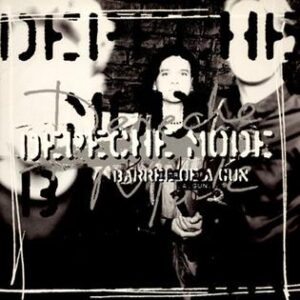
Here’s the stomping Barrel of a Gun, the first single off Depeche Mode’s 1997 album Ultra. The accompanying video shows how far they’d progressed by then from their early-1980s clean-cut-boys-with-synthesisers phase – this is grungy, decadent, Anton Corbijn-directed artiness. At least, it is until Dave Gahan starts wandering around in a silly coat covered in Christmas-tree lights.
From wikipedia.org / © Mute Records
Here’s something else that’s silly, this time involving America’s awesomely dark and bleak industrial-rock juggernaut Nine Inch Nails (which is basically musician / vocalist / producer Trent Reznor and whoever happens to be in the studio with him at the time). No, I’m not saying Nine Inch Nails are silly. But some years ago, they were the subject of a celebrated musical / video ‘mashup’ whereby editor and content creator Garren Lazar grafted the band’s disturbing song Closer, from the 1994 album The Downward Spiral, onto clips taken from the beloved children’s TV programme The Muppet Show (1976-81). Hence, the song’s opening drumbeat is performed in the video by Animal, the drummer in the Muppets’ house band, Dr Teeth and the Electric Mayhem. (Thankfully, Animal doesn’t feature when Reznor sings Closer’s most notorious lyric, “I want to f**k you like an animal.”)
Watching Kermit, Gonzo, Miss Piggy and the rest cavort to this song is a reminder that, loveable though the Muppets are, if you first encountered them at a very young age you might have found them a bit sinister. For example, the stuff in the video involving a frenetically speeded-up Dr Teeth is downright freaky. Also featured are some of the human guests who appeared on The Muppet Show, such as Alice Cooper, Cloris Leachman, Rita Moreno, Harry Belafonte and Dudley Moore – Moore’s cameo is particularly worth waiting for.
However, should anyone be upset at me linking to a comical Nine Inch Nails / Muppets mashup, I’ll throw in a bonus link – to a more sombre and majestic mashup where Rory Gamble transposes Nine Inch Nails’ The Day the World Went Away (from 1999’s The Fragile) onto the trailer for Mad Max: Fury Road – Black & Chrome. Both sonically and visually, it’s a work of genius. You’ll punch the air when, one minute and ten seconds in, things get cranked up to 11.
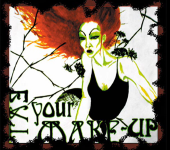
Eat Your Makeup is the name of a short film made by American’s God-Emperor of Bad Taste, John Waters, back in 1968. However, Eat Your Make Up – note the slight difference in the wording – is also the name of a French Goth band and here, to round things off, is their 2005 song I was the Murderer. It’s a pleasant reminder that at least some of Goth’s musical roots lie in punk rock.
© Adipocere Records