Agnes, Queen of the West


© Polygon Books


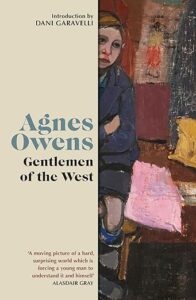
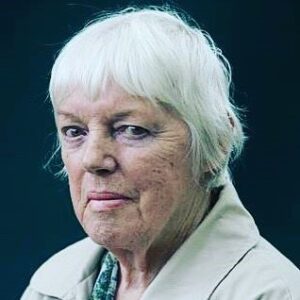
By a coincidence I’d just finished reading Gentlemen of the West (1984), the first book published by the late Scottish writer Agnes Owens, when I learned that May 24th – last Sunday – was the 100th anniversary of Owens’s birth.  This article in last Sunday’s Observer informed me.


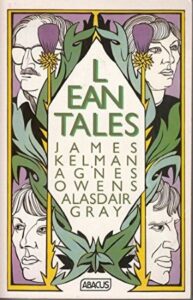
A long time ago, I’d read nine of Owens’s short stories included in Lean Tales (1985), an anthology showcasing work by her and her friends (and originally mentors) Alasdair Gray and James Kelman.  No disrespect to Gray and Kelman, but I thought her stories were the best stuff in Lean Tales and one of them, Arabella, blew me away.  In just six pages, Arabella paints a devastating picture of the title character, who may or may not be a witch.  Arabella obviously doesn’t have much command of , or regard for, normal social skills.  She visits her parents seemingly oblivious to the fact her mother can’t stand the sight of her, she isn’t someone you’d want looking after your pets (though she owns four dogs, whom she carts around in a pram), and her way of dealing with a sanitary inspector’s visit to her ruinous house is not for the weak-stomached.


Arabella was the story that brought her to the attention of her literary peers.  In the late 1970s Gray, Kelman and the poet Liz Lochhead ran evening classes in creative writing in Owens’s hometown of Alexandria, northwest of Glasgow.  Owens attended the first class and gave a copy of Arabella to Lochhead, who read it on the train back to Glasgow.  Lochhead recalled trying “to put this terrifying, terribly funny story, so anarchic and archetypal, so short and so complete, together with the class I’d just left and that middle-aged lady in the neat coat and woolly hat with the fringe of dark blonde hair sticking out and the full mouth that turned so decisively down at the corners.”  Owens, who’d been busy raising seven children and working variously as a typist, factory worker and cleaner, later claimed she’d only signed up for the writing course to ‘get out of the house’.


Anyway, I’m a fan of Douglas Stuart, author of Shuggie Bain (2020), Young Mungo (2022) and the forthcoming John of John (2026), and I recently read an article of his on Literary Hub entitled Poverty, Anxiety and Gender in Scottish Working-Class Literature.  This recommended a reading list that included Agnes Owens’s Gentlemen of the West alongside such better-known titles as Kelman’s How Late It Was, How Late (1994), Alexander Trocchi’s Young Adam (1954), Irvine Welsh’s Trainspotting (1993) and Alan Warner’s Morvern Callar (1995).  Stuart described her as “one of the most detailed observers of working-class life that I have ever read” and opined that “her writing brings a tenderness and a kindness to a hard, industrial landscape that is usually dominated by men.”  I realised I had on my bookshelf a very old copy of Gentlemen of the West that I’d purchased in a charity shop and, following Stuart’s endorsement, I retrieved it and read it.


The book can be described as either a collection of connected short stories, told by the same narrator, or an episodic novel, each chapter recounting an adventure experienced by its hero.  That hero is Mac, a young west-of-Scotland man who spends his time toiling in frequently shite weather on a building site, jousting with his curmudgeonly mother in the small tenement flat he shares with her, and drinking in the local pub, the Paxton, among a weird, sometimes frightening range of what could be euphemistically termed ‘characters’.  The tenor of Mac’s existence is nicely summed up by the opening paragraphs of one story / chapter entitled Christmas Day at the Paxton:


“It was Christmas Day, a Saturday.  The streets were covered in ice and nothing was moving except me.  There was not a soul, a dog or even a bus in sight and worst of all I suspected the pubs would be closed.  I headed in the direction of the Paxton with my mother’s Christmas message ringing in my ears.


“’Where’s yer Christmas present ye ask?  Well, where’s mine?  Every year it’s the same.  Not a sausage dae I get aff ye.  No’ even an extra pound an’ a’ the neighbours showing aff their presents.   Well, I’m sick o’ it – ‘


“’And a Merry Christmas to you!’ I had shouted as I walked out.”


The reader never loses sight of the precariousness of Mac’s life.  In the following story, The Aftermath, he reports, All the week after Christmas I was in a foul mood.  It was a long holiday for the building-site worker.  My money was gone by Boxing Day.  I faced New Year without a penny in my pocket…  In the Paxton, he often wonders where his next beer or whisky will come from – though modern readers may find it quaint that the stories are set in an era when a pint cost 50 pence.  Of course, wages then were correspondingly low.  (Incidentally, I’m of a vintage whereby I can just remember being able to buy two pints of Light for a pound at the Rugby Club’s wee upstairs bar on the Northgate in Peebles.)


Among the tales recounted in Gentlemen of the West…  Mac, a Protestant, goes looking for a dead friend’s memorial service and gets stuck in a Roman Catholic chapel while mass is being performed.  He encounters an old schoolmate who then limpets onto him when he discovers there’s a gang after him.  He intervenes when he believes his mother is getting too friendly with a character called Proctor Mallion, who’s the very last person he wants as a stepdad – “His first wife ran away wi’ the insurance man and his second left him efter he pushed her out the windae.  Lucky for her it wis on the ground floor”.


He gets paid off at his work following a row between the brickies and the building site’s boss-man.  He gets re-hired, only to discover later the boss-man has employed as a general labourer someone called McCluskie, who’s just spent time in prison for manslaughter.  Mac explains the crime to a young apprentice thus: “…if I take this brick hammer an’ smash it ower yer heid, that would be murder.  On the other haun’, if I accidentally push ye aff the scaffolding when ye get up, that’s manslaughter.”
 

© Little, Brown Book Group Limited


There’s a supporting cast that includes the winos who drink by a local riverbank – “Billy Brown, Big Mick, Baldy Paterson and Craw Young… huddled round a large flat stone that displayed two bottles of Eldorado wine and some cans of beer” – and the memorably erratic Paddy McDonald who lives in a tumbledown bothy alongside “live rabbits in the oven – lucky for them it was in disuse – pigeons in a cage in the bedroom, and a scabby cat always asleep at the end of a lumpy sofa, with the dog at the other end.”


It’s tempting to view Gentlemen of the West, episodic in nature and populated by unfortunates and never-do-wells, as a forerunner to Irvine Welsh’s Trainspotting.  But there are important differences.  Mac and at least some of his associates are in employment.  That employment’s shaky, though.  And as the 1980s unfold, you dread to think how the doctrine of Thatcherism (resources concentrated in London and southeastern England, to hell with the rest of Britain) will upend their community.  Also, they don’t have the drug-fueled nihilism of Welsh’s characters, though I suppose the Trainspotting gang could be seen as the feral, heroin-raddled offspring of Mac and his mates a generation later.


If you compare the chapter / story Up Country, in which Mac makes a spontaneous daytrip out of his town, ends up on a boat on the Firth of Clyde with “some sightseers on deck with the loud English patter”, and then ends up for a few hours on an uninhabited island, with the episode in Trainspotting where Renton and co. briefly visit the Scottish Highlands, the differences are stark.  Mac blunders around the island like an innocent child, first feeling euphoric (“The view was terrific, all lochs and mountains.  I felt contempt for my mates who would be firmly established in the boozer by now, slugging away at whisky and beer, unaware that were better ways of passing the time), then feeling creeped out as he realises he’s all alone there and stumbles across a small cemetery.  In Trainspotting, the Scottish scenery inspires the far more cynical Renton to embark on his famous rant about the Scots: The lowest of the low, the scum of the earth. The most wretched servile, miserable, pathetic trash that was ever shat intae creation.”


On his way back from the island, Mac encounters an eccentric German tourist who’s come to Scotland “to study castles…  Then I shall write my book.”  Mac reacts with bemusement but also respect: “I looked after him wishing I could be as sure of everything.”  He even takes inspiration from him and the story ends with the line, “…some day I will get away from this place.  Some day I might go and see castles myself.”  In Welsh’s novel, unlike Danny Boyle’s 1996 film adaptation of it, Renton and the others don’t run into a foreign tourist.  But with drug habits to finance, you know their reaction to one would be far more predatory.


In other parts too of Gentlemen of the West, we see decency in Mac, for example, in his interactions with the hapless Paddy McDonald.  And we see it in other characters.  McCafferty, in charge of the building site, comes across as an insufferable dick in the episode Paid Aff, but in the very next one, McCluskie’s Out, he’s willing to give a second chance to a guy just out of prison.


But the book’s real heart isn’t Mac but his long-suffering and sharp-tongued mother, the ‘auld wife’ as he calls her.  On the surface, their relationship is one of never-ending bickering and arguing – ‘banter’ is much too gentle a word for it.  Yet it’s clear that the auld wife is the bedrock supporting Mac’s meandering, occasionally chaotic existence.  And no doubt there are countless other, resilient women in the surrounding tenements providing a similar service to countless other men.  Owens, whose son John was a bricklayer, was probably all too familiar with the role.  In the article in the Observer, John is quoted as saying that if his mother based Mac and the Auld Wife’s relationship on the relationship she had with him, things were “a bit exaggerated… though I may be forgetting how cheeky I could have been as a young man.”


Only at the end of the final story / chapter, Goodbye Everybody, is the true nature of their relationship made explicit.  Mac makes good on the promise he made in Up Country and sets off for Aberdeen in the hope of finding a better living for himself.  It’s impossible not to feel a lump in your throat as you read his account of the morning of his departure and he describes how his usually formidable mother is ‘shaking’ and ‘searching for words’.  When he walks off down the street, not looking back, he knows “she would stay there watching until I was out of sight.”


And you suddenly appreciate Douglas Stuart’s observation that Agnes Owens brings a ‘tenderness’ and ‘kindness’ to a ‘hard, industrial landscape… dominated by men.’
 

From Glasgow Women’s Library

The big Mc


From wikipedia.org / © Nonsenseferret


It’s exactly a decade since the Scottish writer, poet and columnist William McIlvanney passed away on December 5th, 2015.  Here’s something to mark this melancholy anniversary.


For myself and many book-lovers in Scotland in the 1980s, William McIlvanney was both a source of pride and exasperation.  Pride that modern Scottish literature was capable of producing someone as good as he was; but exasperation that the British literary establishment seemed to have little interest in him or his peers (like Alasdair Gray and James Kelman) north of the border.  On their radar, Scottish writers didn’t make much of a blip.


Back then, the clique of authors, critics and academics who, through Britain’s highbrow media outlets, decided what was fashionable were a privileged Oxford / Cambridge-educated bunch who lived in London and seemingly lived up their own arses too.  I always find it telling that in 1984, when things felt at their very worst, the Booker Prize – the flagship award for the UK literary establishment – managed to have on its short-list five books that had novelists, biographers, literary critics and literary lecturers as their main characters.  The only shortlisted book that was about people who didn’t make a living out of literature (you know, like 99.999% of the human population) was J.G. Ballard’s Empire of the Sun.  And it didn’t win, though it should have.


The novel that helped put McIlvanney on the map was 1975’s Docherty, which was about a tough west-of-Scotland miner and his family trying to cope with everything that the early decades of the 20th century threw at them.  Thus, McIlvanney was never going to ingratiate himself with the ‘in’ crowd by writing about writers, biographers, critics or lecturers either.


I’d read McIlvanney’s 1977 novel Laidlaw as a teenager – more about that in a minute – but it wasn’t until I was at college that one of my tutors (Isobel Murray) urged me to read a book of his that’d just been published, 1986’s The Big Man.  I’m glad I listened to her because The Big Man proved to be one of my favourite books of the 1980s.  It features another miner, called Dan Scoular.  He’s an ex-miner, actually, because this is the post-miners’-strike 1980s, Scoular has lost his job and he and his family are struggling to make ends meet.  The imposing Scoular happens to be good at fighting, though it’s a side of him that he’s suppressed for a long time.  Then he’s approached by a Glaswegian gangster who offers to pay him a small fortune if he takes part in an illegal bare-knuckle fight.  Thus, Scoular faces a dilemma – does he do something that he finds abhorrent if it saves him and his loved ones from penury?  Inevitably, after he ignores his better instincts and agrees to the proposal, he finds out that there are more complicated and even nastier things going on in the background.


© Hodder and Stoughton


The Big Man is the most cinematic of McIlvanney’s books and it was no surprise that it was filmed, in 1990, by David Leland.  The film gets some things right.  The villains, played by Ian Bannen and Maurice Roëves, are good.  However, it gets a lot wrong, including a Hollywood-esque, feel-good ending far removed from the bleak, ambiguous note with which McIlvanney closes the book.  Another problem is that, at the time, there wasn’t a bankable-enough Scottish star for the filmmakers to cast in the role of Scoular.  So they had to search around and the next best thing they could find was a Northern Irishman, Liam Neeson.


Now I like Neeson, but every time in The Big Man that he opens his mouth and those dulcet County Antrim tones of his emerge, the sense that you’re in a hard-pressed mining town in the West of Scotland goes out of the window.  It’s a pity that the film wasn’t made during the years since, when some bankable Scottish actors have come to prominence (though it might be difficult to find one with the necessary, hulking physicality that Neeson had).  Incidentally, The Big Man – a movie about Scottish ex-mining communities and ruthless Glasgow criminals – also has Hugh Grant in its cast.  I’ll give you all a minute to pick your jaws up off the floor.


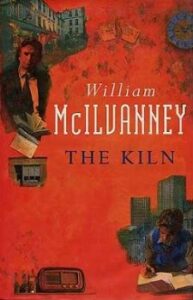
A later novel by McIlvanney, 1996’s The Kiln, received a lot of acclaim.  It even had a recommendation on its cover from Sean Connery.  I’ve just praised McIlvanney for not writing books about writers, but The Kiln actually has a writer as its central character, one in the throes of a mid-life crisis.  However, the novel is more a coming-of-age novel because its hero spends much of it looking back on his working-class youth, especially on a period he spent toiling in a local brickworks.


When The Kiln appeared, it seemed to cement – an appropriate verb for a book about bricks – McIlvanney’s status as a major figure in Scottish letters.  But it seemed the last time that he commanded such attention.  Recently, I was thinking about The Kiln and I remembered reading it while I was making a long-distance bus trip during the only occasion I was in Australia – which was in 1997, almost thirty years ago and almost twenty years before McIlvanney’s death.  What on earth happened to him after that?  I’d come across an occasional interview with him or article by him in the Scottish press, but that was about it.  In 2006 he published one more novel, Weekend, though it arrived with little fanfare – the antithesis of the reception The Kiln got a decade earlier.


© Hodder and Stoughton


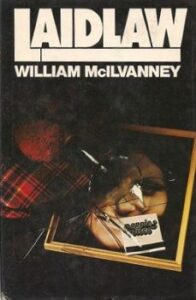
Though as far as mainstream literature was concerned McIlvanney seemed to disappear from view after The Kiln, he did in recent years win belated acknowledgement for his work as a crime writer – specifically, for his 1977 novel Laidlaw, which was republished in 2013, and its sequels The Papers of Tony Veitch (1983) and Strange Loyalties (1991).  (The latter book also serves as a grim semi-sequel to The Big Man.)  All are about a tough but intellectual and philosophical Glasgow detective called Jack Laidlaw.  Since then, crime novels set in Scotland have sold by the barrow-load and Scottish crime writers like Iain Rankin, Val McDiarmid, Denise Mina, Christopher Brookmyre and Stuart MacBride have enjoyed lucrative careers, so McIlvanney can be seen as the man who started it all.  His Jack Laidlaw was the prototype for Inspector Rebus and the rest.  In effect, McIlvanney created ‘Tartan Noir’.


Even when I read Laidlaw at a young age, I found it a bit uneven (as prototypes usually are), its prose shifting slightly uncomfortably between Glasgow-speak and Raymond Chandler-isms.  It wasn’t helped by the way it was marketed, either – “Turn down a Glaswegian when he offers you a drink,” intoned the blurb on the back, “And he’ll break your legs,” which wasn’t what the book was about.  Laidlaw focuses more on psychology than on violence, and I found it disconcerting that in its final pages the hero isn’t rushing to catch the murderer so much as he’s rushing to save the murderer from gangland-backed vigilante justice.  But all power to McIlvanney for inventing what would become Scotland’s biggest literary export.  Iain Rankin, in particular, has always admitted his debt to him.


McIlvanney was a political thinker too and during the 1990s – back in those long-ago days when Scotsman Publications produced material that was worth reading – he was a perceptive columnist in the Scotland on Sunday newspaper.  I also remember him delivering a speech in Edinburgh’s Meadows during the March for Scottish Democracy rally held on December 12th, 1992, demanding the creation of a Scottish parliament.  On stage, in front a crowd of 30,000 people, he performed far better than any of the politicians in attendance.  He memorably summed up the case for a parliament saying: “We gather here like refugees in the capital of our own country, wondering what we want to be when we grow up.  Scotland – the oldest teenager amongst nations.”


But at the same time he pleaded for racial tolerance.  “Scottishness,” he pointed out, “isn’t some pedigree lineage.  It’s a mongrel tradition.”  I suspect that with McIlvanney’s speech that day began the emphasis on ‘civic nationalism’ that Scottish nationalists – at least, the decent, mainstream ones, not the fringe, far-right heidbangers – have been at pains to cultivate ever since.


Finally, William McIlvanney played an indirect role in the start of my writing career.  My very first short story to see publication, a slice-of-life piece set on a Scottish farm with the self-explanatory title Lambing Time, appeared in a magazine called Scratchings, then produced annually by Aberdeen University’s Creative Writing Society.  Scratchings had been launched in the early 1980s with the help of a financial contribution from McIlvanney.  At the time he was Aberdeen University’s writer-in-residence and he was approached by two young students who “wanted to borrow 40 pounds to start a poetry magazine.  Would he be able to lend them the money?”  He did, Scratchings was born, and it provided a home for Lambing Time a few years later.


Incidentally, the two students who successfully tapped McIlvanney for 40 pounds were Dundonian Kenny Farquharson, now a columnist with the Times newspaper; and Invernessian Alison Smith, now better known as the novelist Ali Smith, who’s been shortlisted three times for the Booker Prize – yes, the award whose shortlist bugged me so much back in 1984.


© Hodder and Stoughton

Favourite Scots words I-L


From wikipedia.com / © Tim Evanson


Today is St Andrew’s Day, the national day of Scotland.  So, in keeping with tradition on this blog, here’s the latest instalment in my A-Z of the always-fascinating Scots language….


Once upon a time, the main detractors of the Scots tongue seemed to be those snobby, London-based, Oxbridge-educated fossils who ran Britain’s literary establishment.  I’m thinking of the furore that greeted James Kelman’s novel How Late It Was, How Late winning the Booker Prize in 1994.  How Late… was written uncompromisingly in the voice of a working-class Glaswegian and its success did not go down well in many posh quarters.  Simon Jenkins, for instance, described it getting the Booker as ‘literary vandalism’, Kelman as an ‘illiterate savage’, and the novel itself as “the rambling thoughts of a blind Glaswegian drunk.”


But compare that with the reaction of Britain’s literary establishment to last year’s Deep Wheel Orcadia, the science-fiction verse-novel by Harry Josephine Giles, which is told in Orcadian and which won 2022’s Arthur C. Clarke AwardDeep Wheel Orcadia has been greeted respectfully, for example, here and here, rather than with the horrified pearl-clutching or bemused mockery that used to be the norm.


No, looking at social media, it seems to me that nowadays the folk who bash the Scots language most, and who virulently denigrate people who use it, are Scottish ones – those of a Conservative and / or Unionist disposition.  The more extreme members of this faction profess to be loyal subjects of ‘the King’ (Charles presumably, not Elvis) and staunch supporters of a certain football team in Glasgow.  They also slather their Twitter profiles in Union Jacks and, without a shred of irony, declare that they ‘hate nationalism’.


In other words, Scots has become part of a culture war.  It’s been aligned with the Scottish independence movement and the independence-seeking Scottish government at one end of the battlefield; while at the battlefield’s other end, Unionists and British nationalists deny that Scots exists or deride it as ‘slang’ or ‘an accent’ or (at best) ‘a dialect of English’.  Likewise, they do down any sort of Scottish culture that suggests Scotland is slightly different from England and the inhabitants of Great Britain aren’t just a single, homogenous mass.  Hence, you get the likes of Ian Smart, self-styled ‘lefty lawyer’ and ‘Scottish Labour Party hack’, dismissing former Machar (Scotland’s Poet Laureate) and writer-in-Scots Jackie Kay as “a woman from Bishopbriggs, writing doggerel”, and slandering another Scots-using author, Emma Grae, as a ‘white nationalist’.


Scotland’s other language, Gaelic, gets it in the neck from these types all the time too.  Witness the celebrated episode where right-wing Scottish troll Effie Deans complained on social media about how road-signs in Gaelic caused her to get lost in the Fort William area.  This was despite the place-names being printed in English as well as in Gaelic on the signs.  “She’s like a post-imperial psychotic satnav gone wrong,” commented one wit on Twitter.


Anyway, here’s a further selection of my favourite words in Scots, this time those beginning with the letters ‘I’, ‘J’, ‘K’ and ‘L’.  And Scots is a language.  If you don’t like that assertion, you can stick it up your hole.


From google.com/maps


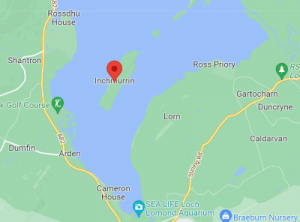
Inch (n) – not the unit of measurement but a geographical word with two meanings, both of which turn up in Scottish place-names.  It can be a small island (see Inchmurrin in Loch Lomond, which is actually the largest freshwater island in the British and Irish islands), or an expanse of flat ground next to a river (see Markinch in Fife).


Irn Bru (n/adj) – Scotland’s ‘other national drink’, the fizzy, luridly-coloured, non-alcoholic beverage that’s claimed to be both a hangover cure and the only soft drink in the world not to be outsold by Coca Cola in its native country.  I’m not sure if either of these claims stands up to scientific scrutiny, but who cares?  All right, Irn Bru is a trademark more than a vocabulary item, but I’ve seen it used as an adjective meaning ‘orange’, for instance, as in “the Irn Bru-coloured ex-American president, Donald Trump.”


Jakey (n) – a down-at-heels, worse-for-wear vagrant with an alcohol dependency.  The alcohol in question is usually either Buckfast Tonic Wine or Carlsberg Special Brew.  The Scottish-based bestselling author J.K. Rowling is sometimes referred to as ‘Jakey Rowling’ by Scottish-independence enthusiasts, irritated at her high-profile support for Scotland remaining part of the United Kingdom during the 2014 independence referendum.


Janny (n) – a janitor.  In Matthew Fitt’s  But n Ben A-Go-Go (2000), hailed (22 years before Deep Wheel Orcadia) as the first-ever science-fiction novel written in Scots, the main character works as a cyberjanny, ‘cleaning up social middens in cyberspace’.


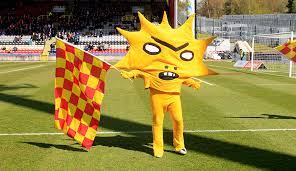
Jag (n/v) – variously, the painful pricking sensation you get when you touch a thistle-head; a needle-and-syringe injection; a serving of whisky, as in “Wid ye like a wee jag ay Grouse?”; or a supporter of Partick Thistle Football Club, the third football team in Glasgow whose mascot, Kingsley, is the most terrifying sporting mascot in the world.  The adjective derived from jag is jaggy.  Yes, Kingsley is the world’s jaggiest sporting mascot too.


© Partick Thistle Football Club


Jalouse (v) – to suspect.


Jaup (v) – ‘to splash or spatter’, according to my well-thumbed copy of the Collins Pocket Scots Dictionary.  Like a lot of Scots words, I heard this one, or a vowel-altered variation of it, before I even moved to Scotland.  While I was living in Northern Ireland as a wee boy, and whenever my mother was frying something in the kitchen, she’d bark at me: “Stay back or ye’ll be japped by the pan!”


Jiggered (adj) – exhausted.


Jingbang (n) – the lot or ‘every last one’, as in the phrase, “the whole jing-bang ay them”.


© D.C. Thomson


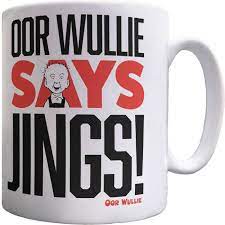
Jings! (exclamation) – a mild and very old-fashioned expression of surprise in Scotland.  Nowadays, in fact, I suspect there is just one person in Scotland who still says “Jings!”  That is Oor Wullie, the dungaree-clad, bristly-haired juvenile delinquent from the Sunday Post comic strip of the same name.


Jobby (n) – a turd.  A word much loved by Billy Connolly, as in his routine about the mechanism that expels faecal matter underneath airplane toilets, the jobbywheecher.  (Wheech means to remove something quickly and suddenly.)  Incidentally, another Scottish term for excrement found in this region of the alphabet is keech.


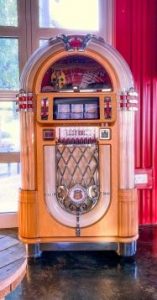
Jouk (v) – to duck or dodge.  A nice story I’ve heard is that this word found its way to the American south.  There, a juke joint became a roughhouse dancing venue where people had to keep jouking this way and that to avoid punches, bottles, etc., thrown on the dance floor.  In turn, this led to the machines that played records of the music you heard at such places being called jukeboxes.


From unspash.com / © Max Tcvetkov


Keek (v) – to peep or glance at something.  The derivative keeker refers not, as you might expect, to a peeping Tom, but to a black eye.


Ken (v) – to know.  Meanwhile, the adjective kenspeckle means ‘well-known’.


Kent yer faither! (idiom) – “(I) knew your father!”  In other words, “Don’t give yourself airs and graces because you’re from humble stock, same as the rest of us.”  I’ve never heard anyone use this as a putdown, but I’ve heard several folk over the years complain about kentyerfaither syndrome in Scotland.  They felt Scotland was a place where if you managed to improve yourself and be successful, you then had to deal with a bunch of jealous, moaning gits trying to cut you down to size.


Kirk (n) – with a capital ‘K’, the Kirk refers to the Church of Scotland, i.e., the institution representing the country’s once-dominant Presbyterian faith.  With a small ‘k’, a kirk refers to a church building.  In 2008, when George Takei, who played Mr Sulu in the original series of Star Trek (1966-69), married his long-term partner Brad Altman and invited all the surviving members of the Star Trek cast to his wedding, except for William Shatner, whom he famously disliked, a joke about this circulated in Scotland.  The punchline went: “The Kirk doesn’t approve of gay marriage anyway.”


From wikipedia.org / © NBC


Laldy (n) – ‘your all’.  The expression “Gie it laldy!” has been bellowed from the touchline of many a Scottish sports field.


Leid (n) – a language.  Thus, this entry is about the ‘gid Scots leid’.


Links (n) – defined in the Free Dictionary as ‘relatively flat or undulating sandy turf-covered ground usually along a seashore.’  A links can also refer to a golf course positioned on such terrain.  For example, eastern Edinburgh has Leith Links and Fife has Lundin Links.  In fact, Ruth Davidson, the tank-loving honorary colonel who used to lead the Scottish Conservative Party, was ennobled not so long ago and she chose for herself the title of ‘Baroness Davidson of Lundin Links’.  Although I prefer to call her: ‘Her Royal Highness Baroness Colonel Tank-Commander Ruth Davidson of Jar-Jar Binks’.


Loon (n) – a word common in North-East Scotland, equivalent to laddie, just as the North-Eastern quine is equivalent to lassie.  When I was out drinking as a young guy in Aberdeen, my Aberdonian pal George Boardman would cheerily cry at the end of the evening, “See ye later, loon!”


Loup (v) – to jump.


Lugs (n) – ears.  I’ve heard more than one person, after being subjected to someone else’s haranguing or moaning, retort: “Quit burnin ma lugs!”


Lum (n) – a chimney.  Some years ago, the Guardian reviewed a collection of short stories by the late Scottish author Alasdair Gray and the reviewer complained about the number of typos in the book.  He cited as an example ‘Edinburgh lums’, which he assumed was a misprint of ‘Edinburgh slums’.  But no, Gray was actually referring to the smoky chimneys of the Scottish capital.


From unsplash.com / © Uwe Conrad