The comeback kid


From wikipedia.org / © Scottish Government


I’ve always had an unhealthy obsession with politics.  Lately, however, I’ve written less about the subject on this blog because my obsession was becoming literally unhealthy – ruminating on politics and politicians in 2026 was filling my head with dark and depressing thoughts.  Nonetheless, I’ll now make some comments about the election for the Scottish Parliament, which happened on May 7th. That day also saw elections for the Welsh Senedd and for various local authorities in England, but I’ll only mention those in passing.


If you’re not a political anorak, you might want to skip this.


So: the results were 58 seats for the Scottish National Party (down six from the previous election in 2021); 17 for Scottish Labour (down five); 17 for Reform UK (up 17); 15 for the Scottish Greens (up seven); 12 for the Scottish Conservative and Unionist Party (down 19); and ten for the Scottish Liberal Democrats (up six).


Despite securing six seats less than their 2021 total, and seven seats short of a parliamentary majority, the result was impressive for the SNP in that this is the fifth election in a row where they’ve ended up as the biggest, government-forming party.  Keir Starmer’s Labour government at Westminster, which hasn’t been in power for two years yet and is already as popular as a fart in a spacesuit, would kill for such longevity and  durability.


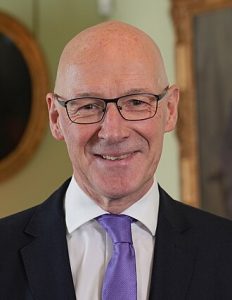
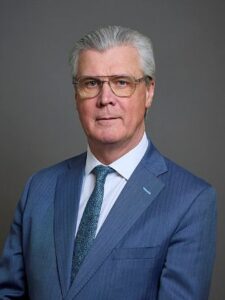
It’s also quite a comeback for SNP leader John Swinney.  Originally Swinney served as SNP leader from 2000 to 2004, when his party was in opposition in the Scottish Parliament.  It wasn’t a happy experience for him.  In the 2003 Scottish election his party dropped from 35 to 28 seats and the following year he resigned.  He later described being opposition leader as “the worst, most awful, most sapping, most soul-destroying job in politics…”


Having enjoyed spells as a cabinet minister and Deputy First Minister, Swinney was planning to retire at this year’s election.  However,  in May 2024, after the affable but hapless Humza Yousaf resigned as First Minister, Swinney surprised everyone by standing unopposed for – with his famous negotiating skills, he managed to sweet-talk the formidable likes of Kate Forbes into not running against him – and winning the leadership again, 20 years after losing it.  And this time, he became First Minister of Scotland too.  Many assumed he would act as a ‘caretaker’ FM, until someone younger and with more chutzpah came along, but thanks to this election result he’s likely to be around for a while.


While I’d never describe Swinney as someone who sets the heather alight, and if he got a fiver every time someone likened his demeanour to that of a bank manager he’d probably be a billionaire by now, I have to say I think he’s a decent guy and I’d rather have him in charge of Scotland than most other Scottish politicians.  I’m biased in this regard.  As I wrote on this blog before, I encountered him a couple of times during my youth, via my old schoolmate Roger Small, who was best friends with him at university, and I liked him.  But it’s not just me.  Most people, political friends and foes alike, seem to like Swinney.


Even the world’s most horrible man, Donald Trump, has a soft spot for him.  In 2025, Trump declared, “John Swinney is a terrific guy — and loves golf and loves the people of this country, and we really appreciate it.”  Yes, I know that Trump thinks Vladimir Putin, Xi Jinping and Kim Jong Un are the bees’ knees, so being liked by him isn’t necessarily a ringing endorsement of your character.


More recently, when Trump announced the removal of US tariffs on Scotch whisky, Swinney claimed this was due in part to a meeting he had with the US president last September.  He was criticised for saying this by the UK government’s Secretary of State for Scotland Douglas Alexander, who argued that trade agreements weren’t in the remit of a leader of a devolved administration.  But after the election result, Trump messaged, “Congratulations to John Swinney on winning his Re-Election for First Minister of Scotland.  He is a good man, who worked very hard along with the King and Queen of the United Kingdom, with respect to Tariff Relief for Great Scottish Whiskey – and deserves this Big Electoral Victory!”  So now, Dougie Alexander looks a bit of a chump.


Trump, being a low IQ individual, misspelt ‘Scottish whisky’ as ‘Scottish whiskey’.  The stuff spelt with an ‘e’ is actually made in Ireland.
 

From wikipedia.org / © Scottish Parliament / youtube.com


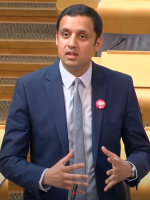
Elsewhere, Scottish Labour and the Scottish Conservatives had their worst ever performances in a Scottish parliamentary election.  Labour leader Anas Sawar hit the headlines back in February when he demanded that Keir Starmer resign as British Prime Minister: “The situation in Downing Street is not good enough. There have been too many mistakes.”  Sarwar’s resignation-call distanced him and his branch of the Labour party from the wildly unpopular Starmer and it generated  a lot of publicity at the time.  But when Starmer said no, he wouldn’t be resigning, it looked less like a political earthquake and more like a mild political bowel-movement.  It highlighted Sarwar’s place as Scottish party leader in the great scheme of things – not high.  It also meant Starmer was embarrassingly conspicuous by his absence in Scotland when Labour started campaigning for the election there.


The Scottish Tories have been reduced to a rump, their number of Members of the Scottish Parliament (MSPs) barely in double figures.  Their leader Russell Findlay has tried to talk them up in the Tory-friendly pages of the Scottish Daily Mail, describing them as the ‘Dynamic Dozen’.  I wouldn’t describe any dozen that includes such numpties as Murdo Fraser, the man who once asked Donald Trump if he’d consider buying Glasgow Rangers Football Club, as ‘dynamic’.  Maybe ‘dysfunctional’ or ‘dystopian’.


Following a near-extinction event caused by their coalition with the Conservatives in Westminster in the early 2010s, the Liberal Democrats have enjoyed something of a revival.  The passing of time has clearly detoxified their reputation a little in folk’s memories.  That said, I don’t know how anyone can stomach their Scottish leader Alexander Cole-Hamilton, who to me comes across as being insufferably arrogant.


And the Scottish Greens have almost doubled their representation in the parliament.  Without wishing to downplay this achievement, I suspect they enjoyed the best of both worlds in relation to the English and Welsh Greens – a separate party – south of the border.  They benefited from the wave of enthusiasm, and publicity, that their southern counterparts experienced earlier this year.  Simultaneously, as a separate party, they were distant enough from them to escape the more recent backlash against the English / Welsh party’s leader Zack Polanski, who stupidly retweeted something about the attack on two Jewish men in Golders Green and then suffered an all-out assault from the right-wing media determined to portray him as an antisemite.  (This despite Polanski being Jewish himself and despite some of the media’s caricatures of him being… hideously antisemitic.)


The Scottish Greens are co-led by Gillian Mackay and the chirpy Ross Greer.  I know Greer is a ‘Marmite’ politician for many, but I like how he puts the wind up gammons like Piers Morgan.
 

From youtube.com / © ITV


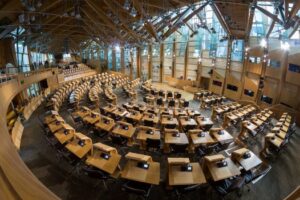
With the SNP on 58 MSPs, and the pro-Scottish-independence Greens on 15, 73 MSPs now support Scotland leaving the United Kingdom, as opposed to 56 unionist MSPs who don’t.  It’s the parliament’s biggest ever pro-independence majority.  Of course, you won’t have heard much about that fact from Scotland’s (unionist-owned) mainstream media, who instead have obsessed on a different fact – that the parliament suddenly has 17 far-right Reform MPs.  Nigel Farage’s extremist party had representation there before, thanks to one MSP defecting to them from the Conservatives.  But today, with Labour, they’re the joint-second biggest party.


This has prompted journalists like the Times’s Kenny Farquharson to declare ‘the death of Scottish exceptionalism’ – Scottish exceptionalism being the idea that Scottish voters are more community-orientated, more considerate of their fellow citizens, more leftwing and, generally, nicer than voters than those elsewhere in the UK, especially in England.  Reform’s showing proves that, no, the Scots are just as right-wing and awful as everyone else.


Well, I find it nauseating that the  parliament contains 17 MSPs who, if their party ever came to power, would enact Trump-style authoritarian and racist policies.  One of them, Senga Beresford, representing the South Scotland region, has already caused controversy by expressing admiration for fascist lout Stephen Yaxley-Lennon on social media.  But I derive some comfort from the fact that none of those MSPs were elected through the parliament’s first-past-the-post, constituency-based voting system, responsible for deciding 73 of the 129 MSPs.  Reform’s 17 sneaked in afterwards, via the additional, regional-based ‘list’ system.  Also, the Conservatives won 31 seats at the previous election, but have been culled to 12, and that number plus Reform’s 17 puts the total number of right-wingers  at 29 – two less than before.


I certainly don’t see Scotland as being exceptional, i.e., better than anywhere else.  I’ve met plenty of Scots who’ve been arseholes as much as arsehole-y people from other places.  But Scotland is still different from other parts of the UK.  If it wasn’t different, it wouldn’t have its own languages, literature, music, sports teams, legal system, educational system, etc.  It wouldn’t have been scunnered by Margaret Thatcher in the 1980s while people elsewhere were proclaiming her the new, handbag-wielding messiah.  It wouldn’t have voted heavily against Brexit when people in England and Wales voted for it.  It wouldn’t have its own independence movement with, now, a 57% majority in the Scottish parliament.  I know that sticks in the craws of unionist politicians and journalists who’d have you believe that Scotland is absolutely indistinguishable from the rest of the UK, that a punter from Elgin is identical to a punter from Ely.


Talking of journalists, the coverage of the election in the Scottish mainstream media was woeful.  The unionist newspapers (i.e., nearly all of them) spent half the time wailing “Everything in Scotland is shite!” and the other half wailing, “How dare anyone suggest doing anything even vaguely radical to improve things!”  Swinney’s proposal that, in an emergency, the Scottish government should put a cap on the price of essential food products so that poor people could still buy them, was met with hoots of derision – and the sneering observation that the UK government would never allow it.  (A Labour government – “For the many, not the few” – denying someone the right to keep essential foodstuffs affordable for the nation’s poorest people?  Not a great look.)


I thought the recent opinion-piece by Scottish journalist Stephen Daisley in the Spectator, calling on the Labour and Conservative parties to get rid of the UK’s devolved parliaments (“Dr. Frankenstein would understand that it was his duty to put down the hideous creature his foolishness and vanity unleashed on the world”), was bad enough.  But the articles that his fellow Scottish journo Chris Deerin penned about Scottish Reform leader Malcolm Offord, for the supposedly left-wing New Statesman, went to arse-licking extremes where no article has gone before.


And now, with Plaid Cymru’s Rhun ap Iorwerth the First Minister in Cardiff, and Sinn Fein’s Michelle O’Neill the First Minister in Belfast, all three devolved governments in the United Kingdom are helmed by people who see their nations’ futures as being outside that supposedly united kingdom.  Interesting times indeed…


But you won’t ever read about that in the newspapers.
 

From wikipedia.org / © User Colin
You can’t say those things nowadays… unless you’re a politician


From wikipedia.org / © House of Lords / Roger Harris


In this post I’m not going to repeat the three most depraved and revolting jokes I’ve ever heard.  But I’ll say when and where I heard them, and from whom.


The first joke concerned a medical tragedy and a hideous crime, both involving children, which’d made headlines in the UK during the 1980s.  One night in a pub in Aberdeen, where I was a college student, a friend told a 13-word joke that combined the two cases.  The friend was a decent guy who was drunk at the time and he uttered the joke during a moment of reckless bravado.  Immediately afterwards, he looked disgusted with himself and spent the rest of the evening in a state of depression.  I don’t think I heard him tell an even vaguely risqué joke after that.


I wasn’t as shocked as I might have been because I’d already encountered the joke in written form.  Some degenerate had scribbled it on the back of a toilet-door in Aberdeen University’s Queen Mother Library and I’d noticed it whilst ‘on the john’.


The second joke was two words longer – 15 – and I heard it in the context of a supposedly real-life anecdote.  Another guy I’d known as a student had, following graduation, gone on a trip to the USA where, one day, he’d ended up at an outdoor music festival.  He too was somewhat inebriated.  The festival’s compere decided, at one point, to leave the stage and wander among the crowd, sticking his microphone into people’s faces and asking them how they were getting on.  He stopped by my old acquaintance and, discovering he was from ‘Scaaat-land’, asked him to tell a ‘Scaaat-tish’ joke.  So my acquaintance spewed those 15 words into the microphone, which boomed across the field from the festival’s speakers and left the entire crowd in mortified, disbelieving silence.  I’m not sure if I really believe that story happened – but if it did happen, it was quite something.


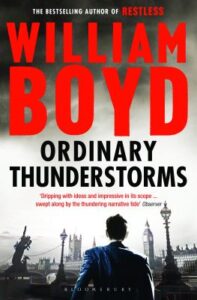
Incidentally, the same joke appears in William Boyd’s 2009 novel Ordinary Thunderstorms.  An unsavoury character tells it to the book’s hero, who responds by tipping him over a bridge and dropping him into the River Thames, where he drowns.  To be fair, the character had antagonized him a lot before that, so he wasn’t just reacting to the joke’s depravity.


© Bloomsbury


The third joke I heard in the early 1990s.  I was sitting at the counter of an Edinburgh pub when a drunken guy beside me told it.  It was a longer and more elaborate joke and featured Freddie Mercury, singer of the rock band Queen, who was famously gay and had died of AIDS a while earlier, and another famous showbusiness personage, also gay, who’s still with us in 2026.


Ooph, I thought, that’s really horrible. I hope I never hear a joke like that again.  


Well, I have just encountered a joke like that again.  In fact, it’s the same joke, though updated from the 1990s and now about the gay singer George Michael, who passed away in 2016, and his former partner Fadi Fawaz.  According to the Daily Record newspaper last week, it was told by Malcolm Offord, leader of the far-right-wing Reform party’s branch in Scotland.  In 2018, he included it in a speech he delivered at a Burns Supper held by a rugby club he was a director of.  In the kerfuffle following the Daily Record’s report, Offord admitted telling the joke was ‘a mistake’ and denied being homophobic.  “I don’t have any issue with homophobia,” he said.  “I’ve got a lot of gay friends.”


Nigel Farage, Reform’s Britain-wide leader, has defended Offord, saying, “If we’re going to drum people out of public life for telling a joke at a boozy rugby club dinner that’s amongst friends, we’ll finish up with the dullest group of individuals, looking a bit like, sounding a bit like Keir Starmer.”  Less forgiving was John Swinney, leader of the Scottish National Party and currently First Minister of Scotland – the post Offord aspires to take over following the Scottish parliamentary election this May.  Swinney said of Offord, “He’s unfit to be leader of any political party, unfit to be a member of the Scottish Parliament with views and attitudes like that…  I think we’ve got to be really careful as a country about where we are heading, and Reform have got no part to play in it if they represent views of intolerance, prejudice and hatred of that type.”


What are we to make of this?  Should we regard Offord’s faux pas as regrettable, alcohol-fuelled ‘banter’, accept his apology and move on?  And are we, as Farage suggests, in danger of becoming too puritanical, of scaring all the interesting people away from public office, of ending up with humourless dullards in power over us?  Is society getting – oh God, here we go again – too woke?


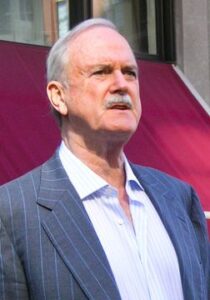
It calls to mind the lamentations of Monty Python (1969-74) and Fawlty Towers (1975-79) star John Clleese, who’s spent a good part of the last few years complaining that you can’t tell a good, impactful, close-to-the-bone joke anymore because folk get too offended: “I don’t think we should organize a society around the sensibilities of most easily upset people because then you have a very neurotic society.”  Incidentally, the 86-year-old Cleese appears to have thrown in his lot with Rupert Lowe’s party Restore UK, an outfit even further to the right than Farage’s Reform.


From wikipedia.org / © Paul Boxley


Well, in my view, we’re never going to stop hearing sick, horrible and downright racist / misogynist / homophobic / transphobic / etc. jokes.  For as long as the urge to be ‘edgy’ persists in the human psyche, such jokes will continue to be told in pubs and clubs, on sports terraces, in Internet forums, on WhatsApp and other messaging platforms, in countless situations where people interact.  But anyone who thinks it’s a good idea to spout a joke of that sort in public – supposedly 200 people attended Offord’s Burns Supper – shouldn’t be presenting themselves as a politician qualified to take over the highest political office in Scotland.  Especially when as holder of that office you’ll be representing, and making decisions that affect, the group of people your joke cruelly mocked.


Call me old-fashioned, but I prefer my political leaders to be dull – and serious, and sensible.  I remember British Prime Ministers like Labour’s Jim Callaghan and the Conservatives’ John Major, both rather grey and uninteresting, but whom I felt a lot safer having in Number 10, Downing Street than, say, an alleged laugh-a-minute ‘personality’ like Boris Johnson.  Between Callaghan and Major, of course, Britain was subjected to the 11-year reign of Margaret Thatcher, who had many qualities – mainly negative qualities, in my opinion – but being a barrel of laughs who told good jokes wasn’t one of them.


Offord must have thought he was on safe ground with his joke because he was at a well-lubricated rugby club event, not what you’d expect to be the most politically correct of gatherings.  But according to the Daily Record, even his rugby-loving audience was unimpressed.  One witness said, “I was sitting next to a gay man and it was clearly an extremely uncomfortable and unpleasant experience for him…  At the time I thought it pretty awful and indeed that was the feeling in the room.  Even for a rugby club it was a crude, bad taste and insulting spectacle…  I don’t know who in their right mind would say something like that.”


Even some of the usual suspects in Scotland’s mostly right-wing, Unionist media have turned on Offord because of this.  Scottish Times columnist Alex Massie penned a piece entitled Reform may already regret its choice of leader in Scotland, whilst Scottish journalist Stephen Daisley, who frequently writes for the very right-wing Spectator, messaged, “Malcolm Offord is single-handedly wrecking Reform’s chances in the Scottish parliament.  Can the Holyrood campaign be salvaged?”


I haven’t heard any reaction yet from Chris Deerin, who’s somehow the Scotland editor at the supposedly left-leaning New Statesman.  When Offord became Scottish Reform leader, Deerin tweeted, “Malcolm Offord is a seriously great get for Reform.  Very smart, ambitious for Scotland, excellent communicator, properly Scottish, experience of government, hugely successful in business – working class boy made good.  Ooft.”  (‘Ooft’, of course, was my first thought when I heard that joke.)  And in a couple of New Statesman articles Deerin penned about Offord, he talked breathlessly about the wealthy politician’s ‘gilded life’ and particularly admired his “vintage, open-top Jaguar sports car, Bond-esque in its sleek lines and growling power,” in which Offord “roared off into the countryside.”


Alas, despite everything, I don’t think Offord will be roaring off into the countryside, never to be seen or heard of again.  There are too many people who’ll rally to his cause rather than reject it after this furore.  That’s because they believe the line, fed to them endlessly by Britain’s right-wing media and pundits, that everything is too puritanically woke now, that you can’t crack a joke about gays or women or religious or ethnic minorities without the roof falling on your head, that you “can’t say those things nowadays”.  The irony is that you can say those things nowadays, and totally get away with them, at least if you’re a British politician.


Nigel Farage has recently courted controversy over the personalized messages he’s sent as Cameo videos – one of several lucrative side-projects he has in addition to being Reform party leader and a Member of Parliament.  A Guardian investigation found that the messages included ones “supporting a convicted rioter, repeating extremist slogans, and endorsing a neo-Nazi event” and where he “referenced antisemitic conspiracy theories, and made misogynistic remarks about leftwing politicians, including a comment about the US congresswoman Alexandria Ocasio-Cortez’s breasts.”


Previously, Farage was in hot water because of allegations made by over 30 people who’d known him during his schooldays.  According to their accounts, the teenaged Farage was quite the dedicated follower of fascism – among other things, singing Hitler Youth songs and growling “Hitler was right” and “Gas them” at Jewish pupils. He’s variously responded to these allegations by calling them ‘fantasies’, saying he can’t remember saying such stuff or dismissing it as – there’s that word again – ‘banter’.


Not that this has dented Farage’s popularity much.  His party is still leading in British opinion polls.


From wikipedia.org / © Roger Harris

From wikipedia.org / © Roger Harris


Elsewhere, Robert Jenrick, formerly the Conservatives’ Shadow Justice Secretary and now a defector to Reform, caused outrage last year when he said a 90-minute visit to the Handsworth part of Birmingham was “as close as I’ve come to a slum in this country” and one where he didn’t encounter “another white face“.  And earlier this month, the Conservatives’ Nick Timothy, who’s inherited Jenrick’s role as Shadow Justice Secretary, described an open Iftar event in Trafalgar Square as “an act of domination…  not welcome in our public places and shared institutions…  straight from the Islamist playbook.”  In previous years open Iftar events had been held in the square without anyone objecting, as had other religions’ celebrations such as Chanukah, Vaisakhi and Diwali.  And it had also hosted Christian events like mass prayers and Good Friday passion plays.


Rather than discipline them, Conservative party leader Kemi Badenoch backed both Jenrick and Timothy.  The latter case inspired the double-barreled, hard-right-wing rabble-rouser Stephen Yaxley-Lennon to crow on social media about how, just two years ago, a Conservative Member of Parliament making Timothy’s anti-Islamic comments would have been expelled from the party.  But not in 2026.


Yes, call me old-fashioned…  But I prefer the good old days when not only were British mainstream politicians grey and dull, but if they’d spouted anything blatantly racist, misogynistic, homophobic, or Islamophobic, they’d immediately have been out on their ear.

Tears of an ermine gown


From the Daily Record


For reasons of preserving my sanity, I’ve avoided writing about politics lately.  That includes the politics of my old homeland, Scotland.  However, I feel compelled to type a few words on the topic thanks to the coverage given to a recent interview with Jack McConnell.  Oops, sorry, I’ve misnamed him.  It should be Baron Jack McConnell of Glenscorrodale.  The twitter handle he’s given himself is @LordMcConnell, so evidently these titles are important to him.  Baron McConnell was First Minister of Scotland from 2001 to 2007 and the last First Minister to belong to the Scottish Labour Party.


Last week, Baron McConnell was interviewed in the Scottish current affairs magazine Holyrood and had plenty to say about the current state of Scottish politics which, since he was nudged out of power by Alex Salmond’s Scottish National Party in 2007, have been dominated by the SNP.  The Baron is not happy at what he sees.  He laments that nothing has changed in Scotland since the 2014 referendum on independence (which, of course, his side won), laments that modern Scottish politics has ‘no public debate and no public accountability’, and pines for the good old days ‘of ministers doing their jobs well’.


Indeed, so strongly does he feel that at one point the interviewer notes, “McConnell’s voice starts to break and his eyes well up.”  “Sorry,” he says, “I’m feeling quite emotional about it right now…  I genuinely feel like we are stuck in treacle and I don’t know how we get out of it.”


Commentators in Scotland’s (heavily unionist) mainstream media have seized upon the article as both an articulation and confirmation of all that’s ghastly about modern-day Scotland, which has had the SNP in power for the past 14 years now and is currently under the First Ministership of Nicola Sturgeon.  In the Rupert Murdoch-owned Times, for instance, pundit Kenny Farquharson wrote, “I challenge anyone, of any political stripe, to read this interview with Jack McConnell and not find themselves agreeing with at least some of his analysis of where Scotland finds itself right now.”  And in the New Statesman, Chris Deerin opined about Jack – sorry, Baron! – McConnell’s outpouring, “Coming from a politician who is known for his optimism and problem-solving approach, and who rarely lacks a twinkle in his eye, the anguish is all the more powerful.  And it is very hard to disagree with anything.”


Incidentally, Deerin has form in lambasting Scotland’s prevailing political orthodoxy.  In 2015, in the right-wing online news outlet CapX, he wrote that the place “has become a soft and sappy nation, intellectually listless, coddled, a land of received wisdom and one-track minds, narrow parameters and mass groupthink…  It is certainly the viewpoint that dominates our polity and media – an unholy alliance of Nationalists, Greens and socialists. I’m sure many consider themselves to be all three.”  I find it mind-melting that the left-leaning New Statesman saw fit to make him its Scotland Editor.


Baron McConnell apparently bewails a lack of vision in modern Scottish politics, though I’m surprised that someone with his broad vision doesn’t acknowledge the fact that in the last decade, by way of being part of the United Kingdom, Scotland has had to deal with the austerity cuts imposed by David Cameron and George Osborne, and then the vote to leave the European Union (powered by anti-European votes in England – every part of Scotland voted to remain in the EU) and its ongoing, toxic legacy, and the Covid-19 epidemic.  Not to mention that the UK as a whole is currently governed by a set of Conservative politicians whose moral compass seems to be the same one that Al Capone referred to in the 1920s.  I doubt even a Scottish government with impeccable Unionist / Labour credentials headed by the noble Baron himself would appear particularly dynamic having all that to contend with.  So, it seems a bit myopic of him to overlook it.  Unless, of course, he’s just being disingenuous.


From angelfire.com


Also, when I think back to the supposed golden age of public debate, and public accountability, and ministers doing their jobs well, and not being stuck in treacle – i.e., Baron McConnell’s tenure as First Minister – I can’t remember much that was outstanding.  Well, apart from the ban on smoking in public places, the first such ban implemented in one of the constituent nations of the UK, which made life pleasanter and healthier for non-smokers like myself who liked to visit the pub sometimes.  But otherwise, I just remember him making an arse of himself by wearing a pinstriped kilt to a charity fashion show in New York in 2004.  (Even my old Dad, not normally one to get worked up about Scottish politics, exclaimed, “Christ, what an embarrassment!”).  Oh, and a stushie about him and his family holidaying in Majorca with Kirsty Wark, a senior journalist at the supposedly impartial BBC.  And his enthusiasm for promoting Public Finance Initiatives which, by 2016, were projected to cost Scottish taxpayers some 30 billion pounds during the decades to come.  And the fact that one year he returned 1.5 billion pounds of devolved money to the London treasury, when there were clearly things in Scotland he could have spent it on.


Still, Baron McConnell must have fond memories of those years.  A staunch Blairite, he had the satisfaction of knowing his smiley, warmongering hero was ensconced in Number Ten, Downing Street.  Also, the Labour Party was massively powerful in Scottish local politics, and it held the lion’s share of Scottish seats in the Westminster Parliament too.  Labour were the top dogs in Scotland.  This was their territory.  No wonder political commentators joked that Labour votes in Scotland were weighed rather than counted; and in Glasgow you could stick a red rosette on a monkey and it’d get voted into Westminster.


Actually, looking at the evidence, the red rosette / monkey scenario must have actually happened in a number of cases.  I’m thinking of such specimens as Lanark and Hamilton East’s one-time Labour MP Jimmy Hood, who once declared he’d oppose Scottish independence even if it made the Scottish people better off – the fact that as an MP he was busy claiming £1000-a-month second-home expenses in London no doubt had something to do with his keenness to keep Westminster running the show.  And Midlothian’s David Hamilton, who in 2015 did his bit for the battle against sexism by describing Nicola Sturgeon (and her hairstyle) as “the wee lassie with a tin helmet on”.  And Glasgow South West’s Ian Davidson, who charmingly predicted that after 2014’s referendum on Scottish independence the debate would carry on only “in the sense there is a large number of wounded still to be bayoneted”.  This shower became known as the ‘low-flying Jimmies’ because of their lack of ambition in anything other than being cannon-fodder for Labour at Westminster and enjoying all the perks that came with being MPs.  And with numpties like these populating the Westminster opposition benches during the 1980s and 1990s, it’s no surprise Mrs Thatcher’s Tories had a free run to do whatever they liked in Scotland.


Yes, I know, in 1999, early in Blair’s premiership, Labour did set up the devolved Scottish Parliament in Edinburgh.  But I’m sure it was seen as a means of keeping additional numbers of loyal Scottish Labour Party hacks in lucrative employment and was designed not to rock the boat in any way for London.  The Scottish parliament was organised so that no party (i.e., the SNP) could never win an outright majority in it and its ruling executive would always have to be a coalition.  And the biggest party in any coalition, Blair and co. assumed, would always be the Scottish Labour Party.


It was a shock for Labour when in 2007 the SNP won the biggest number of seats in the Scottish parliament, eschewed coalitions and ran Scotland for the next four years as a minority administration.  It was an even bigger shock for them when in 2011 the SNP achieved the impossible and managed to win an overall majority of seats there.  Hadn’t Labour’s finest minds arranged things so that this would never happen?  And things got even worse in 2015 when, with the Scottish party led by the hapless Jim Murphy, Labour lost 40 of its 41 MPs to the SNP in a Westminster election.  Yes, it must’ve been tough for poor old Labour to witness all that.  There’s nothing worse than having a sense of entitlement and then not getting what you believe you’re entitled to.


From unsplash.com / © Serena Repice Lentini


Baron McConnell is a good example of a particularly rotten aspect of the Scottish Labour experience.  Secure a seat in the London or Edinburgh parliaments, follow orders, doff your cap to your masters, and after a few decades of loyal service you’ll get the ultimate reward – a peerage.  Scotland was meant to be not only Labour’s stomping ground, its fiefdom, but also its station of departure for a gravy train running all the way to the House of Lords.  These days, in the Lords, the second largest legislative chamber in the world after the Chinese National People’s Congress – which is about as democratic – the good Baron of Glenscorrodale gets to rub ermine-clad shoulders with such other Scottish Labour luminaries as Baron George Foulkes of Cumnock, Baron George Robertson of Port Ellon and Baron Alastair Darling of Roulanish.


No doubt he also enjoys a chinwag with the Margaret Thatcher-worshipping former Secretary of State for Scotland Michael Forsyth, who was supposedly booted out of power in 1997 – I can’t remember his title, but I assume it’s something like Lord Freddy of Krueger – and another of Chris Deerin’s heroes, the former Scottish Conservative Party leader Ruth Davidson, whom I believe nowadays calls herself Baroness Colonel Davidson of Jar-Jar Binks.  Obviously, there are plenty of former Conservative Party treasurers to fraternise with as well.  Accountability, eh?


In the Holyrood interview Baron McConnell talks about how in the Labour party “there was an absolute commitment to the redistributive nature of the UK.”  But isn’t that the real reason for mediocrity and poverty of imagination in Scotland?  Isn’t it the message that Scots have to stay in the UK because their country is a basket case and their wealthy neighbour – well, part of it, London – has to continually redistribute money to them?  Wouldn’t it be wiser in the long run to remove the dependency set-up, through independence, and give Scots the powers to make their own decisions, implement their own courses of action, make their own mistakes and hopefully learn from them?  But that would necessitate dismantling the cosy British constitutional system that the Baron and his friends currently do so well out of.


Ironically, there is a part of the UK where the local Labour Party doesn’t feel obligated to kowtow to London and is prepared to do its own thing.  I refer to the Labour Party in Wales, whose leader Mark Drakeford bucked the dismal losing trend set by Labour in England and Scotland and won the biggest number of seats in the Welsh Senedd election earlier this year.  During the Covid-19 pandemic, Drakeford has won plaudits by refusing to work in lockstep with London – which I suspect Baron McConnell would have done, had he still been Scottish First Minister.  Instead, Drakeford has followed his own instincts and implemented health measures he thinks are appropriate for Wales.


From wikipedia.org / © Conference of Peripheral Maritime Regions


Just the other day, it was announced that Drakeford’s party has come to an agreement with Plaid Cymru, the Welsh pro-independence party, so that legislation can be passed smoothly in almost 50 policy areas.  Could you imagine a similar agreement being reached in Edinburgh?  No way.  Not with the idiotic ‘Bain Principle’ still holding sway, and Scottish Labour being so obsequious to their head office in London, who would frown on any moves by Labour in Scotland that might not play well with voters in England.   Plus, some Scottish Labour members would sooner chainsaw off their legs at the knees than have anything to do with the hated SNP, those frustraters of their sense of entitlement, those derailers of their gravy train.