Rab Foster gets cosy


© Cloaked Press


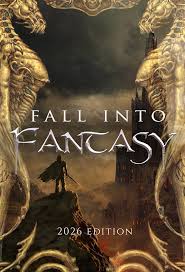
Fall Into Fantasy 2026, this year’s instalment in the Fall into Fantasy series of short-story anthologies from the publisher Cloaked Press, went on sale a couple of days ago.  Its 15 stories include one entitled Jerthemia the Healer, which is attributed to Rab Foster, the penname I use when I write fiction in the fantasy genre.


Jerthemia the Healer is a rare thing from me.  It belongs to the sub-genre of fantasy known as ‘cosy fantasy’.  The Wikipedia entry on cosy fantasy describes it as being “characterized by its focus on comforting, low-stakes narratives set in fantasy worlds.  It emphasises themes of community, friendship, healing, and everyday life, often eschewing violence, war, and other serious conflicts which are typical of high fantasy…  Relationships, including family, found family, friendship, and healthy romance, are central…”  The entry goes to list some examples of cosy fantasy, such as Sarah Beth Durst’s The Spellshop (2024) – a novel “full of stolen spellbooks, unexpected friendships, sweet jams, and even sweeter love” – and Travis Baldree’s Legends & Lattes (2022), which is about a retired orc who joins forces with a succubus and opens a coffee shop.


Well, anybody who knows me would undoubtedly say that cosy fantasy sounds much too wholesome and un-cynical a sub-genre for someone with my unwholesome and cynical character to be working in.  And yes, usually, any time I’ve tried to write a cosy fantasy story, it hasn’t gone well – by the second or third page, one of the characters is puking up their intestines or getting their face ripped off or having horror-slugs crawl out of their eye sockets.  I guess I’m not mentally programmed to write that gentle, nice sort of fiction.


However, with Jerthemia the Healer, the central idea was strong enough for me to put the whole story on paper without turning it into a bloodbath.  And that idea is…  Well, I think I can give it away here because it’s already been given away in the blurb accompanying Fall into Fantasy 2026 on Amazon… The central character, Jerthemia Ros, is a fantasy-world vet who has to attend to sick or injured mythical animals.


An obvious inspiration for Jerthemia the Healer is literature’s most famous veterinarian surgeon, James Herriot, who wrote eight books between 1970 and 1992 based on his life as a vet in the Yorkshire Dales during the 1930s, 1940s and 1950s.  These inspired the very popular TV series All Creatures Great and Small, which ran from 1978 to 1980 and later from 1988 to 1990 and starred Christopher Timothy, Peter Davison and Robert Hardy.  I’ve only read one of Herriot’s books and it wasn’t quite my cup of tea, and I always found the TV show a bit twee,  But from all accounts Herriot was a decent and humble man who genuinely loved the animals he worked with, so all power to his memory.


By the way, ‘Jerthemia Ros’ is an anagram.  Have you worked it out yet?


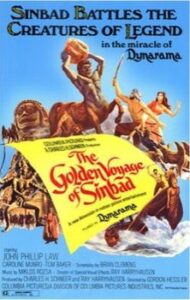
One other inspiration for Jerthemia the Healer (and a huge influence on my fantasy writing generally) is the legendary stop-motion animator Ray Harryhausen, whose films were populated with all manner of mythical creatures brought to life by his special-effects wizardry: dragons, rocs, cyclopes, hydras, harpies, gorgons, krakens, etc.  In my story, the appearance of one of the creatures is entirely modelled on a beastie that Harryhausen animated in his 1973 movie The Golden Voyage of Sinbad.
 

© Morningside Productions / Columbia Pictures


The tenth volume in Cloaked Press’s Fall into Fantasy series, Fall into Fantasy 2026 can be purchased at Amazon here.

Rab Foster gets grim


 © Schlock! Webzine


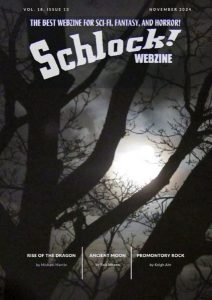
Rab Foster, my penname when I write fantasy fiction, has just had a new story published.  It’s called The Mechanisms of Raphar and it appears in the November 2024 – Volume 18, Issue 13 – edition of Schlock! Webzine.


Once upon a time, I believed fantasy fiction came in two varieties only.  One type consisted of 1000-page-long, telephone-directory-sized epics whose narratives involved quests, wizards, kings and queens, elves, hobbits and orcs and the first thing you saw when you opened the books was a lavishly detailed map of the fantasy-land in question.  This J.R.R. Tolkien-esque variety was known as ‘high fantasy’.  Alternatively, there were short stories where Conan the Barbarian, armed with only a broadsword and a leather jockstrap, cut a bloody swathe through enemy warriors, slew the occasional giant snake and earned himself the adoration of the occasional busty maiden.  These were examples of the more down-and-dirty ‘sword and sorcery’ variety, of which Robert E. Howard was the leading practitioner.


But not anymore.  Nowadays, if I type the question, “What are the different types of fantasy fiction?” into Google, it gives me 24 sub-genres.  These include all sorts of nice, cheery-sounding things such as ‘hopepunk’ (“about characters fighting for positive change, radical kindness, and communal responses to challenges”), ‘romantasy’ (which are “typically set in fantastical worlds, with fairies, dragons, magic, but also feature classic romance plotlines – enemies-to-lovers, soulmates, love triangles”) and ‘cosy fantasy’ (“works that contain or portray a comforting healing ambience to the story… centre on slice of life moments… and are often gentle in their narratives”).  A well-known example of that last sub-genre is Travis Baldree’s 2023 novel Legends & Lattes, in which an orc and a succubus join forces to… open a coffee shop.  Now I’m not going to slag off Legends & Lattes because it’s wrong to diss a book I haven’t read.  Let me merely say it doesn’t sound like my cup of tea.  Or indeed, cup of coffee.


Meanwhile, at the opposite end of the niceness spectrum from hopepunk, romantasy and cosy fantasy is… grimdark.  This is the nihilistic, blood-soaked, everyone’s-a-bastard variety of fantasy most famously essayed in George R.R. Martin’s Game of Thrones books (1996-2011) and TV series (2011-19).  The science-fiction author Adam Roberts has described grimdark as fantasy stories where “nobody is honourable and might is right”, and which “turn their backs on the more uplifting Pre-Raphaelite visions of idealised medievaliana, and instead stress how nasty, brutish, short and, er, dark life back then really was.”


I’m not that big a fan of grimdark.  I sometimes find its ‘everything sucks’ attitude rather adolescent.  But The Mechanisms of Raphar is pretty grim, and pretty dark, so I guess it qualifies as a story of this type.  I’ve experienced a few lows recently, especially in my professional life, and I can hardly say I’m enchanted with the state of the world in 2024, so perhaps the story is a manifestation of my current discontent.


The Mechanisms of Raphar was vaguely inspired by the Edgar Allan Poe story The Pit and the Pendulum.  Unlike the famous 1961 movie version directed by Roger Corman, which was about Vincent Price mourning his dead wife in a castle that coincidentally happened to have a few torture instruments stowed in its cellar, Poe’s original tale is about a prisoner of the Spanish Inquisition who tries to withstand the various devices of torture they use against him.  In The Mechanisms of Raphar, the villains are an insane, sado-masochistic religious cult who worship a god of pain, have a giant temple that’s packed full of torture-machines, and make their services available – for a fee – to people who want other people to suffer horribly, such as despots and their prisoners or other religions and their heretics.  I’m from Northern Ireland, so I don’t have a high opinion of organised religion.  I think this shows in the story.


Incidentally, the name ‘Raphar’ is nearly an anagram of ‘Haw Par’, which is my tribute to Haw Par Villa, the most extraordinary museum in Singapore.  Haw Par Villa’s most famous – or notorious – attraction is a graphic representation of the Ten Courts of Hell where you can see the souls of sinners being horrifically tortured and punished for the crimes they committed while they were alive.  Indeed, the ‘Tree of Blades’ that features in the story is inspired by the ‘Tree of Knives’, festooned with bloodied bodies, on display in Haw Par Villa’s depiction of hell.


Until the end of November, The Mechanisms of Raphar can be read here, while you can access the contents page of Volume 18, Issue 13 of Schlock! Webzine here.


And now that I’ve hopefully worked that bloodlust out of my system, maybe I will write a cosy fantasy next…  Maybe my next Rab Foster story will be one where a kelpie and a balrog join forces to open a tea-room in Goblin-land.