It’s Bat-Bond


From wikipedia.org / © Colleen Sturtevant


Unless you’ve spent the past week wearing a blindfold and earplugs, you’ll know from newspapers, new programmes, news websites, YouTube videos, TikTok videos, podcasts and general social media that English actor Robert Pattinson has been chosen as the next James Bond.  Making the choice were the powers that be at Amazon, which has lately gained financial and creative control over the Bond franchise.  Amazon chairman Jeff Bezos claimed he was ‘heavily involved’ in Pattinson’s selection.  Which is worrying.  James Bond, a man whose arch-nemesis is Ernst Stavro Blofeld, a bald billionaire with his own private space programme, is now having his fate decided by Jeff Bezos, a bald billionaire with his own private space programme.


Also in the running for the role were the actors Josh O’Connor, Callum Turner, Jack Lowden and Nicholas Hoult, who are all aged 36 and four years younger than Pattinson.  They’re also less famous than Pattinson, who’s already appeared in three super-popular cinematic franchises:  as the ill-fated Cedric Diggory in 2005’s Harry Potter and the Goblet of Fire, zapped to death on the orders of Lord Voldemort (played by Ralph Fiennes – M to Daniel Craig’s 007 in the three most recent Bond films); as a spangly vampire in the Twilight movies (2008-12); and as the title character of The Batman (2022), which has a sequel due in 2028.


Candidates to play Bond have to undergo a screentest that’s known as ‘the From Russia with Love (1963) test’.  According to former Bond producer Michael G. Wilson, they have to act out “the same scene… and that’s the one in From Russia With Love, where Bond comes back to his room after the assassination, and he starts taking off his shirt, goes into the room to bathe.  Then he hears something, takes his gun, goes in and the girl’s in the bed…  Anyone who can bring that scene off is right for Bond.  It’s tough to do.”  So, if you can perform the sequence as effortlessly as Sean Connery did in the real From Russia with Love, you’ve bagged the job of being the next 007.


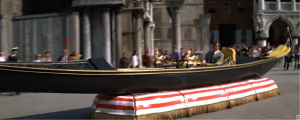
I have to say, though, that a sterner test would be a Moonraker (1979) test, wherein the aspiring Bond actors try to maintain their suaveness, dignity and cool while, Roger Moore-style, they emerge out of a Venetian canal in a gondala-that-turns-into-a-speedboat-that-turns-into-a-hovercraft, to the accompaniment of Johann Strauss’s Tritsch-Tratsch-Polka and with drunkards and pigeons doing double-takes.
 

From youtube.com / © Eon Productions / United Artists


I was rooting for Jack Lowden to get the role, mainly for geographical reasons.  I spent a good part of my youth in the Scottish Borders town of Peebles and Lowden grew up in the village of Oxton, just 30 miles from Peebles in the same region.  Also, Lowden would have been the first Scottish James Bond since Connery, the original and, for many folk, the best Bond actor.  But I’m not too upset by the fact that we’re getting a Bat-Bond rather than a Borders-Bond.  Countless other people are upset, though.  “I have never felt this much rage in my life.  This is the worst decision in all of cinema history…  This is an abomination,” a reader in the Guardian ranted about Pattinson’s appointment the other day.


I can understand arguments against Pattinson based on the fact of his current popularity – indeed, his current ubiquity.  Yes, it seems unfair that he gets to play Bond when he’s already playing Batman.  And yes, his recruitment to the role goes against the ethos governing the recruitment of the previous six Bond actors in the official film franchise.  When they were hired, none of them had the great big cinematic footprint behind them that Pattinson has already.  I suppose Roger Moore was the best-known of Pattinson’s predecessors when he became 007, but that was because of his TV work, in Ivanhoe (1958-59), The Saint (1962-69) and The Persuaders (1971-72).  However, I’m willing to overlook the objections because in my opinion Pattinson is a pretty decent actor.


For one thing, away from his Harry Potter / Twilight / Batman stuff, he was cast in two movies, Cosmopolis (2012) and Maps to the Stars (2014) by the great, innovative Canadian director David Cronenberg.  If Cronenberg puts you in his films, it shows you’re a special breed of actor – a breed that includes Oliver Reed, Patrick McGoohan, Christopher Walken, Jeremy Irons, Jennifer Jason Leigh and Viggo Mortensen.  He was also in Claire Denis’s scuzzy, downbeat sci-fi movie High Life (2018); in Robert Eggers’s Edgar Allan Poe-inspired The Lighthouse (2019) alongside a flatulent Willem Dafoe; and in Antonio Campos’s splendidly dark and overwrought southern-gothic movie The Devil All the Time (2020), in which he plays a scumbag, predatory preacher with the memorable name of the Reverend Preston Teagardin.


He’s also played a British secret agent before, in Christopher Nolan’s Tenet (2020).  Despite the bewildering presence of whirligig machines that change people moving forwards through time to moving backwards through it, and vice-versa, Tenet feels very much like a James Bond film.  Indeed, watching it, I found myself ticking off the Bond films it reminded me of – 1965’s Thunderball (the villain lounging on his luxury yacht); 1995’s Goldeneye (the bungee-jumping sequence); 1987’s The Living Daylights (the fight in the kitchen); and 1985’s A View to a Kill (the chase involving a fire engine).


As the raffish Neil, who pops up regularly to give confused hero John David Washington much-needed advice and support and who clearly knows much more than he’s letting on, Pattinson is one of the best things in Tenet.  It would be a mistake for him to play Bond in the way he plays Neil, but at least it shows he’s comfortable in an espionage movie with sci-fi overtones, which is what the Bond movies commonly are.


Also, the best Bond actors have conveyed the sense that there’s a certain darkness to the character, no matter how smoothly tuxedo-ed up he is, which I’m sure Pattinson is capable of doing too.
 

From wikipedia.org


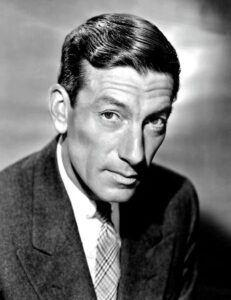
Actually, with his prominent cheekbones, Pattinson bears a faint resemblance to the American musician, composer and songwriter Hoagy Carmichael whom, in Ian Fleming’s original Bond novels Casino Royale (1953) and Moonraker (1955), Bond is said to resemble – one of the most tantalising clues Fleming gives readers about what his hero looks like.  I’m also encouraged by the fact that the publicity shot released with the announcement of Pattinson as Bond depicts him as a sniper, pointing a rifle – rather like Timothy Dalton, the actor who played Bond closest to the character in Fleming’s books, who had to do sniping duties at the start of his first Bond film, The Living Daylights.


Possibly more important than Pattinson’s casting, though, is the fact that the next Bond will be directed by Denis Villeneuve, whose CV includes Arrival (2016), Blade Runner 2049 (2017) and three Dune movies (2021, 24 & 26).  Villeneuve is the only modern filmmaker apart from Nolan who has the vision, self-confidence and know-how to get properly big and ambitious projects onto the screen and imbue them with intelligence as well as spectacle.  His talents, on top of Pattinson’s star power, should be exactly what’s needed to get the Bond franchise up and running, generating headlines and making profits again.


It’s rumoured that Villeneuve and Pattinson plan to make a trilogy of Bond movies.  If so, this would make the numerology of Bond-actors and (official) Bond-movies perfect.  George Lazenby made one movie, Dalton made two, Pierce Brosnan made four, Craig made five, Connery made six and Moore made seven.  Pattinson would fill in that missing three-movie slot.


Where would the stories for the trilogy come from, I wonder?  Would they be original ones?  Or would the filmmakers return to Fleming’s books, which include a loose trilogy, the novels involving Blofeld,  Thunderball (1961), On Her Majesty’s Secret Service (1963) and You Only Live Twice (1964)?  However, Thunderball has already been filmed twice, in 1965 and in Irvin Kershner’s ‘rogue’ Bond production with Connery, Never Say Never Again (1983), so audiences may be overly familiar with its plot.


Finally, I found it touching that in response to the announcement about Pattinson, the 87-year-old George Lazenby posted a video welcoming him to ‘the most exclusive club in the world’.  He also expressed hope that Pattinson would get to repeat his most famous line, “This never happened to the other fellow.”  I’d heard Lazenby hadn’t been in great health in recent years, so it was great to see him looking sprightly and cheerful.

 

From x.com/lazenbyofficial

M. John Harrison’s endgame


© Serpent’s Tail


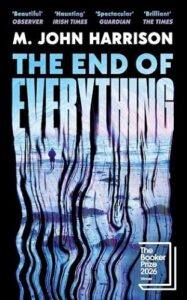
Recently, I was halfway through a novel when suddenly the novel was announced as the winner of 2026’s Booker Prize.  What a surprise.  I’d started reading M. John Harrison’s The End of Everything (2026) knowing that it was on the prize’s shortlist – this was stated on its cover – but it was so unique, riffing on old tropes of the science-fiction genre whilst doing new, unexpected and plain weird things with those tropes, that I’d assumed its chances of winning were zero.


Indeed, it was more the weirdness than the science-fictional aspects of The End of Everything that convinced me it had no chance.  The British literary establishment is famously snobby towards science fiction, and genre writing of any type, but lately the Booker has gone to books that can be (even if their authors aren’t wild about the idea) classified as sci-fi – Margaret Atwood’s The Testaments (2019), Paul Lynch’s Prophet Song (2023) and Samantha Harvey’s Orbital (2024).  The End of Everything, however, simply seemed too odd to win.


Harrison was as surprised as I was that he’d bagged the Booker.  Interviewed in the Observer, he said of the prize-giving ceremony, “I was enjoying it up until I heard my name, and then I had a moment of utter terror, realising that I had to go up onto the podium…”  His panic was partly due to “the fact that I had taken three days to write a very short speech about something that I didn’t think I was going to get, trying to fill it with authenticity when it wasn’t authentic.”


I’ve been aware of Harrison for a long time but read his work only sporadically.  As a teenager, I came across his writings in the influential science-fiction publication New Worlds.  In the 1960s it’d been a monthly magazine that promoted ‘new wave’ science fiction, i.e., eschewing the tropes of traditional sci-fi, like spaceships, alien planets, robots and intergalactic empires, and instead embracing more literary and experimental content and prose-styles, 1960s counter-culture, the modern media landscape, the soft sciences, radical politics, feminism….  Basically, anything likely to get up the noses of science fiction’s conservative old guard who’d made their names writing more straightforward, escapist fare in the 1930s, 1940s and 1950s.  When I read New Worlds, in the 1970s, it was being published four times a year in paperback form and in it I discovered reviews and essays penned by Harrison.


It’s fair to say he was not a fan of the afore-mentioned traditional science fiction, with its afore-mentioned spaceships, alien planets, robots and intergalactic empires.  I seem to remember him giving a right old kicking to a novel by the American sci-fi author Poul Anderson, whom I mentioned on this blog a few posts ago.


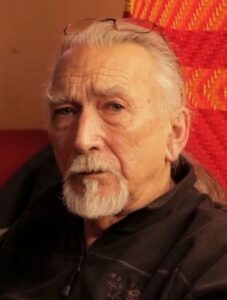
I also saw him in an episode of the 1979 BBC documentary series Time Out of Mind, which looked at the lives and works of science fiction writers.  Episode 3 was about Michael Moorcock who, as well as being a prolific and innovative writer of science fiction and fantasy, edited New Worlds.  For the episode, he insisted on being interviewed with Harrison present.  Thus, while Moorcock was slagging off writers of old-school science fiction, Harrison chimed in with criticisms of his own, that, for instance, those old guys had no ‘sense of irony’.  The episode of Time Out of Mind can be viewed on YouTube here.  It’s fun seeing the 1979 Harrison looking so young and boyish compared to the still-sprightly but rather Gandalfian figure he cuts today.


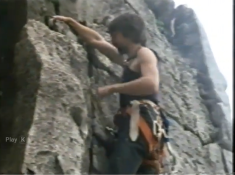
Soon afterwards, I encountered Harrison’s short story The Ice Monkey in a volume of horror stories, edited by Ramsey Campbell, entitled New Terrors 2 (1980).  The Ice Monkey made a big impression on me.  It arguably has an element of the supernatural – the ornamental monkey of the title may, like a pin-pierced voodoo doll, have initiated a tragic accident – but the real horror resides in the circumstances of one of the main characters, who has a broken marriage behind him.  It’s a ‘kitchen-sink’ kind of horror, something that was very new to me at the time.  The story is also about rock climbing, an activity Harrison indulged in for much of his life.  He only gave up climbing a few years ago.  “I stopped just about at the end of Covid.  I was getting tired, physically tired, which I think was simply to do with age.  I was halfway up a wet piece of gritstone somewhere outside Sheffield, and I suddenly thought, ‘I’m wet, I’m cold, I’m tired, my hands are all cut up.  Why am I doing this?  What sensible person would do this?’”


© Bruce Pennington / New English Library


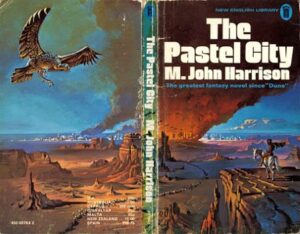
In the decades since, I’ve read his 1971 ‘dying earth’ fantasy novel The Pastel City, the first book in his Viriconium sequence, which caught my eye on a second-hand bookshop shelf because of its gorgeous cover by the artist Bruce Pennington; and his 2006 novel Light, a space opera (of sorts) that’s the first volume in his Kefahuchi Tract trilogy; and his 2017 collection of short fiction, You Should Come With Me Now.  I’m glad I read that last book because the strange stories in it helped prepare me for The End of Everything.


The End of Everything is set in a near-future Britain where an alien invasion is in progress. The invaders are called the iGhetti and they seem to manifest themselves as ‘tall writhing bursts of light’.  Quite how and why they arrived on earth is a mystery: “Competing authorities associated the iGhetti with dark matter or the banking crisis of the late 2000s, while others believed it to be less an invasion than a ‘re-enchantment of the world’, a process of spiritual tourism and gentrification pursued by advanced civilisations from a mooted ninth planet.  More popularly, they were seen as having ‘come out of the internet’: indeed, this was the favoured theory of the internet itself…”


In Britain, the iGhetti seem concentrated around the City of London, against which the authorities – what’s left of them – stage constant military assaults.  Meanwhile, their presence is apparently the cause of hallucinogenic episodes, euphemistically called ‘bad patches’, in people’s consciousness.  They’ve also seemingly caused Britain to lose all contact with the rest of Europe, which is referred to as a ‘lost continent’.  That doesn’t deter shiploads of Britons from regularly setting sail into a misty English Channel optimistically thinking there’s still something to find on the other side of it.


Perhaps most alarmingly, the iGhetti appear to have seeded the sea with organisms – ‘artefacts’ – that start off as small blobby things but rapidly evolve, sometimes into human forms with the power of speech.  One of the book’s characters, Philip Tennent, makes a living as a beachcomber in the East Sussex seaside resort of Dalston-on-Sea.  He collects such artefacts when they’re washed ashore and sells them to interested parties.  His customers include a man called Hampson, who uses artefacts in gruesome scientific experiments aimed at making contact with the iGhetti – Hampson is “the beachcomber’s call of last resort, a man no one liked, or liked to deal with.  No one liked what he did with the things they sold him.”


The End of Everything’s plot begins with Philip retrieving an artefact that evolves with unsettling speed and becomes unsettlingly human.  He hooks up with his aunt, Marnie, an artist whose lifelong feistiness and rebelliousness are starting to manifest themselves in extreme ways now that she’s succumbing to dementia.  And the three of them, Philip, Marnie and the artefact, set off on a road trip.  The events that follow unfold through the prism of the weirdness that the iGhetti have unleashed upon the world.


I’ve described the plot in tentative language – ‘seem to’, ‘appear to’, ‘apparently’, ‘seemingly’, ‘perhaps’ – because none of the characters have much clue about what’s going on.  Harrison has stated that he doesn’t like ‘the over-explanation of everything’ in fiction and pointed out that upheaval in real life is frequently under-explained.  It isn’t like in traditional science fiction stories where the Martians invade, humanity reacts, the invasion ends, and everyone immediately knows what’s happened.  Rather, there’s confusion – people not knowing when the disaster or upheaval has started or ended, not knowing it’s happened at all because it hasn’t impacted on them, trying to ‘keep calm and carry on’, being in denial about it, being taken in by conspiracy theories, and so on.  The climate emergency, which is wreaking havoc around us right now, is a good example of that.


From wikipedia.org / YouTube.com / © Virtual Futures


The End of Everything’s premise of a catastrophe happening and causing reality to fray around it recalls the works of J.G. Ballard, one of my all-time favourite writers and someone who was an influence on Harrison.  But while Ballard’s fiction often took place in exotic locales, in the forests of Cameroon or on Pacific atolls or in gated communities in southern France, Harrison bases his catastrophe in some very British – very English – settings: in crumbling, fading seaside towns.


You get such details as ‘the concrete paths and slipways of the old sea defences’ or ‘a hot snacks van that operated from a viewpoint car park above the shingle line’ or beaches consisting of ‘pebbles patched with open sand, rimmed with weeds and rubbish, evening primrose, sparse sea buckthorn, the trickle of a sewage overflow, an abandoned ice cream parlour’ or, most memorably, the benches along the seafronts with their memorial plaques, which are almost always dedicated to old men.  At one point Marnie believes she sees “the ghosts of old men drawn out to sea, released from the mysterious dawn-to-dusk confinement of their commemorative benches along the north shore, to rise until they face out towards the lost continent.”


Obviously, those seaside settings imbue The End of Everything with an oh-so-British melancholia and slightly seedy, slightly pathetic nostalgia.  And this makes me feel it’s a more personal and inward-looking book than some critics have made out – critics who’ve seized on the ‘big things’ in the plot and read them as metaphors, like the ‘lost continent’ symbolising Brexit or the artefacts symbolising the recent intrusion of AI into our lives.  (The artefact that Philip and Marnie end up with resembles an LLM because, as it develops, it gobbles up the sensory input and information around it, learns to speak and eventually becomes quite garrulous.)


I’m more inclined to think that the book is about Marnie and her weakening mental faculties.  How much of the confusion sown by the iGhetti is simply the result of her own, accelerating dementia, with past and present, fantasy and reality, becoming increasingly muddled?  The suspicion that we might have blundered into Marnie’s unstable private universe is augmented by the fact she’s an artist and, in his descriptions, Harrison makes repeated references to artists: Canaletto, Giorgio de Chirico, H.R. Giger, Henry Moore, Pablo Picasso.  Marnie would no doubt interpret the world around her in the same way, likening it to the works of painters and sculptors.


Because it’s won the Booker, lots of people will be buying and starting to read The End of Everything just now, which is excellent news for Harrison’s bank account.  I wonder, however, how many of them will actually finish the novel and, if they do, how many will actually like it.  Personally, I didn’t find it an easy read.  But finally – by the end of everything – I thought it was wonderful.


From YouTube.com / © BBC

When Peter Medak showed his class


From wikipedia.org / © United Artists / AVCO Embassy Pictures


The British-Hungarian film and TV director Peter Medak died near the end of last month.  Here’s an update of something I wrote a decade ago about what I consider to be Medak’s greatest movie, 1972’s The Ruling Class…


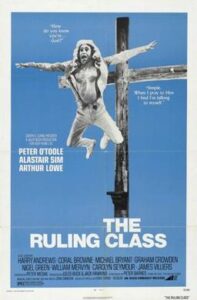
It’s fair to say that the British film industry hasn’t produced anything else quite like The Ruling Class, the satirical 1972 movie starring flamboyant Anglo-Irish actor Peter O’Toole, directed by émigré Hungarian filmmaker Peter Medak and scripted by English playwright Peter Barnes, who adapted for the screen his 1968 play of the same name.


Okay, The Ruling Class’s surreal but relentless lampooning of Britain’s social, religious and political establishments puts it in territory similar to that occupied by the famous film trilogy directed by Lindsay Anderson, If (1968), O Lucky Man! (1973) and Britannia Hospital (1982).  Indeed, the similarities feel more pronounced due to the presence in The Ruling Class of Arthur Lowe and Graham Crowden, two actors who appeared regularly in Anderson’s work.


Also, the casting of Lowe, Coral Browne and Harry Andrews in The Ruling Class calls to mind Douglas Hickox’s delicious comedy-horror movie Theatre of Blood (1973), in which all three actors fall victim to a psychopathic Shakespearean actor played by Vincent Price.  The Ruling Class contains a dose of the macabre too and shares with Theatre of Blood a mad but compelling antihero.


But for acting gusto, for directorial flair, for a story that blends a bewildering range of genres, and for mocking humour that veers between the delightfully subtle and the bruisingly un-subtle, The Ruling Class is in, well, a class of its own.


© United Artists / AVCO Embassy Pictures


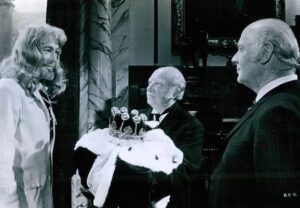
O’Toole plays Jack Gurney, the 14th Earl of Gurney, who inherits his title after the 13th Earl – a brief but barnstorming performance by Andrews – accidentally perishes during a disturbing sex-game involving a noose and a ballerina’s skirt.  To the relief of the late earl’s brother, a Church of England bishop played by the incomparable Alistair Sim, he didn’t commit suicide, which would of course have been sinful.


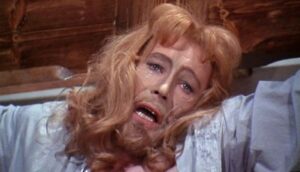
The Gurney family is dismayed to learn that young Jack is out-and-out, barkingly insane.  He believes he is Jesus Christ and sports an appropriately Christ-like beard and mane of hair.  He also wishes to bring peace and love to the earth and sleeps upright on a giant wooden cross.  Before long, the most unscrupulous of his relatives, his Uncle Charles (William Mervyn) and Aunt Claire (Browne), are plotting to get rid of him.


Charles decides to ensnare Jack using his young opera-singing mistress Grace (Carolyn Seymour).  He introduces them, calculating – correctly – that Jack will fall in love with her and marry her.  When the marriage is consummated and an heir produced, Charles can then have Jack committed.  Charles’s plans go astray, however.  Grace falls in love with the crazy but unsettlingly charming Jack and, later, Jack seems to be cured of his madness by his psychiatrist Dr Herder.  Herder is played by Michael Bryant, who for some reason does an uncannily accurate impersonation of the great Czech character actor Herbert Lom.  Indeed, so much is Bryant like Herbert Lom that during the film I assumed I was watching Lom.  I only realised it was Bryant in the role when I saw his name in the closing credits.


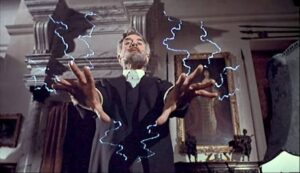
Herder bases his cure on the reasoning that there can only be one Jesus Christ, and if Jack can be convinced that somebody else is Christ then he’ll be cured of his own delusions.  There follows a sequence in which Herder introduces Jack to a psychiatric patient called McKyle, played by Nigel Green, who believes himself to be a very different sort of Messiah: a wrathful, blood-and-thunder, take-no-prisoners, Old Testament-style one with a booming Scottish accent.  Green’s performance here is electrifying – literally electrifying, because the panic-stricken Jack sees bolts of energy shooting out of his hands.  Actually, it’s disconcerting to watch Nigel Green in a role like this if, like me, you mainly remember him for playing Colour-Sergeant Bourne in Zulu (1964), who was surely the most unflappable and down-to-earth character in the history of British cinema.


© United Artists / AVCO Embassy Pictures


And Charles’s scheme to have his troublesome nephew banged away in the loony-bin ultimately fails when the court psychiatrist (Crowden) discovers to his joy that Jack is a fellow old Etonian – the film’s dig at the ‘old-boy network’ that’s promoted incompetence and mediocrity in the upper echelons of British society for centuries.  The pair of them then burst into a jolly rendition of The Eton Boating Song.  Incidentally, the film is peppered with musical interludes like this one.  None of them last long enough for it to quite qualify as a musical, but they add yet another colour to its palette.


Predictably, Jack isn’t really cured of his insanity.  “I’m Jack!” he affirms a little too keenly, “I’m Jack!”  He no longer believes that he’s Jesus Christ, but he soon develops a worrying interest in Victoriana and we realise that the Jack he thinks he is now isn’t Jack Gurney.  It’s a different Jack, one who gained notoriety in the back-streets of Whitechapel in the late 1880s.  In one phantasmagorical scene, splendidly orchestrated by director Medak, we see Jack step through the wall of his mansion’s living room and into a Victorian back-street, accompanied by one of the film’s female characters – who soon gets spitted on a long sharp blade.


However, in the film’s final spasm of irony, Jack Gurney’s confusion with Jack the Ripper does him no harm whatsoever.  His Ripper-style murder is blamed on someone else – the film’s sole working-class character, the Gurneys’ butler Tucker (Lowe).  Then, near the movie’s end, Jack takes his seat in the House of Lords and there delivers a debut speech that is a demented, psychotic hang-’em / flog-’em rant.  The speech, needless to say, is wildly popular among the House’s venerable members.  (Medak memorably shows the assembled lords through Jack’s eyes as a horde of rotting, cobwebbed but somehow animate corpses.)  His infant son, meanwhile, is also gurgling, “I’m Jack!  I’m Jack!” which suggests that the insanity of this particular branch of the ruling class will continue for another generation at least.


With all this going on, the success or failure of The Ruling Class depends on the ability of the actor in the lead role and Peter O’Toole is glorious.  He’s at the height of powers – still surfing the waves he made in 1962’s Lawrence of Arabia, 1964’s Beckett and 1968’s The Lion in Winter; and before booze and bad movie choices, like 1979’s Caligula and 1984’s Supergirl, took their toll on his reputation.  For the entire film his character is as mad as a hatter and yet you have no difficulty believing Carolyn Seymour’s Grace – and indeed, later, Coral Brown’s Aunt Claire – could fall for this wild-eyed, loquacious and charismatic lunatic.


But O’Toole is helped by his supporting cast.  Arthur Lowe is wonderful as the beleaguered and cantankerous butler, Tucker.  While Lowe’s career was full of delightful moments, I think the most delightful moment of all comes in The Ruling Class when he learns that the late 13th Earl of Gurney has left him 30,000 pounds in his will and he does a wee dance to celebrate.  Coral Browne, meanwhile, who was pushing 60 at the time she made the film, gives a memorable performance as a mature lady who remains sexually charged, slinky and alluring.  There’s nothing inelegant about the scene towards the movie’s end where she tries to seduce O’Toole, who’s some 20 years her junior.  Actually, I can understand why in real life Vincent Price married Browne shortly after he’d murdered her onscreen in Theatre of Blood.


© United Artists / AVCO Embassy Pictures


The film also showcases the talents of several actors whose careers were never quite as successful as they should have been.  Carolyn Seymour is excellent as Grace and it seems a shame that most of her subsequent work was on British and American television.  William Mervyn, who was typecast playing upper-class gentlemen in the likes of The Railway Children (1970) and various Carry On films, makes a splendid main villain, Uncle Charles, and it’s unfortunate he wasn’t given some similarly meaty roles before his death in 1976.  Also in the movie is James Villiers, playing Jack’s dim-witted but amiable cousin Dinsdale.  I was used to seeing Villiers in villainous or officious roles, like in Seth Holt’s Blood from the Mummy’s Tomb (1972) or the 12th Bond movie For Your Eyes Only (1982) and it’s a pleasure watching him play a very different character in this.


Another person connected with The Ruling Class whose talent didn’t get to blossom as much as it should have was Peter Medak.  This and his 1972 adaptation of the Peter Nichols play A Day In the Death of Joe Egg put plenty of wind in his sails, but that wind suddenly died in 1973 when he took on the near-career-ending task of directing the pirate-comedy movie Ghost in the Noonday Sun.  He later described it as “the biggest disaster of my life.”  The project was sabotaged by the almost pathological uncooperativeness of its star, Peter Sellers, then at his most unpredictable and volatile.  Having the famously bipolar Spike Milligan involved probably didn’t help.  Denied a cinematic release at the time, it finally saw the light of day on video in 1985.  I’ve watched half-an-hour of it on YouTube and it’s bloody awful.


In 1980, though, Medak directed The Changeling, a brave attempt at staging a subtle, old-fashioned ghost story during a period when most scary movies involved screaming teenagers, masked knife-wielding maniacs and buckets of gore.  And in the early 1990s he made a couple of decent British films like The Krays (1990) and Let Him Have It (1991) and also the ludicrous, overwrought but stylish thriller-noir Romeo is Bleeding (1993) with Gary Oldman and Lena Olin.  In 1998 he directed the old tosh that was Species II but thereafter, gratifyingly, was able to work on episodes of several top-quality American TV shows like The Wire (2002-8), Breaking Bad (2008-13) and Hannibal (2013-15).  Indeed, after Medak’s death on October 27th, Hannibal’s showrunner Bryan Fuller remembered him as a “gentle teddy bear of a Hungarian” and a “wonderfully talented, kind, and funny man who always had a great story to tell, both on and off the set.”


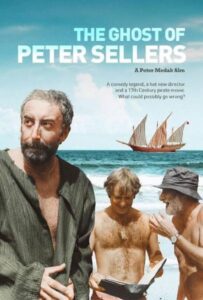
It was also gratifying that in Medak’s swansong, the 2018 documentary The Ghost of Peter Sellers, he managed to turn the darkest and most traumatic episode of his career, Ghost in the Noonday Sun, into a critically acclaimed account of the making of that luckless film.  The Ghost of Peter Sellers gives fascinating insight into how, in multitudinous ways, film projects can go wrong.  It’s also unexpectedly moving because, despite all the strife that Peter Sellers caused him, Medak vocalises with breathtaking magnanimity how much he loved and admired Sellers too.


© Vegas Media / 1091 Pictures


But the finest monument to Peter Medak, in my opinion, remains the exuberance and chutzpah of The Ruling Class.   At one point, Nigel Green’s deranged McKyle describes himself as “the high-voltage Messiah, the electric Christ, the AC/DC god”, and the film is something like a cinematic equivalent of that.

Jim Mountfield: less angelic, more demonic


© Cloaked Press


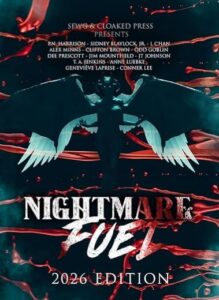
The independent publisher Cloaked Press has just brought out the latest instalment in its series of annual horror-story anthologies, Nightmare Fuel.  The 2026 anthology is called Angels & Demons and, as its title indicates, its contents are about supernatural entities either of the angelic or demonic varieties.  I’m pleased to say I have a story included in Nightmare Fuel 2026: Angels & Demons.  It’s entitled Asmodeus 86 and it’s attributed to Jim Mountfield, the pseudonym under which I write macabre fiction.


My story is about a demon, not an angel – the ‘Asmodeus’ of the title is, according to his Wikipedia entry, ‘a king of demons in the legends of Solomon and the constructing of Solomon’s temple’ and ‘associated with lust’.  He’s mentioned in various holy texts in Judaism, Christianity and Islam, as well as being referenced in the notorious 1486 treatise on witchcraft the Malleus Maleficarum (the Hammer of Witches in English) and supposedly involved in the famous possession of a convent of Ursuline nuns in Loudon in France in 1634.


Oddly, though, I first became aware of the name Asmodeus through something entirely different.  In Geoffrey Household’s 1939 thriller Rogue Male, the novel’s anonymous narrator and hero gives the name to a feral cat who befriends him while he’s literally holed up in the English countryside, hiding from the bad guys.  ‘Asmodeus’ is an appropriate moniker for the cat since he’s rather supernatural in appearance, being wholly black.  Also, the kinship the narrator feels with the cat whilst under extreme pressure – he spends ages concealed in a dark, filthy cubbyhole under a huge hedgerow in Dorset – becomes intense and spooky: “…there is, I believe, some slight thought transference between us…  back and forth between us go thoughts of fear and disconnected dreams of action.  I should call these dreams madness, did I not know they came from him and that his mind is, by our human standards, mad.”


So Asmodeus-the-demon is the exotic subject of my story in Nightmare Fuel 2026: Angels & Demons.  But Asmodeus 86’s setting is a mundane one.  It takes place in a state secondary school in the south of Scotland in the 1980s, just like the one I attended back then, Peebles High School.  The story concerns a group of school-pupils who resort to using black magic to achieve their ends and one hapless kid who unwittingly gets caught up in their shenanigans.  If you map the ages of the characters onto my high-school experiences, the events in the story would have happened in 1982, my final year, when I did my final exams there.


However, at that time in 1982, the news in Scotland, and the United Kingdom generally, was dominated by the war between Britain and Argentina over possession of the Falkland Islands.  So I shifted the setting forward to 1986, when the story’s characters would have less ‘background noise’ coming from the TV, newspapers and conversations around them.  (Not that big events weren’t happening in 1986.  The story namechecks a certain Mr. Gorbachev, a certain disaster at Chernobyl and… psychobilly music.)


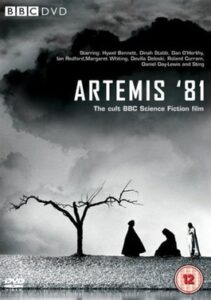
Lastly, I titled the story Asmodeus 86 as a tribute to Artemis 81, the baffling, barmy and fascinating three-hour occult / mystery / fantasy / sci-fi TV play broadcast by the BBC in December 1981, written by David Rudkin, directed by Alastair Reid, and starring such thespians as Hywel Bennet, Dan O’Herlihy, Anthony Steel, Roland Curran, Ingrid Pitt, a very young Daniel Day-Lewis and, er, Sting as a gay angel.  Yes, I can safely say the days when the BBC would be so bold as to spend money on an audacious and willfully headache-inducing project like Artemis 81 are long past.


Containing 13 stories dedicated to the ‘divine and the damned, the celestial and the unholy’, the 285-page Nightmare Fuel 2026: Angels & Demons can be purchased on kindle here and as a paperback here.


From wikipedia.org / © BBC

Rab Foster lights the way


© Swords & Sorcery Magazine


I’m pleased to report that Rab Foster, the nom de plume by which I write fantasy fiction, has just had a new story published in issue 177 of Swords & Sorcery Magazine.  Entitled The Illuminators, it features a recurring character of mine, the swordswoman Cranna the Crimson, who’s basically a big gobby redhead who takes no shit from anybody, least of all from male chauvinists.  In The Illuminators, Cranna is hired to escort a group of pilgrims across a city, at night, to a graveyard.  Ostensibly, the pilgrims’ purpose is to say prayers in memory of some fellow-believers who are buried in the graveyard – but inevitably, this being a sword-and-sorcery story, their real purpose proves to be a darker one.


The Illuminators owes a lot to a wonderful essay called On Thud and Blunder (1978) by the late science fiction and fantasy author Poul Anderson, which you can read here.  First, Anderson addresses the tendency of writers of sword-and-sorcery and heroic-fantasy fiction, up until the late 1970s at least, to base the imaginary settings of their stories on pre-industrial European societies that’d existed in history: ‘often as a mishmash of Roman Empire, Dark Ages, and high Middle Ages’, though ‘with a bit of Pharaonic Egypt, Asian nomadism, and so forth on the fringes.’


He then castigates many of those writers for not creating a setting ‘which, however thaumaturgical, makes sense,’ and describes how the realities of pre-industrial European life – political structures, labour, religion, literacy, travel by land and sea, disease, warfare, weaponry, horses, hand-to-hand combat – were very different from what’s usually depicted in fantasy writing.  To take just one example: “Nobody in his right mind would grab a sword two-handed, raise it over his head, and chop straight down, exposing his belly all that while.”


Something that struck me especially was Anderson’s observation about pre-industrial cities after dark: “People who have experienced blackouts will tell you that a nighted city without the modern invention of lights is black.  With walls shutting off most of the sky — especially along narrow medieval streets — it is far gloomier that any open field.  You’d grope your way, unless you had a torch or lantern (and then you’d better have an armed guard).”  That gave me the idea of having Cranna work for a business, in a medieval-style city, that provides escorts for travelers in the city’s streets after dark.  The escorts carry torches and are armed, thus providing both illumination and security.


I also took on board Anderson’s comments about the cleanliness, or lack of it, of pre-industrial streets.  “Furthermore, those lanes were open sewers; in many places, stepping stones went down the middle because of that.  Despite sanitary measures, metropolitan streets as late as about 1900 were often uncrossable simply because of horse droppings.  Graveyards stank too: one reason why incense was used in church services.”


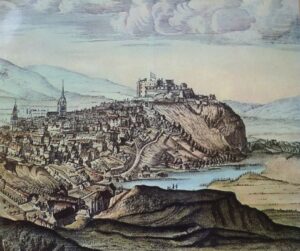
In fact, the city that appears in The Illuminators is inspired by one I’m very familiar with, Edinburgh.  The Scottish capital earned itself the nickname of ‘Auld Reekie’, first of all because of the smoke it produced and then, as the meaning of ‘reek’ changed from ‘smoky’ to ‘stinky’, because of its malodorousness.  My imaginary city even has a lake below its slopes, which one character describes as a ‘cesspit’ because of all the sewage and filth that’s oozed down those slopes into it.  That corresponds to the Nor Loch, the body of badly-polluted water that used to exist at the bottom of the northern slopes of Edinburgh’s Auld Toon – the site of the Nor Loch is now occupied by Waverley Station and Princes Street Gardens.


For the month of November, you can read The Illuminators here, while the main page of Swords & Sorcery Magazine can be accessed here.


From wikipedia.org