
From pixabay.com / © Fietzfotos
In recent years, I’ve tried to follow the adage, “If you don’t have anything nice to say, don’t say anything at all.” Therefore, rather than write about books, films, TV shows, etc., I thought were bad and slag them off, I’ve tried to focus on works I thought were good and be positive in my vibes.
However, I got out of the wrong side of the bed this morning and feel grumpy. So, here’s a post radiating unapologetic negativity – about some genres of music that I always thought were a bit, or a lot, rubbish. But my diatribes will also mention some honourable exceptions, which leavens the darkness with a little sunshine.
Jazz
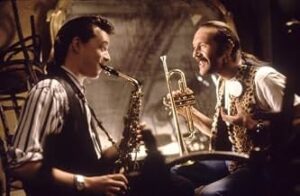
There’s a sizeable segment of the world’s music-loving population who think jazz music is the bees’ knees. But it never did much for me. In fact, I agree with Jimmy Rabbitte, the youthful Svengali behind the band in The Commitments (1991). After Dean the saxophone player starts sneaking jazz bits into the band’s soul sound, Jimmy confronts him while he’s having a pee at a urinal and declares, “Jazz is musical wanking! If you want to wank, use that thing in your hand, not your sax!”
© Beacon Pictures / 20th Century Fox
It’s surprising because I love blues music, another musical genre that grew out of the culture of the American south’s black population in the early 20th century. Yes, I can happily spend all day listening to my collection of records by bluesmen and women like John Lee Hooker, Lightnin’ Hopkins, Memphis Minnie, Freddy King, Bessie Smith, Howling Wolf and so on. But jazz? It strikes me as ponderous and leaves me cold.
I suspect part of my beef against jazz is powered by the fact that certain people I’ve known over the years who were into the genre were, frankly, pretentious and annoying. This includes two ladies I’ve encountered, at different times and in different places, who fancied themselves as jazz chanteuses, fronted bands and did that ‘scat’ singing thing where they drooled ‘shooby dooby doo-wah’ into a microphone all evening thinking it made them the epitome of cool. It didn’t. (By the way, anyone acquainted with me when I lived in Sapporo in the 1990s, please note – the above rant does not apply to the well-known jazz fans Gordon Ents and William Green, whom I knew back then and regarded as really good guys.)
Honourable exceptions: However, I think Ethiopian jazz is brilliant. Its jazziness is suffused with Middle Eastern sounds and rhythms, making it sublimely trippy.
© Ritz Records
Country and Irish
I know many folk dislike country and western music on account of some of its practitioners and fans being right-wing, red-necked and, well, a bit racist, and on account of its seemingly limited subject matter: trucks, trains, prisons, farms, horses, beer, patriotism and heartbreak. But such generalisations do the genre a disservice. It’s also produced some great artists: Johnny Cash, Hank Williams, Willie Nelson, Gram Parsons, Kris Kristofferson and the saintly and now sadly departed Dolly Parton.
But country and Irish music, which Wikipedia defines as “a musical sub-culture in Ireland formed by mixing North American country-style music with Irish influences” that “emerged from Ireland’s showband scene, where local bands would play American pop standards tailored to Irish sensibilities”? Sheesh! I find it an aural puree. All the interesting, gritty bits (symbolised by Johnny, Hank, Willie, Gram and co. above) have been removed and what’s left are some easy-on-the-ears twangy guitars, jaunty accordions and cheery female choruses and a bloke from Athlone or Letterkenny crooning about tractors, or hayfields, or going to church, or – that great country and Irish staple – ‘mammy’.
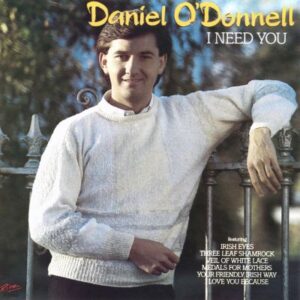
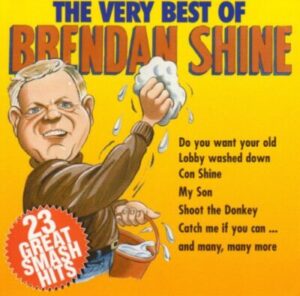
My own, late mother was into country and Irish music and her record player gave heavy rotation to the likes of Foster and Allen and the inimitable Brendan Shine, which explains why I’m so scarred. If you can listen to Brendan Shine’s 1981 opus Spuds (“Spuds, spuds, spuds! / Ah, these spuds are really great / Good oul Irish spuds / Are on everybody’s plate!”) all the way through without having a breakdown, you’re made of sterner stuff than I am. At least my mum wasn’t that keen on the country-and-Irish superstar and knitwear-clad cultural juggernaut that is Daniel O’Donnell. O’Donnell’s reputed to have sold 10 to 15 million records globally and was parodied in the 1998 Father Ted episode Night of the Nearly Dead, in which a much-loved singer called Eoin McLove visits Craggy Island and bluntly informs Ted, “I have no willy.”
Honourable exceptions: I’m not wild about the music, but Philomena Begley can certainly sing.
From wikipedia.org / © Atlantic Records
Prog rock
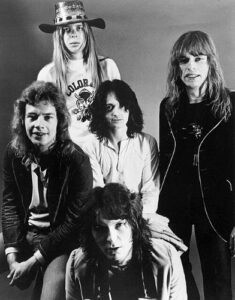
Prog rock, or to give it its full title, progressive rock, was initially essayed by various pompous rock bands in the early 1970s: Emerson, Lake and Palmer, Jethro Tull, Yes, Pink Floyd after Sid Barrett left, Genesis before Phil Collins took over, etc. It had guitar solos and keyboard solos that twiddled on forever because the musicians were trying to convince their audiences that, no, they weren’t just dumbass rock or pop musicians but proper artistes pushing boundaries by fusing rock with classical music and (eek!) jazz… Much of it is unlistenable to me. I agree with the late John Peel who once observed, “the one distinguishing feature about early-70s progressive rock was that it didn’t progress.” Anyway, by the mid-1970s, God decided that enough was enough and created punk rock, which seemed to put an end to it. (Though Marillion popped up in the 1980s and the genre lives on today.)
Honourable exceptions: Okay, I’ve been facetious. I have a few nice things to say about prog rock too. Firstly, looking at Wikipedia’s List of Prog Rock Bands, I see many names on it whom I actually like. However, while those bands may have been prog-rock-tinged at times, I view them as essentially playing different types of music: Hawkwind (space rock), Can (Krautrock), Rush (hard rock and heavy metal), Ozric Tentacles (psychedelic rock). Secondly, you can’t deny that, judiciously chosen and used, the music of some prog rock bands has enlivened many a movie – see Michael Mann’s use of Tangerine Dream on his soundtracks, or Dario Argento’s use of Goblin on his, or Vangelis’s contribution to Blade Runner (1982), or how that bit from Mike Oldfiend’s Tubular Bells (1971) turned up brilliantly in The Exorcist (1973). And thirdly, among albums by latter-day prog-rock bands, I thought Porcupine Tree’s Fear of a Blank Planet (2007) was wonderful.
From wikipedia.org / © RSO Records
Disco
I don’t hate disco. I was just never into it. So sorry, ABBA, Chic, KC and the Sunshine Band and Earth, Wind and Fire. The problem, of course, is that to be a fan of disco music, you have to be a fan of dancing, and as I have always danced like I possessed two left legs, that’s excluded me from the culture.
Incidentally, it’s weirdly ironic – considering how disco was a big thing among the black, Latino and gay communities in the late 1970s – that certain, legendary disco bands have been tarnished by associating with certain, intolerant far-right-wing politicians recently. Admittedly, these are modern incarnations of the bands, i.e., with hardly any of the original line-ups remaining in them. A version of Boney M has been in talks to perform at this month’s conference by Nigel Farage’s Reform Party, while a version of Village People played at inaugural events for Donald Trump in 2025. Of course, Village People’s YMCA (1978) is much-loved by Trump, who dances to it at every opportunity – arthritically shuffling about whilst joggling his little fists in front of him like he’s trying to milk a levitating cow.
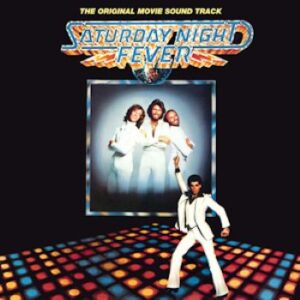
Honourable exceptions: The Bee Gees’ Stayin’ Alive (1977) is a fine anthem, though I like it even more in this mash-up with AC/DC’s Back in Black (1980) from Wax Audio.
Right, I’ve released some of that yellow bile from my system, am feeling better and will end this post here. But stay tuned. I’ll be writing about more musical genres I can’t stand soon. (Hint: we’re getting near the 1980s…)
© Beaumex Music