Musical genres I don’t like


From pixabay.com / © Fietzfotos


In recent years, I’ve tried to follow the adage, “If you don’t have anything nice to say, don’t say anything at all.”  Therefore, rather than write about books, films, TV shows, etc., I thought were bad and slag them off, I’ve tried to focus on works I thought were good and be positive in my vibes.


However, I got out of the wrong side of the bed this morning and feel grumpy.  So, here’s a post radiating unapologetic negativity – about some genres of music that I always thought were a bit, or a lot, rubbish.  But my diatribes will also mention some honourable exceptions, thus leavening the darkness with a little sunshine.


Jazz

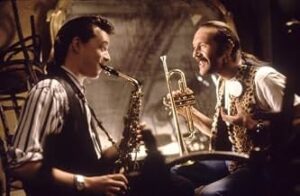
There’s a sizeable segment of the world’s music-loving population who think jazz music is the bees’ knees.  But it never did much for me.  In fact, I agree with Jimmy Rabbitte, the youthful Svengali behind the band in The Commitments (1991).  After Dean the saxophone player starts sneaking jazz bits into the band’s soul sound, Jimmy confronts him while he’s having a pee at a urinal and declares, “Jazz is musical wanking!  If you want to wank, use that thing in your hand, not your sax!


© Beacon Pictures / 20th Century Fox


It’s surprising because I love blues music, another musical genre that grew out of the culture of the American south’s black population in the early 20th century.  Yes, I can happily spend all day listening to my collection of records by bluesmen and women like John Lee Hooker, Lightnin’ Hopkins, Memphis Minnie, Freddy King, Bessie Smith, Howling Wolf and so on.  But jazz?  It strikes me as ponderous and leaves me cold.


I suspect part of my beef against jazz is powered by the fact that certain people I’ve known over the years who were into the genre were, frankly, pretentious and annoying.  This includes two ladies I’ve encountered, at different times and in different places, who fancied themselves as jazz chanteuses, fronted bands and did that ‘scat’ singing thing where they drooled ‘shooby dooby doo-wah’ into a microphone all evening thinking it made them the epitome of cool.  It didn’t.  (By the way, anyone acquainted with me when I lived in Sapporo in the 1990s, please note – the above rant does not apply to the well-known jazz fans Gordon Ents and William Green, whom I knew back then and regarded as really good guys.)


Honourable exceptions: I think Ethiopian jazz is brilliant.  Its jazziness is suffused with Middle Eastern sounds and rhythms, making it sublimely trippy.
 

© Ritz Records


Country and Irish

I know many folk dislike country and western music on account of some of its practitioners and fans being right-wing, red-necked and, well, a bit racist, and on account of its seemingly limited subject matter: trucks, trains, prisons, farms, horses, beer, heartbreak and patriotism.  But such generalisations do the genre a disservice.  It’s also produced some great artists: Johnny Cash, Hank Williams, Willie Nelson, Gram Parsons, Kris Kristofferson and the saintly and now sadly departed Dolly Parton.


But country and Irish music, which Wikipedia defines as “a musical sub-culture in Ireland formed by mixing North American country-style music with Irish influences” that “emerged from Ireland’s showband scene, where local bands would play American pop standards tailored to Irish sensibilities”?  Sheesh!  I find it an aural puree.  All the interesting, gritty bits (symbolised by Johnny, Hank, Willie, Gram and co. above) have been removed and what’s left are some easy-on-the-ears twangy guitars, jaunty accordions and cheery female choruses and a bloke from Athlone or Letterkenny crooning about tractors, or hayfields, or going to church, or – that great country and Irish staple – ‘mammy’.


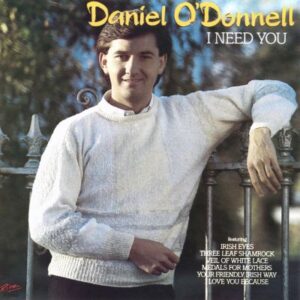
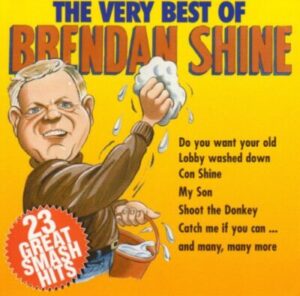
My own, late mother was into country and Irish music and her record player gave heavy rotation to the likes of Foster and Allen and the inimitable Brendan Shine, which explains why I’m so scarred.  If you can listen to Brendan Shine’s 1981 opus Spuds (“Spuds, spuds, spuds! / Ah, these spuds are really great / Good oul Irish spuds / Are on everybody’s plate!”) all the way through without having a breakdown, you’re made of sterner stuff than I am.  At least my mum wasn’t that keen on the country-and-Irish superstar and knitwear-clad cultural juggernaut that is Daniel O’Donnell.  O’Donnell’s reputed to have sold 10 to 15 million records globally and was parodied in the 1998 Father Ted episode Night of the Nearly Dead, in which a much-loved singer called Eoin McLove visits Craggy Island and bluntly informs Ted, “I have no willy.”


Honourable exceptions: I’m not wild about the music, but Philomena Begley can certainly sing.
 

From wikipedia.org / © Atlantic Records


Prog rock

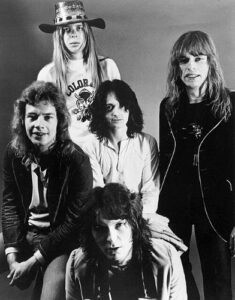
Prog rock, or to give it its full title, progressive rock, was initially essayed by bands in the early 1970s like Emerson, Lake and Palmer, Jethro Tull, Yes, Pink Floyd after Sid Barrett left and Genesis before Phil Collins took over.  It had guitar solos and keyboard solos that twiddled on forever because the musicians wanted to convince everyone that, no, they weren’t just dumbass rock or pop musicians but proper artistes pushing boundaries by fusing rock with classical music and (eek!) jazz.  Much of it is unlistenable to me.  I agree with John Peel, who once observed, “the one distinguishing feature about early-70s progressive rock was that it didn’t progress.”  Anyway, by the mid-1970s, God decided that enough was enough and created punk rock, which seemed to put an end to it.  (Though Marillion popped up in the 1980s and the genre lives on today.)


Honourable exceptions: Okay, I’ve been facetious.  I have a few nice things to say about prog rock too.  Firstly, looking at Wikipedia’s List of Progressive Rock Bands, I see many names on it whom I actually like.  However, while those bands may have been prog-rock-tinged at times, I view them as essentially playing different types of music: Hawkwind (space rock), Can (Krautrock), Rush (hard rock and heavy metal), Ozric Tentacles (psychedelic rock), etc.  Secondly, you can’t deny that, judiciously used, the music of prog rock bands has enlivened many movies – see Michael Mann’s use of Tangerine Dream on his soundtracks, or Dario Argento’s use of Goblin on his, or Vangelis’s contribution to Blade Runner (1982), or how that bit from Mike Oldfield’s Tubular Bells (1971) turned up brilliantly in The Exorcist (1973).  And thirdly, among albums by latter-day prog rock bands, I thought Porcupine Tree’s Fear of a Blank Planet (2007) was wonderful.
 

From wikipedia.org / © RSO Records


Disco

I don’t hate disco.  I was just never into it.  So sorry, ABBA, Chic, KC and the Sunshine Band and Earth, Wind and Fire.  The problem, of course, is that to be a fan of disco music, you have to be a fan of dancing, and as I have always danced like I possessed two left feet, that’s excluded me from the culture.


Incidentally, it’s weirdly ironic – considering how disco was a big thing among the black, Latino and gay communities in the late 1970s – that two legendary disco bands have been tarnished by associating with intolerant far-right-wing politicians recently.  Admittedly, these are modern incarnations of the bands, i.e., with hardly any of the original line-ups remaining in them.  A version of Boney M has been in talks to perform at this month’s conference by Nigel Farage’s Reform Party, while a version of Village People played at inaugural events for Donald Trump in 2025.  Of course, Village People’s YMCA (1978) is much-loved by Trump, who dances to it at every opportunity – arthritically shuffling about whilst joggling his little fists in front of him like he’s trying to milk a levitating cow.


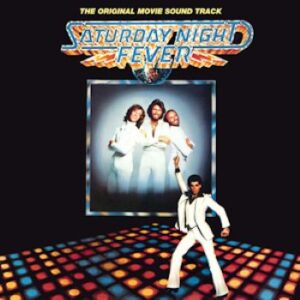
Honourable exceptions: The Bee Gees’ Stayin’ Alive (1977) is a sprightly tune, though I like it even more in this mash-up with AC/DC’s Back in Black (1980) from Wax Audio.


Right, I’ve released some of that yellow bile from my system, am feeling better and will end this post here.  But stay tuned.  I’ll be writing about more musical genres I can’t stand soon.  (Hint: we’re getting near the 1980s…)
 

© Beaumex Music
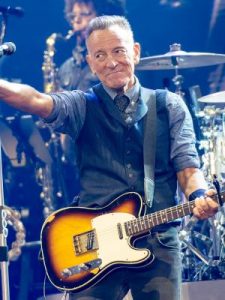
The Boss versus the dross


From wikipedia.org / © Ralph_PH


I have another reason to loathe Donald Trump, the 45th and also, alas, 47th president of the United States of America.  He’s made me like Bruce Springsteen.


On May 14th, at Manchester’s Co-op Live Arena, on the opening night of his Land of Hope and Dreams tour, Springsteen – the famously sideburned, famously plaid-shirt-wearing singer-songwriter-guitarist from New Jersey – kicked off proceedings by making a speech.  He declared: “…my home, the America I love, the America I’ve written about, that has been a beacon of hope and liberty for 250 years, is currently in the hands of a corrupt, incompetent and treasonous administration.  Tonight, we ask all who believe in democracy and the best of our American experiment to rise with us, raise your voices against authoritarianism and let freedom ring!”  Later on, he described the head of that ‘corrupt, incompetent and treasonous administration’, i.e., Trump, as an ‘unfit president’ and proclaimed, “The America l’ve sung to you about for 50 years is real and regardless of its faults is a great country with a great people.  So we’ll survive this moment.”


Needless to say, it wasn’t long before Trump’s overworked posting-thumb was busy knocking out a retort on his Truth Social platform.  He called Springsteen ‘as dumb as a rock’ and added: “This dried out ‘prune’ of a rocker (his skin is all atrophied!) ought to KEEP HIS MOUTH SHUT until he gets back into the Country, that’s just ‘standard fare’. Then we’ll all see how it goes for him!”


Also joining in was Trump’s number-one music-industry sycophant Kid Rock, now a not-so-kiddish 54 years old.  It’s telling that the only song I’ve heard by him was the 2008 hit All Summer Long – a Kid Rock number whose best bits weren’t actually written by Kid Rock.  They come from Lynyrd Skynyrd’s Sweet Home Alabama (1974) and Warren Zevon’s Werewolves of London (1978).  “Just another person with TDS (Trump derangement syndrome) at the highest levels,” Kid Rock said of Springsteen.  “To be in Europe talking junk about our president who gets up and works his ass off for this country, every day, and his administration is doing such great things…  Thank God for him.  But to do that in Europe… what a punk move.”  Kid Rock, please note.  To me and many folk my age, calling Bruce Springsteen a ‘punk’ is amusing.  But it’s not the insult you think it is.


Since Kid Rock believes Trump’s administration is ‘doing such great things’ for the USA, he’s surely a big fan of Trump’s vicious anti-immigrant policies.  Incidentally, the restaurant he’s licensed in Nashville, the not-at-all-stupidly-titled Kid Rock’s Big Ass Honky Tonk Rock N’ Roll Steakhouse, lately and mysteriously sent kitchen-staff home during a weekend when Trump’s brutal Immigration and Customs Enforcement (ICE) agency were conducting operations in the city.  I’m sure the reason for this wasn’t anything dodgy.  Not because, say, the restaurant was employing people who were immigrants lacking permanent legal status and might get dragged off and incarcerated.


I first encountered the musical oeuvre of Bruce Springsteen, or ‘Loose Windscreen’ as I liked to call him, while I was a fifth-year pupil at Peebles High School in the early 1980s.  Fifth and sixth-years pupils, the senior members of the student body known as the ‘Upper School’, were entitled to their own common room, where there was an elderly record-player and speakers you could play music on during the morning, lunchtime and afternoon breaks.  This was normally monopolised by the Upper School’s sizeable heavy-metal contingent and it blasted out a lot of AC/DC, Deep Purple, Iron Maiden, Judas Priest, Led Zeppelin, Motorhead, Rainbow, the Scorpions, Thin Lizzy and Whitesnake.


© Columbia Records


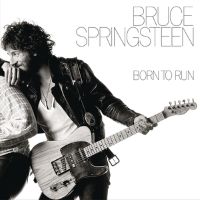
However, once in a while, somebody would manage to get past the phalanx of heavy-metal fans surrounding the record player and slap something a little different on it.  One such record was Springsteen’s 1975 breakthrough album, Born to Run.  Hearing it, I thought it was all right and, at the time, the title track seemed a stormer.  (Nowadays,  having heard it a zillion times, I’m less keen on it.)  So, Mr Windscreen’s, sorry, Mr Springsteen’s music seemed perfectly fine to me.  But it wasn’t anything I’d go out of my way to listen to.


Incidentally, a few years earlier, my favourite band had been the Boomtown Rats, the new wave outfit fronted by Bob Geldof.  Last week, I listened to Rat Trap, the Boomtown Rats song that topped the UK charts in 1978, for the first time in decades.  And I was surprised by how, well, Springsteen-esque it sounds now.


By the mid-1980s I was a student at Aberdeen University.  I quickly discovered that a number of my fellow-students were seriously into Bruce Springsteen.  They were so into him they apparently knew everything about every second of music he’d ever committed to vinyl – that, say, if you played the third of the nine tracks on the Belgian version of the 1973 LP Greetings from Ashbury Park N.J. backwards, you’d hear him break wind in the studio.  Yes, stuff like that.


These Bruce-fans – whom some unkindly referred to as ‘Bruce-bores’ – were, without exception, male.  Actually, a good proportion of them seemed to be engineering students and had names like ‘Morris’.  Also, they never called their hero ‘Bruce’, but used the annoying moniker ‘The Boss’.  This struck me as paradoxical since they were always going on about what a man of the people he was.  Surely, then, a blue-collar, working-class guy like him would be against the bosses?


© Columbia Records


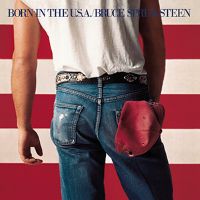
This was a bad time if, like me, you were surrounded by Bruce-bores, sorry, Bruce-fans, and you didn’t believe as they did that Springsteen was the greatest thing to have happened to music since Mrs Beethoven gave birth to little Ludwig van.  For, in 1984, he released Born in the USA, an album that sold over 30 million copies worldwide and spawned no fewer than seven singles.  As with most of Springsteen’s output, it struck me as perfectly decent, but not remarkable, journeyman rock music.  But it subsequently became annoying because people around me never seemed to stop playing it.


The Born in the USA singles received heavy rotation in the place where I worked part-time during my second year as a student, Ritzy’s Nightclub.  At Ritzy’s I was a member of the floor-staff – meaning I spent most of my time collecting empty glasses and loaded ashtrays from the punters’ tables, cleaning them, and returning the glasses to the bar-shelves and the ashtrays to the tables.


I’ve said before on this blog that of the many jobs I’ve had in my life, I hated the Ritzy’s one most.  I had to work until 2.00 AM every Friday and Saturday night while my mates were out partying.  The glasses I collected were often phenomenally grotty with cigarette ends and even puke floating around in them.  Many of the punters were workers in Aberdeen’s then-flourishing oil industry, who made tons of money and believed their hefty earnings allowed them to behave like knob-heads at all times, especially towards serfs like myself.  And the music spewing out of the nightclub’s speakers was gruesome – all the vacuous New Romantic stuff like Duran Duran, Spandau Ballet and Wham that dominated the UK charts during 1984-85.  In that company, Springsteen’s songs didn’t seem so bad.  But having to hear them repeatedly in that environment quickly made me sick of them too.


The first Born in the USA single out of the blocks was Dancing in the Dark, which I came to associate with a mid-week gig I had at Ritzy’s.  This was a regular evening the nightclub held for the over-30s, which was known in local parlance as ‘Grab-a-Granny Night’.  It featured a live band who performed cover versions of songs currently in the charts and Dancing in the Dark seemed a particular favourite of the band’s frontman, a bloke called Stan.  The sound of Stan warbling his way through the song, and the sight of him simultaneously attempting some Boss-like dancing onstage whilst apparently in possession of two left feet, are burned into my memory.


In the summer of 1985, I developed a fully-fledged aversion to Bruce Windscreen, sorry, Springsteen.  The summer was going badly for me for various financial, personal and health reasons, and my mood wasn’t helped by the fact that every single day that July and August saw rain piss down relentlessly on Aberdeen, turning the grey granite the city was built with oppressively black.  At one point I found myself sharing a flat with a good friend, one Andrew J. MacRury, who was also having a bad summer.  And yes, Andy was an avid Bruce-bore, sorry, Bruce-fan.  I worked night-shifts and, a dozen times each day, while I was in bed trying to snatch some sleep, I’d be rudely awoken by my friend playing the title track of Born in the USA in the next room, at full blast, in a desperate attempt to cheer himself up.  Repeatedly, every day, I was practically blasted out of bed by the sideburned one hollering: “Booooorn… in the US-Aaaa!  I wuz booooorn… in the US-Aaaa!”


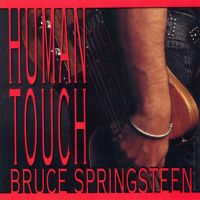
Thereafter, if anyone show signs of talking enthusiastically about Bruce Springsteen, let alone play some music by him, I’d run for the hills.  In March 1992, when to great fanfare he released two albums on the same day (Human Touch and Lucky Town), I think I went into hiding.


© Columbia Records


Now any Bruce-bores, sorry, Bruce-fans reading this will no doubt be shocked by my attitude towards their hero and accuse me of being deficient in musical taste.  To that I would reply I wasn’t the only person on the planet unswayed by the charms of Mr Springsteen.  The legendary radio DJ John Peel, for example, once said of Springsteen’s appeal: “It utterly mystifies me.  I can’t see it at all.  I mean, when he first started out… it sounded to me like sub-Dylan stuff.  And it just doesn’t ring true.”  Indeed, the John Peel Wiki notes that Peel “almost never played any of Springsteen’s material on his show and scarcely missed an opportunity to compare him unfavourably with other artists such as Half Man Half Biscuit.”


Certain musicians have been less than enthralled by him too.  The Rolling Stones guitarist Keith Richards, while describing Springsteen as ‘a nice guy, a sweet guy’, has been scathing about his musical ability.  He wrote in his 2010 biography Life, “If there was anything better around, he’d still be working the bars of New Jersey.”  Meanwhile, Irish folk-rock troubadour Van Morrison once grumped about what he saw as Springsteen’s lack of originality.  As far as Van Morrison was concerned, he’d nicked all his ideas from, er, Van Morrison.  “For years people have been saying to me, ‘Have heard this guy Springsteen?  You should really check him out!’  I just ignored it.  Then four or five months ago I was in Amsterdam, and a friend of mine put on a video.  Springsteen came on the video, and that was the first time I ever saw him, and he’s definitely ripped me off.”


However, in times of great adversity, you have to take sides – even the sides of folk whom, until now, you’ve regarded as your enemies.  For instance, the cops had to join forces with the prisoners in John Carpenter’s Assault on Precinct 13 (1976) when faced with an onslaught by the murderous gang Street Thunder.  And James Bond (Roger Moore) had to team up with Jaws (Richard Kiel) in Lewis Gilbert’s Moonraker (1979) to overcome the genocidal plans of Hugo Drax (Michael Lonsdale).  I feel the same way about Bruce Springsteen.  I’ve found much of his music stodgy, and at times his fans have driven me up the walls, but I’ll back him all the way in his struggle against Trump, who’s busy turning Springsteen’s homeland into an authoritarian state run by white supremacists, loopy evangelical Christians, billionaire tech-bros and environment-wrecking oil barons.


Indeed, if Springsteen can do anything to get Trump out of office – arrange, say, for a million Bruce-bores, sorry, Bruce-fans to storm the White House – I’ll happily grow sideburns, and wear a plaid shirt for the rest of my life, and listen to Born in the USA a dozen times a day.  Hail to the Boss!


Also, while I don’t have much regard for Springsteen’s music, I still think it’s light-years better than that Big Ass Honky Tonk Rock N’ Roll shite peddled by Kid Rock.


From wikipedia.org / © Carl Lender

Hungry like the Alpha Wolf


I remember sometime in the 1990s reading an interview with the late, legendary radio DJ John Peel, who was an enthusiastic proponent of extreme heavy metal.  Peel talked about the oddness of going to see a band like the aptly-titled Extreme Noise Terror and realising that he was three times the average age of the punters in the auditorium.


That was exactly how I felt a week-and-a-half ago when I went to Singapore’s Aliwal Arts Centre to attend a gig by the Australian metalcore band Alpha Wolf.  Such was the youthfulness of those around me, and such was my own feeling of decrepitude, that I wondered if I should just send myself up, impersonate Steve Buscemi in the popular Internet meme (taken from a 2012 episode of the TV show 30 Rock) and declare, “How do you do, fellow kids?


Metalcore, Wikipedia informs me, “is a fusion genre combining elements of extreme metal and hardcore punk… noted for its use of breakdowns, which are slow, intense passages conducive to moshing.”  A list of metalcore bands I’ve found on the Internet contains such names as Killswitch Engage and the Dillinger Escape Plan, bands whose albums have resided in my record collection for many years.  Wow, I thought, I’ve owned metalcore music without even knowing it was metalcore! 


Meanwhile, when I looked at Alpha Wolf’s Wikipedia entry, I discovered that they’d taken their name from the 2011 Liam Neeson thriller The Grey, which is about the survivors of a plane crash in an uninhabited part of Alaska being picked off one-by-one by a pack of hungry wolves.  At one point, Neeson’s character, a wolf expert, explains that the beasts are led by a fearsome ‘alpha wolf, which is apparently the Alien Queen of the lupine world.  However, as the band come from Tasmania, I wonder if their name was also partly inspired by their island’s most famous extinct animal, the Tasmanian wolf.


One nice thing about the Alpha Wolf gig was that support was provided by not one, nor two, but three local bands.  It fascinates me that a place as famously orderly and respectable as Singapore can produce so many bands specialising in the supposedly disorderly and disreputable genre of heavy metal.  Those support bands were Tariot, Tell Lie Vision and the self-described ‘progressive metalcore’ Aggressive Raisin Cat, whom John Peel would probably have awarded a session on his BBC Radio 1 show on the strength of their name alone.  All three gave their sets their best shot and won the crowd’s appreciation.  My only quibble was that Aggressive Raisin Cat didn’t have an image of a raisin, or indeed, a cat, projected onto the backdrop behind them while they played.  Instead, there was a weird-looking spinning crisp.


The venue proved a rather austere place.  It was just a space with a stage at the front, and a mixing console and a merchandising stall in the back corners.  There wasn’t a bar, which meant that liquid refreshment had to be procured from the nearest branch of 7-11, which took a while to find, and led me to unfortunately miss some of Tariot’s set.  In between performances, most of the crowd would seep out onto the street outside to chat, smoke and imbibe a little – despite Singapore’s reputation for strictness, drinking in public is permitted until 10.30 pm.  Then, as soon as they heard the next band’s musicians striking their first chords, they’d hurry back inside again.


I’ve seen some videos by Alpha Wolf on YouTube, where they performed belters of songs like Black Mamba and Akudama, though thanks to the limited acoustics in the box-like, concrete-y confines of the arts centre auditorium, some of the shape and structure of those songs got lost a bit.  Still, the intensity of the headliners’ show couldn’t be faulted.  From the amount of moshing and crowd-surfing going on, and the fact that by the end of the set there seemed to be more folk on the stage than on the floor below, it was clear that Alpha Wolf had given the punters their money’s worth.


Just before the proceedings finished, a cake-and-candles were brought onstage for the celebration of someone’s birthday – I couldn’t see very clearly from my vantage point at the back of the venue, but the birthday-boy might have been the singer with Aggressive Raisin Cat – which struck me as a sweet, final touch.  What a nice bunch of lads, I thought.  To put it another way, despite the aural bombast, Liam Neeson should have nothing to fear if this Alpha Wolf was at his door.


© Open Road Films