More things that terrified the young me


From wikipedia.org / © Group Three Productions


Here’s the second half of my account of things that scared me, to the point of scarring me, when I was wee.


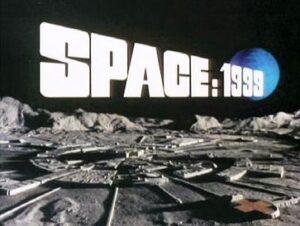
Space: 1999 – Dragon’s Domain (1975)

Even as a kid, I knew the TV show Space: 1999 was silly.  I already had enough awareness of science to realise the ridiculousness of its premise – a titanic explosion on the moon in the then-future year of 1999 sends it, and 300 human beings crewing a base there called Moonbase Alpha, careering out of earth’s orbit and into deep space.  Particularly ridiculous was how every second episode the moon hurtled into a new solar system and came close enough to an earth-type planet for the Moonbase Alpha folk to explore it.  Space: 1999 depicted the universe as a giant pinball machine with the moon bouncing between earth-type planets like the silver ball bouncing between the machine’s flippers and bumpers.


And yet…  A Space: 1999 episode called Dragon’s Domain petrified me.  It has the runaway moon approaching a sinister graveyard of abandoned spaceships in which a horrifying, one-eyed, tentacled monstrosity lurks.  Okay, seen today, the monster in Dragon’s Domain doesn’t impress, being a mass of wavy tentacles obviously animated by wires.  But the barrage of things that accompany it still inspire fear – it initially materialises as a swirling pattern of lights, it makes hideous shrieking noises and its victims are battered by gusts of wind.  Most horribly, moments after those victims are dragged into its maw, they’re spat out again as desiccated corpses, apparently drained of all their moisture.


There’s something about the episode’s ineluctability that got me too.  It focuses on a Moonbase Alpha member (Gianni Garko) who’s encountered the monster before.  While he was captaining a mission into deep space, it ate his crew and only he managed to escape.  Now stuck on the moon after its unexpected departure from earth’s orbit, fate has cruelly decreed that he’ll meet the thing again.


The pictures in The Horrific World of Monsters (1974)

I might have been terrified by monsters like that Space: 1999 one, but I was also fascinated by them and in the mid-1970s I bought a hardcover, kids-orientated book called The Horrific World of Monsters by Dulan Barber.  This provided an A-Z of monsters from myth, folklore, cryptozoology, movies, TV and comics.
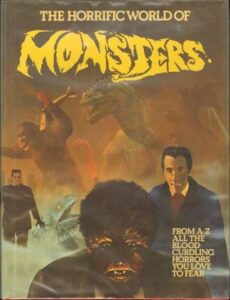
 

© Marshall Cavendish


Lavishly illustrated, a couple of the book’s page-sized movie-stills troubled me, lodged themselves in my psyche and occasionally caused me nightmares.  These depicted the mummy, played by Lon Chaney Jr in 1944’s The Mummy’s Ghost, throttling a victim; a fanged, hairy Michael Landon pouncing on a victim in I was a Teenage Werewolf (1957); and, in unflinching close-up, the title character of The Return of the Fly (1959), the second film in the series about a scientist experimenting with a teleportation device who gets his molecules mixed up with those of a fly and acquires a massive, insectile head.  Just as well it wasn’t a close-up of Jeff Goldblum from late in David Cronenberg’s 1986 remake of The Fly.  That sight would have left me gibbering.


Eventually, I sold the book to a schoolmate called Geoff Simmons, who was a gifted artist and who used some of its illustrations as inspiration for pictures – I remember him showing me one he’d drawn based on the mummy.  Geoff is now a graphic designer (and also a community historian) in London.  I’d like to think The Horrific World of Monsters played a small part in shaping his future career.


Bodega Bay gets attacked in The Birds (1963)

By the mid-1970s, someone had informed me that the Americans and Russians both had ‘bombs that could blow up the world’, so I had a new thing to worry about – the end of humanity.  Accordingly, apocalyptic movies frightened the bejesus out of me.  For example, Steve Sekely’s Day of the Triffids (1963), a cheap adaptation of John Wyndham’s 1951 novel, scared me with its depiction of a world where nearly everyone has gone blind.  Even at 10 years old, unfortunately, I could tell how shoddy its special effects were, especially the ones involving the triffids.


But the apocalyptic movie that traumatised me was 1963’s The Birds, directed by the impeccable Alfred Hitchcock and based on a 1952 short story by the equally impeccable Daphne du Maurier.  Most traumatic for me was the part where Tippi Hedren and Rod Taylor find themselves in a diner in the middle of the little coastal town of Bodega Bay, trying to convince the locals – who react with varying degrees of scepticism – that the area’s feathered population is behaving very strangely.  After seven minutes of conversation that mingles humour with growing unease, and is brilliantly performed by character actors like Doreen Lang (as an increasingly frightened mother), Charles McGraw (as a gruff fisherman), Ethel Griffies (as an elderly, know-all ornithologist) and Karl Swenson (as a Bible-quoting Irish drunkard), all hell breaks loose.


Multitudinous seagulls swoop down and cars and petrol pumps explode (thanks to fuel spewing from a dropped hose), more cars crash, horses run wild and many townspeople get clawed and pecked.  Hedren spends a nightmarish minute trapped inside a telephone booth with birds, plus one unlucky human victim, smashing into its sides.  Taylor rescues her and gets her into the diner again, but…  The atmosphere there is suddenly less welcoming.
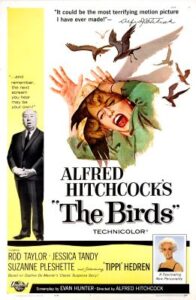
 

From wikipedia.com / © Universal Pictures


Hitchcock’s orchestration of this blew me away.  The telephone-booth bit was possibly the first time I’d been exposed to what film-fans would describe as ‘pure cinema’.  But Taylor and Hedren’s return to the diner provides the chilling coup de grâce.  The people inside are cowering in terror, including Griffies’s no-longer-cocky ornithologist, and already a superstitious irrationality is taking hold of them.  This crystalises when a now-crazed Lang accuses Hedren of, basically, being a witch: “Who are you?”  What are you?  Where did you come from?  I think you’re the cause of all this.  I think you’re evil.  Evil!”  No doubt a young Stephen King was taking notes at this point.  Similar things happen in his 1980 novella The Mist, with many of its characters reacting to another apocalyptic event by succumbing to medieval-style hysteria.


Doctor Who – The Seeds of Doom, episode 4 (1976)

I could write a whole article based only on moments from the BBC’s long running science-fiction / fantasy / horror series Doctor Who (1963-89, 2005-25) that scared me: the shop dummies coming to life in the serial Spearhead from Space (1970); the killer plastic chair in Terror of the Autons (1971); the murderous Morris dancers in The Daemons (1971); a scaly hand appearing over a boat’s gunwale in The Sea Devils (1972); an infected crewman removing his hand from his pocket and revealing it transformed into a slab of glistening green slime (okay, it’s really green-painted bubble-wrap, but hardly anyone at the time knew what bubble-wrap was) in The Ark in Space (1975)…  But scariest of all was the 1976 serial The Seeds of Doom, about alien seed-pods that infect humans and transform them into malevolent, carnivorous plant-monsters.  Episode 4 of The Seeds of Doom, to be precise.


One alien pod becomes the possession of an insane millionaire plant-lover called Harrison Chase – played by character actor Tony Beckley, who’d been in The Italian Job (1969) and Get Carter (1971) – and at the start of episode 4 it germinates, infecting one of Chase’s minions, a hapless botanist called Arnold Keeler (Mark Jones).  Ignoring Keeler’s pleas to be taken to a hospital, Chase has him chained to a bed, purring in delight, “The rate of increase is astonishing…  Protein absorption from the animal, of course…  We shall have to give you some food soon…  You’re changing into a plant, Keeler…  a marvellous new species of plant!”
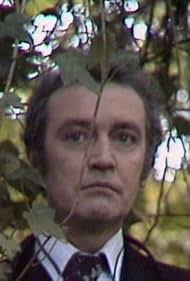
 

© BBC


With Keeler turning green, then fibrous, then tentacular, and Chase trying to speed up the metamorphosis by feeding him pieces of raw meat, what I was witnessing here was the icky sub-genre of horror known as ‘body horror’.  But it was the performances of Beckley and Jones, one disturbingly malevolent, the other distressingly pathetic, that truly conveyed the horribleness of the situation.


Legend Horror Classics, issue 4 (1976)

The same impulse that made me buy The Horrific World of Monsters inspired me to purchase issue 4 of a British film magazine called Legend Horror Classics, edited by Gent Shaw, who’d also edited the scary-movie magazine World of Horror in 1974-75.  Issue 4 of Legend Horror Classics was devoted to zombies, which until then I’d understood to be dead people brought back to life by voodoo and put to work on Caribbean sugar plantations.  By the 1970s, however, thanks to the influence of George A. Romero’s Night of the Living Dead (1968), zombie stories and films had become less voodoo-reliant and a lot grislier and more visceral.  This issue contained several gruesome photos that, like those in the Monsters book, gave me nightmares.


However…  Since then, I’ve discovered, indignantly, that the yuckiest pictures in the issue weren’t actually from zombie movies!  There was one of the mouldering, prehistoric ape-creature inhabited by an evil alien intelligence in the Christopher Lee / Peter Cushing horror film Horror Express (1972); and one of a rotting corpse (not reanimated as a zombie) from another 1972 movie featuring Christopher Lee, Deathline.  If you’re reading this, Gent Shaw, I’m accusing you of breaking the Trade Descriptions Act.
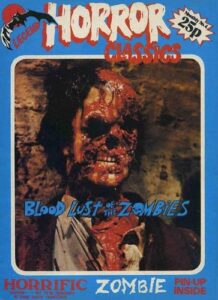
 

© Legend Publishing


The Nationwide report about the Hexham Heads (1976)

The Hexham heads were two little stone heads, possibly Celtic in origin, discovered in the northeast English town of Hexham in 1971.  Reputedly, the heads triggered paranormal activity in the homes of whoever had custody of them.  And that paranormal activity manifested itself spectacularly in the form of a werewolf that was glimpsed stalking through their homes after dark.


Infamously, Nationwide (1969-83) – normally a family-friendly TV current-affairs programme, which aired on the BBC every weekday evening after six o’clock – featured a report on the story in 1976.  The makers of the report had the not-so-family-friendly idea of spicing it up with ghastly screams, images of severed human heads and an unexpected jump-cut of Oliver Reed lurching towards the camera in 1961’s Curse of the Werewolf.  This approach traumatised every kid who happened to be watching, me included.


One eyewitness reported seeing the Hexham Heads werewolf after arriving home late at night – allegedly she spotted it prowling about her dark house before she switched on the lights.  Soon afterwards, my family moved from Northern Ireland to Scotland.  My parents frequently received invitations to Sunday lunch and dinner at the homes of Northern Irish folk they knew directly, or knew as friends of friends, who were now living in Scotland.  After much food, whisky and blethering, we wouldn’t get home until late on Sunday evening.  While my parents unlocked the front door and we entered a black, silent house, I’d think of the Nationwide report and wonder, “What if there’s a werewolf waiting in there?”


From wikipedia.org / © Archaeology Data Service / Dr Anne Ross


Footage of that legendary 1976 TV report on the Hexham Heads was long believed lost but it’s now been discovered and restored – see here and here.


Jon Voight’s dream at the end of Deliverance (1972)

By the time I was 12, I believed I was a mature, hardened type who’d seen everything and couldn’t be frightened anymore.  But then on TV one evening I watched John Boorman’s Deliverance (1972), about four Atlanta business men whose canoeing holiday in remote north Georgia turns into an ordeal, and was freaked out by it.


Oddly, it wasn’t the notorious sequence where some hillbillies rape Ned Beatty’s character and insist that he squeals ‘like a pig’ that upset me most.  Maybe I wasn’t old enough to fully understand what was happening.  No, it was the bit near the end where Jon Voigt’s character has a nightmare about the river they canoed on – which has since been dammed and turned into a lake – and sees a pale, bloated hand rising out of its water.  The image of that emerging hand haunted me for weeks afterwards.  I obviously wasn’t as tough as I thought I was.


© Elmer Enterprises / Warner Bros.


Thinking about it, I suppose I must have been a complete scaredy-cat whose childhood was one long procession of moments of terror.  So now, half-a-century later, why do I write short horror stories under the penname of Jim Mountfield?  I’ve had nearly 70 such stories published.


Perhaps it’s a case of ‘if you can’t beat ’em, join ‘em.”
My 2024 writing round-up


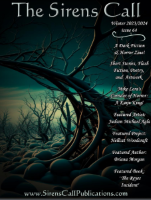
© The Sirens Call Publications


“Well, 2024 was an excellent year!”  No future historians will say, ever.  Come to think of it, because of events in 2024, there might not be any future historians.  Not any future, full-stop.


However, on a personal level, 2024 saw some improvements in my situation.  Firstly, in March, my partner and I, and our cat, moved apartments in our current city (and country) of abode, Singapore.  We’d been in an expensive condo, inhabited mostly by rich Western and Chinese expatriates, in a modern part of the city-state.  We moved into a cheaper and more modest condo in an older and more traditional district where our neighbours are nearly all Singaporean.  It’s so much nicer.  For one thing there are no spoilt, bratty kids running riot outside our front door because the unfortunate Filippino / Indonesian / Burmese girls hired by their expat parents as ‘maids’ or ‘helpers’ and made to look after them are afraid or unwilling to discipline them.  Also, our new neighbourhood is handier for getting to our work and has several notable Hawkers’ Centres and eateries offering a range of good but modestly-priced foods.  Singapore is generally expensive and its Hawkers’ Centres are one of its saving graces.


Secondly, I had a successful year with regard to my writing.  Indeed, in terms of short stories published, 2024 even topped 2023, when 15 of my stories made it into my print.  This has been my best writing year to date.


So, here’s a round-up of my stories published in 2024.  Details are provided about who published them, what pseudonym they were published under and, when possible, how they can be accessed today.


As Jim Mountfield:

  • Jim Mountfield, the pseudonym I stick on my horror fiction, was first published in 2024 at the end of January when the story Underneath the Arches was included in the quarterly fiction-and-poetry magazine The Sirens Call.  Heavily inspired by Edgar Allan Poe, Underneath the Arches was written by me at a young age – and I think it shows in the florid writing style.  However, I was grateful to The Sirens Call for giving the story (which’d languished on my computer hard-drive for decades) a home at last.  Alas, The Sirens Call ceased publication late in the year and I can no longer provide a link for downloading its past issues.
  • In April, Issue 11 of The Stygian Lepus featured my ‘cosmic-horror’ story The Followers, which was set in the English city I lived in from 2002 to 2005, Newcastle-upon-Tyne.  Specifically, it was set in two parts of it, Grainger Market and Chinatown on Stowell Street.  Issue 11 can be read here if you become a member of The Stygian Lepus’s Back Catalogue; or purchased here.


© The Stygian Lepus


  • April was also when my Northern-Ireland-set short story The Crawler, which involved a devious policeman and a collection of sinister dolls, appeared in 2024’s second issue of The Sirens Call.
  • And in July the next – and unfortunately, the last ever – issue of The Sirens Call contained my sci-fi / horror story The Colony.  This was set in East Anglia after manmade climate change has hoicked up temperatures and sea levels.  Its premise was that scientists had created, through genetic engineering, millions of giant jellyfish-like organisms and tethered them offshore in order to hold back storm surges and reduce coastal erosion.  Obviously, nothing could go wrong with this scheme.  Nothing at all…
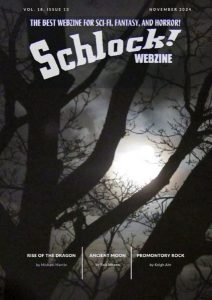
  • The Hole in the Wall was a ‘folk-horror’ story about a member of an organisation modelled on Britain’s Campaign for Real Ale (CAMRA) who’s researching a couple of pubs.  First, he visits a horrible dump of a pub; then he stumbles across a pub that’s so classy it seems too good to be true.  And yes, the second one is too good to be true because it has a mysterious, malevolent something lurking in its walls.  The Hole in the Wall appeared in Volume 18, Issue 12 – the October 2024 edition – of Schlock! Webzine, which can be purchased here.
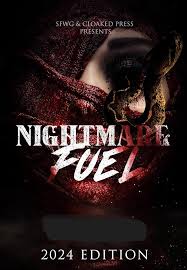
  • Also in October, my story The Activation was the opening number in the anthology Nightmare Fuel: Body Horror 2024, the annual volume of scary fiction published by Cloaked Press.  As the collection’s title suggests, its theme this year was body horror, described by Wikipedia as “a subgenre of horror fiction that intentionally showcases grotesque or psychologically disturbing violations of the human body or of another creature…” including “aberrant sex, mutations, mutilation, zombification, gratuitous violence, disease, or unnatural movements of the body.”  The Activation contained about five of those things, so I think it fitted the bill.  It was also a prequel to my story The Nuclei, which appeared in the 2020 collection Xenobiology – Stranger Creatures.  Nightmare Fuel: Body Horror 2024 can be purchased on Kindle here and as a paperback here.


© Cloaked Press


  • In November, a Jim Mountfield story appeared in the collection Monster: Underdog Anthology 2024 from Leg Iron Books.  A monster of a book indeed, this featured 39 spooky stories, including my Halloween-set effort Bag of Tricks.  The story was inspired by a memory I had of riding on Bangkok’s Skytrain one October 31st when some Thai kids entered the carriage wearing fancy dress, presumably on their way to a Halloween party; but most of Bag of Tricks actually takes place in Scotland.  Monster: Underdog Anthology 2024 can be bought on Kindle here and as a paperback here.
  • The Tears of the Pontianak, which appeared in the Samhain 2024 edition of the magazine The Hungur Chronicles, published in November too, was a first for me.  This was my first published story where the setting is my current home, Singapore.  As you can tell from the title, it’s mainly about a Pontianak, a blood-drinking demon of Malaysian, Singaporean and Indonesian folklore.  But the idea for the story actually came to me one afternoon when I was exploring Singapore’s Asian Civilisations Museum and encountered some beautiful pieces of local, antique furniture.  The Hungur Chronicles’ Samhain 2024 issue can be purchased directly from Hiraeth Publishing here or from Barnes & Noble here.
  • Coming from a farming background, quite a few of my stories are set on farms.  However, I only had one ‘farm-horror’ story published in 2024.  This was in Issue 19 – the December 2024 edition – of The Stygian Lepus and its title was Rack and Ruin.  It owed something to the legendary American horror writer H.P. Lovecraft, although the Lovecraftian elements were mixed with the mud, muck and rain of a hill farm in autumnal southern Scotland.  Again, Issue 19 can be read here if you’re a member of The Stygian Lepus’s Back Catalogue; or simply bought here.
  • The influence of H.P. Lovecraft could also be seen in The House of Glass, the final Jim Mountfield story I had published in 2024.  As its title implies, most of the action takes place inside a house made almost entirely of glass.  The house stands in the mountains of Sri Lanka, the country where I lived in real life from 2014 to 2022.  The House of Glass appears in the anthology Swan Song: The Final Anthology, which, sadly, is the last volume to come from Trevor Denyer’s Midnight Street Press – from now on, Midnight Street Press will exist only to sell what’s on its back catalogue, not to produce anything new.  It can be purchased from Amazon UK here and from Amazon US here.


© Swords and Sorcery Magazine


As Rab Foster:

  • Rab Foster, the pseudonym I use when writing fantasy fiction – usually the unruly sub-genre of fantasy called ‘sword and sorcery’ – hit the ground running in 2024.  On January 1st, the second and final part of my story The Boots of the Cat appeared in Volume 18 Issue 3 of Schlock! Webzine.  This was about a group of mercenaries who, while sequestered in an unwelcoming city, find themselves in a strange scenario inspired by a famous fairy tale.  And no, despite the title, that fairy tale isn’t Puss in Boots.  The issue can be purchased here.
  • Because of a publishing delay, the December 2023 edition of the fiction magazine Savage Realms Monthly didn’t appear until January 2024.  It contained my story Pit of the Orybadak, which combined fantasy elements – slimy flesh-eating monsters slithering around in a giant bog – with the pertinent real-life theme of how soldiers are treated (or mistreated) when they become prisoners of war.  This issue of Savage Realms Monthly can be bought here.
  • The Fleet of Lamvula, a heady story inspired by my love of ‘lost graveyards of ships’ stories, and the movies of Ray Harryhausen, and the trippiest song ever recorded, Black Sabbath’s Planet Caravan, appeared in late January in Issue 144 of Swords and Sorcery Magazine. The story can now be read in Swords and Sorcery Magazine’s archive, here.
  • In July, my Rab Foster story The Drakvur Challenge made it into the pages of Issue 3 of Crimson Quill Quarterly.  This was a milestone for me, being (by my calculations) the 100th short story I’ve had published.  The Drakvur Challenge was inspired by a visit I made to Tirta Gangga Royal Water Garden in Bali, Indonesia – a place I found fascinating because of its beautiful ponds, fish, fountains and networks of stepping stones… while, stowed away in a compound at the back, it also had some surprisingly monstrous-looking statues.  However, like much of my fantasy fiction, The Drakvur Challenge owed a big debt to the cinematic marvel that was Ray Harryhausen too.  Issue 3 of Crimson Quill Quarterly can be obtained as a paperback here and on Kindle here.


© Crimson Quill Quarterly


  • August saw the appearance of my story The Scarecrow of Terryk Head in Issue 151 of Swords and Sorcery Magazine.  In it, one of my recurring fantasy-fiction characters, Gudroon the Witch, had to deal with not only the evil scarecrow of the title but with three doltish farmers – and with three even-more-doltish farmers’ sons.  Again, The Scarecrow of Terryk Head is now available to read in the magazine’s archive, here.
  • In November, Rab Foster strayed into the controversial sub-genre of fantasy known as ‘grimdark’ and served up a tale of violence and gore, nihilism and despair, entitled The Mechanisms of Raphar.  (What, I wonder, inspired this?  What event in the real world in November 2024 could have induced nihilism and despair in me?)  Owing something to Edgar Allan Poe’s The Pit and the Pendulum (1842) and also something to the ’10 Courts of Hell’ display at Singapore’s most remarkable museum, Haw Par Villa, The Mechanisms of Raphar appeared in Volume 18, Issue 13 of Schlock! Webzine, now purchasable at Amazon here.


© Schlock! Webzine


As Steve Cashel:

  • Steve Cashel, the penname I put on non-horrific, non-fantastical and often crime-tinged stories set in Scotland, had one piece published in 2024.  In fact, it appeared only yesterday, on December 31st, the final day of the year.  It’s called Malkied and appears on the short-fiction page of the website for the crime-and-mystery publisher Close to the Bone.  It’s accessible here.


And finally…

  • This is cheating.  Self-publishing doesn’t count.  But on September 18th, 2024 – the tenth anniversary of Scotland’s referendum on independence – I took the opportunity to post on this blog a short story entitled Mither, which I’d written in 2014 soon after I’d heard the referendum’s result.  A mixture of Scottish politics and Alfred Hitchcock’s Psycho (1960), it was too weird to ever get properly published.  (Still, even if I say so myself, I think Norman Bates and his mom are a good metaphor for Scotland and the divisions between ‘yes’ and ‘no’ voters that supposedly materialised at the time.)  Anyway, if you’re interested, you can read it here.


So, I had 17 short stories published in 2024, which makes it my most successful year as a writer ever.  I suspect I will be hard-pressed to equal or better that record in 2025, however.  That’s because of the recent disappearances of certain magazines (like The Sirens Call) and publishers (like Midnight Street Press) who have published my stuff regularly in the past.


Meanwhile, 2025 looks like it’s going to be garbage, largely due to Donald Trump regaining the American presidency, which will embolden fascists, climate-change deniers, anti-vaxxers and conspiracy-fantasist nutjobs around the world.  I suspect even somewhere as famously stable as Singapore will be affected, negatively, by the USA turning into a mafia state / an oligarchy / the political equivalent of a meth lab.  And there’ll be extra, unwelcome input from Elon Musk…  Oh well.  My strategy for surviving 2025 with my sanity intact will be to keep my head down and keep writing.


© The Sirens Call Publications

First blood to Rampo


© Tuttle


And another Halloween-inspired post…


Japanese writer Hirai Taro, who lived from 1894 to 1965, was such a fan of Edgar Allan Poe, America’s doyen of macabre and mysterious fiction, that he used the penname ‘Edogawa Rampo’.  English-language names sound somewhat stretched and distorted when converted to the syllable-systems of Japanese – my own name is pronounced ‘Ee-an Sumisu’ – and Taro’s penname was basically a Japan-ised version of ‘Edgar Allan Poe’.  Say ‘Edogawa Rampo’ quickly a few times and you’ll find yourself reciting the name of Baltimore’s greatest man of letters.


Accordingly, during his literary career, Rampo wrote in similar genres to Poe.  He didn’t merely pen horror stories.  Poe’s name is now so synonymous in the West with tales of terror like The Tell-Tale Heart (1843), The Masque of the Red Death (1842), The Fall of the House of Usher (1839), The Pit and the Pendulum (1842), The Facts in the Case of M. Valdemar (1845) and so on that it’s often forgotten how innovative he was working in other genres.  In particular, he helped create the detective story with his trilogy of stories about crime investigator C. Auguste Dupin, The Murders in the Rue Morgue (1841), The Mystery of Maire Roget (1842) and The Purloined Letter (1844).  And it was largely in detective and crime fiction that Rampo made his name.  He even helped to found the Japanese Mystery Writers’ Club.


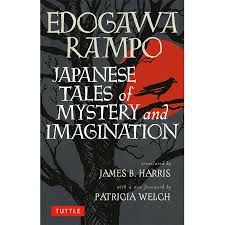
Rampo’s Japanese Tales of Mystery and Imagination (1956) is an English-language collection of nine of his best short stories.  Not only does it take its name from Tales of Mystery and Imagination, described by Wikipedia as ‘a popular title for posthumous compilations of writings by American author, essayist and poet Edgar Allan Poe’, but it combines stories from those two genres Poe helped to popularise in the early 19th century, the horror and the detective / mystery ones.  It has to be said the two styles mesh together nicely in this collection.  There’s a weirdness in Rampo’s detective fiction that ensures it doesn’t feel that different, tonally, from his morbid horror stories.


Among the crime stories, you get villains attempting to commit the perfect murder with schemes that involve living a double life as an invented character (The Cliff), impersonating someone who looks exactly like them (The Twins) and the fear of sleepwalkers that they might do something ghastly whilst moving in a trance-like state (Two Crippled Men).  All three have a last-minute twist wherein the main characters get their come-uppance from someone who’s even smarter than they are, or by a small but fatal act of negligence – the sort of minor blunder that would have Peter Falk’s Lieutenant Columbo swooping down like a hawk.  Talking of Falk’s beloved shabby-but-canny TV detective, The Psychological Test is a very Columbo-esque tale of how a pair of investigators use an ingenious method to get a suspect in a murder case to incriminate himself.


Meanwhile, The Red Chamber takes a trope popular in 19th and early 20th century English fiction, that of a comfortable, wooden-panelled gentlemen’s club where the tweedy members congregate after dark and, with the lights turned down, proceed to tell each other scary stories.  In Rampo’s gentlemen’s club, however, things get shaken up when the evening’s storyteller, a newcomer, boasts about being responsible for “the murder of nearly a hundred people, all as yet undetected’ and proceeds to explain how he did it and got away with it.  Several harrowing twists later, it’s no surprise that the story’s narrator, a long-term member of the club, concludes: “…we unanimously agreed to disband.”


The other four stories in Japanese Tales of Mystery and Imagination are macabre ones.  They possess the same oddness and intensity of his crime stories, but cranked up to higher levels.  The Hell of Mirrors is about a man who becomes obsessed with optics, with ‘anything capable of reflecting an image… magic lanterns, telescopes, magnifying glasses, kaleidoscopes, prisms and the like’ and with mirrors: ‘concave, convex, corrugated, prismatic.’  Typically with Rampo’s fiction, this obsession spills over into another obsession, a sexual one.  The protagonist is soon using telescopes to pry through the windows of his female neighbours and using periscopes to ‘get a full view of the rooms of his many young maidservants.’  The story reaches its climax when he devises a mirrored, optical device so depraved it ultimately induces madness.


The Traveller with the Pasted Rag Picture, on the other hand, is the one Rampo story in this collection that veers off into the supernatural.  It reminded me very slightly of the M.R. James story The Mezzotint, though the picture in that story was a spookily lifelike one that recorded a horrific event.  In Rampo’s story, a similarly lifelike picture serves as a testimony to a sad, doomed and one-sided romance.


That leaves two stories, The Human Chair and The Caterpillar, which I think are masterpieces.  The Human Chair concerns an ugly and reclusive craftsman who makes a living fashioning luxurious chairs, whilst getting a perverse kick out of imagining ‘the types of people who would eventually curl up’ in them.  Eventually, driven insane by his desire to get intimate with the folk who’ll acquire and use his chairs, he designs a bulky one containing a secret, human-sized cavity, inside which he hides himself.  The chair and its maker end up in a hotel lobby, where the latter gets his jollies from feeling the bodies of the guests rest on top of him.  No one “suspected even for a fleeting moment that the soft ‘cushion’ on which they were sitting was actually human flesh with blood circulating in its veins – confined in a strange world of darkness.”


The story is told in the form of a confession, sent as a letter to a famous lady novelist.  While she reads it, she begins to wonder about the suspiciously large and comfy chair she’s seated in, which has found its way to her study after being in a hotel.  There comes a final twist that nullifies what’s happened before – or perhaps doesn’t.


The Caterpillar, written in 1929, is an early, literary example of ‘body horror’.  The central character is an unfortunate young army officer so maimed and mutilated in battle that he comes home resembling the larval-form insect of the title.  This puts understandable strain on the officer’s wife, upon whom, totally helpless, he depends for care and attention.  In fact, The Caterpillar is more about the wife than the husband, with the hideous situation gradually pushing her into the realms of madness – of sadistic madness, because she starts taking her woes out on her husband, who can’t do anything to defend himself.  The story works both as a feminist tract, showing the plight of women whom society expects to be wholly devoted and subservient to their husbands, and as a horror story exploiting male fears of emasculation.  It’s a grim and powerful read, packing as much of a punch as it did when it first appeared, nearly a century ago.


I think the original Edgar Allan Poe would approve of Rampo’s tales.  They’re deliciously dark and twisted, and frequently ingenious, and sometimes funny too – a lot of the humour derives from how his villains, when telling their stories, like to revel in their own cleverness and degeneracy.  It’s just a pity that Japanese Tales of Mystery and Imagination is the only English-language collection by Rampo I’ve come across.  I’d really like to read more of his stuff.  Unlike a certain character played by Sylvester Stallone, I wouldn’t mind seeing a Rampo 2, Rampo 3, Rampo 4 and Rampo 5.


From wikipedia.org / © The Mainichi Graphic

Jim Mountfield gets activated


© Cloaked Press, LLC


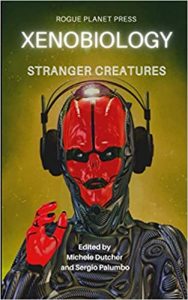
Back in September 2020, I had a story called The Nuclei included in an anthology called Xenobiology: Stranger Creatures.  All its stories, in the words of one of the editors, Michele Dutcher, shared a theme of “biology that has been artificially produced, or biological creatures that have been produced by genetic material being acted upon by outside sources to produce something new.”  Being about artificially-created biological creatures, The Nuclei was classifiable as science fiction, but it definitely lurked at the horror end of the sci-fi spectrum.  In fact, the creatures featured in The Nuclei were the result of me attempting to imagine the most revolting monsters possible.  For that reason, the story was credited to Jim Mountfield, the pseudonym I use for my macabre fiction.


The Nuclei was also a post-apocalyptic story, set in the ruins of Edinburgh – we definitely need more post-apocalyptic stories set in the capital of Scotland – after my revolting, artificially-created creatures had decimated humanity and brought human civilisation to an end.  The human characters, some ragged, malnourished survivors who belonged either to a loony religious cult or to an equally loony militia, referred to an event called ‘the Activation’ shortly before civilisation fell, when the artificially-created horrors were first unleashed on mankind.  That gave me the idea of writing a prequel to the story, detailing what happened at the Activation, i.e., on Day One of the nightmare.


I have now written that story, called The Activation, and have just had it published under the penname of Jim Mountfield too.  It features in Nightmare Fuel: Body Horror 2024, the latest instalment in the annual Nightmare Fuel collections of scary fiction put out by Cloaked Press, LLC.  As its title indicates, the theme for this year’s collection was body horror, which Wikipedia defines as “a subgenre of horror fiction that intentionally showcases grotesque or psychologically disturbing violations of the human body or of another creature.”  Well, the modus operandi of the creatures in The Nuclei involved a lot of body horror, so this seemed a natural home for its prequel.


The setting and main character of The Activation were inspired by something that happened to me once and by somebody I used to know.  Firstly, the happening was a misadventure I had while travelling on the London Tube back in 2016, somewhere between King’s Cross and Liverpool Street Stations – I must have been on either the Circle, Metropolitan or Hammersmith and City lines.  A young woman had what is euphemistically described as an ‘episode’ and started screaming hysterically at her fellow passengers.  Unfortunately, among the things she screamed was the claim that she was carrying a bomb.  The train promptly stopped at the next station and remained there with its doors sealed for 20 or 25 minutes.  Nobody could get in or out.  Meanwhile, the woman kept shrieking gibberish at everyone.


At one point, a pair of British Transport Police officers walked down the train, but didn’t actually stop to deal with the unhinged woman when they reached her.  No, they just walked past her, to the train’s far end, and then walked back – again doing nothing when they passed her a second time.  Later, when I researched the protocol for occurrences like this, I found out that the Transport Police officers had done an ‘assessment of the incident scene’.  Satisfied that they knew where the problem was, and that it wasn’t a case of terrorism, and that there weren’t any other problems elsewhere, they then informed the local police and told them where to find the problem.  When those police arrived on the platform, the nearest set of doors were opened so that they could board the train and remove said problem.


Obviously, this took time.  And with those doors sealed until the local police came, it made me wonder what would have happened to the folk stuck on the train if there’d been a real terrorist present.  I guess we were considered ‘expendable’.


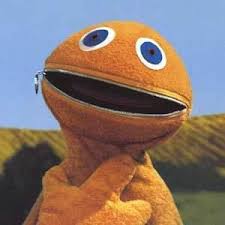
By the time the Transport Police did their assessment, it’d become clear to everybody that the young woman causing the trouble wasn’t a terrorist.  She was just some poor, mixed-up soul who’d probably forgotten to take her medication that day.  I realised this when, at one point during her ravings, she started listing ‘all the great prophets in history’.  These were Buddha, Jesus, Mohammed and… Zippy, the gimpy zip-mouthed puppet from the British kids’ TV show Rainbow (1972-92).


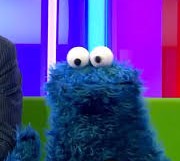
I had to put that detail into my story The Activation.  Although, because Nightmare Fuel: Body Horrors is an American publication, I changed Zippy from Rainbow to the better-known Cookie Monster from Sesame Street (1969-present).  Sorry about that, Zippy, but you just aren’t internationally famous enough.


© Teddington Studios / Thames Television

© Sesame Workshop / BBC / From X


Secondly, the main character in The Activation was inspired by a former colleague, a PE teacher, who was employed by an English private school I worked at in 2002.  He was an ex-soldier.  One evening, the two of us were having a pint in the neighbourhood pub when he told me – with a preliminary request not to say anything about it to the school’s headmistress – that when he went to the school to be interviewed for the PE-teacher position, he’d been homeless.  At the time he was sleeping inside some giant concrete pipes at the side of a road that were soon to be popped in the ground for a sewage or drainage project.  Homelessness among former members of the Armed Forces is something that’s tragically common.


Anyway, for The Activation, I thought the hero would be somebody with experiences similar to my old colleague – a former soldier, homeless, desperately trying to turn his life around.  And then he gets caught up in the hideous events of the story and is put through hell.  Yes, I know.  I’m a sadist.


Containing 14 tales of grisly, gruelling terror, Nightmare Fuel: Body Horror 2024 can now be purchased on Kindle here and as a paperback here.

More sinister sides of Singapore


© Epigram Books


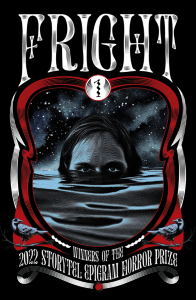
A couple of months ago on this blog, I reviewed an anthology of horror stories set in modern-day Singapore called, appropriately, The New Singapore Horror Collection, written by local author S.J. Huang.  Now I’ve just finished reading a collection called Fright 1, containing 11 more scary stories set in the southeast Asian city-state, which my partner was kind enough to buy for me as a Christmas present.


Unlike The New Singapore Horror Collection, each story in Fright 1 is penned by a different person.  These 11 writers were the top-ranking entrants in a short-fiction competition held last year.  As the book’s introduction explains, Fright 1 “showcases the winners and finalists of the 2022 Storytel Epigram Horror Prize, and celebrates all subsets of the horror genre, told with a Singaporean twist.”


The first thing that struck me about Fright 1 was the preponderance of female writers – eight out of 11.  This might be a surprise to the many people who’ve traditionally associated the horror genre with male writers, although anyone familiar with the work of Angela Carter, Shirley Jackson, May Sinclair, Daphne du Maurier, Anne Rice, Charlotte Perkins Gilman, Mary Elizabeth Braddon and the criminally underrated Dorothy K. Haynes, to say nothing of Mary Shelley, would argue otherwise.  Thus, the collection was doubly interesting for me.  Not only did its stories have a setting, Singapore, that I’m not very familiar with, but many of its themes were ones that impact on women – arranged marriages, pregnancy, sexting and, generally, being wronged by duplicitous men.  These being horror stories, such themes are refracted through a lens that sends them into the realm of the supernatural and macabre.


Fright 1 gets off to a solid start with Meihan Boey’s The General’s Wife, which is set in past times and is about an unremarkable young woman (‘with crooked shoulders and a pockmarked face’) whose family are desperate to get her married off to someone, anyone, so that they no longer have to be responsible for her.  When a mysterious, older, wealthy man known as the ‘General’, living on one of Singapore’s little satellite islands, requests her hand in marriage for no obvious reason, they don’t ask questions.  She’s hurriedly packed off to the island.  What follows is a tale of skulduggery involving deceit and sorcery, with suggestions of Bluebeard and even Jane Eyre (1847), impressively told and grippingly paced.  My only criticism is that I found the ending slightly rushed, although it contains a satisfying hint that the story’s narrator is no longer the shrinking violet she used to be.


Also set in historical Singapore is Dew M. Chaiyanara’s Under the Banana Tree, which is about a kampung – the Malaysian term for village – that’s terrorised by a pontianak when it takes up residence by the tree of the title and starts making “agonised wails that pierced the night and made all the villagers rush to slam their windows shut, bolt their doors and hold each other tight.”  According to Wikipedia, a pontianak is a supernatural creature found in Singaporean, Malaysian and Indonesian folklore that “usually takes the form of a pregnant woman who is unable to give birth to a child.  Alternatively, it is often described as a vampiric, vengeful female spirit.”  A woman in the village – evidently the only person there with a spine – resolves to go and tell the ponianak to, basically, shut up.  To her surprise, she finds herself developing a bond with the creature.  She also learns that they have more in common that she could ever have imagined.


Meanwhile, a non-folkloric and very modern supernatural being is devised for Kelly Leow’s story Breakwater.  This posits the idea that people subjected to extreme humiliation on social media, so that their lives are ruined, they end up living in shame and they vanish from their former social circles, actually, to a certain extent, ‘die’.  Not enough to leave behind a ghost, as many people believe happens when you physically die, but enough to create a semi-ghost, a ‘shade’.  Breakwater features a serial online-abuser being trailed, unbeknownst to him, by the shades of his former victims – one of which partly narrates the story.  I liked Breakwater a lot, not only because its central conceit feels genuinely new, but also because it’s set in Singapore’s East Coast Park.  The park is at the back of my residence and is an evocative place at night, one where, as Leow observes, “Cargo ships form a ghostly city out on the horizon, lights glittering in rows like the windows of apartments.”


Among the male writers represented, Teo Kai Xiang’s Untitled Train Story uses another well-known part of Singapore as its setting, the city’s MRT system.  Workers digging out a new MRT line discover a mysterious tunnel that seems to have existed a long time before trains began running underground.  It’s apparently man-made, its walls are covered in strange symbols, and it’s formed out of some ‘sleek and almost metallic black substance’.  I began the story wondering if it would turn into a Singaporean variant on H.P. Lovecraft’s seminal story Pickman’s Model (1927), which helped establish the trope, now common in the horror genre, of fleshing-eating, ghoul-like creatures living in secrecy under the streets of a modern-day city – see, for example, the movies Death Line (1973) and C.H.U.D. (1984).  Later, however, it becomes clear that Xiang’s story has more in common with a different strand of Lovecraft’s work – his tales of cosmic horror.  There’s something at the end of the tunnel that isn’t just deadly.  It also has the power to do disturbing things to the minds of those who encounter it and manage to survive.


For my money, however, the collection’s best tale is Dave Chua’s Hantu Hijau, which in Malay means ‘green ghost’.  It’s narrated by a young girl who becomes obsessed with a ghost, a female one, that’s said to haunt her Singaporean public housing estate: “Some doubted her existence; merely a hyper-localised myth to get children to return early and in bed before eleven, but I knew she had always been here, biding her time.”  The story is atmospheric and also manages the important trick of making the reader both frightened of its ghost and sympathetic towards it.  At the same time, Chua makes it believable by lacing the supernatural plot with descriptions of the block and its assorted inhabitants (“Despite the decrepit state of some of the storeys, the residents were full of kindness and humanity”) and with accounts of the girl’s mum – a hard-pressed single mother whose desperate attempts to make money and keep them afloat gradually become shady and even criminal.  With its blend of the ghostly, the grittily realistic and an urban myth that might not be so mythical, Hantu Hijau reminded me slightly of the Clive Barker story The Forbidden (1986), which later became the basis for the Candyman movies.


Not quite everything in the collection was to my tastes.  I felt a few stories had rather too much happening for them to be properly frightening.  Also, a couple of times, the social issues being explored were used for ‘body-horror’ moments that had me thinking of films like David Cronenberg’s The Brood (1979) or Brian Yuzna’s Society (1989) – good, grotesquely-surreal fun, yes, but too far-fetched for the build-up that’d preceded them.  Maybe it’s just me.  I feel that to be truly scary, a story has to be at least partway believable.  But if it contains too many incidents, or too much over-the-top gloop, it becomes less believable and hence less scary.  Overall, though, I was impressed by Fright 1  and I strongly recommend it.


For the record, the 2022 Storytel Epigram Horror Prize judges ranked Dew M. Chaiyanara’s Under the Banana Tree as the third-best entry, Dave Chua’s Hantu Hijau as the runner-up, and Kelly Leow’s Breakwater as the winner.  The collection can be purchased here, as can an audiobook version of it.

Jim Mountfield gets apocalyptic


© Rogue Planet Press 


A 7000-word story of mine called The Nuclei has just appeared in a new collection called Xenobiology: Stranger Creatures.  Its subtitle describes it as ‘an anthology of international sci-fi, steampunk and urban fantasy short stories.’


The contents of the anthology are explained in more detail in its introduction by one of its editors, Michele Dutcher: “Since Xenobiology is not a study of naturally occurring organisms, the stories in this anthology deal with biology that has been artificially produced, or biological creatures that have been produced by genetic material being acted upon by outside sources to produce something new.  Those new organisms can be intriguing when thrown into the mind of an imaginative author.”


The Nuclei is classifiable as science fiction but definitely lurks at the horror end of the sci-fi spectrum.  Therefore, in Xenobiology: Stranger Creatures, it’s credited to Jim Mountfield, the pseudonym I use for my macabre fiction.  Basically, it’s a body-horror story set in Edinburgh after an apocalypse.  Now there’s a sentence you don’t get to write too often.


Writing a story with a post-apocalyptic setting was an opportunity for me to address some of the misconceptions people have about what would happen after civilisation collapsed, thanks to watching many Hollywood movies on the theme.


Firstly, and I say this with regret because I’m a big fan of George Miller’s Mad Max franchise, petrol would soon degrade and become unusable.  Thus, within a few years, no survivors would be able to drive around in motorised vehicles – not even in the giant armoured battle-trucks that featured in 2015’s Mad Max: Fury Road.  So in The Nuclei I have the human protagonists riding about on horses or on bicycles.  The bicycles possess solid wheels made of micro closed-cell polymer resin that allow them to be rode over the debris-strewn, weed-sprouting streets of post-apocalyptic Edinburgh without the risk of incurring punctures.  Also, importantly, when the bicycles aren’t on the road, they’re ‘connected to motors and chargers and used to repower the batteries for essentials like the field radio.’


The story also makes references to a few things that seem too mundane to appear in the average post-apocalyptic movie but that would surely be a big thing for survivors of a real-life global meltdown.  For example, scurvy would manifest itself among those survivors if they were suddenly denied access to fruit and vegetables in their diets.  And the danger posed by cuts and infections would be immense after whatever supplies of antibiotics had survived the apocalypse ran out.


One crucial point that the story tries to make is that post-apocalypse the remaining humans wouldn’t immediately degenerate into bands of savages hellbent on killing each other.  This departs from the anarchic scenarios depicted in Cormac McCarthy’s 2006 novel The Road and or in just about every zombie-holocaust movie ever made (the latter suggesting that, when it comes down to it, human beings are even worse than any zombies they’re trying to fight off).


Actually – as reports from the aftermath of any earthquake, tsunami or other natural disaster will testify – human beings are genetically programmed to cooperate and help one another out.  This is not for any uplifting moral reason but simply because cooperation increases their chances of survival.  Hence, in The Nuclei, you get the members of a loopy post-apocalyptic religious cult joining forces with a militia dedicated to the protection of medical science in order to defeat, or at least diminish, a common foe.


And what is that foe?  Well, it’s one of the ‘stranger creatures’ of the collection’s title, the result of genetic tampering.  It’s also the result of me sitting down and attempting to imagine the most revolting monster possible.


Xenobiology: Stranger Creatures is currently available from Amazon here.


© Rogue Planet Press