Back with the Chain gang


I once wrote on this blog that the Jesus and Mary Chain, the Scottish alternative rock band whose core members are brothers Jim and William Reid, was “on at least three days of the week… my favourite band of all time.”  Incidentally, I’d say on the other four days of the week my favourite all-time band is the Rolling Stones between 1969 and 1974, when Mick Taylor played with them.


However, when I heard that the Jesus and Mary Chain intended to perform in Singapore, my current abode, in the middle of this month, I felt a little apprehensive.  For one thing, though I often cite the first time I saw the band live – at London’s Brixton Academy in 1992, while they headlined the Rollercoaster tour and the support bands were American alternative rockers Dinosaur Jr, swirly shoegazers My Bloody Valentine, and a young, up-and-coming band called Blur (whatever happened to them?) – as one of the best gigs, if not the best gig I’ve ever attended, the last time I saw them was a different affair.   That was in Edinburgh in 1998, when relations between Jim and William had decayed so badly they spent the show telling each other to shut up.  It presaged a disastrous performance soon after at the Los Angeles venue House of Blues, where Jim turned up drunk and William stormed offstage.  To no one’s great surprise, the following year they announced the band had split up – though they reformed in 2007.


Would 2025’s Singapore gig be closer in spirit to the 1992 one or the 1998 one?


Also, last year, they released a new album called Glasgow Eyes whose sound was something of a departure.  Though simultaneously dreamy and scuzzy in the best Jesus and Mary Chain tradition, a strong dose of electronica infused it.  I assumed their 2025 set would contain a good number of songs from Glasgow Eyes, which was fine, but it’d mean a lot of the music wouldn’t be what I immediately associated with the Jesus and Mary Chain.


There was the age issue too. With Jim and William Reid now 64 and 67 years old respectively, I wondered how kind time had been to their performing abilities.  After all, I hadn’t seen these guys sing and play onstage for nearly 30 years.  30 years – wow!


And lastly, it just seemed weird that the Jesus and Mary Chain was playing in a famously sensible, serious and clean-living place like Singapore.  After all, this is a band that initially made its name with chaos and disreputability.  When the Reids first performed in 1983, they generated controversy with their habit of delivering gigs just 15 minutes long, with their backs to the audience and their sound cloaked in squalls of feedback, which went down so badly with the punters that – according to the British tabloid press – ‘riots’ ensued.  And their Singaporean show was scheduled for the Esplanade Concert Hall, a venue whose floorspace is entirely covered in seating.  I honestly couldn’t imagine a Jesus and Mary Chain gig where everyone had to sit.


Thus, as I entered the Esplanade Concert Hall on the evening of the show, I had plenty of concerns.  But I needn’t have worried.  This was a great concert.


Before things kicked off, I ordered a few beers at a bar just outside the auditorium’s entrance and sipped them whilst taking in the appearances of my fellow concert-goers.  It genuinely surprised me how many Singaporeans had come tonight.  They consisted mainly of young goths or middle-aged folk who looked like they’d been art-college students in an earlier era.  There was a lengthy queue, mainly of Singaporeans, to buy T-shirts.  An especially popular purchase was a T-shirt featuring the cover of the Jesus and Mary Chain’s 1985 debut album, Psychocandy, which depicted Jim and William in their svelte youth.


© Blanco y Negro


(Among the non-Jesus and Mary Chain T-shirts I observed folk wearing were, not unexpectedly, ones bearing the names of the Cure and the Cocteau Twins…  And, in one case, of Radio Clyde, which was unexpected.)


But there were Westerners around too. Whilst queuing for a beer, I got chatting to an English fellow who was wearing a T-shirt featuring the title of Blur’s 1993 album Modern Life is Rubbish.  “I actually saw Blur supporting the Jesus and Mary Chain,” I said, “back before they were famous.”


He replied, “That would have been the Rollercoaster tour.  I saw it in Birmingham.”  He added wistfully, “Don’t remember much about it, though.”


I should have come back with the obvious quip, “Yes, it was all a bit of a blur!”  But, alas, I wasn’t as quick-thinking as that.


Just before eight o’clock, the gig’s start-time, everyone made their way into the auditorium.  However, when the lights dimmed, it wasn’t for the Jesus and Mary Chain’s set but for that of a support act, the Singaporean singer-songwriter Shye.  Although Shye’s Wikipedia page describes the musical genres she works in as ‘folk-rock, neo-soul, electronic, R&B’, what she and her backing band served up tonight sounded pretty shoegazer-ish to me – not too far removed from the songs at the mellower end of the Jesus and Mary Chain’s repertoire.  Her performance went down well.
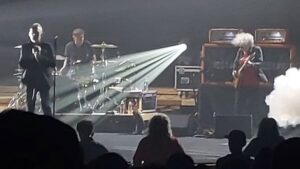


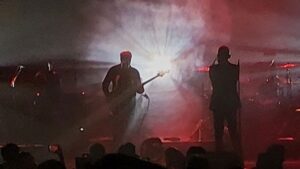
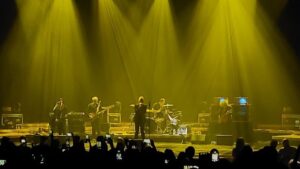
Then the main attraction appeared.  The moment the band – Jim, William, guitarist Scott Von Ryper, bassist Mark Crozer and drummer Justin Welch – came onstage and immediately tore into Jamcod, the most blistering track on Glasgow Eyes, the crowd rose to their feet as one and stayed on their feet for the entire 19-song set.  And I knew at once from the band’s poise and confidence, and the audience’s euphoric reaction to them, that everything about this show was going to be right.


Every phase in the Jesus and Mary Chain’s career was acknowledged tonight, with material played from all eight of the band’s studio albums – plus the 1986 Some Candy Talking EP, unsurprisingly represented by the song Some Candy Talking, whose ambiguous lyrics so upset the late disc jockey Mike Smith that he blacklisted it on the BBC’s Radio One.  As it turned out, four songs were performed from Glasgow Eyes: besides Jamcod, the lowkey Chemical Animal, the lumbering Poor Pure and the jaunty Venal Joy.  These actually fitted in seamlessly with the rest of the set.


I was delighted that the band played three songs from my favourite Jesus and Mary Chain album, 1989’s Automatic: Between Planets, Halfway to Crazy and Head On.  I always felt Automatic got a bad rap from the critics and was sorely underrated.  Also well-represented was 1987’s Darklands, whose brooding numbers added both melody and melancholy to proceedings and balanced the set’s more abrasive parts: the album’s title track, Happy When It Rains and, appropriately, April Skies.  (Well, the show was taking place under the April skies of Singapore.)  And for fans who’d been with the band from the very beginning, three numbers were aired from Psychocandy: In a Hole, Taste of Cindy and Just Like Honey.


On the original Just Like Honey, the female backing vocals were provided by Karen Parker, the then-girlfriend of then-Jesus and Mary Chain drummer Bobby Gillespie (who, of course, would go on to front Primal Scream).  So versatile was Ms. Parker that on one occasion she stepped in and played drums at one of their gigs after Gillespie had hurt his hand.  Also, Scarlett Johannson did those vocal duties when the band played Just Like Honey during their first performance after reforming in 2007.  Tonight, Jim Reid invited Shye, the support act, onstage again to sing it with him.  She also co-sang Sometimes Always from 1994’s Stoned & Dethroned – stepping into the shoes of Mazzy Star’s Hope Sandoval, who’d shared the vocals on the original recording.  Shye acquitted herself beautifully.
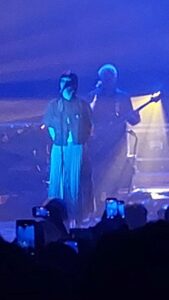


I doubt if many people would rate 1998’s Munki or 2017’s Damage and Joy as the best-ever Jesus and Mary Chain albums, but I had absolutely no problem with the songs played from them tonight: Cracking Up and I Hate Rock ‘n’ Roll off the former and All Things Pass off the latter.  Everything, in fact, was performed with great aplomb.  As frontman, Jim Reid kept the talk between songs to a minimum and just got on with delivering the goods, i.e., singing.  At the end of the main set, though, he did comment drily, “We have to go now… But if you make some noise, we might come back.”


My only regrets about the evening were a few songs I’d have liked them to play, but they didn’t.  These included Blues from a Gun and UV Ray from Automatic, and Nine Million Rainy Days from Darklands.  I would also have enjoyed hearing something off their two compilations of singles, B-sides and rarities, 1988’s Barbed Wire Kisses, (for example, Sidewalking) and 1993’s The Sound of Speed (for example, Heat and their cover of the 13th Floor Elevators’ Reverberation).  And I’d have loved to hear more from their excellent 1992 album Honey’s Dead, though the song they did play from it, Reverence, at the end of the encore brought proceedings to a stupendous close.  None of this, of course, was the band’s fault.  It’s a testimony to the greatness of their back catalogue that they could never cram everything you wanted to hear into a single set.


When I left the Esplanade Concert Hall and stepped out into the Singaporean night, I felt quite a buzz, to say the least.  In fact, I felt 30 years younger.


Temporarily, anyway.
 

We’ve lost the other Mr. Mountfield


From wikipedia.org / © Katherine Barton and Gaz Davidson


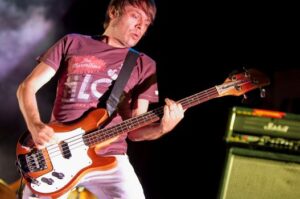
I was shocked and saddened to hear about the death on November 20th of Gary ‘Mani’ Mountfield, bass player with the Stone Roses from 1987 to 1996 and 2011 to 2017 and with Primal Scream for the 15 years between his spells in the Roses.


Shocked because Mani seemed such an exuberant figure (in keeping with his exuberant bass sound) that he was the very last rock-and-roll-related personage I’d expect to die at the relatively young age of 63.  I’ve seen plenty of other rock-and-roll figures on stage who did look ready to kick the bucket because of their frailty, ravaged-ness and general air of vulnerability.  But not Mani, who was always ebullient.   In fact, just days before his passing, he’d announced dates for a speaking tour of the United Kingdom planned for next year, which doesn’t sound like someone on their last legs.


Hailing – of course – from Manchester, Mani first played in two bands that were prototypes for the Stone Roses, the Fireside Chaps (with future Roses guitarist John Squire) and the Waterfront (with future Roses singer Ian Brown joining in 1983).  The Roses’ definite line-up finally coalesced in 1987 with him, Brown, Squire and drummer Alan ‘Reni’ Wren.  During the 1980s he also found time to play in a band called the Mill alongside Clint Boon, who’d later furnish humble but durable ‘Madchester’ band the Inspiral Carpets with their quirky keyboard sound.


Along with the Happy Mondays – and, okay, the Inspiral Carpets – the Stone Roses were the leading lights of the late 1980s / early 1990s Madchester movement, which irresistibly grafted the riffs of rock music onto the grooves of dance music and promoted a cheery, unpretentiously hedonistic vibe far removed from the posing and self-consciousness that’d plagued British popular music earlier in the 1980s.  It also paved away for the more internationally successful, but aesthetically less interesting, Britpop explosion of the mid-1990s.  Mani’s bass was an essential part of the formula.  For instance, it’s the first instrument you hear on I Want to be Adored, the opening track on the Stone Roses’ eponymous and massively acclaimed album of 1989.


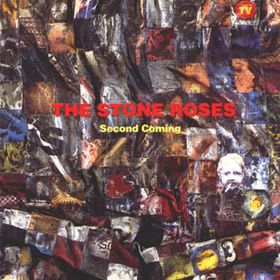
Sadly, legal wrangles and musical procrastination meant it was a long time before a second Stone Roses album appeared.  Second Coming finally saw the light of day in 1994, five-and-a-half years later.  Inevitably, after the wait and all the attendant anticipation, it was deemed a disappointment by the critics.  I have to say I think Second Coming is sorely underrated.  I fully understand why Simon Pegg, in Shaun of the Dead (2004), refuses to throw it along with the rest of his record collection at two advancing zombies.  “I like it,” he affirms.


I saw the Stone Roses for the first and last time during the tour they did on the back of Second Coming.  In 1995 they played a gig in the Japanese city of Sapporo, where I was living at the time.  It was not a happy experience.  Ian Brown was in a foul mood and gave the impression of wanting to be somewhere else – anywhere else.  To be fair, a trio of Australian bodybuilders had beaten Brown up in a club in Tokyo a few days earlier, which gave him a credible reason for his lack of enthusiasm.  Mani and the rest of the band played perfectly well.


© Geffen Records


Also slightly unhappy was the next occasion I saw Mani perform, which was after he’d joined Scottish band Primal Scream, another outfit intent on exploring the overlap between rock music and dance music.  The band were on the bill of a one-day event on Glasgow Green that I attended in 2000.  While they were limbering up to play the song Sick City from their new album XTRMNTR, Mani cheerfully barked into a microphone, “This is dedicated to Glasgow because it really is… a sick city!”  For a large portion of the Glaswegian crowd, this comment went down like a cup of – appropriately – cold sick.  (By the way, this was before ‘sick’ acquired its modern, slang meaning of ‘really good’.)   Later, Mani felt obliged to announce that he was only joking  and, really, “Glasgow isn’t a sick city at all!”  It’d been some banter that folk took the wrong way, but it impressed me that he was man enough to apologise for it.


I saw the Mani-era Primal Scream on two further occasions: at London’s Brixton Academy in 2003, when I thought they were pretty good; and at Norwich’s University of East Anglia in 2009, when they were on blistering form.  In fact, I’d include their 2009 Norwich show in my personal ‘Top Ten Gigs of All Time’.  With his jolly, everyman demeanour, Mani provided some balance to Primal Scream’s frontman Bobby Gillespie, whom I always found a bit too-cool-for-school when they played live.


Before joining the reformed Stone Roses in 2011, Mani found time to participate in another band, a ‘supergroup’ called Freebass whose gimmick was that it had three – three! – famous bass players, all from the Manchester area.  Its line-up also included Andy Rourke, former bassist with the Smiths, and Peter Hook, former bassist with Joy Division and New Order.  The project ended ignominiously, with Mani taking exception to what he saw as Hook unjustly exploiting the legacy of Joy Division and his late Joy Division bandmate Ian Curtis – Hook had also formed an outfit called Peter Hook and the Light that performed old Joy Division songs.  Hook’s wallet, Mani claimed on social media, was visible from space because it was ‘stuffed with Ian Curtis’s blood money.’  Needless to say, the two fell out, though later – again – Mani apologised and he and Hook made up.


Indeed, Hook has been one of the many musicians who’ve paid tribute to Mani since his death was announced a few days ago.  Other condolences have come from members of the Stone Roses, Primal Scream, the Happy Mondays, New Order, the Smiths, the Charlatans, the Verve, Echo and the Bunnymen, Elbow, the Courteneers, the Farm, Ocean Colour Scene, Kasabian, Shed Seven, Badly Drawn Boy…  I’m not a big fan of Oasis, but I thought it touching that, at their concert in Brazil the other night, Liam and Noel Gallagher projected Mani’s face onto the giant screen behind the stage whilst performing Live Forever (1994).  You get the impression you could go around everybody involved in the British music scene in the 1980s and 1990s and not find anyone with a bad word to say about the guy.


Finally, I owe Mani some gratitude.  Years ago – around 2010, I think – I was trying to think of a pseudonym to put on a horror short story I was about to submit to a magazine.  ‘Ian Smith’ seemed too dull a name to attach to a piece of short fiction that was meant to chill the blood.  At the time, I had a Primal Scream album playing in the background and I suddenly thought, “They’ve really had a second wind since Mani joined them.”  Then it occurred to me: Mani’s real name was Gary Mountfield.  ‘Mountfield’ sounded about right for a pseudonym – it wasn’t too exotic, but not too common either.  (Mountfield was also the name of a village in Country Tyrone, Northern Ireland, where I used to live, so it had a personal connection with me too.)  Thus, the penname Jim Mountfield was born.  It’s adorned nearly 70 published short stories since then.


So, thank you for the inspiration, Mani.


From wikipedia.org / © livepict.com

My favourite gigs


© Chrysalis


My previous blog-post was about seeing Deep Purple live in concert.  This was the most recent of many gigs I’ve been to.  Indeed, by my calculations, I’ve seen about 160 musical acts perform live, starting with veteran Scottish hard rock / heavy metal group Nazareth, whom I saw in Aberdeen in 1984.


Anyway, this has got me thinking about the best gigs I’ve ever been to.  Here are my favourite eight.


The Proclaimers – Aberdeen Ritzy, 1987

I didn’t know what to expect when some mates got me along to a concert by Craig and Charlie Reid, better known as Scottish folk-pop duo the Proclaimers.  I liked the Reids – their hit song that year, the politically charged Letter from America, was already becoming Scotland’s great anti-Maggie-Thatcher anthem – but I had no idea what they’d be like live.  Also, they were performing at Aberdeen Ritzy, a place I had an aversion to because I’d once worked there as a member of the floor-staff and it was the least enjoyable job I’d ever had.


I had no reason to be apprehensive.  The gig felt like a giant, joyous football match where the entire crowd supported the same team and that team was winning 10-0.  I suspect one reason why the Proclaimers went down so well that night was because the Aberdonian audience could relate to their song Throw the R Away, which is about the frustrations caused when standard English-speakers can’t understand your accent.  Which is a common hazard if you speak Aberdonian.


The Jesus and Mary Chain, Dinosaur Jr, My Bloody Valentine, Blur – the Rollercoaster Tour, London Brixton Academy, 1992

From Craig and Charlie Reid to two more Scottish siblings called Reid.  These were Jim and William Reid of the feedback-drenched East Kilbride noise-niks the Jesus and Mary Chain.  Their Rollercoaster Tour date at Brixton Academy in 1992 offered not only excellent support from American alternative rockers Dinosaur Jr and dreamy, swirly shoegazers My Bloody Valentine, but also a chance to sample a young, up-and-coming band called Blur.  Though my reaction when I saw Damon Albarn onstage wasn’t that he was destined to be an icon of the future Britpop movement but that he resembled a very young, musical version of Norman Wisdom.


© Blanco y Negro


Meanwhile, the headliners blew me away.  Promoting their recent album Honey’s Dead (1992), which was packed with behemoth tunes like Reverence and Sugar Ray, the Jesus and Mary Chain performed in silhouette against a giant blood-red backdrop.  This made them look like the imperious Masters of the Universe.


The Manic Street Preachers – Sapporo Penny Lane, 1993

Welsh rock band the Manic Street Preachers were promoting their album Gold Against the Soul when they turned up in the Japanese city of Sapporo, at whose Hokkai-Gakuen University I worked at the time as a lecturer.  Though in Britain they were seen as having a punk edge, the Japanese took their fondness for glam clothes and eyeliner as meaning they were another Guns n’ Roses.  Thus, their gig at Sapporo’s Penny Lane drew a lot of Japanese girls wearing silk scarves and floppy hats, who kept squealing “Rich-ee!” at the Manics’ guitarist, Richey Edwards.  The gig was both excellent and dramatic – the drama coming when the highly-strung Edwards freaked out about an illuminated fire-exit sign at the other end of the auditorium that he claimed was putting him off his performance.


Since then, that gig has haunted me in two ways.  Firstly, around the same time, I bought the Japanese edition of Gold Against the Soul.  Years later, long after Edwards’ tragic and never-explained disappearance in 1995, I listened to it again and discovered the CD case contained a second tray that I hadn’t noticed before.  In it was a bonus CD, a live one of them performing in Japan.  When I played it, I felt poignantly transported back in time – for there, in the crowd, were those Japanese girls shouting “Rich-ee!” again at poor, doomed Richey Edwards.


From wikipedia.org / © Masao Nakagami


Secondly, when I saw the Manic Street Preachers again last year, in Singapore, they played a new song called Still Snowing in Sapporo, which I learned was inspired by that long-ago gig in 1993.  How weird, I thought, to be in the audience listening to them playing a song about a concert 30 years earlier… knowing I was were probably the only person in the audience who was at that concert.


The Beastie Boys – Sapporo Jasmac Plaza, 1995

I almost didn’t attend this gig, which also took place while I worked at Sapporo’s Hokkai-Gakuen University.  The show was due to begin at 7.00 PM – concerts in Japan tended to start when the tickets said they would – and the same evening I had to give a late lecture until 7.20 PM.  Plus I calculated that by the time I got from the university campus to the venue, the Jasmac Plaza, the Beastie Boys would already be an hour into their gig.  It didn’t seem worth it.


However, a few weeks before the concert, it was announced that work had been completed on a new Sapporo subway line, which had a station called Gakuen-Mae directly below the campus where I was working.  I also discovered that the next station along the new line, Hosui-Suskino, had an exit that was only a block from the Jasmac Plaza.  And a subway train left for Hosui-Susukino from Gakuen-Mae every evening at 7.30.  I figured that if I caught the 7.30 train, and moved very fast, I could be at the concert hall in the Jasmac Plaza ten minutes later – hopefully not yet halfway through the Beastie Boys’ set.  Fate seemed to be urging me to buy a ticket, so I did.


That evening, I finished my lecture on the stroke of 7.20, ran like hell for the subway station and charged down what seemed like half-a-dozen escalators, descending deeper and deeper into the earth.  The train was already at the platform and I ran and jumped through its about-to-close carriage doors.  At Hosui-Susukino, I sprang out of the train, ran up more escalators, ran along a city block into the Jasmac Plaza and up several staircases to its fourth floor, where the concert hall was.  Live music blasted out of speakers above me.  I dashed into the hall, gasping for breath, my university lecturer’s suit, shirt and tie soaked in sweat…  And I discovered that the Beastie Boys weren’t on stage at all.  What I was hearing was a support act that hadn’t been mentioned on the bloody ticket.  The Beasties didn’t appear until forty minutes later.


After that, it needed to be a superb gig to justify all the hassle and indignity I’d suffered.  Which, thankfully, it was.


© Mute


Nick Cave – Edinburgh Princes Street Gardens, 1999

During the 1999 Edinburgh Festival, goth-rock troubadour Nick Cave – without his band the Bad Seeds – performed in Edinburgh’s Princess Street Gardens, which meant he had the craggy Edinburgh Castle rock, crowned by the battlements of the castle itself, as a spectacular backdrop.  But there was a problem.  Taking place in the castle was the Edinburgh Tattoo, that celebration of tartan-swathed, bagpipe-wailing Scottish military kitsch held every August; and the Tattoo organisers were not happy about having to compete against a concert below in the Gardens.  Indeed, a few evenings earlier, the Gardens had hosted the psychedelic / space-rock outfit Spiritualised and their percussive beats had caused the Lone Piper – the bagpiper who appears on the ramparts at the Tattoo’s finale to play the lament Sleep Dearie Sleep – to lose concentration and mess up the tune.  This evening, to placate the Tattoo, Cave wasn’t allowed to start playing until it had finished, meaning the audience turned up at the time specified on the tickets but then had to wait an hour.  To keep us entertained, some local performance-poets were brought onstage, including the late, lamented Paul Reekie.


One consequence of this was that when Cave finally did come on, the end-of-Tattoo firework display was erupting above the castle.  Talk about a spectacular entrance.  And the ensuing gig was worth the long wait.  The songs, mostly stripped-down versions of stuff from 1997’s The Boatman’s Call and 1996’s Murder Ballads, were wonderfully enhanced by the gothic surroundings – the rock, the castle and finally a gorgeous full moon ascending into the starry Edinburgh sky.


The Waterboys – Newcastle, Tyne Theatre and Opera House, 2003

In the mid-1980s, there was a considerable buzz about the Waterboys, who were expected to go stratospheric and join U2 and Simple Minds as one of the big Celtic rock bands of the era.  Instead, under the leadership of Edinburgh man Mike Scott, they decamped to Ireland, became a folk band for a while, and rock superstardom never arrived.  I actually preferred their folky stuff (like 1988’s When Ye Go Away) to their rather bloated rock stuff (like 1985’s The Whole of the Moon).


For this 2003 gig in Newcastle, the band did an hour of gentle, melodic music, kicking off with a version of the Rolling Stones’ Wild Horses, which Scott decided to play because he’d “had it in his head all day,”  There was an interval during which the Geordie crowd enjoyed a pint or four in the Opera House bar.  And then it was back into the auditorium for a second hour of up-tempo rock music.  The relaxed and nothing-more-to-prove Scott clearly wanted to have a good time and wanted to give his audience a good time too – which he did, in spades.


© Geffen Records


Alabama 3 – Newcastle, University of Northumbria, 2005

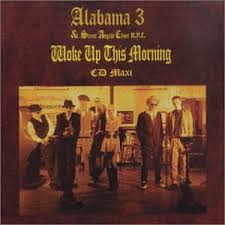
This was the best blues / country / techno / electronica / indie / trip-hop / acid-jazz gig I’ve seen, courtesy of the best (and possibly only) band in the world whose music ticks all those boxes, the Alabama 3.  They’re not from Alabama, but from South London.  Also, there’s eight or nine of them rather than three.  With so many band-members onstage, and such a stew of different sounds, this gig at the University of Northumbria was inevitably a bit of a shambles – but what a glorious shambles.  Their track Woke Up This Morning, which at the time served as the opening theme for The Sopranos (1999-2007), was particularly epic.


Primal Scream – Norwich UEA, 2009

I wasn’t expecting a great deal in 2009 when the Bobby Gillespie-fronted alternative rock band Primal Scream turned up at the University of East Anglia, where I was in the middle of doing a full-time MA.  Feeling creaky and long in the tooth by then, I assumed my best gig-going days were behind me.  I was too old for the mosh-pit, for jumping around and getting into the exuberant spirit of things.  Meanwhile, I’d seen Primal Scream a few times before and found them a bit hit-and-miss.


But I ended up really, really enjoying myself.  I managed to snag a position right at the edge of the stage, giving me a perfect view.  And Gillespie and the gang were in blistering form.  Primal Scream concerts can feel schizophrenic because their music veers between harsh, experimental electronica (like 2000’s Kill All Hippies) and loose-limbed, traditional Rolling Stones-style rock ‘n’ roll (like 1994’s Jailbird), but here it didn’t matter.  They just alternated.  They’d do one hardcore electronica number (accompanied by a brain-frying lightshow), followed by a Stonesy number, then another electronica one, then another Stonesy one, and so on.  Somehow, tonight, it worked brilliantly.


From wikipedia.org / © Phil Guest