© Penguin
When it comes to the literary oeuvre of Edith Wharton, all I’m familiar with is her 1911 novella Ethan Frome, which I read many years ago. I enjoyed it and resolved to read more of her works but, somehow, never got around to it.
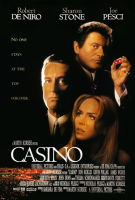
At least, I did see Martin Scorsese’s 1993 movie adaptation of her Pulitzer Prize-winning novel The Age of Innocence (1920). I enjoyed this too, though many other people seemed not to. People familiar with the novel (including my wife) disliked it because of liberties it allegedly took with the characterisations. Fans of Scorsese’s usual movies didn’t like it because, presumably, it didn’t feature any montages of Joe Pesci cooking and eating pasta, Joe Pesci being loving to his elderly mom, Joe Pesci psychopathically beating and murdering the shit out of people, etc., all set to the music of the Rolling Stones.
I have, over the years, heard people talk enthusiastically about some ghost stories Edith Wharton penned during her career. Her writing ghost stories didn’t surprise me – plenty of literary greats, including Sir Walter Scott, Charles Dickens, Elizabeth Gaskell, Robert Louis Stevenson, Thomas Hardy, Sir Arthur Conan Doyle and Henry James, happily wrote ghostly, scary and macabre fiction until the genre fell out of critical favour and gained an unsavoury reputation in the snobby 20th century. Anyway, not only did I generally resolve to read more of Wharton’s work, but I particularly resolved to read her ghost stories.
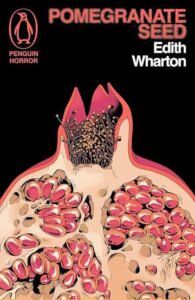
Recently, I read a collection called Pomegranate Seed, published in 2025 by Penguin, which gathers together seven of her supernatural stories. The collection takes its title from the opening story, which is about a young woman, Charlotte, who marries a widower, Kenneth, and becomes increasingly concerned that he’s is having an affair. This is on account of Kenneth receiving letters written by a female hand, which mysteriously arrive without stamps or return addresses and which leave him in a visible state of agitation. It transpires that the letters are ghostly dispatches from his first wife, Elsie, who, even in death, is unwilling to relinquish her hold over him. The trope of a new wife struggling against the spirit of an old, dead wife for possession of her husband has been used several times, most impressively, in my opinion, in Daphne du Maurier’s novel Rebecca (1938). But Pomegranate Seed is an agreeable enough piece.
Incidentally, the title Pomegranate Seed comes from the Greek myth of the goddess Persephone, daughter of Zeus and Demeter, who was tricked into remaining in the Underworld for part of the year when its king, Hades, got her to taste pomegranate seeds – ‘the food of the Underworld’. Persephone’s yearly sojourn in that melancholy realm coincides with the season of winter in the land of the living. A picture of an overripe, seed-oozing pomegranate fills the cover of this 2025 Penguin collection – and makes the book look as if it’s an anthology of body-horror stories.
A troubled marriage and a female ghost also figure in The Lady’s Maid’s Bell, and there’s a similar premise whereby the central character, again a woman, is a newcomer in a household with sinister secrets. Here, though, the character is a maid, recovering from typhoid fever, who’s employed in a mansion house on the Hudson River. What causes the trouble in the troubled marriage isn’t a ghost this time, but an all-too-alive abusive husband. Meanwhile, it’s suggested that the apparition – “a thin woman with a white face, and a dark gown and apron” – is trying to protect the beleaguered wife.
More flippant is Mr Jones, wherein an aristocrat called Lady Jane Lynke inherits an estate called the Bells – “the beautiful old place that had belonged to the Lynkes of Thudney for something like six hundred years” – and then finds her every request about improving the estate defied and thwarted by a very elderly and thrawn caretaker called Mr Jones. The odd thing is that she only ever hears about Mr Jones from the staff, and never actually meets him, which leads to a slightly predictable denouement.
In Afterward, the main characters also acquire an old house – they purchase it rather than inherit it, being a couple who’ve recently ‘come into money’. The house is said to be haunted, though with the puzzling proviso that nobody who encounters the ghost realises it’s a ghost until afterwards: “Not til long long afterward.” A ghost appears and, accordingly, neither of the couple grasps what it is until later. Grimly, when they do realise this, they also find out that the ghost is linked to the underhand way they acquired their fortune in the first place.
From wikipedia.org
Kerfol creates a different kind of atmosphere in its opening pages, a straight-up weird one. The narrator visits a historical pile in Brittany with a view to buying it. He finds no humans on the premises but is followed around by half-a-dozen strangely inscrutable dogs. This first section of Kerfol put me in mind of the stories of Robert Aickman, which were unfailingly odd and unsettling but rarely offered much explanation about what was going on. However, Wharton then proceeds to do the very un-Aickman-like thing of explaining what those eerie dogs were and why there were there.
Less explanation is given in her story All Souls’ and it’s all the more effective because of that. A widow called Sara Clayburn, living on an estate in the wilds of Connecticut, has an accident one winter’s day and severely sprains her ankle. This happens shortly after she encounters a strange woman whilst out on her daily walk – when she asks her, “You’re going to the house?”, she gets an ambiguous answer: “Only to see one of the girls.” And then the woman walks away.
Sara becomes bedridden and has a long, harrowing and possibly imaginary experience where, for a day and a half, it seems that her servants have vanished and she’s entirely alone in the house. The story is a nicely paranoid one where, while you read it, you wonder where Wharton is going with it all. Has Sara slipped into some sort of parallel reality? Are the servants involved in a sinister plot against her? And is there significance – occult significance, perhaps – in the mysterious woman she met before her accident? All Souls’ is made more uncomfortable by the knowledge that this was the last piece of fiction Wharton ever wrote. She died four months after completing it in 1937.
But the best thing in this collection, I feel, is Bewitched, which uses the bleak and unforgiving landscapes of wintertime New England to propagate an atmosphere of genuine dread. Prudence Rutledge, a stern, dour matriarch at a remote farm, summons three neighbours to her farmhouse and informs them that her husband Saul is having regular trysts with another woman, Aura Brand, by the edge of a nearby pond. But this is more than a case of marital infidelity – Aura has been dead for over a year and Saul is increasingly drained and distracted when he returns from these trysts, as if something is feeding on him. The three men resolve to take action. One them is obliged to because he is Sylvester Brand, the late Aura’s father.
Published in 1926, Bewitched made me think of a spooky tale written a year later, H.P. Lovecraft’s The Colour out of Space. Okay, in some ways, the two stories couldn’t be more different – in Bewitched, the horror is psychological and possibly supernatural, while in Lovecraft’s one it’s cosmic in origin and is terrifying unearthly. Also, Bewitched is all about the characters, whereas characterisation is something Lovecraft has little interest in. But both are about agricultural folk who are trying to eke a living in countryside that frequently is – or it becomes – hostile to their efforts, and who come up against frightening forces that their lives until now have given them no understanding of and no preparation for.
I especially like how the possible ghost-vampire being in Bewitched doesn’t follow the norms of conventional fictional and cinematic vampires. Wharton wrote it at a time when these norms hadn’t been cemented yet in popular culture. In that way, Bewitched is reminiscent of Carl Theodor Dreyer’s celebrated 1932 movie Vampyr, another work that does its own thing with the vampire legend.
If this collection has a fault, it’s that Bewitched comes second in the order of stories, with the result that some of the ones that follow it feel slightly anti-climactic in comparison. However, the book concludes with All Souls’, so at least it finishes strongly.
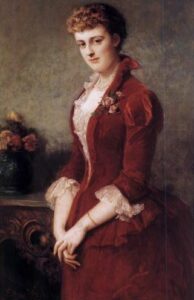
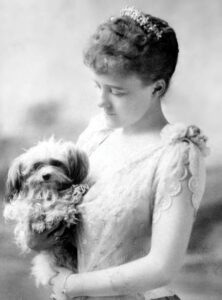
From wikipedia.org / The American Academy of Arts and Letters