© Universal Pictures / Amblin Entertainment
Continuing my tribute to the great New Zealand actor Sam Neill, who died on July 13th…
Sam Neill got top billing alongside Laura Dern and Jeff Goldblum in Steven Spielberg’s Jurassic Park (1993), the highest-grossing movie of all time until James Cameron’s Titanic was released four years later. While it was gratifying that Neill’s career get a boost from his involvement in such a blockbuster, I have to say I’m not a great fan of it. That’s probably because prior to seeing the film, I read the book it’s based upon, Michael Crichton’s Jurassic Park (1990), wherein the story and characters are darker, more complex and more interesting than Spielberg’s interpretation of them.
As Alan Grant, a palaeontologist asked to assess the titular theme park where, it’s planned, visitors will pay good money to gawk at dinosaurs that’ve been cloned back into life using bits of ancient DNA, Neill is inevitably – and literally – dwarfed by his co-stars, the dinosaurs that Spielberg’s special-effects team, headed Stan Winston, created using then-cutting-edge animatronics and computer-generated imagery. Still, he invests Grant with enough quirks to make him memorable.
He’s sometimes curmudgeonly and not fond of children, even ones who like dinosaurs – see how he spooks one youngster with an account of how velociraptors killed their prey, or how he freaks out the grandchildren of park-owner John Hammond (Richard Attenborough) by pretending to get fried by an electric fence. Paradoxically, he can be child-like himself. When he first sees one of Hammond’s dinosaurs, his wonderment leaves him struggling for words and he almost faints. And he shows juvenile delight when he encounters a triceratops, which he hails as “my favourite when I was a kid… the most beautiful thing I ever saw.” (When I was a kid, the triceratops was my favourite dinosaur too.)
When Jurassic Park received a royal premiere in London, Neill found himself sitting between his 10-year-old son and Princess Diana. According to Neill, his son got so worked up at the film’s scary bits that he started farting uncontrollably, and Neill became paranoid about what his royal neighbour would think when she smelled the fumes: “Princess Di is being exposed to the horrors of a little boy’s fart, but she’s going to think it’s me. I am going to be subliminally blamed for my son’s crimes, and I don’t think she’ll talk to me afterwards.” However, gallantly, the princess did speak to him later and ‘never mentioned’ the flatulence. Jeff Goldlum commented drolly on Neill’s anecdote: “I’ve heard him tell that a couple of times and it’s just amazing the lengths that he will go to still blame the boy.”
Neill played Grant twice more, in the second sequel Jurassic Park III (2003), which I saw on TV and found pretty inconsequential; and the fifth one, Jurassic World Dominion (2022), which got lousy reviews and which I’m in no rush to see.
© Miramax / Buena Vista international / Jan Chapman Productions
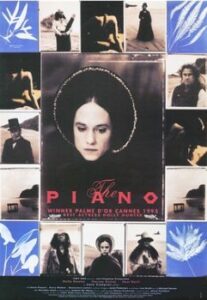
As well as being in 1993’s biggest blockbuster, Neill was in the same year’s biggest arthouse movie, Jane Campion’s The Piano. He plays Alisdair Stewart, a settler in 19th century New Zealand who, via an arranged marriage, suddenly acquires a wife, the mute Ada (Holly Hunter). He also acquires a piano, the playing of which is Ada’s only opportunity to express herself. Predictably, Alister and Ada don’t enjoy a happy marriage and the piano is the catalyst for trouble. It becomes the means by which Ada, unable to tolerate Alisdair’s sexual advances, instead discovers sensuality with a neighbouring settler, George Baines (Harvey Keitel), under the pretext of giving him piano lessons.
While Keitel’s character first seems weird and brutish, but gradually shows himself capable of tenderness and decency, Neill’s goes the other way – we initially have some sympathy for Alisdair, but he becomes a villain who propels the plot towards its climax of mutilation and attempted suicide (though, ultimately, it ends happily). In his 2023 autobiography, Did I Ever Tell You This: A Memoir, Neill wrote of the film, “I don’t think I can overestimate how important The Piano is for me in hindsight. It sits in my funny old CV like a medal on my chest. It wasn’t my film. It was Jane Campion’s. I wasn’t the star of the film. That was Holly Hunter. But there is honour to be found in the second fiddle. Or fourth. No one notices you much, you don’t get nominated for things. But you served. I was there in an important feminist film. I was there in the front line in an important New Zealand film.”
As many have noted, The Piano is an example of how Neill used his screen presence to generous effect. He didn’t hog the limelight but gave his co-stars space to perform to their full potential. This was especially so with his female co-stars. While Neill reined himself in a little, they got the chance to bloom in their roles – not only Holly Hunter in The Piano, but Isabelle Adjani in Possession (1981), Nicole Kidman in Dead Calm (1989), and reportedly – I’ve unfortunately never seen it – Judy Davis in My Brilliant Career (1979).
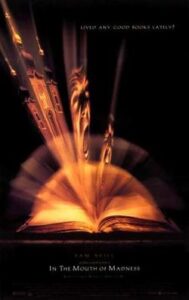
In 1995, Neill worked with cult American director John Carpenter and made the horror movie In the Mouth of Madness, which critics greeted unenthusiastically at the time but which, gradually, has been re-evaluated and is seen now as a misunderstood classic. It features Neill as an insurance investigator called John Trent, who’s hired by a publishing company to track down its missing star author (Jurgen Prochnow). The author’s name is Sutter Kane and though his initials, and massive sales, suggest he was inspired by Stephen King, his tales of cosmic horror and fearsome ancient beings called the ‘Old Ones’ indicate he’s based on the legendary Providence writer H.P. Lovecraft. Trent’s investigations bring him into ever-stranger situations where he encounters characters and settings from Kane’s fiction. It’s as if the writer is controlling what happens in reality – which is worrying, since his new novel concerns the end of the world.
© New Line Cinema
While I’m glad a movie involving Sam Neill, John Carpenter and H.P. Lovecraft has received some retrospective love, I’m afraid I agree with those unenthusiastic critics in 1995. Like many of Carpenter’s later movies, there’s just too much going on in In the Mouth of Madness and you get the impression the director’s throwing everything at the wall in the hope some of it sticks. That said, the movie has some memorable moments, such as a scene where Trent and a client discuss business in a restaurant, not noticing a mad axeman creating mayhem in the street outside their window. Carpenter also stages a spooky sequence wherein a night-time cyclist keeps inexplicably reappearing in front of a cruising car – and keeps changing.
I prefer an earlier Neill-Carpenter collaboration, Memoirs of an Invisible Man (1992), an adaptation of H.F. Saint’s 1987 novel of the same name, itself inspired by H.G. Wells’s novel The Invisible Man (1897). It’s a somewhat awkward film – the tension between the studio, Warner Bros, who wanted an out-and-out comedy, and the star, Chevy Chase, who wanted to show he could do ‘serious acting’, is palpable – but nonetheless I think it’s underrated. I certainly enjoyed Memoirs of an Invisible Man more than director Carpenter did, who once said of it: “I really wanted to quit the business after that movie… I don’t want to talk about why, but let’s just say there were personalities on that film. He shall not be named who needs to be killed. No, no, no, that’s terrible. He needs to be set on fire… No, no, no. Anyway, it’s all fine. I survived it.” Presumably Carpenter was referring to Chase, who has a reputation for being, shall we say, difficult. Even an invisible Chevy Chase was too much for him.
Carpenter certainly didn’t mean Neill, who played the film’s slightly James Mason-like villain. “I love working with him,” the director said of Neill. “He comes prepared. He knows what he’s going to do. He reacts to other actors who are there. I mean, he’s just a dream come true.”
© Paramount Pictures / Golar Productions / Impact Pictures
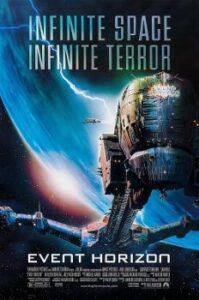
Another horror movie Neill made in the 1990s, which initially got savaged by the critics but was retrospectively reassessed and lauded as a classic, is Paul W. S. Anderson’s Event Horizon (1997). Set in 2047, it’s about an experimental spaceship that’d disappeared during its maiden voyage inexplicably reappearing years later with no sign of its crew. When a rescue mission, whose members include Neill, investigate, it becomes clear the ship’s hyperdrive system accidentally sent it into another dimension – a dimension known to religious folk as ‘hell’ – and back. And it’s returned with something nasty on board.
Well, I’m sorry to be a misery-guts again, but I also agree with the 1997 reviews of Event Horizon and don’t see it as an unappreciated masterpiece. It strikes me as a muddled mixture of Ridley Scott’s Alien (1979) and Clive Barker’s Hellraiser (1987), with that old chestnut of ‘characters being tormented by their innermost fears brought to life’ thrown in. To be fair to Paul W. S. Anderson, the studio, Paramount Pictures, removed much footage from his original edit, believing it was too gory and horrific, and the finished product was not what he and scriptwriter Philip Eisner had envisioned. Incidentally, as Neill’s character is Australian, he had him wear a uniform with an Australian flag-patch – but one where the Union-Jack part of it has been replaced by the Aboriginal flag. Neill hoped that by 2047 a more tolerant, Pauline Hanson-free Australia would better honour its indigenous inhabitants.
By the start of the 21st century, and his sixth decade, Neill had become something of an institution and seemed the personification of the word ‘avuncular’. A good example of this is in the Australian movie The Dish (2000), a gentle comedy in which he plays the boss of an Australian radio telescope that, in 1969, is landed with the job of relaying film-footage from the Apollo 11 moon-mission to the eagerly-awaiting world’s TV screens. This isn’t easy for Neill and his team as, first, they suffer a crippling power cut and then, on July 20th, the day of the landing, a violent storm threatens to blow their dish over. Neill is reassuringly calm and reasonable throughout. Thinking about the film now, I can’t recall any moment in it where he didn’t seem to be wearing a cardigan or puffing at a pipe.
© Madman Films / Piki Films / Defender Films
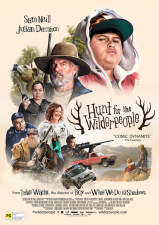
He’s somewhat less avuncular, but still loveable, in Hunt for the Wilderpeople (2016). He plays Hector, a grumpy old misfit who takes to the New Zealand mountains with his chubby, juvenile-delinquent foster-kid Ricky (Julian Dennison) when the latter panics about being returned to state care. They soon have police, social services, vigilantes and the media after them. Along the way they encounter hardship, killer wild boars and a literally tinfoil-hat-wearing lunatic called Psycho Sam (Rhys Darby) but also form a genuine, father-son bond. Director Taiki Waititi creates an affecting and funny movie but avoids easy laughs and cloying sentimentality. Neill and Dennison’s characters take some hard knocks and their happy ending is hard won.
During the 21st century Neill also became a fixture on television – appearing in shows like The Tudors (2007), Crusoe (2008-9), Happy Town (2010), Alcatraz (2012), Peaky Blinders (2013-14), Old School (2014), Tutankhamun (2016), The Twelve (2022-25) and Apples Never Fall (2024) – and on social media, where he regularly posted updates about Two Paddocks, his beloved farm and vineyard in New Zealand’s Central Otago wine region. Famously, Neill named the animals on his farm after celebrities he knew in showbusiness, supposedly because it made him less inclined to eat them: “Well, you can’t eat a friend… I’m not a vegetarian, but I have a ram called Jeff Goldblum. You wouldn’t want to eat Jeff, would you?”
This led to some memorable moments as, for example, Neill posted, “MICHAEL FASSBENDER ASSAULTED!” – his rooster, named after Michael Fassbender, had had his tail-feathers torn out by a rogue dog. Or a comment he made about Helena Bonham-Carter, one of his cows: “She’s had 16 calves now. She’s up for it, if nothing else.” Or a sad disclosure that Meryl Streep, a chicken, had been “…killed by a ferret recently.” During Covid-19, his gentle and good-humoured updates about his farm and its whimsically-named inhabitants was an antidote to the stress and boredom of lockdown. They certainly cheered me up more than, say , Gal Gadot and a bunch of her thespian pals crooning John Lennon’s Imagine on Instagram.
In a 2023 interview in the Guardian, Neill opined, “I’m not afraid to die but it would annoy me. Because I’d really like another decade or two, you know? We’ve built all these lovely terraces, we’ve got these olive trees and cypresses, and I want to be around to see it all mature. And I’ve got my lovely little grandchildren. I want to see them get big… But as for the dying? I couldn’t care less.” A lot of people would have loved to have got another decade or two of Sam Neill, and his acting talents, and his sense of fun. But we should be grateful for what we did get.

© Universal Pictures / Amblin Entertainment