Uncle Sam (Part 2)


© Universal Pictures / Amblin Entertainment


Continuing my tribute to the great New Zealand actor Sam Neill, who died on July 13th


Sam Neill got top billing alongside Laura Dern and Jeff Goldblum in Steven Spielberg’s Jurassic Park (1993), the highest-grossing movie of all time until James Cameron’s Titanic was released four years later.  While it was gratifying that Neill’s career get a boost from his involvement in such a blockbuster, I have to say I’m not  a great fan of it.  That’s probably because prior to seeing the film, I read the book it’s based upon, Michael Crichton’s Jurassic Park (1990), wherein the story and characters are darker, more complex and more interesting than Spielberg’s interpretation of them.


As Alan Grant, a palaeontologist asked to assess the titular theme park where, it’s planned, visitors will pay good money to gawk at dinosaurs that’ve been cloned back into life using bits of ancient DNA, Neill is inevitably – and literally – dwarfed by his co-stars, the dinosaurs that Spielberg’s special-effects team, headed Stan Winston, created using then-cutting-edge animatronics and computer-generated imagery.  Still, he invests Grant with enough quirks to make him memorable.


He’s sometimes curmudgeonly and not fond of children, even ones who like dinosaurs – see how he spooks one youngster with an account of how velociraptors killed their prey, or how he freaks out the grandchildren of park-owner John Hammond (Richard Attenborough) by pretending to get fried by an electric fence.  Paradoxically, he can be child-like himself.  When he first sees one of Hammond’s dinosaurs, his wonderment leaves him struggling for words and he almost faints.  And he shows juvenile delight when he encounters a triceratops, which he hails as “my favourite when I was a kid… the most beautiful thing I ever saw.”  (When I was a kid, the triceratops was my favourite dinosaur too.)


When Jurassic Park received a royal premiere in London, Neill found himself sitting between his 10-year-old son and Princess Diana.  According to Neill, his son got so worked up at the film’s scary bits that he started farting uncontrollably, and Neill became paranoid about what his royal neighbour would think when she smelled the fumes: “Princess Di is being exposed to the horrors of a little boy’s fart, but she’s going to think it’s me.  I am going to be subliminally blamed for my son’s crimes, and I don’t think she’ll talk to me afterwards.”  However, gallantly, the princess did speak to him later and ‘never mentioned’ the flatulence.  Jeff Goldlum commented drolly on Neill’s anecdote: “I’ve heard him tell that a couple of times and it’s just amazing the lengths that he will go to still blame the boy.”


Neill played Grant twice more, in the second sequel Jurassic Park III (2003), which I saw on TV and found pretty inconsequential; and the fifth one, Jurassic World Dominion (2022), which got lousy reviews and which I’m in no rush to see.
 

© Miramax / Buena Vista international / Jan Chapman Productions


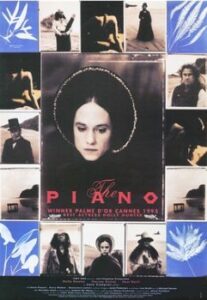
As well as being in 1993’s biggest blockbuster, Neill was in the same year’s biggest arthouse movie, Jane Campion’s The Piano.  He plays Alisdair Stewart, a settler in 19th century New Zealand who, via an arranged marriage, suddenly acquires a wife, the mute Ada (Holly Hunter).  He also acquires a piano, the playing of which is Ada’s only opportunity to express herself.  Predictably, Alister and Ada don’t enjoy a happy marriage and the piano is the catalyst for trouble.  It becomes the means by which Ada, unable to tolerate Alisdair’s sexual advances, instead discovers sensuality with a neighbouring settler, George Baines (Harvey Keitel), under the pretext of giving him piano lessons.


While Keitel’s character first seems weird and brutish, but gradually shows himself capable of tenderness and decency, Neill’s goes the other way – we initially have some sympathy for Alisdair, but he becomes a villain who propels the plot towards its climax of mutilation and attempted suicide (though, ultimately, it ends happily).  In his 2023 autobiography, Did I Ever Tell You This: A Memoir, Neill wrote of the film, “I don’t think I can overestimate how important The Piano is for me in hindsight.  It sits in my funny old CV like a medal on my chest.  It wasn’t my film.  It was Jane Campion’s.  I wasn’t the star of the film.  That was Holly Hunter.  But there is honour to be found in the second fiddle.  Or fourth.  No one notices you much, you don’t get nominated for things.  But you served.  I was there in an important feminist film.  I was there in the front line in an important New Zealand film.”


As many have noted, The Piano is an example of how Neill used his screen presence to generous effect.  He didn’t hog the limelight but gave his co-stars space to perform to their full potential.  This was especially so with his female co-stars.  While Neill reined himself in a little, they got the chance to bloom in their roles – not only Holly Hunter in The Piano, but Isabelle Adjani in Possession (1981), Nicole Kidman in Dead Calm (1989), and reportedly – I’ve unfortunately never seen it – Judy Davis in My Brilliant Career (1979).


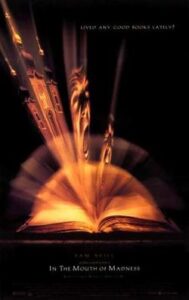
In 1995, Neill worked with cult American director John Carpenter and made the horror movie In the Mouth of Madness, which critics greeted unenthusiastically at the time but which, gradually, has been re-evaluated and is seen now as a misunderstood classic.  It features Neill as an insurance investigator called John Trent, who’s hired by a publishing company to track down its missing star author (Jurgen Prochnow).  The author’s name is Sutter Kane and though his initials, and massive sales, suggest he was inspired by Stephen King, his tales of cosmic horror and fearsome ancient beings called the ‘Old Ones’ indicate he’s based on the legendary Providence writer H.P. Lovecraft.  Trent’s investigations bring him into ever-stranger situations where he encounters characters and settings from Kane’s fiction.  It’s as if the writer is controlling what happens in reality – which is worrying, since his new novel concerns the end of the world.
 

© New Line Cinema


While I’m glad a movie involving Sam Neill, John Carpenter and H.P. Lovecraft has received some retrospective love, I’m afraid I agree with those unenthusiastic critics in 1995.  Like many of Carpenter’s later movies, there’s just too much going on in In the Mouth of Madness and you get the impression the director’s throwing everything at the wall in the hope some of it sticks.  That said, the movie has some memorable moments, such as a scene where Trent and a client discuss business in a restaurant, not noticing a mad axeman creating mayhem in the street outside their window.  Carpenter also stages a spooky sequence wherein a night-time cyclist keeps inexplicably reappearing in front of a cruising car – and keeps changing.


I prefer an earlier Neill-Carpenter collaboration, Memoirs of an Invisible Man (1992), an adaptation of H.F. Saint’s 1987 novel of the same name, itself inspired by H.G. Wells’s novel The Invisible Man (1897).  It’s a somewhat awkward film – the tension between the studio, Warner Bros, who wanted an out-and-out comedy, and the star, Chevy Chase, who wanted to show he could do ‘serious acting’, is palpable – but nonetheless I think it’s underrated.  I certainly enjoyed Memoirs of an Invisible Man more than director Carpenter did, who once said of it: “I really wanted to quit the business after that movie…  I don’t want to talk about why, but let’s just say there were personalities on that film.  He shall not be named who needs to be killed.  No, no, no, that’s terrible.  He needs to be set on fire…  No, no, no.  Anyway, it’s all fine.  I survived it.”  Presumably Carpenter was referring to Chase, who has a reputation for being, shall we say, difficult.  Even an invisible Chevy Chase was too much for him.


Carpenter certainly didn’t mean Neill, who played the film’s slightly James Mason-like villain.  “I love working with him,” the director said of Neill.  “He comes prepared.  He knows what he’s going to do.  He reacts to other actors who are there.  I mean, he’s just a dream come true.”
 

© Paramount Pictures / Golar Productions / Impact Pictures


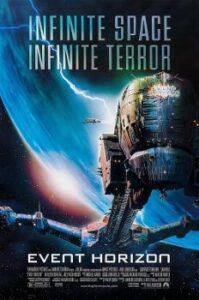
Another horror movie Neill made in the 1990s, which initially got savaged by the critics but was retrospectively reassessed and lauded as a classic, is Paul W. S. Anderson’s Event Horizon (1997).  Set in 2047, it’s about an experimental spaceship that’d disappeared during its maiden voyage inexplicably reappearing years later with no sign of its crew.  When a rescue mission, whose members include Neill, investigate, it becomes clear the ship’s hyperdrive system accidentally sent it into another dimension – a dimension known to religious folk as ‘hell’ – and back.  And it’s returned with something nasty on board.


Well, I’m sorry to be a misery-guts again, but I also agree with the 1997 reviews of Event Horizon and don’t see it as an unappreciated masterpiece.  It strikes me as a muddled mixture of Ridley Scott’s Alien (1979) and Clive Barker’s Hellraiser (1987), with that old chestnut of ‘characters being tormented by their innermost fears brought to life’ thrown in.  To be fair to Paul W. S. Anderson, the studio, Paramount Pictures, removed much footage from his original edit, believing it was too gory and horrific, and the finished product was not what he and scriptwriter Philip Eisner had envisioned.  Incidentally, as Neill’s character is Australian, he had him wear a uniform with an Australian flag-patch – but one where the Union-Jack part of it has been replaced by the Aboriginal flag.  Neill hoped that by 2047 a more tolerant, Pauline Hanson-free Australia would better honour its indigenous inhabitants.


By the start of the 21st century, and his sixth decade, Neill had become something of an institution and seemed the personification of the word ‘avuncular’.  A good example of this is in the Australian movie The Dish (2000), a gentle comedy in which he plays the boss of an Australian radio telescope that, in 1969, is landed with the job of relaying film-footage from the Apollo 11 moon-mission to the eagerly-awaiting world’s TV screens. This isn’t easy for Neill and his team as, first, they suffer a crippling power cut and then, on July 20th, the day of the landing, a violent storm threatens to blow their dish over.  Neill is reassuringly calm and reasonable throughout.  Thinking about the film now, I can’t recall any moment in it where he didn’t seem to be wearing a cardigan or puffing at a pipe.
 

© Madman Films / Piki Films / Defender Films


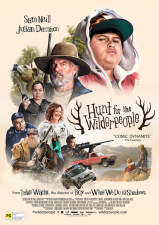
He’s somewhat less avuncular, but still loveable, in Hunt for the Wilderpeople (2016).  He plays Hector, a grumpy old misfit who takes to the New Zealand mountains with his chubby, juvenile-delinquent foster-kid Ricky (Julian Dennison) when the latter panics about being returned to state care.  They soon have police, social services, vigilantes and the media after them.  Along the way they encounter hardship, killer wild boars and a literally tinfoil-hat-wearing lunatic called Psycho Sam (Rhys Darby) but also form a genuine, father-son bond.  Director Taiki Waititi creates an affecting and funny movie but avoids easy laughs and cloying sentimentality.  Neill and Dennison’s characters take some hard knocks and their happy ending is hard won.


During the 21st century Neill also became a fixture on television – appearing in shows like The Tudors (2007), Crusoe (2008-9), Happy Town (2010), Alcatraz (2012), Peaky Blinders (2013-14), Old School (2014), Tutankhamun (2016), The Twelve (2022-25) and Apples Never Fall (2024) –  and on social media, where he regularly posted updates about Two Paddocks, his beloved farm and vineyard in New Zealand’s Central Otago wine region.  Famously, Neill named the animals on his farm after celebrities he knew in showbusiness, supposedly because it made him less inclined to eat them: “Well, you can’t eat a friend…  I’m not a vegetarian, but I have a ram called Jeff Goldblum.  You wouldn’t want to eat Jeff, would you?”


This led to some memorable moments as, for example, Neill posted, “MICHAEL FASSBENDER ASSAULTED!” – his rooster, named after Michael Fassbender, had had his tail-feathers torn out by a rogue dog.  Or a comment he made about Helena Bonham-Carter, one of his cows: “She’s had 16 calves now.  She’s up for it, if nothing else.”  Or a sad disclosure that Meryl Streep, a chicken, had been “…killed by a ferret recently.”  During Covid-19, his gentle and good-humoured updates about his farm and its whimsically-named inhabitants was an antidote to the stress and boredom of lockdown.  They certainly cheered me up more than, say , Gal Gadot and a bunch of her thespian pals crooning John Lennon’s Imagine on Instagram.


In a 2023 interview in the Guardian, Neill opined, “I’m not afraid to die but it would annoy me. Because I’d really like another decade or two, you know? We’ve built all these lovely terraces, we’ve got these olive trees and cypresses, and I want to be around to see it all mature. And I’ve got my lovely little grandchildren. I want to see them get big…  But as for the dying? I couldn’t care less.”  A lot of people would have loved to have got another decade or two of Sam Neill, and his acting talents, and his sense of fun.  But we should be grateful for what we did get.


© Universal Pictures / Amblin Entertainment
The jolly films of Roger (Part 2)


© American International Pictures


Following on from my last blog-post, in which I paid tribute to the prolific, indefatigable and – it has to be said – thrifty filmmaker Roger Corman who died on May 9th, here’s a round-up of my favourite films that Corman directed.


A Bucket of Blood (1959)

Character actor Dick Miller worked regularly with Roger Corman.  His biggest role for him was in a movie that’s also Corman’s best work of the 1950s, the horror-comedy A Bucket of Blood.  Miller plays a would-be avant-garde sculptor called Walter Paisley who’s increasingly frustrated at his lack of talent.  This isn’t helped by the fact that, to make ends meet, he has to work as a busboy at the local Beatnik café, which is full of pretentious tossers going on about what creative geniuses they are.  “Be a nose!  Be a nose!” the hapless Paisley cries as he tries and fails to fashion a recognisable human visage out of a lump of clay.  After accidentally killing his landlady’s cat and then killing an undercover cop who’s trying to implicate him in some drug-dealing at the café (Paisley memorably cleaves his head with a skillet), he hits on a way of producing perfectly proportioned statues: committing murder and coating the bodies in clay.  Frankly, the resulting corpse-statues look hideous, but that doesn’t stop the Beatniks at the café proclaiming Paisley an artistic genius.


Their lack of taste in sculpture mirrors their lack of taste in poetry.  At the beginning we hear Beatnik bard Maxwell Brock (Julian Burton) delivering an epic, and epicly bad, poem called Life is a Bum, which goes: “Life is an obscure hobo bumming a ride on the omnibus of art…  The Artist is, all others are not…  Where are John, Joe, Jake, Jim, Jerk?  Dead, dead, dead!  They were not born before they were born, they were not born…  Where are Leonardo, Rembrandt, Ludwig?  Alive, alive, alive!  They were born…!


© Alta Vista Productions / American International Pictures


The Raven (1963)

As a kid, I loved this movie, the fifth of Corman’s Edgar Allan Poe adaptations for American International Pictures.  The tale of a trio of feuding magicians played by Vincent Price, Boris Karloff and Peter Lorre, it’s more fantasy than horror – but spiced with delightfully ghoulish moments, such as when a torturer checks the temperature of a red-hot poker by pressing it into his own arm, or when Price opens a little casket and is discombobulated to find it full of human eyeballs.  (“I’d rather not say,” he croaks when Lorre asks him what’s inside.)  It’s like a version of Walt Disney’s Bedknobs and Broomsticks (1971) for morbid children.


Needless to say, the film’s connection with Edgar Allan Poe is extremely loose.  In fact, it’s only Karloff turning Lorre into a raven twice during the film that allows Corman to tack the title of Poe’s most famous poem onto it and have Price recite the poem mellifluously during its opening scene.  Meanwhile, in the role of Lorre’s son, we get a 26-year-old and amusingly wooden Jack Nicholson.


© Alta Vista Productions / American International Pictures


X: The Man with the X-Ray Eyes (1963)

A non-gothic movie Corman made whilst in the middle of his Edgar Allan Poe cycle, the sci-fi chiller X: The Man with the X-Ray Eyes (1963) is about a scientist, played by Ray Milland, who experiments on his own eyes and ends up seeing beyond the usual visual spectrum perceptible to humans.


I wrote about this movie last year in a post about its scriptwriter, Ray Russell.  “Milland’s increasingly penetrative vision goes from letting him see though clothing – hence a party scene where, to his bemusement, the dancing revellers appear to be cavorting in the nude – to letting him see the distance edges of the universe, where horrible things lurk.  How one reacts to the film today depends on how one reacts to the special effects that Corman, a famously thrifty filmmaker, deploys to represent Milland’s visions.  They vary from psychedelic patterns and filters to (when he’s peering into human bodies) flashes of what are obviously photos and diagrams taken from human-anatomy manuals.  The effects are either desperately ingenious or just plain desperate, depending on your attitude.  Still, the film cultivates an effective mood of cosmic horror and the ending is nightmarish in its logic.”


The Masque of the Red Death (1964)

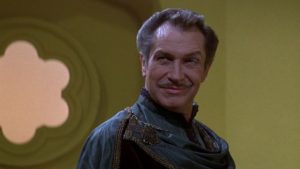
Corman’s majestic adaptation of Edgar Allan Poe’s The Masque of the Red Death, scripted by Charles Beaumont and R. Wright Campbell (with a second Poe story, Hop Frog, stitched into the plot for good measure) and beautifully shot by the great Nicolas Roeg, showcases Vincent Price at his sumptuously evil best.  He’s Prince Prospero, who’s holed up in his castle with an entourage of loathsome aristocrats while a plague, the Red Death, decimates the countryside outside.  Price and friends happily live a life of decadence, fuelled by drink, drugs, sex and diabolism – rather like Boris Johnson and his lackeys and minions partying at No 10, Downing Street, during Covid-19 and breaking all their own lockdown restrictions – while refusing to help the neighbourhood’s terrified peasants.  However, when they decide to enliven their social calendar with a fancy-dress masque, the masque is gate-crashed by a mysterious, Ingmar Bergman-esque figure swathed in a red robe.  Guess who that is.


© Alta Vista Productions / Anglo-Amalgamated / Warner Pathé  


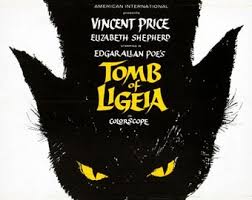
Tomb of Ligeia (1964)

Made the same year as Masque, Corman’s Ligeia has Price in a more sympathetic role, playing a haunted and reclusive man who tries to put his troubles behind him and find happiness with a new wife (Elizabeth Shepherd).  Unfortunately, his former wife, though dead, is still around in spirit form and won’t leave him in peace.  Tomb of Ligeia has a slightly over-the-top ending, but the build-up to it, involving black cats, flag-stoned passageways, cobwebs, candlelight, hypnosis, Egyptology and some spectacular monasterial ruins filmed at Castle Acre Priory near Swaffham in England’s County Suffolk, is spookily wonderful.


The Wild Angels (1966)

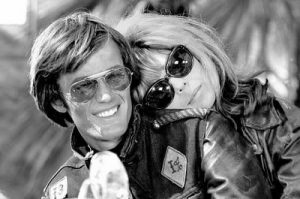
Just what is it that you want to do…?”  “Well, we wanna be free, we wanna to be free to do what we wanna do.  And we wanna get loaded and we wanna have a good time.  And that’s what we’re gonna do….  We’re gonna have a good time, we’re gonna have a party!


Scottish alternative rock / dance band Primal Scream immortalised this exchange from Corman’s The Wild Angels, between Frank Maxwell’s preacher and Peter Fonda’s Hells Angel, by sampling it on their 1990 dancefloor hit Loaded.  Though to be fair, the American grunge band Mudhoney got there first when they sampled it on their song In and Out of Grace two years earlier.  It’s also recited at the climax of The World’s End, Edgar Wright’s underrated sci-fi / horror satire from 2013, during the face-off between Simon Pegg and a supercilious alien intelligence voiced by Bill Nighy.


In addition to Fonda, The Wild Angels features Nancy Sinatra, Bruce Dern, Diane Ladd – supposedly Dern and Ladd’s daughter Laura was conceived during filming, so Laura Dern is something else we have Roger Corman to thank for – and the baby-faced Michael J. Pollard shortly before he played W.C. Moss in Bonnie and Clyde (1967).  The script, officially written by long-term Corman associate Charles B. Griffith and unofficially rewritten by Peter Bogdanovich, is minimalist. While there’s stuff about Fonda’s Hells Angels chapter pursuing a stolen bike, and about Dern’s character being shot by the cops and having to be rescued from a hospital, it’s mainly a frame for scenes in which the Angels offend Middle America.  Corman did his research by throwing parties with free beer and marijuana for real Hells Angels.  He had Griffith attend them and make notes while those Angels recounted their wild (and no doubt exaggerated) tales of life on the road.


© American International Pictures


At least Griffith and Bogdanovich don’t pull their punches.  In the script, the Angels come across as pretty assholey, particularly with their love for Nazi symbols and memorabilia.  This causes a confrontation between them and a World-War-II veteran (Dick Miller again) early in the movie.  When Dern’s character dies and they organise a funeral for him – predictably, the church service degenerates into an orgy – the coffin is draped in a Nazi flag.  The real Hells Angels, some of whom had appeared in the film, were so annoyed by Corman’s portrayal of them that they threatened to both kill him and sue him (presumably not in that order).  If that wasn’t enough, Corman had Frank ‘Dodgy Connections’ Sinatra breathing down his neck, concerned about daughter Nancy’s safety among the Angels on the set.  Actually, the story of an exploitation director making a biker movie who unwittingly antagonises the Hells Angels and the Mafia sounds like it would make a good exploitation movie.


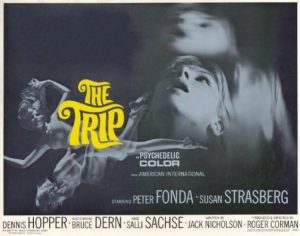
The Trip (1967)

Corman, Fonda and Dern were united for this movie, scripted by one Jack Nicholson.  Yes, it’s about a trip, a hallucinogenic one, experienced by a TV commercial director played by Fonda, wearing a sensible red V-necked sweater.  He takes LSD as a reaction to the break-up of his marriage and the trip initially happens at the home of, and under the watchful eye of, a friend played by Dern, wearing a sensible eggshell-blue polo-neck and fawn jacket.  These scenes were filmed in the house of Albert Lee, leader of the rock band Love.  The cost-conscious Corman was surely pleased to discover that Lee’s house had so much psychedelic décor already it hardly needed to be dressed up for the film.  However, when Fonda hallucinates that he’s killed Dern – he hasn’t – he panics and flees down to Sunset Strip.  Then things really get groovy.


Seen today, The Trip is inevitably something of a museum piece and the low budget means some of its fantasy scenes are ropey.  Bits where Fonda, now wearing a baggy white shirt like a romantic poet, is pursued by medieval, cloaked-and-cowled figures on horseback through what is obviously modern-day California are particularly cringey.  But there are enough genuinely weird things – Fonda having a question-and-answer session with Dennis Hopper on a carousel, Fonda making love to a lady under some heavily patterned lighting that makes them look like psychedelically-coloured chameleons, Fonda having a panic attack inside Dern’s wardrobe – to make it memorable.  And if you enjoy a good 1960s-movie psych-out sequence, the one where the heavily-tripping Fonda blunders into a night club during a live rock performance is awesome.


© American International Pictures


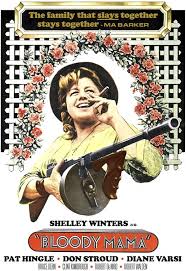
Bloody Mama (1970)

Like The Wild Angels, this Corman movie isn’t so much a story as a series of outrages, with reprobates lurching from one confrontation to another.  Unlike The Wild Angels, the characters in Bloody Mama are based, very loosely, on historical figures – Depression-era America’s notorious Barker-Karpis Gang, supposedly led by matriarch Kate ‘Ma’ Barker.  Many have argued that Ma Barker’s reputation as a criminal mastermind was invented by the media and by J. Edgar Hoover, keen to justify the FBI killing an old woman when they finally caught up with her and shot her.  As the fictionalised Ma Barker, lording it over her four gormless gangster sons, Shelley Winters gives a scenery-chomping performance that dominates the film and blinds you to its various budgetary and exploitative shortcomings. God-fearing, gun-toting, racist, incestuous and psychotic, she seems a monstrous metaphor for America itself.  This is underlined when she herds her sons around the piano to sing Battle Hymn of the Republic.


Among the sons, Don Stroud gets most to do as Ma’s eldest, Herman. He’s a hulking thug to begin with but, in some unexpected character development, gradually forms a mind of his own.  Film buffs, though, will be more excited by the presence of a young Robert De Niro, playing well-medicated son Lloyd.  At one point he gets high on glue, causing an uncomprehending Winters to exclaim, “When you’re working on those model airplanes, you get to acting awful silly!”


Incidentally, Bloody Mama was such a money spinner for American International Pictures that they demanded another Depression-era gangster movie.  Corman, though, was willing only to produce the follow-up, Boxcar Bertha (1972), and a young lad called Martin Scorsese got the directing gig.


When I first started writing this tribute to Roger Corman, I was going to title it THE MAN WHO ROGERED HOLLYWOOD, though I soon decided that sounded disrespectful.  But Corman literally did roger Hollywood.  Without his opportunities and tutelage, Coppola, Scorsese, Cameron, Nicholson, etc., might never have got to where they did, and many landmark movies during the last half-century of Hollywood’s history – from the Godfather movies to the Scorsese-De Niro collaborations, from the Terminator and Avatar series to a host of classic films including Monte Hellman’s Two-Lane Blacktop (1971), Joe Dante’s Gremlins (1984), Jonathan Demme’s Silence of the Lambs (1989), Carl Franklin’s One False Move (1993) and Curtis Hanson’s LA Confidential (1997) – might  not have seen the light of day.  And many of his own movies, cheap though they were, were a great deal of fun.  No wonder Quentin Tarantino loved him.


Not bad for the guy who directed It Conquered the World (1956) and produced Dinocroc vs Supergator (2010).


© Alta Vista Productions / American International Pictures

Jurassic snark


© Universal Pictures / Amblin Entertainment
 

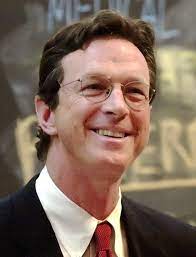
As yet another grim reminder that time stops for no man or woman, and that I’m gradually de-evolving into a doddery, senile old git, I’ve just read in a newspaper that it is now, exactly, thirty years since the release of Steven Spielberg’s Jurassic Park (1993), the epic monster movie about dinosaurs being cloned from ancient bits of DNA to be put on display in a lavish theme park.  It was based on a novel, published three years earlier, by Michael Crichton, and of course it led to a franchise of sequels and reboots that, despite being increasingly lame, generated billions of box-office dollars.


Wow!  Thirty years?  Was the original Jurassic Park movie really that long ago?


Anyway, readers, brace yourselves for a big shock.  I thought the 1993 movie was pretty lame itself.  Although a lot of people nowadays view the original Jurassic Park as a classic – here’s a hot-off-the-presses feature at the BBC website’s ‘Culture’ section praising it for how it ‘made scary movies accessible for young children’; and here’s another feature at the Guardian praising it for its prescient warnings about ‘self-styled geniuses’ who exploit new technology for their aggrandisement without thinking through the potential consequences – I found it a big let-down.


This was because I made the mistake of reading Crichton’s Jurassic Park-the-book before I went to see Spielberg’s JurassicPark-the-movie, and I felt miffed when what’d I’d visualised in my head during the book failed to materialise on the cinema screen.  And before you read further, here’s a spoiler alert.  This entry will give away a lot about the plots of both the book and the film.


Three decades ago, I certainly had high hopes for the film.  Firstly, with Spielberg at the helm and a ton of Hollywood money behind it, Jurassic Park looked like being a very rare beast, a dinosaur movie with proper dinosaurs in it.  I’ve always loved the idea of dinosaur movies, but apart from those ones where the prehistoric beasties were powered by stop-motion animation – like the silent-movie version of Sir Arthur Conan Doyle’s The Lost World (1925) and the original King Kong (1933), whose dinosaurs were animated by Willis O’Brien, and The Beast from 20,000 Fathoms (1953), One Million Years BC (1966) and The Valley of Gwangi (1969), whose special effects were the work of the late, great Ray Harryhausen – dinosaur movies before 1993 had contained dinosaurs that looked, frankly, rubbish.


© Universal Pictures / Amblin Entertainment
 

I’m thinking of ones where the dinosaurs were plainly stuntmen lumbering about in rubbery dinosaur suits, like The Land Unknown (1957).  Or magnified glove puppets, like The Land that Time Forgot (1974).  Or unfortunate modern-day lizards who’d also been magnified and had had fake spikes, horns and fins glued onto them to make them look big and fierce.  The worst offender in that last category is surely Irwin Allen’s terrible 1960 remake of The Lost World, during which Claude Rains exclaimed at the sight of one supposed sauropod: “It’s a mighty brontosaurus!”  While I was watching the film on TV, at the age of ten, I yelled back: “No, it’s not!  It’s just a stupid iguana!”


The big-budget Jurassic Park was going to employ all the latest advances in animatronics and computer-generated imagery to get its dinosaurs right, so I wouldn’t have to worry about having my intelligence insulted by the spectacle of men in monster suits and overblown puppets and lizards.


Secondly, there was a buzz about Jurassic Park because it was rumoured that, for the first time in yonks, Spielberg was going to do something dark.  He’d spent the past dozen years making movies with unbearably-high schmaltz levels: movies about cute aliens phoning home (1982’s ET), and ghostly pilots moping about their still-alive girlfriends (1989’s Always), and Robin Williams turning out to be Peter Pan (1991’s Hook).  Once upon a time, though, he’d directed punchy, at times nightmarish films like Duel (1972) and Jaws (1975).  Prior to Jurassic Park’s release, I was told by more than one film magazine to expect Spielberg to be back to his old schmaltz-free best.  Supposedly, Jurassic Park was going to be like Jaws on dry land.


As for Michael Crichton’s original novel – well, it would never be mistaken for great literature but, reading it, I did think that with cutting-edge special effects and a skilful director it could make a hell of a movie.  Many of its scenes seemed intensely cinematic.  Actually, this wasn’t a surprise because Crichton himself had made films.  Most notably, he’d wrote and directed 1973’s Westworld, which is about a futuristic theme park that allows its visitors to enact their most homicidal fantasies in mock-ups of the American Wild West, medieval Europe and Roman-era Pompeii.  These are populated by scores of human-like robots whom it’s okay to shoot or hack or stab to death because they can’t actually die.  Of course, a glitch in the system eventually compels the robots to start fighting back and then it’s the holiday-makers who get slaughtered.  Westworld, in fact, is a prototype for Jurassic Park, with the same theme-park setting but with robots instead of dinosaurs as the exhibits-that-turn-nasty.


From wikipedia.org / © Jon Chase, Harvard News Office


I knew Crichton’s novel would get trimmed as it was turned into a film, but I was dismayed at how much of it was trimmed.  While Jaws shed a few gratuitous sub-plots that’d made its source novel, the 1974 bestseller by Peter Benchley, seem flabby, and it was a lean, muscular movie as a result, Spielberg’s Jurassic Park was pared to the bone.  In its final reel the park’s pack of deadly velociraptors have escaped from their compound, the surviving humans are running around trying to avoid being eaten by them, and that’s about it.  The velociraptors rampage through the book’s final chapters too, but there are other matters adding to the suspense.  It becomes clear that some velociraptors have managed to board the supply-ship that services the island where the park is located, and there’s a real danger that they’ll reach the American mainland and become an ultra-lethal invasive species.  The humans are also on a desperate quest to count the hatched eggs in the velociraptors’ nests, so that they can calculate just how many of the scaly killers are on the loose.


Also simplified are the fates of the characters.  The main characters, palaeontologists Alan Grant and Ellie Sattler, chaos theorist Ian Malcolm and the billionaire mastermind behind the park, John Hammond, don’t all make it to the end of the book.  Malcolm expires from injuries sustained from a dinosaur attack while Hammond dies after he hears the roar of a tyrannosaurus rex, panics and falls down a hillside.  (Ironically, the roar comes from the park’s PA system – Hammond’s two young grandchildren have been mucking around in a control room with some dinosaur recordings.)  Meanwhile, certain secondary characters, like the park’s lawyer Gennaro and its game warden Muldoon, survive the dino-carnage.  Gennaro is even allowed to show a degree of courage, which is unusual for a fictional corporate lawyer.


In the movie, though, Grant, Sattler, Malcolm and Hammond are played by big-name stars – Sam Neill, Laura Dern, Jeff Goldblum and veteran British actor / director Sir Richard Attenborough – who clearly had it in their contracts that none of them would suffer the indignity of being eaten by a dinosaur.  So, they all survive.  But because this is a monster movie, which demands that monsters eat people at regular intervals, the supporting characters are gradually bumped off, including Gennaro and Muldoon.  This makes the plot very predictable.  Interestingly, one supporting character who got killed in the book but made it out of the movie alive is the geneticist Henry Wu.  Played by B.D. Wong, he’s ironically become the character with the most appearances in the Jurassic Park franchise – Wu’s now turned up in four of the movies.


Meanwhile, the casting of Attenborough symptomizes one of the film’s worst features.  The cuddly, twinkly Attenborough, who one year later would play Santa Claus in a remake of Miracle on 34th Street, is way nicer than the John Hammond of the book, who’s a callous, conniving and delusional arsehole.  He should have been played by Christopher Lee or Donald Pleasence.


© Universal Pictures / Amblin Entertainment
 

Spielberg couldn’t bring himself to be nasty to Hammond, whom he probably regarded as a kindred spirit.  Hammond at his dinosaur theme park, like Spielberg in Hollywood, is merely trying to wow the masses by giving them spectacles they haven’t seen before.  How could he be bad?  Thus, we get a maudlin scene where Hammond explains his motives to Dern’s character by reminiscing about his first venture in the entertainment business – a flea circus.  (Attenborough also gives Hammond the worst Scottish accent in movie history, so he tells Dern how he brought his wee flea circus “doon sooth frae Scotland” to London.)  Look how big the fleas are in his circus now, Spielberg seems to tell us.  What a visionary!


The softening of Hammond’s character infects the rest of the film.  Though some of the velociraptor and tyrannosaurus-rex scenes are scary, it’s all a bit too feel-good.  Spielberg wants us to be awed by the dinosaurs, not shit ourselves at them.  John Williams’ musical score adds to the problem – his Jurassic Park theme, according to Billboard magazine, oozes with ‘astonishment, joy and wonder’; but since this is supposedly a sci-fi horror movie, shouldn’t it be oozing with some old-fashioned fear too?


But my biggest frustration about the film was that while Spielberg portrays Hammond as being like Walt Disney, the park isn’t like Disneyland – and it ought to be.  In the novel Crichton wonderfully juxtaposes the primeval and the high-tech.  There might be hordes of monstrous reptiles from earth’s distant past stumping around the wilds of Hammond’s island, but at the same time the place bristles with state-of-the-art sensors and cameras and is honeycombed with service tunnels crammed full of power-cables.  At its centre is Hammond’s console-packed control room where he squats like a space-age spider in a technological web.  The joy of the book is watching all this technology slowly, gradually start to malfunction and break down – until finally it’s useless.  And meanwhile, the prehistoric stars of the show are clawing at the scenery, hungry to get at the humans who’ve been pulling the levers behind it.


You don’t really get this impression in the film.  Attenborough’s control room looks a bit dingy, like he’s set it up in his garden shed.  And the dinosaurs just seem to be out in big fields with big fences around them – nothing in the background but foliage, nothing underneath but soil.  This Jurassic Park is more like Jurassic Farm.


No, while I sat through Jurassic Park in a cinema 22 years ago, I didn’t feel like I was watching a classic.  The main thing I felt was a huge sense of disappointment – crushing me as effectively as if one of the behemoths onscreen had suddenly stepped out into the auditorium and trod on me.  For the authentic Jurassic Park thrill-ride, check out Crichton’s book.


© Alfred A. Knopf