More musical genres I don’t like


From wikipedia.org / © Michael Spencer


It’s time to put poison pen to paper, or poison fingers to keyboard, and release more bile about more types of music I can’t stand.  Having poured scorn on jazz, country and Irish, prog rock and disco music in my previous post, I’ll now address another four musical genres that I’d sooner poke a sharpened stick into my ear than listen to. And first up is…


New romantic

Just into my teens, in the late 1970s and early 1980s, I naively thought it was a great time to like music.  Punk had recently happened and on its heels had arrived the new wave bands.  Even on mainstream outlets, such as the BBC’s Radio 1 and its flagship TV music-show Top of the Pops (1964-2006), you regularly heard the likes of Blondie, the Jam, Elvis Costello and the Attractions, Ian Dury and the Blockheads, the Boomtown Rats, Talking Heads, the Undertones and Martha and the Muffins.  Some of these artists ranked highly in the singles and albums charts and a few even made it to number one.  Thus, frequently, the period had a nice correlation between what was popular and what sounded good.


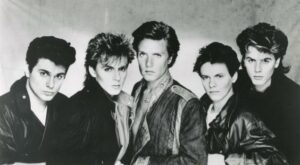
It couldn’t last.  Indeed, I remember the moment things changed.  Early in 1981, I was watching an episode of Tiswas, the anarchic Saturday-morning kids’ TV show, when presenter Chris Tarrant said words to the effect of, “Here’s a video of a song by a great new band called Duran Duran!”  Then I found myself staring at my TV screen in bafflement, trying to make sense of the figures of Simon Le Bon, Nick Rhodes and Andy, John and Roger Taylor, wearing puffy and frilly shirts, sporting floppy fringes and slathered in make-up, while they cavorted to the strains of Planet Earth.  The new romantic craze had begun.  The horror!
 

From wikipedia.org / © Ben Aris / Capitol Records


Thereafter came a flood: Spandau Ballet, Culture Club, Wham, Visage, A Flock of Seagulls, Classix Nouveaux, Kajagoogoo, the Thompson Twins, Tears for Fears, all of whom drove me up the walls.  Vacuous songs.  Production qualities that might have sounded hi-tech in the 1980s but just sound dated now, all dinky drums and plinky keyboards.  A smug dedication to style over substance, with the performers lavishly dressed and expensively coiffured.  Maybe I’m giving them more social significance than they deserved, but they seemed to personify the flash-your-cash, greed-is-good ethos of the Thatcherite 1980s.


Now you can reply to my moaning by saying, “Well, if you didn’t like them, you didn’t have to listen to them!”  But actually, back then, you did.  For a couple of years, the new romantic bands were everywhere,  On the radio.  On TV.  On the covers of glossy new teenybop magazines like Smash Hits and Number One.  In the newspapers – never more so than when the Sun famously ran the headline, ‘BOY GEORGE’S BIG SECRET: I PREFER A CUP OF TEA TO SEX’.


Things got particularly bad in 1984-85, during my second year as a student at Aberdeen University, when to make ends meet I worked in a nightclub called Ritzy’s three or four evenings a week.  I was a member of its floor-staff and the club’s DJ liked his new romantic records.  It was truly gruelling to have to collect glasses and empty ashtrays whilst being blasted by Spandau Ballet crooning their way through True (1983), and then Wham chirping Wake Me Up Before You Go-Go (1984), and then Simon Le Bon conspicuously failing to hit the high notes in Duran Duran’s Wild Boys (1984), and then, oh joy, Boy George ruminating, “War, war is stupid, and people are stupid…” in Culture Club’s The War Song (1984).  Happy memories…  Not.


Honourable exceptions: David Sylvian’s outfit Japan were sometimes called a new romantic band and I thought they were pretty good.  And I liked Adam and the Ants, at least, up until Adam Ant turned into a dandy highwayman.  And though I’ve just given Duran Duran a kicking, I’ll admit that their late-career hit Ordinary World (1992) is a lovely song.  In fact, Ordinary World has featured in not one, but two textbook examples of how to use pop music effectively in movies – Matthew Vaughan’s stylish gangster film The Layer Cake (2004) and Nia DaCosta’s superb zombie flick 28 Years Later: The Bone Temple (2026).
 

From wikipedia.org / © Capitol Records


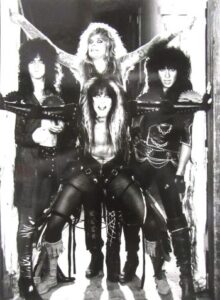
Hair metal

During the first half of the 1980s, it wasn’t easy being a heavy metal fan, as I was.  Heavy metal had a serious image problem then.  Both conservatives and left-wingers regarded it as music made for disreputable, juvenile, sexist, dumbly hedonistic louts.  It didn’t help that metal’s most visible sub-genre at the time was all of those things.  There’s nothing wrong with being disreputable, but hair metal was also juvenile, sexist, dumbly hedonistic and loutish.  (And at the same time, kind of lame – I’ll get to that in a minute.)


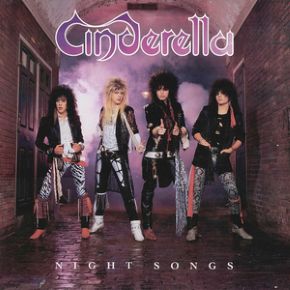
Actually, its practitioners referred to the music as ‘glam metal’ but, given the extravagant, backcombed locks they sported, and the amount of hairspray they used, I prefer the more dismissive moniker ‘hair metal’.  The movement received other disdainful nicknames too, which is a testimony to how disliked it was.  The bands – Mötley Crüe (who added umlauts to their name not because they liked listening to Motörhead, but because they liked drinking Löwenbräu), Quiet Riot, W.A.S.P., Ratt, Poison, Warrant, Dokken, Cinderella – were sneeringly called ‘poodle-heads’.  Their sound was also described as ‘butt rock’.


Clad in spandex, caked in make-up, jangling with accessories and balancing on their bonces the aforementioned ‘big’ hair, whilst singing songs whose lyrics sounded like they’d been written by Frank Kelly’s Father Jack Hackett character in Father Ted (1995-98) – see Mötley Crüe’s Girls, Girls, Girls (1987) – they were bloody awful.  To my ears, they weren’t even that metal.  They used poppy guitar riffs and harmonies and churned out an ungodly number of power ballads.


A decade earlier, God had put an end to the foolishness of prog rock by creating punk music.  Thankfully, around 1988 or so, He again decided enough was enough and created grunge.  Once kids started listening to Kurt Cobain and co, the poodle-heads became history.  Incidentally, there’s a 2005 song by the surreal English indie band Half Man Half Biscuit called Upon Westminster Bridge whose lyrics sum up my feelings about hair metal.  It goes “Oh help me Mrs Medlicott / I don’t know what to do / I’ve only got three bullets / And there’s four of Mötley Crüe.


Honourable exceptions: Guns n’ Roses.  That’s it.
 

From wikipedia.org / © Mercury Records


Thankfully, after hair metal’s demise, heavy metal couldn’t possibly produce another sub-genre that was so horrible.  Could it?  Well…


Nu metal

“I’d rather have my eyelids pulled out than listen to nu metal,” David Mustaine, the frontman of Megadeth, once remarked.  Which is ironic, considering that the one time I saw Megadeth play live, in Chicago in 1995, the support bands included Korn, an outfit credited with helping to kickstart nu metal in the first place.


Mustaine’s disdain for nu metal is typical of many in the traditional heavy metal community, who thought the music of Korn, Limp Bizkit, Linkin Park, the Deftones, Disturbed, Alien Ant Farm, Papa Roach, etc., sucked because it incorporated influences from hip-hop while neglecting the established staples of heavy metal, such as guitar solos.  Mustaine was particularly sore about nu metal’s absence of guitar solos: “I’m talking about the bands that wouldn’t do guitar solos. Guys who get out there and they’d do rhythms and stuff but they’d never do a guitar solo…”


Well, I don’t mind heavy metal music not having guitar solos and certainly don’t mind it being influenced by hip-hop.  Indeed, I love some of the bands who tried to fuse the two genres before the existence of nu metal (and inadvertently became the inspiration for it): Faith No More, the early Beastie Boys and the mighty Rage Against the Machine.  In fact, RATM’s Tom Morello has stated: “For better or worse, Rage Against the Machine seemed to have planted the seeds for the genre that sprung up known as nu metal.  My apologies.”


But I found most nu metal music to be a pain in the arse, a crime against the ears and an affront to the intelligence.  The first – and by far the worst – negative about it was the toxic, misogynistic, bro-y energy it seemed to generate in its heyday.  As Tom Morello observed, “the ethos of it tended to be… anti-woman and fratty.”  This reached its nadir at the Woodstock 1999 festival when, during a Saturday evening performance by Limp Bizkit, the crowd erupted into an orgy of vandalism, violence and sexual assault.

 

From wikipedia.org / © Ruzov Dimitry


Add to that its fashion sense, or lack of one.  Every nu metal band looks a nightmarish collision of chin beards, frosted tips, dreadlocks, shaven scalps, piercings, tattoos, baseball caps, beanies, cargo pants, baggy shorts, hoodies, sports tops and white socks.  Plus the lyrics which, when they aren’t being misogynistic, are being whiny.  The New Musical Express once summarised them as: “I hate my daddy wah wah I’m drowning do you know how it feels to be face down in a rotting corpse drownin’ in blood so ashamed of who I am… wah wah wah wah.”


Honourable exceptions: I like some stuff by Korn, Slipknot and System of a Down.


Emo

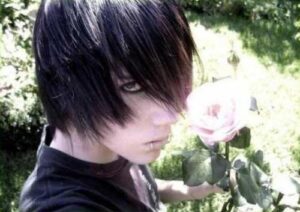
The journalist Gavin Baddeley described emo in his 2015 book Street Culture as ‘punk for kids not ashamed of being smart or showing their feelings… The look was a blend of preppy punk and geek chic… the attitude one of angst, unabashed awkwardness and frustration, making it a powerful draw for smart teenaged misfits.”  He also detailed emo fashions: “…tight black jeans and skinny-fit band t-shirts, sneakers… piercings and tattoos… plenty of black hair-dye and eyeliner…”


Well, I have difficulty telling the difference between emo and another, equally black-clad sub-culture, goth.  Yes, I know emo is supposed to have its roots in the American hardcore punk scene in the 1980s, whereas goth was a melancholy offshoot of an older punk scene, the UK one in the late 1970s.  But all the same…  I can’t help but think of a 2013 episode of the TV cartoon-show South Park in which the Goth Kids try to explain the distinction to a child-protection officer: “A goth believes that, deep down, the world is totally f*cked up, but an emo believes that, deep down, they are totally f*cked up…  Emos are more prone to suicide but goths are more prone to be depressed that so many people commit suicide…  Goths’ darkness is nihilistic whereas emos’ is cynical…  Wait, I thought we were cynical…”


Anyway, I’ve nothing against the sub-culture of emo and its adherents.  My beef is that emo bands – like My Chemical Romance, Funeral for a Friend, Fall Out Boy, Jimmy Eat World, Paramore – simply do nothing for me.  Sorry.


Honourable exceptions: I’ve seen Death Cab for Cutie described, in their early years, as an emo band, and I like them.
 

From wikipedia.org / © Jezebel Parker


And now I have all that worked out of my system, I’ll hopefully return to writing about nicer subjects shortly.
Adi-Ozz amigo


From wikipedia.org / © Ted Van Pelt


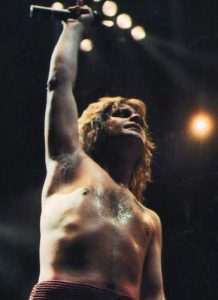
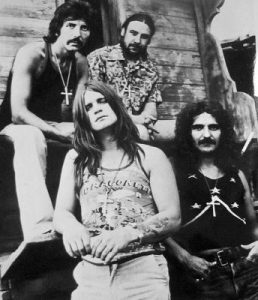
The Prince of Darkness has gone dark.  I was saddened to hear of the passing of Ozzy Osbourne, singer with legendary heavy metal band Black Sabbath, on July 22nd for two reasons.


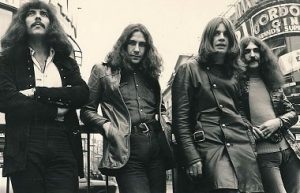
Firstly, Ozzy’s eerie, high-pitched, alien-sounding vocals were the perfect accompaniment for the crunching, doom-laden guitars and drums of his Black Sabbath compadres, guitarist Tony Iommi, bassist Geezer Butler and drummer Bill Ward.  Their rumbling, abrasive sound evoked the heavy machinery in the factories where the working-class quartet found employment as youths and where they would have spent their lives had they not hit the bigtime with their music.  Indeed, Iommi’s time in a steelworks ended with an accident that sheared off two of his fingertips and nearly ruined his budding career as a guitarist.  Ozzy didn’t fare much better, beginning work as a toolmaker’s apprentice and cutting off the top of his thumb on his first day on the job.


It was also a sound that was massively influential.  As I wrote on this blog a couple of years ago, Sabbath’s influence is “all over musical movements like grunge and hardcore punk.  And they’re clearly major influences on such metallic sub-genres as black metal, doom metal, goth metal, power metal, sludge metal, speed metal and stoner metal.  Indeed, they’re responsible for more metal than the Brummie steelworks where the young Tony Iommi lost his fingertips and almost lost his future in music.”


From wikipedia.org / © Warner Bros. Records


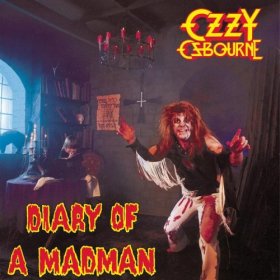
Secondly, when I heard of Ozzy’s death, I felt like I’d lost a crazy, shambolic but lovable uncle.  Yes, he styled himself as the Prince of Darkness – or at least, his manager-wife Sharon Osbourne did, realising how lucrative his mad-bad-and-dangerous-to-know brand was.  And in the 1980s he was a bête noir among Christian American parents and there were unsuccessful attempts to sue him for, it was alleged, causing two young men to kill themselves after they’d listened to his song Suicide Solution from his first solo album Blizzard of Ozz (1980).  And during his young, hellraising years, it certainly sounded like the drink and drugs turned him into a psycho at times.  But once he reached middle-age, he became an amiable, if hapless, teddy bear of a man.  He was also a superstar devoid of airs and graces.  No doubt the tough, unpretentious start to life he’d had in Birmingham helped keep his feet on the ground.


And, fabulously, he never lost his Brum accent.  “Oi’m the Prince of Dawkness!” drunkards would cry in pubs the world over, whenever his name came up in conversations.


His everyman image received a further boost when he, wife Sharon and kids Jack and Kelly featured in Emmy-winning reality show The Osbournes (2002-05).  While I have to say I found the other members of his family an acquired taste, Ozzy was wonderful just for being himself.  Millions of men like me, watching the show as they entered both middle-age and the 21st century, surely sighed wistfully as they recognised themselves in Ozzy’s failing efforts to control the environment around him.  Failing to control his offspring.  Failing to control his pets – I remember him accusing one recalcitrant dog of being “worse than Bin Laden.”  Failing to control the technological gadgets in his house.  “I’m a very simple man,” he ranted at one point. “You’ve got to have, like, computer knowledge to turn the f**king TV on and off… I press this one button and the shower starts going off…”


No doubt it was Ozzy’s lack of guile that led him, in his younger days, to being an absolute disaster in terms of boozing and drug-taking.  His behaviour resulted in him being sacked from Black Sabbath at the end of the 1970s, though Ozzy claimed he was no worse a state than the other three band-members were at the time.  Still, it must have been difficult working with a man given to such antics as snorting a line of ants in the mistaken belief they were a line of cocaine, or getting arrested for urinating over the Alamo whilst wearing a frock.  “Son,” a member of the San Antonio police force told him gravely, “when you piss on the Alamo, you piss on the state of Texas.”


My favourite story from Ozzy’s wild years was one that happened after he’d returned to England from America, where he’d been making the 1972 Black Sabbath album Vol. 4 and where he’d also developed a taste for LSD.  “I took 10 tabs of acid, then went for a walk in a field.  I ended up standing there talking to this horse for about an hour.  In the end the horse turned round and told me to f**k off.  That was it for me.”


A lifetime of drugs, alcohol, excess and idiocy did nothing for Ozzy’s health and, more recently, he was beset by health issues: Parkinson’s disease, neck and spine surgery, depression, blood clots, nerve pain.  At Christmas 2016, after the news that George Michael and Status Quo’s Rick Parfitt had died within the space of 24 hours, a friend emailed me worriedly and said, “At this rate Ozzy’s not going to make it to the Bells.”


Happily, Ozzy made through nine more Bells.  He also made it to Back to the Beginning, his farewell concert held at Birmingham’s Villa Park on July 5th this summer.  The bulk of this consisted of performances by a dazzling range of heavy metal bands who might never have seen the light of day if Black Sabbath hadn’t set the ball rolling for their genre in 1970 – Mastodon, Anthrax, Lamb of God, Alice in Chains, Gojira, Pantera, Tool, Guns N’ Roses, Slayer, Metallica and others, plus two guest-ridden ‘superstar’ bands assembled by the event’s musical director, Rage Against the Machine’s Tom Morello.  The event climaxed with a five-song solo set by Ozzy and then a four-song set by the original Black Sabbath line-up of him, Iommi, Butler and Ward, playing together for the first time since 2005.


Back to the Beginning’s 45,000 tickets sold out in 16 minutes.  It also raised 140 million pounds for charity.  Rather prophetically, Ozzy said of the concert a couple of months before it happened: “I’m going to make this f**king gig if it’s the last thing I do.  Well, it will be…”


He died just 17 days afterwards.  His life was chaotic but, at the very end, his timing was impeccable.


From wikipedia.org / © Jet Records

Honour the Sabbath


From wikipedia.com / © Vertigo Records


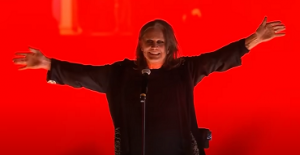
I’m no fan of lengthy international sporting competitions – apart from the Rugby and Football World Cups – and I reacted with a weary shrug to the recent holding of the Commonwealth Games in the English Midlands city of Birmingham.  However, I’d have willingly sat through the Games’ twelve days of sporting endeavour, bored out of my wits, just to be present at the occasion’s closing ceremony.  For this offered a few minutes that, in my mind, were the musical highlight of August 2022, if not the year 2022.  I’m talking about the sight of former Black Sabbath singer and famous Birmingham son Ozzy Osbourne coming up through a stage-trapdoor into a shroud of blood-red mist to sing the 1970 Sabbath classic Paranoid, with Ozzy’s old Sabbath comrade Tony Iommi thumping away on electric guitar.


Apparently, Ozzy had originally turned down an invitation to sing at the ceremony due to health issues.  Quite a lot of health issues, in fact – Parkinson’s disease, neck and spine surgery, depression, blood clots, nerve pain.  But at the last minute, deciding the show must go on, he jumped on a flight from Los Angeles and made a surprise appearance in his old home city.  And though I was no fan of the sporting stuff, I was delighted to see him perform at this, the biggest event in Birmingham for years.  Long before anyone had heard of Peaky Blinders (2013-22), Ozzy – catchphrase: “Oi’m the Prince o’ Dawkness!” – had made it cool to be a Brum


Anyway, this has inspired me to dust down and repost the following item.  It was written in 2017, just after those mighty metallers Black Sabbath had played their last-ever gig.  


The third commandment tells us to keep the Sabbath holy.  Well, I believe in honouring the Sabbath but I’m not talking about the seventh day of the week.  I’m talking about Black Sabbath, the 49-year-old heavy metal band who played their last-ever gig two nights ago.


Fittingly, Black Sabbath’s farewell performance took place at the Genting Arena in Birmingham, the city where it all started for them.  Guitarist Tony Iommi, bassist Geezer Butler, drummer Bill Ward and incomparable – many would say incorrigible – singer Ozzy Osbourne grew up in Aston, one of Birmingham’s working-class suburbs.  Prior to forming the band, they did a variety of unglamorous jobs there, including delivering coal, labouring on building sites and working in a sheet metal factory, car plant and abattoir.  Iommi ended his time in the steelworks with an accident that sheared off two of his fingertips and nearly ruined his budding career as a guitarist.  Osbourne, meanwhile, took up housebreaking and got jailed for six weeks.


Butler told the BBC recently, “It wasn’t a great place to be at that time.  We were listening to songs about San Francisco.  The hippies were all peace and love and everything.  There we were in Aston.  Ozzy was in prison from burgling houses, me and Tony were always in fights with somebody… we had quite a rough upbringing.  Our music reflected the way we felt.”


© Vertigo Records


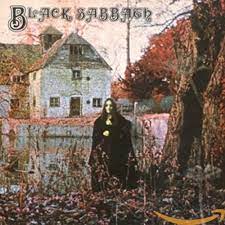
If they felt miserable in Aston and channelled that misery into their music, I can only say the misery was worth it.  The first, eponymously-named song on their first, eponymously-named album in 1970 sets the tone for Black Sabbath’s career of evil.  It’s a gloriously dark and doom-laden affair, opening with rumbles of thunder, the sluicing of heavy rain and the clanging of altar bells.  These give way to a funereal chug of heavy guitars and the eerie high-pitched squalls of Ozzy’s voice (“What is this that stands before me?  / Figure in black which points at me-e-ee?”), which later speed up for a tumultuous but still ominous climax.  I imagine that if any of those peace-and-love hippies whom Butler referred to had gone to a Sabbath gig in 1970 (having ingested some psychedelic substances beforehand) and the gig had opened with this number, they’d have probably fled from the venue screaming in terror with their hands clamped over their ears.


Iommi and Butler were horror-movie fans and their music had a horror-movie vibe.  Even the band’s name came from a scary film, 1963’s Black Sabbath, directed by the legendary Mario Bava and starring the legendary Boris Karloff.  Also horror-movie-esque is the cover of the first Sabbath album, showing a black-robed lady looming spectrally in the middle of a spooky autumnal landscape – the building in the background is actually Mapledurham Watermill in Oxfordshire.  I find it cool that nobody knows the identity of the woman, presumably a briefly-hired model or actress, who posed for the picture.  Iommi has claimed that, later, she turned up at one Sabbath concert and said hello to the band.  But I like to think she’d never been at the original photo-shoot at all.  Rather, she was a ghost that haunted the watermill – and when they developed the cover-photo, her wraithlike image had somehow imposed itself on it.


© Vertigo Records


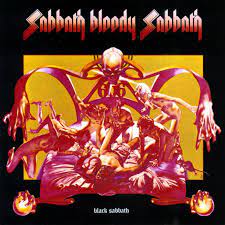
Black Sabbath produced another album in 1970, Paranoid, which was choc-a-bloc with groovily heavy tunes – the famous title track, the skull-crushing Iron Man, the nihilistic War Pigs and the sublimely dreamy and trippy Planet Caravan, which has been described as ‘the ultimate coming-down song’.  The following year’s Master of Reality gave us the jaunty but provocative After Forever (“Would you like to see the Pope on the end of a rope / Do you think he’s a fool?”) and the apocalyptic Children of the Grave.  Other classic songs included Supernaut, which turned up on the 1972 album Vol. 4; the exhilarating title track of 1973’s Sabbath Bloody Sabbath that’s perhaps my favourite Sabbath song ever; and the similarly exhilarating Symptom of the Universe on 1974’s Sabotage, which suggests (to me, anyway) Sabbath were secret forbearers of punk rock.  1976’s Technical Ecstasy and 1978’s Never Say Die are less acclaimed and lack a truly killer track, but I’m still partial to them both.


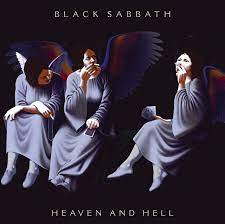
In 1980 we got Heaven and Hell which – shock! horror! – didn’t have Ozzy Osbourne doing vocals.  The singer had been sacked from the band due to his massive substance abuse and consequent massive unreliability.  While Ozzy maintains that he was no worse a wreck than the other three band-members were at the time, it was surely tough working with a man prone to such misfortunes as snorting a line of ants he’d mistaken for a line of cocaine or being caught by the San Antonio police urinating over the Alamo whilst dressed in a frock.  Making a Black Sabbath album without Ozzy sounds as feasible as filming The Lord of the Rings without Gandalf, but Iommi, Butler and Ward wisely recruited the late, great Ronnie James Dio as a replacement.  Dio gave Black Sabbath a new lease of life.  He made them sound different – his operatic voice a contrast to the wailing alienness of Ozzy’s – but I have no complaints about the resulting album, full of spiffing tracks like Children of the Sea, Neon Knights and Die Young.


© Vertigo Records


Dio sang on the next album for Black Sabbath, 1981’s Mob Rules, and returned to sing on 1992’s Dehumanizer; but they were the only Sabbath albums for a long time that were any good.  During the 1980s and 1990s Iommi was the sole founding member who stuck with the band and a succession of jobbing musicians contributed to the records.  Singers included Ian Gillan and Glenn Hughes, two alumni of Sabbath’s more mainstream 1970s rivals Deep Purple.  Meanwhile, the band seemed to get through drummers at a rate worthy of Spinal Tap, with the ELO’s Bev Bevan, the Clash’s Terry Chimes and the ubiquitous Cozy Powell banging the skins at various times.  To be honest, the band’s output during this period – 1983’s Born Again, 1986’s Seventh Star, 1987’s The Eternal Idol, 1989’s Headless Cross, 1990’s Tyr, 1994’s Cross Purposes, 1995’s Forbidden – is pretty rubbish.


Happily, the original line-up had reconciled by the late 1990s and they’ve played together sporadically since then, at least when other work commitments (like Ozzy’s solo career), illness (Iommi was diagnosed as having lymphoma in 2012) and plain old quarrelling (Bill Ward fell out with everyone else and quit in 2012) didn’t get in the way.  In 2013 they even managed to produce a new album, 13, which while not quite up to their old standards got some positive reviews and produced a decent single, God is Dead?  Filling in for Ward on the drums was Brad Wilk from Rage Against the Machine.  I imagine for Wilk getting this job must have been a dream come true.


Well, it seems they’ve finally called it a day.   Maybe that’s just as well in Ozzy’s case, since the old boy’s 67 now and surely needs to take it easy after a lifetime of drugs, alcohol, excess and idiocy.  (At Christmas, after the news that George Michael and Status Quo’s Rick Parfitt had died within the space of 24 hours, a friend said to me worriedly, “At this rate Ozzy’s not going to make it to the Bells.”)


They deserve to enjoy their retirement for their legacy is huge.  Their weighty fingerprints are all over musical movements like grunge and hardcore punk.  And they’re clearly major influences on such metallic sub-genres as black metal, doom metal, goth metal, power metal, sludge metal, speed metal and stoner metal.  Indeed, they’re responsible for more metal than the Brummie steelworks where the young Tony Iommi lost his fingertips and almost lost his future in music.


From youtube.com / © BBC