A splatter of life and death


© Plan B Entertainment / Mubi


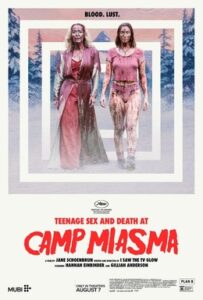
Two days ago, on October 26th, my wife and I received an early Halloween treat.  The 37th Singapore International Film Festival showed Teenage Sex and Death at Camp Miasma (2026), the new meta-horror movie from writer-director Jane Schoenbrun, at the Gallery Theatre in Singapore’s National Museum.  We got tickets for the event before it sold out.


This is Schoenbrun’s third movie, following We’re All Going to the World’s Fair (2021), which I haven’t seen, and I Saw the TV Glow (2024), which I did see recently while it had a tenure on Singaporean Netflix.  It took me two attempts to get into I Saw the TV Glow, but when I adjusted to its wavelength it really impressed me.  It’s a haunting and melancholic film about a pair of alienated high school kids (Justice Smith and Jack Haven) and their relationship with a kids’ horror TV show that, ultimately, causes reality to blur into fantasy.  When adulthood arrives and reality fails to blur anymore for one of them (Smith), the consequences are tragic.  The film has phantasmagorical qualities that sometimes make it feel like a David Lynch movie – if, crucially, David Lynch had grown up in the 1990s rather than the l1950s and 1960s.  And its ending is genuinely sad.


I certainly didn’t feel sad after watching Teenage Sex and Death at Camp Miasma, which I found a joyous and life-affirming, and very funny, experience.  Crudely, it could be summarised as 1950’s Sunset Boulevard transplanted into the universe of the Friday the 13th movies (1980-2009).  A very Friday the 13th-like horror franchise called Camp Miasma, wherein countless horny teenagers were bloodily slain by a killer called Little Death (I Saw the TV Glow’s Jack Haven with a box-shaped vent on their head and wielding a humungous spear), made pots of money in the 1980s.  Now a studio wants to reboot the franchise but, alas, the movies are today regarded as problematic.  The character of Little Death, dismissed at the time as a ‘freak’, is in modern parlance a transgender person.


To handle the project, and to cover their arses, the studio executives commission a young, queer director called Kris Wiliams (Hannah Einbinder), previously responsible for an arthouse film that was a remake of Alfred Hitchcock’s Psycho (1960) told ‘from the perspective of the shower curtain’.  They presume she’ll make it woke enough for modern sensibilities.


The earnest, nerdish but very likeable Kris has the idea of casting in her new version of Camp Miasma the actress Billy Presley (Gillian Anderson), who’d played the ‘final girl’ in the original movie of the series.  Billy has become a recluse and bizarrely lives in the huddle of old summer-camp buildings where that movie was filmed four decades earlier.  So, Kris goes to visit her and reality, as in I Saw the TV Glow, begins to blur…


Schoenbrun is obviously a big fan of the 1980s slasher movies that inspired the film.  In the opening-credits sequence, there’s a montage of Camp Miasma merchandising and artefacts, including video cassettes of the first movie and its (increasingly shite) sequels.  As with Friday the 13th, the sequels include a third instalment filmed in 3D, one called The Final Chapter and a subsequent one called A New Beginning, one where Little Death goes into outer space (Miasma 3000), and one where he tangles with a monster from a rival franchise (Little Death vs Sleepy Man).
 

© Crystal Lake Entertainment / New Line Cinema


Details elsewhere in the film also indicate how knowledgeable Schoenbrun is about the slasher school of cinema.  Billy mentions the unpleasantness of auditioning for the 1981’s The Burning (which was produced by a young Harvey Weinstein).  Kris refers to a gutter-press rumour that once circulated about Jamie Lee Curtis, star of the Halloween (1978-2022) franchise.  And Bruce Springsteen’s sister Pamela is alluded to – she appeared in the second and third entries in the Sleepaway Camp series in 1988 and 1989.


All this makes Teenage Sex and Death at Camp Miasma intriguing because Schoenbrun is transfeminine and non-binary and uses the pronouns ‘they’ and ‘their’.  And notoriously, those old slasher movies that Schoenbrun is a fan of frequently used gender non-conformity and transgender identity as cheap ways to explain their killers being murderously loopy.  See the first Sleepaway Camp movie in 1983, or Brian De Palma’s Dressed to Kill (1980) – which, despite its dodgy gender politics, is in my opinion the best slasher movie of the 1980s – or of course, the granddaddy of them all, Psycho.


I started watching the film wondering what it would do with those weary and mean-spirited old tropes.  As it turned out, Schoenbrun not only dismantles them but reassembles them and makes something wonderfully fresh out of them.  In the process, Teenage Sex and Death at Camp Miasma reclaims the slasher sub-genre for an audience that in the past was too often demonised by it.


One particular joy of the film is its performances.  Hannah Einbinder makes an engaging central character, clearly a stand-in for Schoenbrun, and sells the idea of somebody fascinated by the slasher sub-genre while simultaneously troubled by its misogyny, homophobia and transphobia.  But the film belongs to Gillian Anderson, whose portrayal of Billy Presley is majestic.  I’ve read that as a teenager Schoenbrun was a big fan of The X-files (1993-2002, 2016-18), where Anderson found fame playing FBI agent Dana Scully.  So, getting her to perform in their movie must feel like a dream come true.


Incidentally, another unwelcome trope in cinema is that of a sad, mad and possibly dangerous female movie star living as a recluse, past her prime and losing her looks.  It’s sexist – though if nothing else, it highlights the sexism of the industry around it.  Gloria Swanson, who played the washed-out actress Norma Desmond in Sunset Boulevard, was only 50 when the film was made; whereas nobody questioned the right of her co-star William Holden to still be a leading man in 1969’s The Wild Bunch when he was in his fifties.  But there’s none of that pathetic-ness about Anderson’s character.  Yes, she’s a bit odd at times;  but she’s also bold, funny, charismatic, sensual and empathetic.  Generally, she’s a joy every time she’s on screen.


Elsewhere in the cast, my wife was delighted to spot Kevin McDonald playing a clerk at a hotel near Billy’s summer-camp abode – McDonald is a member of the Canadian comedy team The Kids in the Hall, whose 1988-95 TV sketch show she’s a big fan of.  Another welcome face is that of Patrick Fischler, playing a scary gas-station attendant.  Fischler made a small but devastating appearance in David Lynch’s Mulholland Drive (2001) as the nightmare-haunted man who decides to check out what’s really behind the diner he keeps dreaming about and triggers the most frightening moment in the film – actually, for my money, it’s the most frightening moment in Lynch’s career.
 

© Sante Fe Productions / New World Pictures


I’ll admit, though, to having a few misgivings when I sat down to watch Teenage Sex and Death at Camp Miasma because I’m definitely not a fan of 1980s slasher movies.  I’d already become a horror fan by the end of the 1970s and, for me, the 1970s were the golden age of the genre.  During that decade, you got such classics as The Devils (1971), The Wicker Man (1973), Don’t Look Now (1973), The Exorcist (1973), Deliverance (1974), The Texas Chainsaw Massacre (1974), Carrie (1976), Jaws (1976), Suspiria (1977), Dawn of the Dead (1979) and Alien (1979).  So I was less than enthused when the 1980s arrived and all-of-a-sudden most horror filmmakers seemed interested only in making films wherein dummkopf teenagers get slaughtered by figures in Halloween masks and hockey masks.


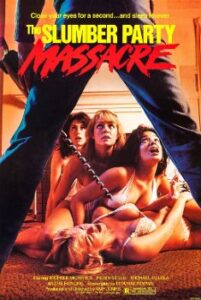
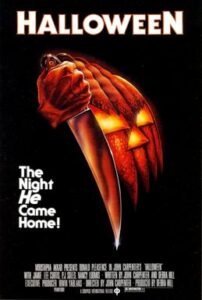
For me, the biggest crime of 1980s slashers like He Knows You’re Alone (1980) or Prom Night (1980) or Happy Birthday to Me (1981) or The Slumber Party Massacre (1982) was their stultifying lack of imagination.  Any display of imagination in the slasher sub-genre seemed to begin and end in the film that kickstarted it, John Carpenter’s original Halloween (1978) – itself a 1970s movie.


Teenage Sex and Death at Camp Miasma contains a number of scenes taken from the ‘original’ Camp Miasma movies of the 1980s.  Some are stylised re-imaginings of them that are operatic in their gusto and feature extraordinary geysers of blood.  But other scenes are meant to be ‘authentic’ ones, which Schoenbrun stages with a convincing, desperate, no-budget 1980s tackiness.  I did end up thinking that if I’d been a few years younger at the time, and less in thrall to 1970s horror movies, and the 1980s slashers had seemed like ‘forbidden fruit’ to me – films I was officially too young to watch and I only occasionally saw, furtively, through my fingers, on scratchy VCR recordings – I might have developed an affection for them too.  And today I’d enjoy them at least in a so-bad-they’re-good way.  (The reality is that I find them so bad they’re annoying.)


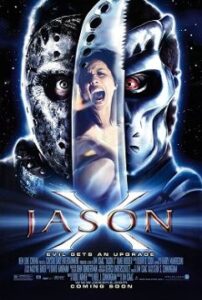
Incidentally, I was delighted that Schoenbrun included in their film a reference to 1983’s Videodrome, a horror movie far better than its slasher contemporaries, made by a genuinely visionary filmmaker, David Cronenberg.  As an actor, Cronenberg was game enough to appear in Jason X (2000), the entry in the Friday the 13th franchise where, yes, Jason Voorhees goes into outer space.


Lastly, it was a pleasure to see Teenage Sex and Death at Camp Miasma at the Singapore International Festival, surrounded by an enthusiastic and appreciative audience.  Everyone seemed to thoroughly enjoy the film and gave it a much-deserved round of applause at the end.
 

© Compass International Pictures / Aquarius Releasing
Mama Mia


© A24 / Little Lamb / Mad Solar Productions


One more post in advance of Halloween…


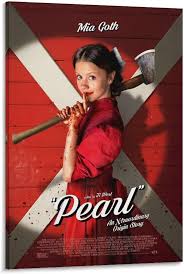
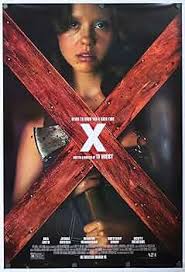
I’ve now watched all of the X trilogy of horror movies directed and written by Ti West and starring Mia Goth (who also co-wrote one of them).  These are X (2022), Pearl (2022) and MaXXXine (2024), which focus on the characters of ruthlessly determined actress Maxine Minx and frustrated wannabe actress Pearl Douglas, both played by Goth.  At its best, the trilogy is great.  At its worst, it’s still good fun.


X is the story of some city-folk heading out into the countryside and falling prey to a foe their slick city ways can’t deal with.  Yes, that’s the plot of half the horror movies ever made, from Tobe Hooper’s The Texas Chainsaw Massacre (1974) to Sam Raimi’s The Evil Dead (1982), from John Boorman’s Deliverance (1972) to Daniel Myrick and Eduardo Sanchez’s The Blair Witch Project (1999), from Eli Roth’s Cabin Fever (2002) to Ari Aster’s Midsommar (2019).  In West’s spin on it, the city-folk are six young filmmakers, including Goth’s character Maxine.  The year is 1979 and they intend to make a porno movie on the quick and on the cheap.  As a market for their product, they’re eyeing the up-and-coming technology of VHS, which will allow people to pay money and watch steamy movies they’re never likely to see in their local cinemas.  The filmmakers have rented a building on an out-of-the-way farm for the shoot, a farm belonging to an elderly couple called Howard and Pearl.


© A24 / Little Lamb / Mad Solar Productions


Incidentally, Howard and Pearl are also the names of an elderly couple featured in the BBC’s long-running, almost never-ending – and terrible – situation comedy Last of the Summer Wine (1973-2010).  I guess an American like West wouldn’t have known that.  Though maybe Mia Goth, who’s English, could have warned him that those character names were likely to give viewers from the United Kingdom PTSD-type flashbacks to Last of the Summer Wine.


X‘s Pearl is clearly unhinged and she’s about to get worse.  Ruminating on her current wrinkly decrepitude, mourning the loss of her youth, and jealously resenting the nubile young bodies performing sex-acts for the cameras on the other side of the farmstead, the old woman flips.  Bloody mayhem ensues, involving guns, knives, pitchforks and a large alligator who hungrily lurks in a pond elsewhere on the premises.  The scene where Maxine takes a naked dip in the pond, not suspecting that its scaly occupant is slowly closing in on her, is one of the creepiest things in the movie.  Rarely have aerial shots been so unnerving.


© A24 / Little Lamb / Mad Solar Productions


In all three movies, West revels in the setting.  X takes place during a Texas summer and the heat and sweatiness are nicely conveyed by the 1970s-aesthetic of the visuals.  The daytime shots, at least, have a faintly bleached and blurry look that evoke all sorts of bucolic American horror movies really made in that decade – the aforementioned Texas Chainsaw Massacre and the likes of John Hancock’s Let’s Scare Jessica to Death (1971), Jack Starrett’s Race with the Devil (1975) and Jeff Lieberman’s Squirm (1976).  Meanwhile, the way Pearl embodies the horrors of the aging process gives the film an extra depth.  This theme is touched upon both melancholically, as when Pearl realises how much Maxine resembles her when she was young, and queasily, with Pearl shuffling down to the makeshift film studio, spying on the actors doing their sex scenes and imagining she’s taking part herself.


But X’s greatest gimmick is its casting, for Mia Goth plays not one, but two characters.  She’s Maxine and Pearl.  The latter role required her to spend ‘a good 10 hours in the make-up chair’ in order to get the old-lady prosthetics applied.


© A24 / Little Lamb / Mad Solar Productions


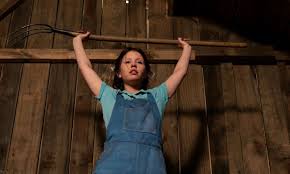
X ends with Maxine’s escape from the farm.  She drives off into the night, still determined to make it big as an actress.  But what comes next isn’t a sequel but a prequel.  If it was plausible for Goth to play Pearl with heavy make-up as an old woman, she could obviously play the character without make-up as a young woman.  Hence, we got Pearl, also released in 2022.  This is set in 1918 with the title character stuck on her parents’ farm (the same one as in X, though disarmingly smart and new-looking compared with the crumbling, rundown version of it in the previous film) whilst waiting for husband Howard to return from World War I.  She’s especially stuck because the Spanish flu pandemic, the early 20th century’s equivalent of Covid-19, is raging and Pearl’s family are isolating themselves.  It doesn’t help matters that her father (Matthew Sunderland) has been crippled by a stroke and her mother Ruth (Tandi Wright) is humourless, censorious and bitter.  Pearl responds to the situation by fantasising about becoming an all-singing, all-dancing silent-movie star – which increasingly provokes Ruth’s wrath.


Meanwhile, Pearl is already subject to the psychopathy that’ll lead to X’s bloody events 60 years later.  In an early scene, she takes a hay-fork to an unfortunate goose who didn’t display sufficient enthusiasm for a show she put on for the animals in the barn. She then goes to the pond and feeds the dead fowl to an alligator, whom she’s named Theda after the silent movie actress Theda Bara (and who’s presumably the granny of the alligator in X).


Though her mother is determined to clip her wings, other things seemingly pull Pearl in the direction of her dreams – namely, the flattery of a handsome but lecherous projector at the local town’s movie theatre, and a once-in-a-lifetime opportunity to join a travelling dance troupe, the auditions for which are being held in the local church.  Predictably, during the ensuing conflicts, betrayals and disappointments, Pearl snaps.  The bodies pile up and Theda the Alligator gets some unexpected meals.


© A24 / Little Lamb / Mad Solar Productions


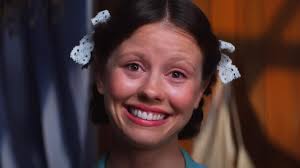
Even more so than X, Pearl shows West and Goth at the top of their games.  The director excels in orchestrating the showbiz-y fantasies that Pearl weaves around herself, including one set in a cornfield and involving a scarecrow that’s inspired by The Wizard of Oz (1939).  We can’t help but pity her even though we know she’s turning into a monster.  And Goth is amazing.  She’s particularly awesome at the end, when Howard finally arrives back from the war and finds the farmhouse kitchen in a less than decorous state.  Pearl presents herself – “I’m so happy you’re home!” – with a rictus-like smile, simultaneously heartfelt and terrifying, that seems to stay on her features forever.  No wonder Peter Bradshaw, film critic in The Guardian newspaper, hailed Goth as ‘the Judy Garland of horror’.


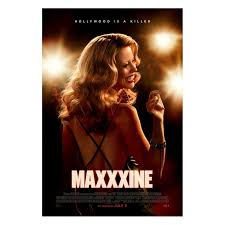
Pearl isn’t around for MaXXXine, released in 2024 and set in 1985, six years after the events of X.  But we glimpse her in flashbacks and her presence is felt in one of the film’s most harrowing scenes.  This is when Maxine – now in Hollywood and trying to graduate from starring in porn movies to starring in something slightly more upmarket, i.e., horror movies – sits in a make-up chair and has a cast made of her head.  With her face buried in the cast, and blinded by it, she suffers a panic attack and imagines Pearl is in the room, caressing her, as she did during one creepy moment in X.


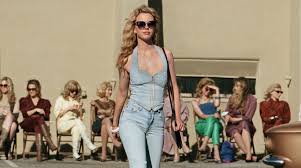
Whereas the action in X and in much of Pearl was confined to a farm, MaXXXine is far more expansive.  Its story unfolds all over Los Angeles, from the Hollywood Hills to the back-lots of Universal Studios (where, significantly, we see the Bates house and motel from Alfred Hitchcock’s Psycho), from the city’s luxurious mansions to its ultra-dodgy strip-clubs, peepshows and back alleyways.  But it’s the time rather than the place that gives the film its vibe.  MaXXXine unashamedly immerses itself in the garish sleaze and excessiveness of the 1980s: big hair, Ray-Ban sunglasses, spandex, lip-gloss, neon colours, graffiti, cocaine, hustlers, flashy convertibles with personalised number-plates, X-rated video stores, lascivious hair-metal bands, gory slasher movies and general ‘me’-generation greed.  West depicts this world as a cesspit, but a somehow joyous cesspit.  Maxine, of course, has taken to it like a duck to water.


But it’s still water that contains alligators.  Maxine gets caught up in a murder spree by an apparently Satan-worshipping serial killer who’s targeting people close to her.  She also has to deal with a crooked private investigator, played with scenery-chewing magnificence by Kevin Bacon, who knows she was present at the bloodbath at Pearl and Howard’s farm in 1979.  These things happen while she’s pursuing what she believes is her big break – a starring role in a schlocky horror sequel called The Puritan II, about to be filmed by a hard-as-nails lady director (Elizabeth Debicki).


© A24 / Motel Mojave / Access Entertainment


This leads to the first of a few unsatisfactory things in MaXXXine’s plotting.  Maxine is so determined to hold onto the film-role that she refuses to cooperate with the cops investigating the serial killer, because getting involved in a murder case will prevent her working on The Puritan II.  We know that Maxine is now in some ways as psychopathically ruthless as Pearl – early on, she’s shown dealing with a would-be mugger in a manner that’ll bring a grimace to the face of anyone possessing a pair of testicles – but come on.  Your friends are being slaughtered around you.  There’s a good chance you’ll be next.  How could you not go to the cops, important impending film-role or not?


Also awkward is the film’s ending, which veers off into a completely different style of movie – admittedly still a 1980s style, that of a Jerry Bruckheimer-Don Simpson action thriller.  At the same time, when the identity of the villain is finally revealed, it’s scarcely a surprise, since it was heavily signalled beforehand.


However, criticising a film paying homage to the 1980s for being illogical is self-defeating, considering that bona fide 1980s movies were hardly known for their logic.  It’s telling that one 1980s movie  MaXXXine has been compared to is Brian De Palma’s violent thriller Body Double (1984).  (Both have scenes prominently featuring Frankie Goes to Hollywood songs, Relax in Body Double, Welcome to the Pleasure Dome in MaXXXine.)  Body Double is regarded as a classic now, but on its release the critics dismissed it as De Palma at his most throwaway, as a series of stylish set-pieces in search of a plot.  MaXXXine is a similar, De Palma-esque mixture of splendidness and shonkiness.


© A24 / Motel Mojave / Access Entertainment


Anyway, there’s much to enjoy in it.  Goth’s first scene as Maxine is brilliant.  It culminates in her emerging from the audition for The Puritan II and contemptuously informing the long queue of would-be starlets waiting outside that they’re wasting their time because she has the job in the bag.  She then struts off to the sound of ZZ Top’s Gimme All Your Lovin’.  The cast is great too.  As well as Goth, Bacon and Debicki, it has Giancarlo Esposito playing Maxine’s shady agent.  Esposito, of course, was the terrifying Gus Fring in Breaking Bad (2008-13) and Better Call Saul (2015-22) and here he does a shockingly Gus Fring-like thing near the movie’s end.


In my opinion, then, X is the best horror movie of the three, Pearl is the best movie full-stop, and MaXXXine, despite its flaws, is very entertaining.  I wonder if West and Goth will get around to making a fourth film.  Goth has played Pearl young and old, but played Maxine only young.  How about a fourth movie set in the 2020s, with Maxine now as aged as Pearl was in X and living reclusively like the embittered Norma Desmond in Billy Wilder’s Sunset Boulevard (1950)?


Being a horror movie, though, it would be in the vein of what used to be called ‘psycho-biddy’ or ‘hagsploitation’ movies.  These constituted a sub-genre of horror that featured aging female movie stars playing old ladies who’ve become psychopathically loopy: for example, Betty Davis and Joan Crawford in What Ever Happened to Baby Jane? (1962), Tallulah Bankhead in Die! Die! My Darling! (1965) Zsa Zsa Gabor in Picture Mommy Dead (1966), Shelley Winters in Whoever Slew Auntie Roo? (1971) and Lana Turner in Persecution (1974).  I have every confidence that the mighty Mia Goth, in old-lady make-up, would hold her own among the likes of Davis, Crawford, Bankhead, Gabor, Winters and Turner.


Come to think of it, she’s done it already, in X.


© A24 / Little Lamb / Mad Solar Productions