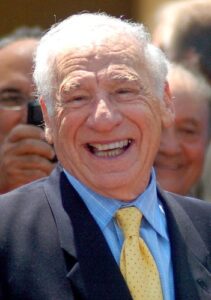
The 100-year-old Mel


From wikipedia.org / © Angela George


Last week saw much hype and noise about the United States of America celebrating its 250th birthday.  Under the leadership of Donald Trump, the USA marked the 250th anniversary of its independence from the British by holding a Great American State Fair on Washington DC’s National Mall.  This featured empty booths, cancelled musical performances, racist flags, power outages, collapsing roofs and a plywood model of the victory arch Trump wants to build on the Potomac that cracked, crumbled and oozed yellow gunk.  How odd that hardly anyone wanted to go to it.


In other moves to celebrate America’s 250th Independence Day, Trump refurbished the Lincoln Memorial’s Reflecting Pool, also in Washington DC, so that its water would shine a patriotic blue, though it immediately shone a less patriotic green thanks to a sudden and unforeseen algae bloom.  He also tried to extend the USA team’s run in the 2026 Football World Cup by arm-twisting Gianni Infantino and FIFA into breaking the sport’s red-card rules so that a key American player could play in the team’s next game – which they lost, courtesy of a 4-1 drubbing by Belgium, causing their exit from the competition.


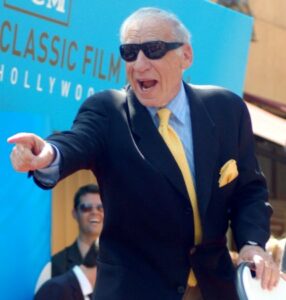
The sound and fury about the 250th anniversary of American independence, and the Trump-esque shenanigans accompanying it, have obscured the fact that, one week earlier, the USA witnessed another important three-digit birthday.  June 28th saw the 100th birthday of the legendary American filmmaker, comedian and general funnyman Mel Brooks.  By the time he turned his hand to making movies in the late 1960s, Brooks already had impressive comic credentials – devising the famed 2000-Year-Old Man comedy sketch with Carl Reiner, for instance, or creating the classic spy-comedy TV show Get Smart (1965-70) with Buck Henry.  But it’s fair to say his films are the body of work for which he’s most beloved.


Like much of the comedy I experienced from an early age – the CarryOn movies, or those starring Abbott and Costello, or the telly career of Ronnie Corbett – I’ve had a complicated and changing relationship with the oeuvre of Mel Brooks.  As a youngster, I thought it was brilliant.  As a young adult, who took himself much too seriously, I dismissed it – certainly, the later films Brooks made – as crass, cringeworthy guff.  Now, in my old age, I can find pleasure in the entirety of Brooks’s canon and appreciate the artistry displayed in even what are, by general consensus, his lesser efforts.  A bad joke might provoke a groan rather than a laugh, but to engineer that groan you still need a certain, warped skill.


I think I passed from my youthful period of Brooks-disdain to my more mature period of Brooks-admiration in the 1990s.  This was when I was attempting to woo (with a total lack of success) a lady from New York whom I considered, for a while, the coolest thing on earth.  We were chatting one evening about our favourite films and the object of my affections suddenly astounded me by saying she was a huge fan of…  No, not Jean-Pierre Melville’s Le Samourai (1967), or Terence Mallick’s Badlands (1973), or Jim Jarmusch’s Mystery Train (1989), but…  Mel Brooks’s Spaceballs (1987).
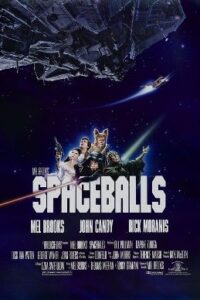
 

From wikipedia.org / © Metro-Goldwyn-Mayer / Brooksfilms


“Seriously?” I spluttered.  I’d seen this science-fiction / Star Wars piss-take shortly after its release and thought it was dreadful.  But, patiently, the lady explained to me the sociological depth and cleverness of some of Spaceballs’ jokes that I’d missed – for example, when Bill Pullman and John Candy rescue the princess (Daphne Zuniga) and Pullman remarks, “That’s all we needed…  A Jewish princess!”  I had to concede there was more to Brooks’s humour than I’d thought.


So, I had my moment of epiphany.  I decided, to misquote a line in The Producers, “Don’t be stupid, be a smarty / Come and join the Mel Brooks party.”


Anyway, it’s a fortnight late for the great man’s 100th, but here is a belated guide to the funniest bits, in my opinion, of his movies.  There’s no mention of The Twelve Chairs (1970) and Life Stinks (1991) because I haven’t seen those two.


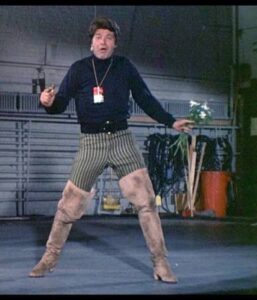
L.S.D. gets auditioned in The Producers (1967)

The movie that put Brooks on the cinematic map, The Producers has had quite an afterlife, becoming a successful Broadway musical that, in 2005, was turned into a film itself.  For me, its highlight isn’t the famous song-and-dance number Springtime for Hitler that’s the centrepiece of the show that impresario Zero Mostel and accountant Gene Wilder stage in the hope it’ll be a massive flop (allowing them to make a fortune from the shares they’ve sold in it).  No, the highlight comes earlier.


That’s when hippy Lorenzo St. DuBois – L.S.D. to his friends – stumbles into the show’s auditions by mistake and performs, with his female guitar / keyboards / sax backing band, a funny-terrible number called Love Power.   (“And I give a flower to the big fat cop / He takes his glove and he beats me up!”)  Played by Dick Shawn with thigh-high furry boots and a Campbell’s soup-can hanging on a chain around his neck, the hapless L.S.D. is hilarious – and the sequence reaches a perfect conclusion when Mostel bellows ecstatically, “THAT’S OUR HITLER!”
 

From instagram.com / (c) Embassy Pictures


The campfire scene in Blazing Saddles (1974)

If I was more sophisticated, I’d nominate as the funniest moments in Brook’s smash-hit comedy-western the scenes where he skewers the residents of frontier town Rock Ridge for their bone-headed racism.  (“You’ve got to remember that these are just simple farmers.  These are people of the land.  The common clay of the new West. You know…  morons.”)  However…  I’m nominating instead the sequence in Blazing Saddles where Slim Pickens’s men sit around a campfire and stuff themselves with traditional cowboy fare – beans – with flatulent results.


I first saw Blazing Saddles when it played on a big screen in the assembly hall of my school as one of the movies chosen for the school’s Film Club.  When the farting began, the teenaged audience, including myself, laughed like drains.  We were still roaring our heads off minutes after the sequence finished.  No other film shown during the several years I was a member of that Film Club – not Alfred Hitchcock’s Psycho (1960), not Nicolas Roeg’s Don’t Look Now (1973), not Ridley Scott’s Alien (1979) – provoked so tumultuous a reaction.  I’m not proud.


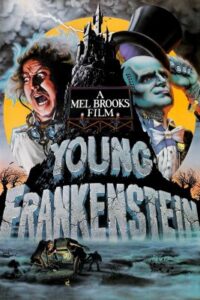
The monster meets the blind hermit in Young Frankenstein (1974)

The most genuinely affectionate of Brooks’s genre parodies, Young Frankenstein pokes fun at the black-and-white Frankenstein movies made by Universal Pictures in the 1930s.  My favourite part of it is when Brooks sends up the sequence in Bride of Frankenstein (1936) where the Frankenstein monster (Boris Karloff) is touchingly but briefly befriended by a lonely blind hermit (O.P. Heggie) who’s unaware of his monstrousness.  Here, the well-meaning but, well, blind hermit (Gene Hackman) accidentally and repeatedly scalds and burns the unfortunate monster (Peter Boyle) whilst trying to offer him broth, cigars, etc., until the latter flees from his cottage in terror.  Despite the gleeful bad taste of the gags, the Young Frankenstein sequence retains some of the sweetness and sadness of the Bride of Frankenstein one.  It also makes you wish Gene Hackman had played more comedy roles.
 

From wikipedia.org / © Gruskoff / Venture Films / 20th Century Fox


The boardroom table in Silent Movie (1976)

This was another movie shown at my school’s Film Club and another sequence that sent us – uncivilised little oiks that we were at the time – into paroxysms of laughter.  Evil corporation Engulf & Devour intends to take over the studio of filmmaker Mel Funn (Brooks) but that won’t happen if the new movie Funn is making becomes a hit.  Engulf & Devour’s board of executives hatch a fiendish plan to sabotage Funn and his movie – they’ll send sultry nightclub singer Vilma Kaplan (Bernadette Peters) to seduce, then dump Funn and re-kindle the massive alcohol problem he had previously.  When a picture of Vilma is unveiled to the executives, sitting around the boardroom table, they’re so impressed that the table rises by several inches.


The line Funn / Brooks inspires when Vilma does dump him, and he goes on a massive bender to drown his sorrows – “He is truly the lord of the winos!” – is pretty funny too.


The orchestra in High Anxiety (1977)

Brooks’s next film takes fond aim at the thriller movies of Alfred Hitchcock.  Its hero, Dr Richard Harpo Thorndyke, again played by Brooks himself, suffers from the titular disorder, the vertigo-like ‘high anxiety’.  While travelling in the back of a car, Thorndyke / Brooks suffers a moment of ominous foreboding, which is accompanied by an equally ominous swell of Bernard Herrmann-like orchestral music – the sort that Hitchcock liked to insert into his films to augment the mood.  This being a Brooks film, though, Thorndyke’s car then passes a bus that contains, as passengers, the orchestra playing the music.


Yes, this is the second time Brooks has used that gag.  It originally appeared in Blazing Saddles and involved the Count Basie Orchestra performing in the desert,  But the orchestra-on-a-bus joke in High Anxiety works better, I think.


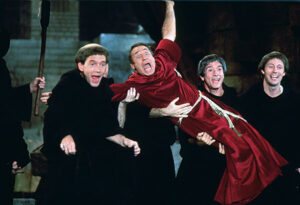
The Spanish Inquisition in History of the World, Part I (1981)

A truly hit-and-miss collection of gags and sketches, History of the World, Part 1 depicts five chapters in world history from the Stone Age to the French Revolution.  Its undisputed highlight is a segment about the Spanish Inquisition.  This features Brooks as Torquemada – his victims are warned not to try to talk him out of torturing them because, “You can’t Torquemada anything!” – and an elaborate Busby Berkeley-like song-and-dance number in a torture chamber which, with its exuberant bad taste, is as impressive as Springtime for Hitler in The Producers.
 

© Brooksfilms / 20th Century Fox


Snotty’s line in Spaceballs (1987)

Spaceballs spoofs Star Wars (1977) but also contains some elaborate send-ups of Planet of the Apes (1968) and Alien (1979) – the latter even drafts in John Hurt to reprise his role as the unfortunate Kane.  But the funniest, or groan-iest, bit in it for me is a simple pun.  A Scottish character called Snotty (Jeff MacGregor), obviously based on Scotty from Star Trek (1966-69), is in a control room flicking a series of switches.  “Lock One!” he shouts.  “Lock Two!  Lock Three!  Loch Lomond!”


The abbot in Robin Hood: Men in Tights (1993)

You have to be a connoisseur of long-ago comedy double-acts to appreciate my favourite joke in Robin Hood: Men in Tights, Brooks’ irreverent take on the then-recent and hugely-successful Robin Hood: Prince of Thieves (1991).  An abbot (Dick Van Patten) is walking in his finery outside his monastery and enjoying the adulation of the local population.  Then a guy who looks and sounds suspiciously like Lou Costello yells at him, “Hey, Abbott!”  Van Patten grumbles, “I hate that guy.”


Dracula tries to control Mina’s mind in Dracula: Dead and Loving It (1995)

I don’t hold it against Brooks’s Dracula: Dead and Loving It, which stars Leslie Neilson as the legendary vampire count, that it isn’t great.  After all, there have been many attempts over the years to spoof vampire films and hardly any of them have been funny – see Roman Polanski’s Dance of the Vampires (1967) or Stan Dragoti’s Love at First Bite (1977).  In fact, it wasn’t until Jermaine Clement and Taika Waititi’s What We Do in the Shadows (2014) that I encountered a vampire-movie parody that made me laugh.


However, Dracula: Dead and Loving It has one funny part where, from a distance, Dracula / Neilson exerts his willpower over the bitten and partly vampirised Mina (Amy Yasbeck) and tries to summon her: “Mina…  Open your eyes…  Arise…  Come to the door…”  The operation goes less smoothly when the mind-controlling vampire discovers there’s a confusing closet door in the way, and a hazardous footstool, and an inconvenient maidservant who’s also picking up his telepathic instructions: “Mina…  You are in the closet.  Open the door and come out…  Watch out for the footstool…  Stand up…  Not you, sit…  No, you sit…  You stand…”


And just before I finish, some praise is due for Brooks as a producer too.  He’s the man who oversaw both David Lynch’s The Elephant Man (1980) and David Cronenberg’s The Fly (1986).
 

From wikipedia.org / © Angela George

The man from another place has gone to another place


From wikipedia.org / © Georges Biard


For the past few days, I’ve felt like wearing a black armband while I sip my cups of coffee.  That’s because David Lynch, visionary maker of movies, short films, TV shows, web series, music videos and commercials, and artist, musician and actor to boot, passed away on January 15th.


In his cinematic output, Lynch was surely one of the most American of film directors. His work was suffused with Americana, both the cosy variety populated by porches, picket fences, lawns, sprinklers, diners, coffee, pie and kindly, neighbourly folk; and the flashier variety whereby bequiffed, leather-jacketed Elvis wannabes and peroxide blondes cruised along endless highways in big, finned sports cars.  This being Lynch, though, submerged beneath the Americana and frequently bubbling to its surface were things altogether weirder, darker, more surreal and twisted.  There was as much Salvador Dali, Luis Bunuel and William S. Burroughs in his work as there was Edward Hopper, Frank Capra and Ray Bradbury.  Meanwhile, though Lynch’s themes, motifs, imagery and stylistic touches felt unique – no wonder ‘Lynchian’ became a word – he wasn’t afraid to dress his visions in the clothes of familiar genres: horror, thriller, crime noir, science fiction and – something Lynch didn’t get enough credit for – comedy.


Anyway, here’s a guide to my favourite parts of the David Lynch film-and-TV universe.


Favourite Lynch cast

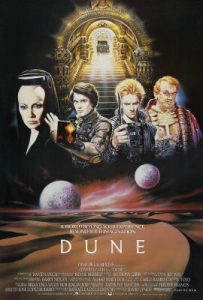
Lynch’s version of Dune (1984) was a box-office flop and received much abuse from critics.  (Dung, I remember the New Musical Express calling it.)  Unfortunately, Dune’s old-school producer Dino De Laurentiis wanted the doorstop-sized and labyrinthine Frank Herbert novel on which it was based crammed into a regulation two-hour movie.  The condensed result didn’t make much sense.


© Dino De Laurentiis Corporation / Universal Pictures


But Lynch never worked with a better troupe of actors.  It even outshone the cast that, four decades later, Denis Villeneuve assembled for his telling of the story in 2022 and 2024.  The Lynch Dune features Kyle MacLachlan, Jurgen Prochnow, Francesca Annis, Kenneth McMillan, Paul Smith, Patrick Stewart, Richard Jordan, Freddie Jones, Sian Phillips, Virginia Madsen, Jack Nance, José Ferrer, Everitt McGill, Brad Dourif, Max von Sydow and Dean Stockwell.  Oh, and Sting – more on him in a minute.


Favourite Lynch collaborator

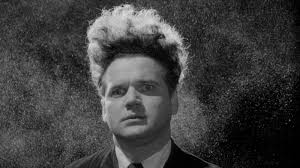
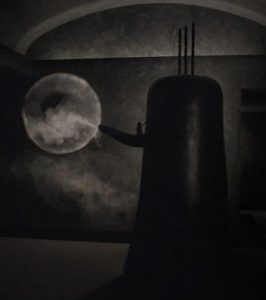
That would be Jack Nance, who played Henry Spencer, lead character in Eraserhead (1977), the film that put Lynch on the map.  With his impassive features, bouffant, tight suit and peculiar gait, Nance contributes as much to the film’s atmosphere as the elements that today we’d regard as typically Lynchian – the mutant baby, the lady in the radiator, the flickering lights, the industrial noise.  Thereafter, he was in all Lynch’s film projects (apart from 1980’s The Elephant Man) up to 1997’s Lost Highway.  He most famously played the amiable, fishing-and-chess-obsessed Pete Martell in Twin Peaks (1990-91), Lynch and Mark Frost’s oddball, sometimes barmy, occasionally confounding TV murder whodunnit, which coincidentally was a soap opera, comedy, horror story and science-fiction drama too.


© AFI Center for Advanced Studies / Libra Films


Nance’s life was hardly a bed of roses.  His film work was intermittent and in the mid-1980s he worked as a hotel clerk to make ends meet.  His second wife Kelly Jean Van Dyke (Dick Van Dyke’s niece) committed suicide.  And he had severe alcohol problems.  During the filming of Blue Velvet (1986), he was in such a state that Dennis Hopper – Dennis Hopper! – had to drive him to a rehabilitation centre.  In 1996, Nance died of a subdural hematoma, resulting from a ‘blunt force trauma’.  The previous day his face was bruised and he told friends that he’d been punched during a brawl he’d got into with some strangers in a doughnut shop.  Lynch said in tribute: “There’s not another actor I can think of who could fill his shoes.  I had roles in my head for future films that I was saving for Jack.  I cannot think of anyone else who could do it.”


Favourite Lynch funny bit

The other day at work I was discussing Lynch’s passing with a colleague.  I started enthusing about the sequence where Nicolas Cage and Willem Dafoe try to rob a feed store in Wild at Heart (1991) and how funny it was: “Willem Dafoe trips and falls on his shotgun and it goes off and you see the top of his head flying up in the air…  Meanwhile, there’s a wounded clerk who’s had his hand blown off at the wrist…  His colleague comforts him by saying modern surgery can reattach his hand… And then you see a dog running away outside with the hand in its mouth…”


At this point I realised my colleague wasn’t laughing with me, but was looking decidedly queasy.  He didn’t seem happy to be reminded of that sequence.  Which shows humour is subjective.  Still, I think the attempted robbery in Wild at Heart is Lynch’s funniest moment.


© PolyGram / Propaganda Films / Samuel Goldwyn Company


Favourite Lynch musical bit

Lynch was a musician, so music played a big role in his films – right from Eraserhead, when the lady in the radiator sings In Heaven.  In his final major work, Twin Peaks: The Return (2017), the long-awaited third season of his celebrated TV show, music wasn’t so much an element as a fixture.  Each episode ended with a scene in the Roadhouse, the bar / concert venue in the town of Twin Peaks, where a musical act would be performing.  Given Twin Peaks’ small size and remote location, the Roadhouse attracted some unfeasibly big names: Julee Cruise, the Cactus Blossoms, Rebekah Del Rio with Moby on guitar, and one Edward Louis Severson – Eddie Vedder to you and me.


But in my opinion, the act that rounds off Episode 8 of Twin Peaks: The Return is best of all.  It’s the fearsome electro-metal juggernaut Nine Inch Nails, whom the Roadhouse MC introduces as the Nine Inch Nails, no less.


© Dino De Laurentiis Corporation / Universal Pictures


Favourite Lynch musician in an acting role

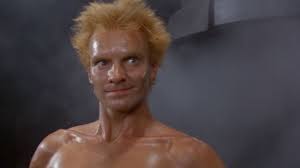
Lynch was also fond of putting singers and musicians in his casts.  Many remember Sting playing Feyd-Rautha Harknonnen, evil nephew of the equally-evil Baron Harkonnen, in Dune.  I’m not a fan of Sting’s acting but visually, with his spiky blonde hair, lean frame and daft codpiece, he was striking.  Indeed, when I saw Denis Villeneuve’s Dune Part 2 and Austen Butler strolled into view as Feyd-Rautha, my first thought was: “Oh look, there’s what’s-his-name in the Sting role!”


© Twin Peaks Productions / New Line Cinema / CiBy 2000


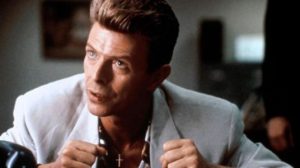
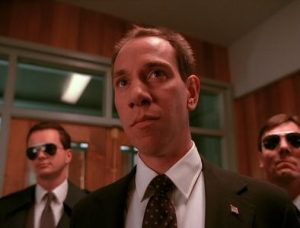
However, my favourite Lynchian musical-cameo comes in the middle of Twin Peaks’ cinematic prequel Twin Peaks: Fire Walk with Me (1992).  This is when David Bowie pops up as Phillip Jeffries, an FBI agent who’s been mysteriously missing for two years.  One morning, he suddenly steps out of a lift at FBI headquarters.  He proceeds to babble gibberish at FBI agents and Twin Peaks regulars Dale Cooper, Albert Rosenthal and Gordon Cole (Kyle MacLachlan, Miguel Ferrer and Lynch himself): “Who do you think this is, there…?  I found something.  And then there they were!”  Then he narrates a trippy dream montage involving dwarves, killers, masks, disembodied mouths and long-nosed spectres.  And then he vanishes into thin air.  “He’s gone!” squawks McLachlan.  “He was never here!” retorts Ferrer.


Bowie died early in 2016, before Twin Peaks: The Return began filming, which seemed to rule Philip Jeffries out of the third series’ storyline.  However, Lynch did include Jeffries.  Only now the disappearing agent is a giant teapot voiced by an actor called Nathan Frizell doing a Bowie impersonation.


David Bowie turned into a teapot.  Only David Lynch could do that.


© Lynch-Frost Productions / Showtime Networks


Favourite Lynch sad bit

Because of the nightmarish aspects of his works – it’s not the majority of their content, but it’s the stuff that lingers in viewers’ minds – Lynch isn’t readily associated with pathos.  Yet there are moments in his films that I find incredibly sad.  In The Elephant Man, for instance, it’s when the titular character John Merrick (John Hurt) escapes from the freak show owned by the evil Bytes (Freddie Jones), with the help of the show’s other inmates.  A dwarf, played by Star Wars’ Kenny Baker, remarks ruefully: “Luck, my friend, luck.  Who needs it more than we?”  Or in Twin Peaks: The Return when Deputy Hawk (Michael Horse) says a final goodbye to the ailing Margaret Lanterman, aka the Log Lady.  This is made more poignant by knowing that Log-Lady actress Catherine Coulson died early in the third season’s production.


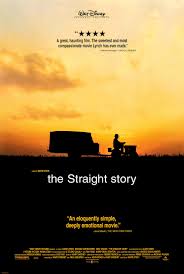
But my number-one Lynch sad moment is probably the ending of The Straight Story (1999), when Alvin (Richard Farnworth) finally makes it to the shack of his unwell brother, Lyle (Harry Dean Stanton).  They’re two old codgers, one using walking sticks and the other a Zimmer frame, and clearly aren’t used to expressing their feelings.  But Lynch, with some basic dialogue (“Did you ride that thing all the way out here to see me?” “I did, Lyle.”), some silence and some anxious, exhausted looks and expressions from his actors, conveys a huge amount of emotion.


© Asymmetrical Productions / Film4 / Buena Vista Productions


Favourite Lynch scary bit

Obviously, there are lots of scary bits in Lynch’s oeuvre.  I imagine he’d have been miffed if you described his works as ‘horror’ films, but he more than earned his entry in any ‘Encyclopaedia of Horror’.


Particularly freaky to me were several things in Twin Peaks and its 2017 sequel.  The image of Killer Bob (Frank Silva) crawling over a sofa in the original series was terrifying.  Twin Peaks: The Return featured in its first episode a strange experiment involving a big glass box and a mass of surveillance equipment that eventually conjures up a phantom entity.  Unfortunately for the guy monitoring the experiment – who’s inopportunely chosen this moment to have it off with his girlfriend – the entity is equipped with kitchen-blender fingers and It proceeds to reduce their heads to bloody confetti.  Also horrific is a sequence in a later episode wherein Deputy Bobby Briggs (Dana Ashbrook) tries to calm a hysterical woman at the wheel of a stalled car and a convulsing, vomiting zombie-like creature slowly rises out of the seat beside her.  This is never explained or referred to again – a perfect, scary Lynchian moment in other words.


And I remember sinking into my cinema seat, not wanting to look at the screen too much, during Lost Highway (1996), when Lynch’s camera starts prowling deep – deep – into the black recesses of the house belonging to Fred (Bill Pullman), the film’s initial hero.  That sequence had a real primordial chill to it.


But for my money, the scariest Lynch moment is the ‘Winkie’s Diner’ sequence in Mulholland Drive (2001).  A man sitting in the diner (Patrick Fischler) recounts two dreams he’s had, both of which take place there.  In each dream he’s been possessed by an inexplicable fear – and a man with a hideous face living behind the diner, whom he can see ‘through the wall’, seems to be responsible.  When a companion suggests he exorcises the memory of the dreams by checking behind the real diner, he reluctantly complies.  So they venture along the side alleyway, and…  What follows is one of the very few jump-scares in cinematic history that actually made me jump.


© Lynch-Frost Productions / Spelling Entertainment


Favourite Lynch speech

Miguel Ferrer’s Albert Rosenthal, the arrogant FBI pathologist who assists Kyle MacLachlan’s Dale Cooper in Twin Peaks, gets my vote here.  During the first season, Albert is very vocal about his low opinion of the town of Twin Peaks, which results in him getting punched out by Sheriff Harry S. Truman (Michael Ontkean).  During the second season, when Truman’s ready to punch him out again following a cutting jibe – “You might practise walking without dragging your knuckles on the floor” – Albert responds to the threat of violence with an impassioned speech explaining that he’s happy to be a knob-end if it helps him in the greater scheme of things, i.e. in the struggle against evil.  Oh, and he’s a committed pacifist too.


“While I will admit to a certain cynicism, the fact is that I’m a naysayer and hatchet-man in the fight against violence.  I pride myself in taking a punch and I’ll gladly take another because I choose to live my life in the company of Gandhi and King.  My concerns are global.  I reject absolutely revenge, aggression and retaliation.  The foundation of such a method is love.  I love you, Sheriff Truman.”


No wonder Cooper tells the dumfounded Truman afterwards, “Albert’s path is a strange and difficult one.”


© De Laurentiis Entertainment Group


Favourite Lynch villain

There are a good many contenders for this too: Killer Bob in Twin Peaks, Willem Dafoe’s Bobby Peru in Wild at Heart, and Kenneth McMillan’s Baron Harkonnen in Dune, who’s basically a levitating, leering sack of pus.  But at the end of the day, my ‘Favourite Lynch Villain’ award has to go to Dennis Hopper’s Frank Booth in Blue Velvet.


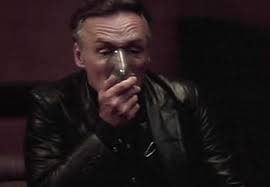
The scene where the black-clad, slick-haired Frank assaults Dorothy Vallens (Isabella Rossellini) whilst acting out a deranged sexual fantasy, screaming things like “Baby wants to f**k! Baby wants to f**k blue velvet!” and slurping gas out of a canister is astonishing.  It’s made even more harrowing by the fact that the hapless Jeffrey Beaumont (Kyle MacLachlan) is hiding nearby in a closet and has to witness it all.  This is the moment when the preppy, clean-cut Jeffrey discovers life is a lot more complicated, in a bad way, than he thought.  No wonder he laments: “Why are there people like Frank? Why is there so much trouble in this world?”


So, thank you David Lynch.  Your oeuvre was sometimes comfortingly genial, sometimes perplexingly weird, sometimes shockingly dark – but it was always fascinating.  I raise a damn fine cup of coffee in your honour.


© Lynch-Frost Productions / Showtime Networks